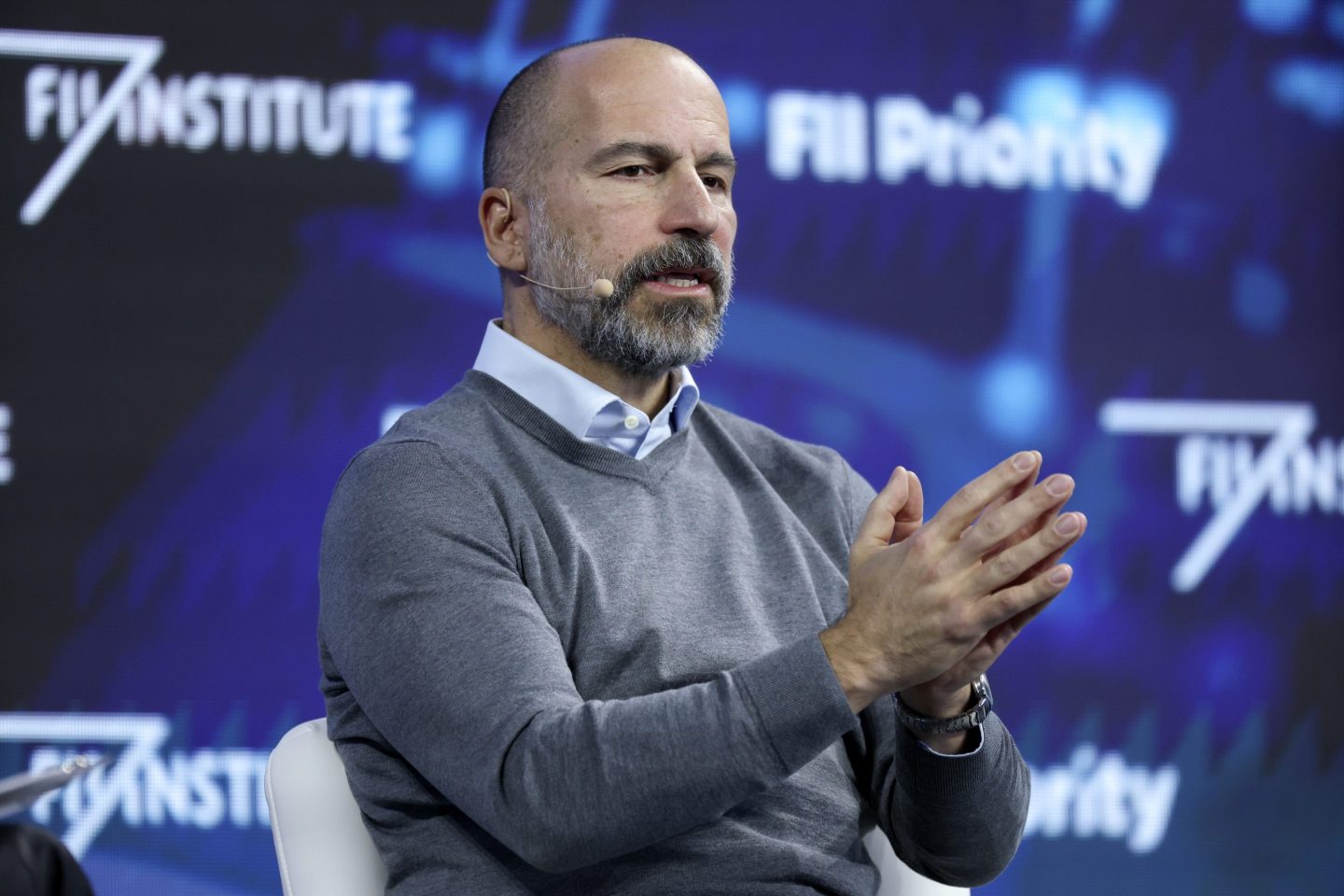
Gen Z is turning away from getting driver’s licenses because they can just grab rideshares instead, according to Uber CEO Dara Khosrowshahi—and his own son is no exception.
While getting a license for Khosrowshahi was “a goal in life” representing freedom, his son has passed on this benchmark of teenagedom, he told The Verge’s Decoder podcast last May. The Uber CEO’s son is among a wave of teens embracing the convenience of rideshare over owning a car, Khosrowshahi noted.
“This drives me crazy,” Khosrowshahi said. “My son is over 18… I’m still trying to get my son to get his driver’s license, but Uber’s freed him up.”
According to Khosrowshahi, the convenience of rideshare for the younger generation is “absolutely having an effect on car ownership.”
Indeed, from 1983 to 2022, the number of 18-year-olds with driver’s licenses in the U.S. decreased from 80% to 60%, according to data from the U.S. Department of Transportation’s Federal Highway Administration. Since 2000, that share among 16-year-olds has dropped by more than a quarter.
Young people’s disinterest in driving goes beyond today’s rideshare opportunities. A 2013 study by the University of Michigan surveying 618 adults without driver’s licenses found 37% of respondents were too busy to get a license, while 32% said vehicle ownership and maintenance were too expensive. About one-third said they get rides from other people. Khosrowshahi speculated that increased urbanization could also be a contributing factor to Gen Z’s rideshare preference.
“My parents put a lot of pressure on me to get one,” one 24-year-old in Philadelphia previously told the Washington Post in 2023. “But I haven’t needed one to this point. If there’s an emergency, I’ll call an Uber or 911.”
More rideshare opportunities for teens
Uber has seen opportunities to tap into a younger consumer base, launching teen accounts three years ago that allow teens under 18 to travel by themselves in Uber cars. The company implemented a slew of safety guardrails on the feature, including live trip tracking for parents to monitor rides, as well as the ability for parents to contact drivers directly during trips.
Other rideshare companies have followed suit, including Waymo, which has robot taxi chauffeur teens around Phoenix and Los Angeles. Lyft launched its own teen feature in February with similar safety measures.
“Teens want—like every teen ever—independence. They want to be able to go and do their own thing,” Lyft CEO David Risher told Fortune earlier this year. “And parents want something that is reliable and safe and affordable, and that’s what we’re trying to design.”
What is the future of car ownership?
Despite Khosrowshahi lamenting his son skipping out on what he considered a teenage rite of passage, his hopes for the future of Uber will depend on Gen Z continuing to eschew driving. The CEO has long touted rideshare’s potential to disrupt the appeal of car ownership. In 2019 ahead of Uber’s IPO, he said his company would be to car ownership what Netflix and other streaming services are to cable, taking away utilization opportunities for a product once viewed as non-negotiable.
“We and our competition are slowly de-bundling what I call the car bundle,” Khosrowshahi told CNBC at the time. “Now, you don’t have to use a car to go out to dinner, or you don’t have to use a car to take your kids to school, etc, etc. Each of these occasions is being replaced by an on-demand occasion.”
As the rideshare giant banks on fewer people buying cars, vehicle registration in the U.S. has increased 8% from about 263 million in 2015 to more than 284 million in 2023, according to Federal Highway Administration data. However, the ages of vehicles on the road have continued to rise, per S&P Global data, suggesting economic pressures may be dissuading consumers from purchasing cars at the current pace.
Uber is trying to tap into consumers’ continued fears about the economy, introducing last year a “route share” feature offering shuttle services along fixed routes at a more affordable cost to commuters. Critics have mocked the feature as simply trying to recreate public transportation, but Khosrowshahi told Decoder Uber is not interested in competing with mass transit. He instead said he sees route-sharing as complementary to taking a bus or train because some individuals may prefer ridesharing for specific occasions like seeing a friend.
The rideshare company remains focused on eliminating the need for new cars on the road, Khosrowshahi insisted.
“It’s going to take a lot of work to get there,” he said. “We’re less than 3% of miles traveled on the road even though we’re a very big company.”
A version of this story was published on Fortune.com on May 27, 2025.
More on rideshare:
- Lyft CEO David Risher is still a driver for the company: It made him realize being even one minute late could cost the customer their job
- Uber riders complain they were charged more for paying with Amex cards—one viral video shows a $13 difference
- Uber ups robotaxi bet with steering-wheel free Zoox rides in Las Vegas