• Home
  • Latest
  • Fortune 500
  • Finance
  • Tech
  • Leadership
  • Lifestyle
  • Rankings
  • Multimedia

Trendingnow

1

Bars, bowling alleys, and movie theaters cost too much to run and visit. Americans have run out of places to hang out and we're paying with our health

2

The labor market could become so backward that the economy will have to shed jobs to keep unemployment steady

3

As Trump balks again at escalating war, Iran smells ‘blood in the water’ and looks to exploit its newfound strategic advantage, experts say

1

Bars, bowling alleys, and movie theaters cost too much to run and visit. Americans have run out of places to hang out and we're paying with our health

2

The labor market could become so backward that the economy will have to shed jobs to keep unemployment steady

3

As Trump balks again at escalating war, Iran smells ‘blood in the water’ and looks to exploit its newfound strategic advantage, experts say
HealthWorld Health Organization

Marburg virus, a relative of Ebola with no approved vaccines or treatments, is spreading in West Africa. Here’s what you need to know

By
Erin Prater
Erin Prater
Down Arrow Button Icon
By
Erin Prater
Erin Prater
Down Arrow Button Icon
February 16, 2023, 4:23 PM ET
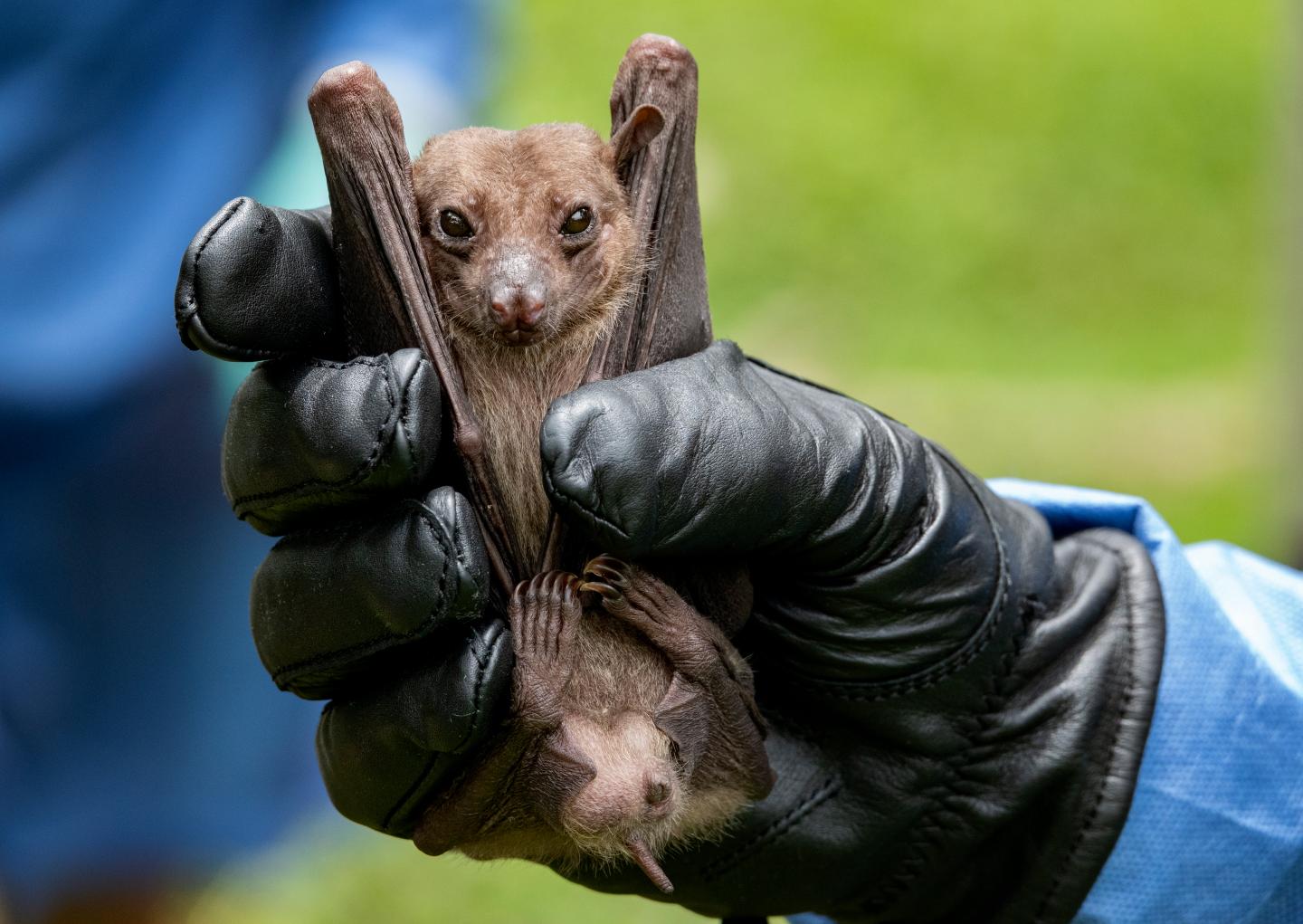
A fruit bat captured by CDC scientists in Queen Elizabeth National Park in Uganda on Aug. 25, 2018. The scientists glued small GPS devices to 20 bats in an attempt to determine flight patterns and how the creatures transmit Marburg virus to humans. The West African country of Equatorial Guinea reported its first-ever cases of the virus this week, according to the World Health Organization.
A fruit bat captured by CDC scientists in Queen Elizabeth National Park in Uganda on Aug. 25, 2018. The scientists glued small GPS devices to 20 bats in an attempt to determine flight patterns and how the creatures transmit Marburg virus to humans. The West African country of Equatorial Guinea reported its first-ever cases of the virus this week, according to the World Health Organization.Bonnie Jo Mount/The Washington Post via Getty Images
Add Fortune on Google for similar content.

An Ebola-like virus for which there are no approved vaccines or treatments has spread to an African country it’s never before appeared in, raising alarm that it could spread even farther.

The West African country of Equatorial Guinea reported its first cases this week. At least nine people tested positive for the haemorrhagic fever after their deaths, and another 16 are suspected to have the disease. Their symptoms include bloody vomit and diarrhea, fever, and fatigue, according to a Monday update from the World Health Organization.

There are no approved treatments like antivirals or vaccines for Marburg, fatal in up to 90% of cases. This makes the recent spread all the more concerning. While experts say the risk to the rest of the world is currently low, transmission elsewhere is always possible.

“What happens in Africa can show up in your backyard hospital in less than 24 hours,” due to international air travel, Dr. Luis Ostrosky, an infectious diseases specialist at The University of Texas Health Science Center at Houston, tells Fortune.

Viruses like COVID have shown us “how small the world is,” Dr. William Schaffner, professor of infectious diseases at Vanderbilt University Medical Center in Nashville, Tenn., notes.

“There are people who would like to ignore what’s happening in what, to them, are remote parts of the world,” he says. “But we are well to be interested, aware, and prepared.”

Here’s what you need to know about this highly disturbing virus with epidemic potential.

What is Marburg virus?

Marburg virus disease is a zoonotic (or animal-carried) hemorrhagic fever, and a member of the filovirus family. The only other members of the family are the six known species of Ebola, which can cause nearly identical symptoms.

Hemorrhagic fevers like Marburg and Ebola reduce the body’s ability to function on its own. They damage the cardiovascular system, in addition to multiple other organ systems. They often result in bleeding, also known as hemorrhaging.

When asked which is worse, Ebola or Marburg, Ostrosky told Fortune that “they’re all pretty bad, with high morbidity and mortality.”

Where does Marburg virus typically occur?

Sporadic cases of Marburg are not uncommon in sub-Saharan Africa, including countries like Angola, the Democratic Republic of Congo, Ghana, Kenya, and Uganda, according to the U.S. Centers for Disease Control and Prevention. 

Prior to this month’s outbreak in Equatorial Guinea, the latest outbreak occurred in Ghana in July and August. Three cases were confirmed, with two deaths—all among the same household, according to the WHO and CDC.

While African fruit bats are natural hosts for the virus, the first identified cases of Marburg occurred outside of Africa, oddly enough—in 1967, at labs in Marburg and Frankfurt, Germany, and in Belgrade, Yugoslavia (present-day Serbia). The 31 cases that occurred were among lab workers exposed to African green monkeys from Uganda or their tissue, and members of the workers’ families. Seven people died.

How is Marburg transmitted?

Carrier African fruit bats and other non-human primates can transmit the virus to humans, who can transmit it to other humans via bodily fluids or contaminated surfaces. Aerosol transmission is possible, at least from animal to human. Many past cases of Marburg occurred among those who mined in bat-infested caves in Africa, according to the CDC.

The potential for transmission by asymptomatic or low-symptomatic individuals—who have Marburg without symptoms, or who are only mildly ill, with nonspecific symptoms—exists, Schaffner says.

A similar phenomenon has been noted in Ebola, which is generally thought to be transmitted by people with symptoms. But that isn’t always the case, Dr. Maryam Keshtkar Jahromi, an infectious disease doctor and expert on viral hemorrhagic fevers from Johns Hopkins Medicine, recently told Fortune.

“If you go to some rural areas of Ebola-endemic countries and take blood specimens from people who don’t remember being infected or having symptoms, you’ll find some people have antibodies against the virus,” she said of Ebola in October. “You ask them, ‘Were you ever sick? Were you in contact with someone who was sick? They don’t remember anything. They were infected with the virus sometime and they never had any symptoms.’”

As the human population grows and expands into areas that were once remote, “we expose ourselves to viruses that are circulating in animal populations,” Schaffner says. 

“That can clearly be a local problem, but also, since people can get on airplanes and be almost anywhere around the world in 12 hours, it can potentially introduce these infections around the world.”

How deadly is Marburg?

Marburg is fatal in up to 88% of cases, according to the WHO. But the fatality rate varies widely by outbreak, and has ranged from 23% to 90%, according to the CDC.

What are the symptoms of Marburg?

Symptoms of Marburg won’t occur until 2-21 days after exposure, known as an incubation period. Once symptoms do occur, they come on fast and furious, and include high fever, severe headache, chills, and severe malaise.

Around the fifth day of symptoms, a rash with flat, discolored areas of skin and small raised bumps may occur—usually on the chest, back, and stomach. After this, nausea, vomiting, chest pain, a sore throat, abdominal pain, and diarrhea may appear, according to the CDC.

From here, symptoms can become progressively more severe, expanding to include jaundice, pancreatic inflammation, severe weight loss, delirium, shock, liver failure, massive hemorrhaging, and multi-organ dysfunction.

It can be difficult for doctors to tell Marburg apart from malaria, typhoid fever, dengue, or other viral hemorrhagic fevers like Lassa fever or Ebola, especially if there are no other suspected cases in the area. A lab test can confirm cases after symptoms have been present for a few days.

How is Marburg treated?

There are no approved treatments for the virus, including antivirals. Early supportive care, including rehydration with oral and IV fluids, is crucial for potential survival. Patients may also be given blood and clotting-factor transfusions, and help in maintaining necessary blood pressure and oxygen levels. Treatment will also be given for any complicating infections, should they arise, according to the CDC.

A number of experimental treatments, including blood products, immune therapies, and drugs, are being tested, according to the WHO.

Is there a vaccine for Marburg?

There are no approved vaccines for the disease, though several are in the works, the WHO states.

How likely is Marburg to transmit outside of Africa?

The risk of spread globally, and to the U.S. in particular, is “extremely low,” Dr. Jay Varma, chief medical adviser at the New York-based think tank Kroll Institute, tells Fortune. Generally, Marburg requires close physical contact to spread, “and similar to the many large Ebola outbreaks that have occurred in Africa in the past several years, it’s unlikely to cause a global pandemic.”

Marburg was identified in the U.S. once, in 2008, in a traveler who returned from Uganda. It was also identified once in Russia, in 1990, as a result of lab contamination, and in the Netherlands, in 2008, in a Dutch woman who had recently traveled to Uganda. Aside from these, and the initial instances of the disease in Europe in the 1960s, no other cases of Marburg have been diagnosed outside of Africa.

Who is monitoring Marburg?

The virus is on a WHO list of “priority pathogens” that have the potential to cause outbreaks and pandemics. Aside from Marburg, that list includes Crimean-Congo haemorrhagic fever; Ebola; Lassa fever; coronaviruses Middle Eastern respiratory syndrome (MERS), Severe Acute Respiratory Syndrome (SARS), and COVID-19; henipaviruses, Rift Valley fever, and “Disease X,” which represents an unknown pathogen with pandemic potential. The list was last updated in 2019, and a revised list should be released in the first quarter of this year, according to the organization.

U.S. hospitals are ready to respond to viral hemorrhagic fevers, Ostrosky says, and have been ever since Ebola was first transmitted in the U.S. in 2014, from an individual infected in Liberia to two nurses who cared for him in Dallas, Texas, where he became sick after traveling.

“We all had Ebola plans after the latest case in the U.S., and we took this winter to redrill,” he says. “We revamped those plans.”

While Marburg is unlikely to cause an epidemic in the U.S., “we’re mindful that pandemics are there and are real, and that something happening in Africa can start one,” he adds.

Learn how to navigate and strengthen trust in your business with The Trust Factor, a weekly newsletter examining what leaders need to succeed. Sign up here.
About the Author
By Erin Prater
See full bioRight Arrow Button Icon
Add Fortune on Google for similar content.

Latest in Health

Finance
Lorem ipsum dolor sit amet, consectetur adipiscing elit, sed do eiusmod tempor incididunt ut labore et dolore magna aliqua. Ut enim ad minim veniam
By Fortune Editors
October 20, 2025
Finance
Lorem ipsum dolor sit amet, consectetur adipiscing elit, sed do eiusmod tempor incididunt ut labore et dolore magna aliqua. Ut enim ad minim veniam
By Fortune Editors
October 20, 2025
Finance
Lorem ipsum dolor sit amet, consectetur adipiscing elit, sed do eiusmod tempor incididunt ut labore et dolore magna aliqua. Ut enim ad minim veniam
By Fortune Editors
October 20, 2025
Finance
Lorem ipsum dolor sit amet, consectetur adipiscing elit, sed do eiusmod tempor incididunt ut labore et dolore magna aliqua. Ut enim ad minim veniam
By Fortune Editors
October 20, 2025
Finance
Lorem ipsum dolor sit amet, consectetur adipiscing elit, sed do eiusmod tempor incididunt ut labore et dolore magna aliqua. Ut enim ad minim veniam
By Fortune Editors
October 20, 2025
Finance
Lorem ipsum dolor sit amet, consectetur adipiscing elit, sed do eiusmod tempor incididunt ut labore et dolore magna aliqua. Ut enim ad minim veniam
By Fortune Editors
October 20, 2025

Most Popular

Finance
Lorem ipsum dolor sit amet, consectetur adipiscing elit, sed do eiusmod tempor incididunt ut labore et dolore magna aliqua. Ut enim ad minim veniam
By Fortune Editors
October 20, 2025
Finance
Lorem ipsum dolor sit amet, consectetur adipiscing elit, sed do eiusmod tempor incididunt ut labore et dolore magna aliqua. Ut enim ad minim veniam
By Fortune Editors
October 20, 2025
Finance
Lorem ipsum dolor sit amet, consectetur adipiscing elit, sed do eiusmod tempor incididunt ut labore et dolore magna aliqua. Ut enim ad minim veniam
By Fortune Editors
October 20, 2025
Finance
Lorem ipsum dolor sit amet, consectetur adipiscing elit, sed do eiusmod tempor incididunt ut labore et dolore magna aliqua. Ut enim ad minim veniam
By Fortune Editors
October 20, 2025
Finance
Lorem ipsum dolor sit amet, consectetur adipiscing elit, sed do eiusmod tempor incididunt ut labore et dolore magna aliqua. Ut enim ad minim veniam
By Fortune Editors
October 20, 2025
Finance
Lorem ipsum dolor sit amet, consectetur adipiscing elit, sed do eiusmod tempor incididunt ut labore et dolore magna aliqua. Ut enim ad minim veniam
By Fortune Editors
October 20, 2025
Fortune Secondary Logo
Rankings
  • 100 Best Companies
  • Fortune 500
  • Global 500
  • Fortune 500 Europe
  • Most Powerful Women
  • World's Most Admired Companies
  • See All Rankings
  • Lists Calendar
Sections
  • Finance
  • Fortune Crypto
  • Features
  • Leadership
  • Health
  • Commentary
  • Success
  • Retail
  • Mpw
  • Tech
  • Lifestyle
  • CEO Initiative
  • Asia
  • Politics
  • Conferences
  • Europe
  • Newsletters
  • Personal Finance
  • Environment
  • Magazine
  • Education
Customer Support
  • Frequently Asked Questions
  • Customer Service Portal
  • Privacy Policy
  • Terms Of Use
  • Single Issues For Purchase
  • International Print
Commercial Services
  • Advertising
  • Fortune Brand Studio
  • Fortune Analytics
  • Fortune Conferences
  • Business Development
  • Group Subscriptions
About Us
  • About Us
  • Press Center
  • Work At Fortune
  • Terms And Conditions
  • Site Map
  • About Us
  • Press Center
  • Work At Fortune
  • Terms And Conditions
  • Site Map
  • Facebook icon
  • Twitter icon
  • LinkedIn icon
  • Instagram icon
  • TikTok icon
  • YouTube icon

Latest in Health

Exclusive: Former OpenAI exec Fidji Simo discusses her battle with POTS and her startup’s plans to cure it with AI and 3,500 vials of blood (so far)
HealthOpenAI
Exclusive: Former OpenAI exec Fidji Simo discusses her battle with POTS and her startup’s plans to cure it with AI and 3,500 vials of blood (so far)
By Emily ForliniAugust 3, 2026
5 hours ago
Best Hair Serums (2026): Tested and Reviewed
HealthDietary Supplements
Best Hair Serums (2026): Tested and Reviewed
By Emily PharesAugust 3, 2026
8 hours ago
AstraZeneca said to have explored Bristol Myers merger
HealthPharmaceutical Industry
AstraZeneca said to have explored Bristol Myers merger
By Dinesh Nair, Michelle F. Davis, Ashleigh Furlong, Kelly Gilblom and BloombergAugust 2, 2026
1 day ago
Photo of Hudson Leogrande
SuccessEntrepreneurs
He was homeless at 16. Now he sits on the board of David Beckham’s wellness company and his business is about to hit $1 billion in revenue
By Emma BurleighAugust 2, 2026
2 days ago
A person walks alone in a public plaza
North Americapublic policy
Bars, bowling alleys, and movie theaters cost too much to run and visit. Americans have run out of places to hang out and we’re paying with our health
By Catherina GioinoAugust 2, 2026
2 days ago
Asia’s aging population doesn’t have to be a fiscal burden. With smart planning, it can be a growth opportunity
Commentaryaging
Asia’s aging population doesn’t have to be a fiscal burden. With smart planning, it can be a growth opportunity
By Runchana Pongsaparn and Koon Hui TeeJuly 31, 2026
3 days ago

Most Popular

Bars, bowling alleys, and movie theaters cost too much to run and visit. Americans have run out of places to hang out and we're paying with our health
North America
Bars, bowling alleys, and movie theaters cost too much to run and visit. Americans have run out of places to hang out and we're paying with our health
By Catherina GioinoAugust 2, 2026
2 days ago
The labor market could become so backward that the economy will have to shed jobs to keep unemployment steady
Economy
The labor market could become so backward that the economy will have to shed jobs to keep unemployment steady
By Jason MaAugust 1, 2026
2 days ago
As Trump balks again at escalating war, Iran smells ‘blood in the water’ and looks to exploit its newfound strategic advantage, experts say
Middle East
As Trump balks again at escalating war, Iran smells ‘blood in the water’ and looks to exploit its newfound strategic advantage, experts say
By Jason MaAugust 2, 2026
1 day ago
Trump just invoked a 1930 tariff law no president has ever used — against Canada
Commentary
Trump just invoked a 1930 tariff law no president has ever used — against Canada
By Caleb PetittAugust 2, 2026
1 day ago
Sam Altman says a 'cool use case' for ChatGPT is a daily AI podcast about your kids. The replies were brutal
AI
Sam Altman says a 'cool use case' for ChatGPT is a daily AI podcast about your kids. The replies were brutal
By Holly Van Leuven and Morning BrewAugust 3, 2026
12 hours ago
He was homeless at 16. Now he sits on the board of David Beckham's wellness company and his business is about to hit $1 billion in revenue
Success
He was homeless at 16. Now he sits on the board of David Beckham's wellness company and his business is about to hit $1 billion in revenue
By Emma BurleighAugust 2, 2026
2 days ago

© 2026 Fortune Media IP Limited. All Rights Reserved. Use of this site constitutes acceptance of our Terms of Use and Privacy Policy | CA Notice at Collection and Privacy Notice | Do Not Sell/Share My Personal Information
FORTUNE is a trademark of Fortune Media IP Limited, registered in the U.S. and other countries. FORTUNE may receive compensation for some links to products and services on this website. Offers may be subject to change without notice.