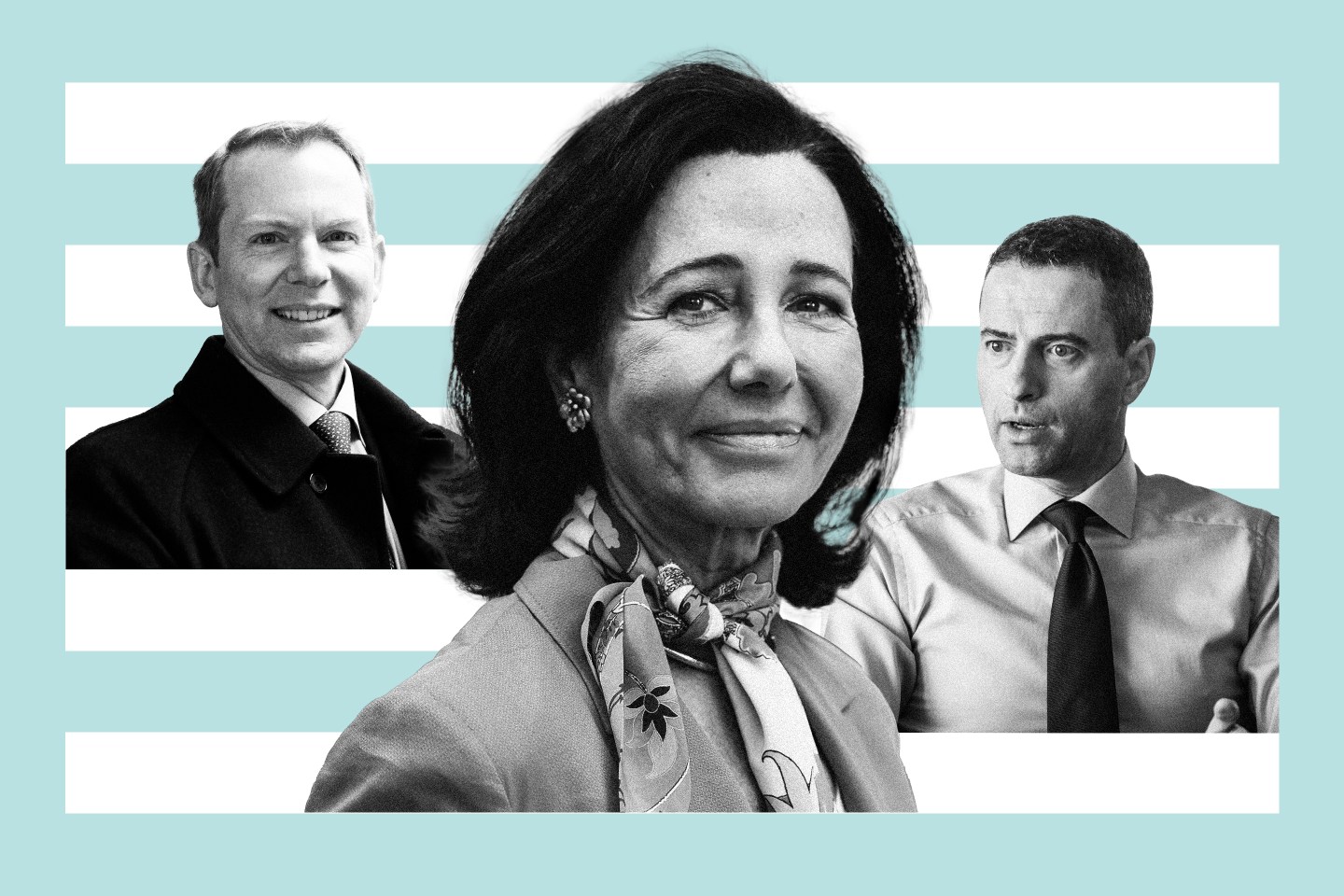
By the time Ana Botín, the executive chair of Spanish bank Santander (ranked No. 10 on the Fortune 500 Europe list), turned 30, she had already lived and worked in the U.K., Austria, Switzerland, and more.
Today, she considers that time “invaluable” and has tried to infuse its spirit into the company’s multicountry culture, she told Fortune.
If you take a closer look at the work experience of the top CEOs on the Fortune 500 Europe list, a similar thread emerges: Many have spent significant chunks of their careers overseas before landing the top job.
Consider Shell, which placed second in Fortune’s ranking of Europe’s biggest companies. Wael Sawan became the energy giant’s CEO at the start of 2023. Before that, he served as the managing director and chairman of Shell Qatar. In his nearly three-decade career with Shell, he also worked in other regions, including parts of Africa and Asia.
Swiss commodities company Glencore’s CEO, Gary Nagle, has held leadership roles in Colombia, Australia, and South Africa. The same is true for Mercedes-Benz CEO Ola Källenius, who spent several years heading up the German company’s business in the U.S. and the U.K.
“I was part of the team that built the plant in Alabama. Building a completely new plant and a new product was a pioneering experience,” Källenius said of his time in America in 2020.
Lloyds Banking Group boss Charlie Nunn spent well over a decade of his career in the U.S., Hong Kong, and other parts of Europe before taking the British bank’s top job.
In contrast, the trend isn’t as prevalent among executives at the helm of American companies on the Fortune 500 list. Of course, there are a handful of exceptions, such as UnitedHealth Group’s CEO, Andrew Witty.
The CEOs of the tech and consumer behemoths that dominate the list in America have instead honed their experience at other U.S.-based corporations. Many of them have worked their way up to the C-suite over decades.
Amazon’s Andy Jassy spent 24 years at the company, launching and leading Amazon Web Services in the process. While that time spent is significant, it dwarfs in comparison to the careers of Mary Barra and Mike Wirth, who spent 44 years and 42 years at General Motors and Chevron, respectively.
Several European CEOs are also “lifers,” like Volkswagen’s Oliver Blume, who joined the company in 1994. Earlier in his professional career, he spent five years in Barcelona as the head of planning at SEAT S.A., a Spanish car manufacturer owned by Volkswagen.
The making of an international CEO
A few reasons help explain why globe-trotting CEOs have become more commonplace in European companies over time: among them, the company’s scale of operation and approach to succession planning.
“There’s always been a disparity between U.S. corporations and European-headquartered organizations in that you’ll often find with those large European corporations, they’re going to be operating across multiple territories to get the critical mass,” said Sarah Lim, managing director of board and CEO services at consulting firm Korn Ferry. In other words, to succeed at building a sprawling business in Europe, you have to think internationally from day one.
She pointed out that the biggest U.S. companies can achieve scale by serving their home market. Consider the case of one of the top Fortune 500 companies, Costco Wholesale, which reported net sales of $250 billion during its 2024 fiscal year. That’s more than Greece’s latest GDP figures.
“The necessity for those leaders to have worked in multiple markets is quite crucial … ”
Sarah Lim, managing director of board and CEO services at Korn Ferry
So achieving meaningful scale for many European companies invariably means expanding their business beyond home. That explains why a large chunk of the European-headquartered companies on the Fortune 500 Europe list manage brands that have become household names internationally, even if they started small in their regions, whether that’s Zara owner Inditex or Ikea’s parent company, Ingka Group.
As businesses take off and overseas markets start becoming critical pillars—sometimes even bigger than the original European market—companies want their top leaders to decipher what they’re up against. Holding leadership roles in those territories is a great litmus test for this.
“The necessity for those leaders to have worked in multiple markets is quite crucial to understand the cultural nuances of either the teams that they’re leading, the customers that they’re supporting, the supply network that they’re working with,” Lim said.

Gearing up for CEO succession
Succession planning is an essential process for companies considering their longevity and long-term performance. When preparing for future transitions, companies try to have a bench of candidates who can eventually take on the top job.
International postings are a smart way to cultivate talent for such leadership roles. They allow CEO hopefuls to navigate differences in regulatory frameworks, communication styles, and more, as part of their career development.
That also allows the future CEO to better connect with the company’s employees, said Gianpiero Petriglieri, an associate professor of organizational behavior at INSEAD. He pointed to studies that have shown the benefits of living, rather than visiting, abroad in improving creativity and building diverse professional and personal networks.
“Mobility has become a marker of talent, and the willingness to be mobile has become a marker of commitment to a certain kind of career and organization,” he told Fortune.
Leading a European multinational company is no small feat. But CEOs are better prepared for the challenge when they’ve “been there, done that,” as the expression goes.
To be sure, this doesn’t mean leaders with mainly domestic market expertise are set up for failure. But there’s a clear difference in the soft skills and cultural awareness a CEO with international experience brings to the table, said Marlène Ribeiro, a Paris-based managing partner at executive search firm Page Executive.
“We are not expecting the CEO to have the answer to all the questions,” she said. However, whom they interact with and how they do so across regions could ultimately give them the edge for success.