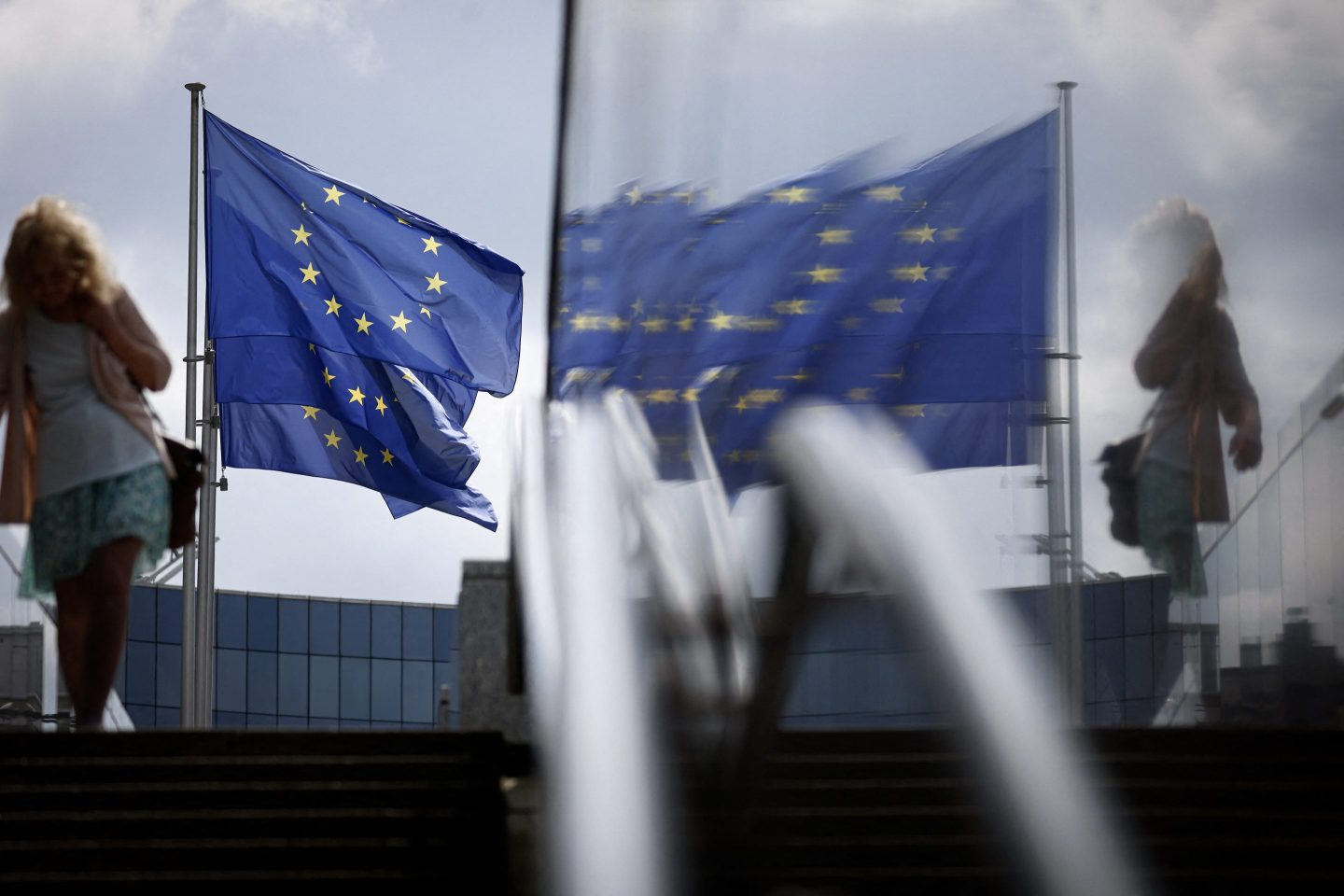
The EU is facing some of the most complex challenges in its history. Geopolitical disruption and volatility are on the rise. A host of disruptive forces are at play, including climate change, the rise of artificial intelligence (AI), and shifting demographics. Competition from the U.S. and China has never been fiercer.
All this has led to a highly uncertain outlook. Mario Draghi, in a recent report on European competitiveness, outlined how Europe must take urgent measures to reestablish itself on the world stage. These include reform of the innovation lifecycle, decarbonization, enhancing security, and reducing dependencies.
The consensus is clear: There is an urgent need for change. Recent EY research found that foreign direct investment (FDI) into Europe declined in 2023, falling by 4% compared with 2022, and dropping to 11% lower than pre-pandemic levels.
Despite hopes of a post-pandemic bounce back, the reality is that Europe has been held back by slow economic growth, spiraling inflation, soaring energy prices, and a challenging geopolitical environment.
There is much to do, but policymakers cannot deliver the change that’s needed alone. Businesses have a responsibility to be part of the solution.
Here are five priorities that should drive the agenda and help Europe shape its future with confidence.
Boosting international trade and investment
The next five years will see the EU facing a complicated geopolitical environment, with significant challenges to the international order. While the EU seeks to reduce its external dependencies and pursue strategic autonomy, building close trading partnerships will be critical.
A sharp focus on redefining global trade and investment is needed. That means developing sustainable practices and free trade agreements and furthering digital transformation.
The EU must also streamline complex regulation that risks making business costly and complex. But it’s not just about the paperwork—it’s also about playing fair. The EU should continue to support efforts to reform the World Trade Organization, which will help ensure disputes get settled effectively. There should also be a focus on syncing supply chains and customs codes, all while keeping the private sector in the loop. This will help create a bold blueprint for a thriving, equitable trading future.
Unlocking the EU’s competitiveness
Competitiveness should be the cornerstone of EU policy. That means framing the digital and green transitions in terms of competitive advantage, not regulatory burden. Other issues, such as the cost of doing business, should be managed actively to avoid undermining Europe’s attractiveness.
Now is the time to convey a powerful and resolute message: Europe is open for business and its brightest days are yet to come. The EU’s Capital Markets Union is gaining momentum and we must keep that energy alive, leveraging technology to make financial markets more attractive and accessible. Tax policies need a makeover—simpler, consistent rules will be the key to avoiding unnecessary costs and keeping Europe competitive. The single market remains critical, ensuring fair play for businesses—it’s essential to protect and expand it.
Trust is the currency of markets, and the EU needs to double down on fighting financial crime and increase cooperation with other jurisdictions to safeguard investments. The EU must also strengthen bonds with its neighbors. A united, thriving Europe benefits everyone.
Driving the digital transition
The rate at which digital technology—including AI—is being developed and deployed is impacting our lives more than ever before. This means new opportunities and new risks. The EU has led the way in regulating the digital space—a balanced approach to governance will promote innovation, while also mitigating risks.
The EU’s digital playbook should be clear: Safety, innovation, and standards should lead the way. Protecting citizens is non-negotiable, but it’s also important not to stifle creativity. The EU must be a magnet for bright minds and bold ideas, with enough rules to guide them but not enough to hinder them. As tech innovation races ahead, Europe should take the lead in shaping the global roadmap, pushing for shared ethical standards that open doors for businesses worldwide.
When it comes to cyber threats, it should be all hands on deck: unified defenses, shared intelligence, and clued-up citizens.
Aligning prosperity with sustainability goals
The EU is leading the way toward a more sustainable future. According to our research, 67% of businesses consider Europe better than other regions in supporting them in achieving their sustainability plans.
The real work lies in aligning prosperity with sustainability goals. ESG reporting must be crystal clear—no more data chaos, just one set of rules for everyone across the EU. Businesses need to rally together with the public sector to drive toward a net-zero future, cutting emissions in half by 2030 with a focus on sustainable finance, cleaner cities, and the green energy transition.
The EU taxonomy for sustainable activities needs to be demystified, helping companies go green without getting tangled in red tape. Governments must provide the right backing and incentives that make going green a no-brainer. Europe is on the brink of a sustainability revolution—and the world is watching.
Committing to skills and talent
As we prepare for a greener, more digital future, equipping the workforce with the right skills is not just a nice-to-have—it’s an absolute imperative.
Part of that will mean equipping young people with a multifaceted education that includes sustainability skills and emerging tech. But it’s not just book smarts—life skills like adaptability, resilience, and the ability to learn, unlearn, and relearn rapidly will be critical too.
The EU should transform itself into a magnet for the brightest minds in AI and green tech, constantly upskilling and transforming. One way to achieve that would be to introduce European Skills Badges. Think of them as passports for your talents, making every skill count, whether learned in a classroom or on the job. This would help build a workforce that’s ready for anything and recognized everywhere.
The collaborative road ahead
Europe’s path to future competitiveness is clear, but the journey will not be easy. Businesses must be active participants in this process. While governments can create the conditions for growth, the private sector must take the initiative to invest, innovate, and lead. Europe faces distinct challenges, from navigating geopolitical tensions to coordinating efforts across multiple countries, which makes bold business leadership even more crucial to help meet these challenges head-on.
The challenges are significant. But if we get it right, Europe will unlock its full potential, driving sustainable growth for generations to come.
Read the EY Vision for Europe here. The views reflected in this article are the views of the author and do not necessarily reflect the views of the global EY organization or its member firms.
More must-read commentary published by Fortune:
- COVID-19 raises the stakes for heart attacks, strokes, and even death long after infection, new study finds
- Here’s why the gap between Americans’ perception of U.S. economic performance and reality has doubled since 2019, according to economists
- The U.S., EU, and India must urgently come together in a free trade agreement on clean energy, says the CEO of one of India’s largest renewables companies
- Here are the facts that activist critics of Pfizer CEO Albert Bourla are missing, according to a Yale analysis
The opinions expressed in Fortune.com commentary pieces are solely the views of their authors and do not necessarily reflect the opinions and beliefs of Fortune.