• Home
  • Latest
  • Fortune 500
  • Finance
  • Tech
  • Leadership
  • Lifestyle
  • Rankings
  • Multimedia

Trendingnow

1

Mark Cuban says he has the solution to growing income inequality, and it's to reward every employee—from CEO to janitor—with company stock

2

OpenAI says its AI models secretly broke out of a secure test environment and hacked into AI company Hugging Face in order to cheat on an evaluation

3

Mathematicians grapple with a ‘very rapid and very unsettling change’ as AI cracks yet another century-old problem

1

Mark Cuban says he has the solution to growing income inequality, and it's to reward every employee—from CEO to janitor—with company stock

2

OpenAI says its AI models secretly broke out of a secure test environment and hacked into AI company Hugging Face in order to cheat on an evaluation

3

Mathematicians grapple with a ‘very rapid and very unsettling change’ as AI cracks yet another century-old problem
CommentaryHealth

COVID-19 raises the stakes for heart attacks, strokes, and even death long after infection, new study finds

By
Carolyn Barber
Carolyn Barber
Down Arrow Button Icon
By
Carolyn Barber
Carolyn Barber
Down Arrow Button Icon
October 11, 2024, 12:59 PM ET
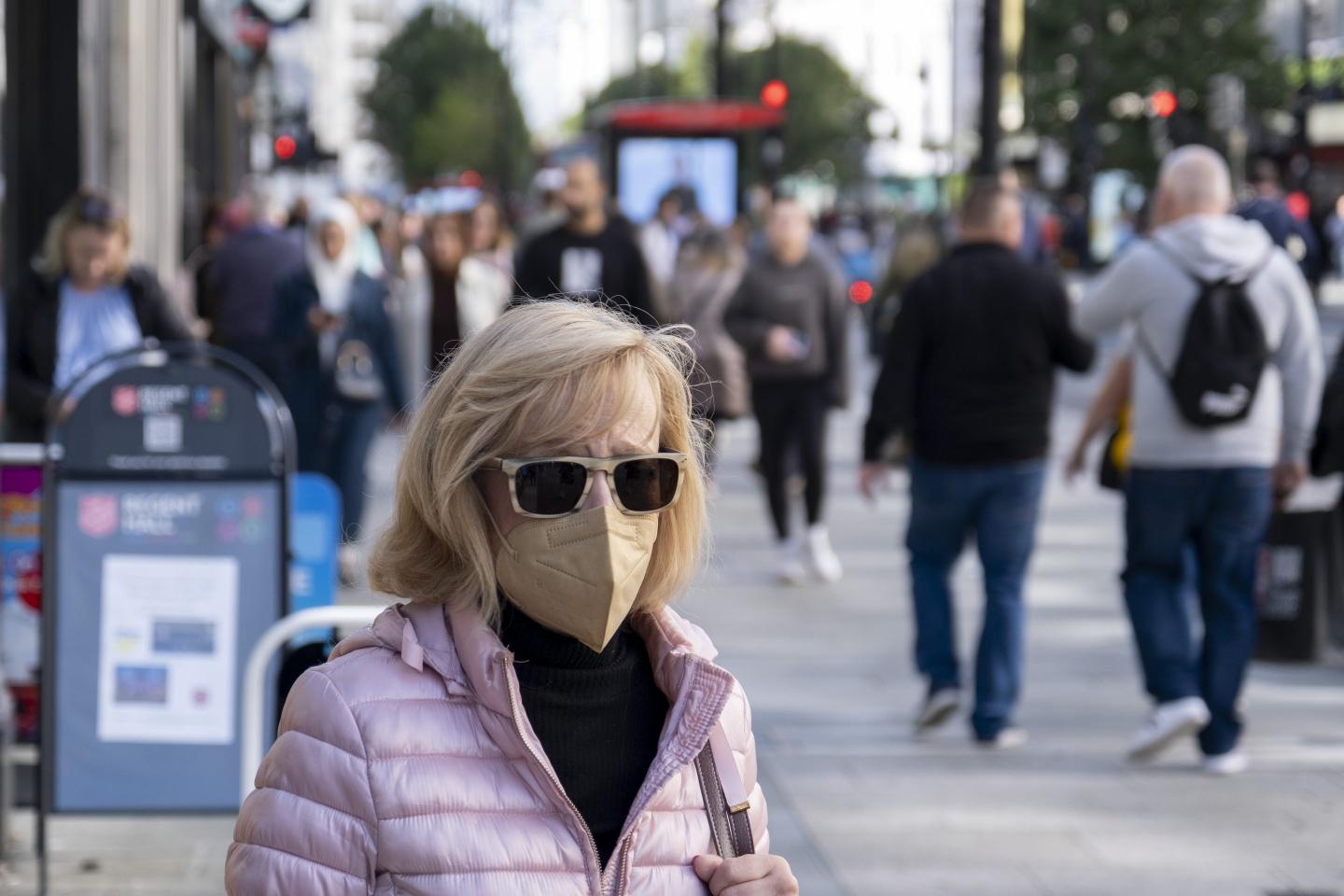
The study used data for nearly a quarter-million adults from the U.K. Biobank system.
The study used data for nearly a quarter-million adults from the U.K. Biobank system.Mike Kemp - In Pictures - Getty Images
Add Fortune on Google for similar content.

Practically from the beginning of the COVID-19 pandemic, researchers and medical experts feared–and often loudly warned–that the virus wasn’t like other infections that people might encounter during, say, flu season. SARS-CoV-2 was different. It was worse. And the potential long-term effects, as we reported two years ago, were even more worrisome.

A new large-scale study puts those longer-range concerns into bold relief. The results are as unforgiving as many experts had hypothesized.

The study, involving nearly a quarter-million adults, found that those with any type of COVID-19 infection in 2020 had twice the risk of suffering a major cardiac event—a heart attack, stroke, or even death—in the three years after a diagnosis than those who weren’t infected.

People whose infections were severe enough to warrant hospitalization faced nearly a four times greater risk of a major cardiac event or death than the uninfected group.

“These findings are undeniable and extremely troubling,” says David Putrino, the director of the Cohen Center for Recovery from Complex Chronic Illness at Mount Sinai School of Medicine. “The significance of this work is that our current public health policy surrounding COVID-19 is inadequate. People need to be informed of the risks they are incurring to their long-term health by being repeatedly infected with SARS-CoV-2.”

There is a chilling truth to those words. While experts and major medical institutions still find themselves debunking myths about the virus and the vaccines developed to fight it, the longer-term research tells a story of lives irrevocably altered by COVID-19 infections and argues strongly for vaccination and other mitigations against the virus.

The study was published Oct. 9 in the American Heart Association’s peer-reviewed journal Arteriosclerosis, Thrombosis and Vascular Biology. The report’s authors and researchers analyzed data from the U.K. Biobank system, including the data for more than 8,000 adults who had a positive lab test for COVID-19 in 2020 and another 2,000 or so whose cases required hospitalization. Results were compared with nearly 220,000 adults in the database who were not diagnosed with COVID-19 during that time.

In the nearly three years following the acute infection in 2020, the study’s authors found double the risk of heart attack, stroke, and death compared with the uninfected group. Somewhat surprisingly, the elevated risks did not abate over the three years of study, suggesting a problematic staying effect.

“The two-fold increased risk observed in year one following infection was also seen in year two, and even year three,” says study author Stanley Hazen, chair of the Department of Cardiovascular and Metabolic Sciences at the Cleveland Clinic. “This was seen in all subjects independent of age, sex, or risk factors for cardiac disease.” (The ages of those in the study ranged from 50 to 86, with an average age of 67.)

What’s more, in a subset analysis of hospitalized cases without known heart disease, infection with the virus raised the risk for heart attack, stroke, or death to the same levels as individuals who had a history of heart disease, diabetes, or peripheral artery disease (PAD)—but not COVID-19.

“This is why we refer to COVID as a coronary artery disease risk equivalent,” says Hooman Allayee, principal investigator of the study and a professor at USC’s Keck School of Medicine in Los Angeles. “Getting severe COVID is just as bad for heart attacks and strokes as having pre-existing heart disease.”

Those I interviewed were quick to note a critical distinction and key limitation of the study: None of the individuals was vaccinated at the time of their infection, as COVID-19 vaccines were not available in 2020.

“The study didn’t look at the effects of COVID-19 vaccination on a person’s cardiovascular risk,” Hazen says. “I suspect that it would be protective, because vaccines usually keep COVID infections from becoming severe.”

Putrino agrees. “Our team has been consistently advocating for the public to focus on infection prevention strategies such as masking, clean air, and vaccination in order to best avoid acute SARS-CoV-2 infection,” he says. “The public should be educating themselves on the long-term risks associated with COVID infection.” 

How COVID-19 elevates the risk for cardiovascular problems is the subject of much study and conjecture. Research into long COVID has highlighted the disease’s deleterious effects on the body’s normal functions over time, and some of the same factors may well be at work here.

“COVID-19 may lead to inflammation of endothelial cells (that line blood vessels),” says Ziyad Al-Aly, chief of research and development at VA St. Louis Health Care, whose previous work foretold many of the results from the U.K. Biobank study. 

“It can also activate the complement system and increase the propensity to form clots; it may also destabilize or inflame plaques in the coronary arteries,” Al-Aly says. “These mechanisms may explain the significant increase in (cardiovascular) risk and the durability of that increase in risk over many years.”

Notably, the new study found that genetics also played a role. For example, hospitalization for COVID-19 doubled the risk of heart attack or stroke among individuals with blood types A, B, or AB, but didn’t change the risk for those with O blood type.

Allayee also says he would “very much like” to replicate the study’s major findings in additional populations, “since U.K. Biobank is mostly European whites.” He says the research group is already trying to get access to other datasets in order to do that.

But the findings are robust and pretty clear: COVID-19 infection raises the stakes with respect to heart attacks, strokes, and even death. That effect continues three years post-infection. And severe infections make those risks even worse.

We know from other studies that vaccination can reduce the severity of infection, the need for hospitalization, and the risk of death associated with COVID-19 infections. Yet in the U.S., about one in five people had not received a single COVID-19 vaccine shot as of last year, to say nothing of a full dose or an updated vaccine.

The study also found in a preliminary analysis that hospitalized COVID-19 patients who were already taking aspirin, did not have a significantly increased cardiovascular risk. That suggests that the risk can potentially be mitigated but still requires further study, says Allayee.

“I would use these data (from the study) as a sign to be more aggressive in prevention: healthy diet, exercise, controlling your blood pressure and cholesterol, stopping smoking,” says Sandeep Das, co-chair of the American Heart Association’s COVID-19 CVD Registry committee and a director at UT Southwestern Medical Center in Dallas. “I think this study should perhaps push some people out of complacency and into thinking about their longer-term risk.”

That process should involve vaccination. It may well mean more aggressive masking and paying attention to the air quality around one’s daily routines. But none of that can happen without an awareness that, as much as some people want to believe otherwise, COVID-19 remains an active threat to public and personal health, including your own history with the virus.

“You may have forgotten that you had COVID years ago, but it has not forgotten about you,” Al-Aly says, “Trivializing COVID as just a cold or an inconsequential nothing-burger is wishful thinking that does not align with scientific evidence.”

More must-read commentary published by Fortune:

  • Here’s why the United Steelworkers oppose Nippon’s takeover of U.S. Steel
  • EPA administrator: Rolling back Biden-Harris infrastructure and climate investments would mean backlash in American communities
  • The U.S., EU, and India must urgently come together in a free trade agreement on clean energy, says the CEO of one of India’s largest renewables company
  • We keep celebrating low unemployment—but data shows jobs and economic activity have been shifting to big business

The opinions expressed in Fortune.com commentary pieces are solely the views of their authors and do not necessarily reflect the opinions and beliefs of Fortune.

About the Author
By Carolyn Barber
See full bioRight Arrow Button Icon
Add Fortune on Google for similar content.

Latest in Commentary

Finance
Lorem ipsum dolor sit amet, consectetur adipiscing elit, sed do eiusmod tempor incididunt ut labore et dolore magna aliqua. Ut enim ad minim veniam
By Fortune Editors
October 20, 2025
Finance
Lorem ipsum dolor sit amet, consectetur adipiscing elit, sed do eiusmod tempor incididunt ut labore et dolore magna aliqua. Ut enim ad minim veniam
By Fortune Editors
October 20, 2025
Finance
Lorem ipsum dolor sit amet, consectetur adipiscing elit, sed do eiusmod tempor incididunt ut labore et dolore magna aliqua. Ut enim ad minim veniam
By Fortune Editors
October 20, 2025
Finance
Lorem ipsum dolor sit amet, consectetur adipiscing elit, sed do eiusmod tempor incididunt ut labore et dolore magna aliqua. Ut enim ad minim veniam
By Fortune Editors
October 20, 2025
Finance
Lorem ipsum dolor sit amet, consectetur adipiscing elit, sed do eiusmod tempor incididunt ut labore et dolore magna aliqua. Ut enim ad minim veniam
By Fortune Editors
October 20, 2025
Finance
Lorem ipsum dolor sit amet, consectetur adipiscing elit, sed do eiusmod tempor incididunt ut labore et dolore magna aliqua. Ut enim ad minim veniam
By Fortune Editors
October 20, 2025

Most Popular

Finance
Lorem ipsum dolor sit amet, consectetur adipiscing elit, sed do eiusmod tempor incididunt ut labore et dolore magna aliqua. Ut enim ad minim veniam
By Fortune Editors
October 20, 2025
Finance
Lorem ipsum dolor sit amet, consectetur adipiscing elit, sed do eiusmod tempor incididunt ut labore et dolore magna aliqua. Ut enim ad minim veniam
By Fortune Editors
October 20, 2025
Finance
Lorem ipsum dolor sit amet, consectetur adipiscing elit, sed do eiusmod tempor incididunt ut labore et dolore magna aliqua. Ut enim ad minim veniam
By Fortune Editors
October 20, 2025
Finance
Lorem ipsum dolor sit amet, consectetur adipiscing elit, sed do eiusmod tempor incididunt ut labore et dolore magna aliqua. Ut enim ad minim veniam
By Fortune Editors
October 20, 2025
Finance
Lorem ipsum dolor sit amet, consectetur adipiscing elit, sed do eiusmod tempor incididunt ut labore et dolore magna aliqua. Ut enim ad minim veniam
By Fortune Editors
October 20, 2025
Finance
Lorem ipsum dolor sit amet, consectetur adipiscing elit, sed do eiusmod tempor incididunt ut labore et dolore magna aliqua. Ut enim ad minim veniam
By Fortune Editors
October 20, 2025
Fortune Secondary Logo
Rankings
  • 100 Best Companies
  • Fortune 500
  • Global 500
  • Fortune 500 Europe
  • Most Powerful Women
  • World's Most Admired Companies
  • See All Rankings
  • Lists Calendar
Sections
  • Finance
  • Fortune Crypto
  • Features
  • Leadership
  • Health
  • Commentary
  • Success
  • Retail
  • Mpw
  • Tech
  • Lifestyle
  • CEO Initiative
  • Asia
  • Politics
  • Conferences
  • Europe
  • Newsletters
  • Personal Finance
  • Environment
  • Magazine
  • Education
Customer Support
  • Frequently Asked Questions
  • Customer Service Portal
  • Privacy Policy
  • Terms Of Use
  • Single Issues For Purchase
  • International Print
Commercial Services
  • Advertising
  • Fortune Brand Studio
  • Fortune Analytics
  • Fortune Conferences
  • Business Development
  • Group Subscriptions
About Us
  • About Us
  • Press Center
  • Work At Fortune
  • Terms And Conditions
  • Site Map
  • About Us
  • Press Center
  • Work At Fortune
  • Terms And Conditions
  • Site Map
  • Facebook icon
  • Twitter icon
  • LinkedIn icon
  • Instagram icon
  • TikTok icon
  • YouTube icon

Carolyn Barber, M.D., is an internationally published science and medical writer and a 25-year emergency physician. She is the author of the book Runaway Medicine: What You Don’t Know May Kill You, and the co-founder of the California-based homeless work program Wheels of Change.


Latest in Commentary

t
CommentaryTariffs
Trump’s third tariff tantrum piles more dizzying distractions on top of ever-spiraling failures
By Jeffrey Sonnenfeld and Steven TianJuly 22, 2026
2 hours ago
orson
CommentaryOpenAI
We got California to intervene about OpenAI’s corporate switch from nonprofit status. It’s time for the SEC to come to the table
By Orson Aguilar and Catherine BracyJuly 22, 2026
2 hours ago
ls
Commentarybooks
Confessions of an award-winning AI memoirist — the ‘slop’ debate isn’t really about good writing, and you know it
By Luke StoffelJuly 22, 2026
3 hours ago
b
Commentarythe future of work
Manpower President: The future of work question that even CEOs can’t answer
By Becky FrankiewiczJuly 22, 2026
3 hours ago
k
Commentarypower
What I keep hearing from Fortune 500 CEOs: ‘We have no idea what we’re actually paying for power’
By Kiran BhatrajuJuly 21, 2026
1 day ago
Bolt CEO Ryan Breslow
CommentaryHuman resources
The CEO who fired HR was right. About the wrong thing.
By KeyAnna SchmiedlJuly 21, 2026
1 day ago

Most Popular

Mark Cuban says he has the solution to growing income inequality, and it's to reward every employee—from CEO to janitor—with company stock
Success
Mark Cuban says he has the solution to growing income inequality, and it's to reward every employee—from CEO to janitor—with company stock
By Sasha RogelbergJuly 20, 2026
2 days ago
OpenAI says its AI models secretly broke out of a secure test environment and hacked into AI company Hugging Face in order to cheat on an evaluation
Cybersecurity
OpenAI says its AI models secretly broke out of a secure test environment and hacked into AI company Hugging Face in order to cheat on an evaluation
By Jeremy Kahn and Emily ForliniJuly 21, 2026
19 hours ago
Mathematicians grapple with a ‘very rapid and very unsettling change’ as AI cracks yet another century-old problem
AI
Mathematicians grapple with a ‘very rapid and very unsettling change’ as AI cracks yet another century-old problem
By Eva RoytburgJuly 21, 2026
22 hours ago
‘I want to die broke’: Billionaire philanthropist Denny Sanford dies after giving away $4 billion
Success
‘I want to die broke’: Billionaire philanthropist Denny Sanford dies after giving away $4 billion
By Sydney LakeJuly 20, 2026
2 days ago
Despite a $156 million contract, Knicks star Jalen Brunson still calls his parents for financial advice any time he makes a big purchase
Success
Despite a $156 million contract, Knicks star Jalen Brunson still calls his parents for financial advice any time he makes a big purchase
By Emma BurleighJuly 21, 2026
23 hours ago
'Dr. Doom' Nouriel Roubini says we're headed for universal basic income or 'some form of socialism' as AI revolutionizes work—He calls that optimistic
AI
'Dr. Doom' Nouriel Roubini says we're headed for universal basic income or 'some form of socialism' as AI revolutionizes work—He calls that optimistic
By Jason MaJuly 18, 2026
4 days ago

© 2026 Fortune Media IP Limited. All Rights Reserved. Use of this site constitutes acceptance of our Terms of Use and Privacy Policy | CA Notice at Collection and Privacy Notice | Do Not Sell/Share My Personal Information
FORTUNE is a trademark of Fortune Media IP Limited, registered in the U.S. and other countries. FORTUNE may receive compensation for some links to products and services on this website. Offers may be subject to change without notice.