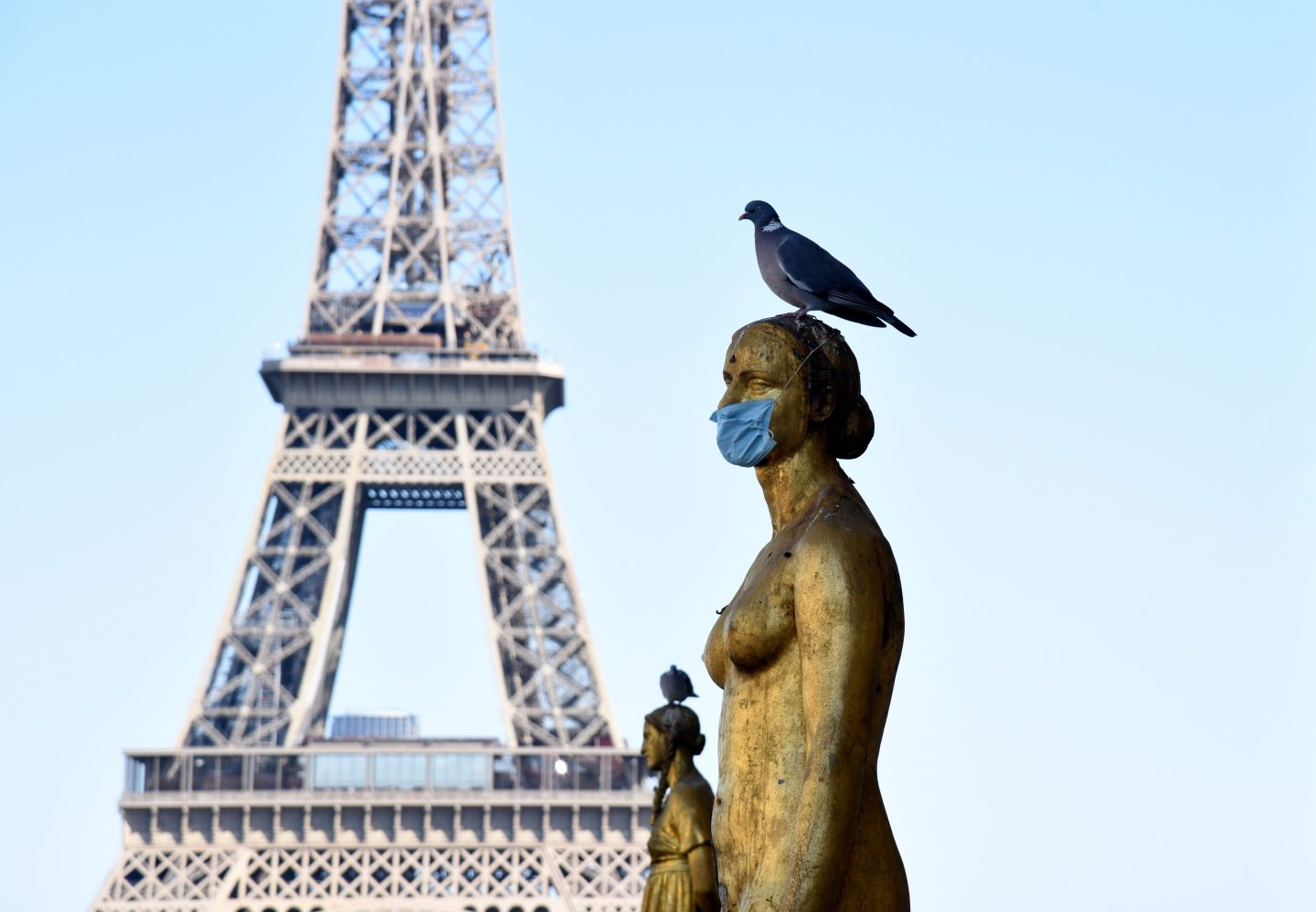
About an hour outside Vienna, the Penny Markt in Krems an der Donau prides itself on two things: low, low prices, and the provenance of its meat and fresh produce. But one mild August day last year, shoppers rummaging for a locally-sourced bargain found a rather more exotic, if less welcome, surprise, lurking amid the banana crates.
The culprit was a stowaway Brazilian Wandering Spider, an 11cm black and red arachnid with a bite that causes convulsions, hypothermia, death and—if you’re of the male persuasion—a particularly painful case of uncontrolled erections. You can imagine the shock.
The store shut for precautionary disinfection, and the spider got away, never to be heard from again. But it’s hardly the only invasive creepy crawly to make its way into European tabloids lately.
France has acquired an unfortunate pre-Olympic reputation for rampant bed bug infestations, with Paris deputy mayor Emmanuel Grégoire warning people “no one is safe. You can catch them anywhere,” and reports of the bloodsuckers on the Eurostar causing panic in London.
Tiger mosquitoes, which can carry Dengue and Zika, have also been seen around the country, leading Paris authorities to bring in entomologist ‘detectives’ to track down their breeding spots.
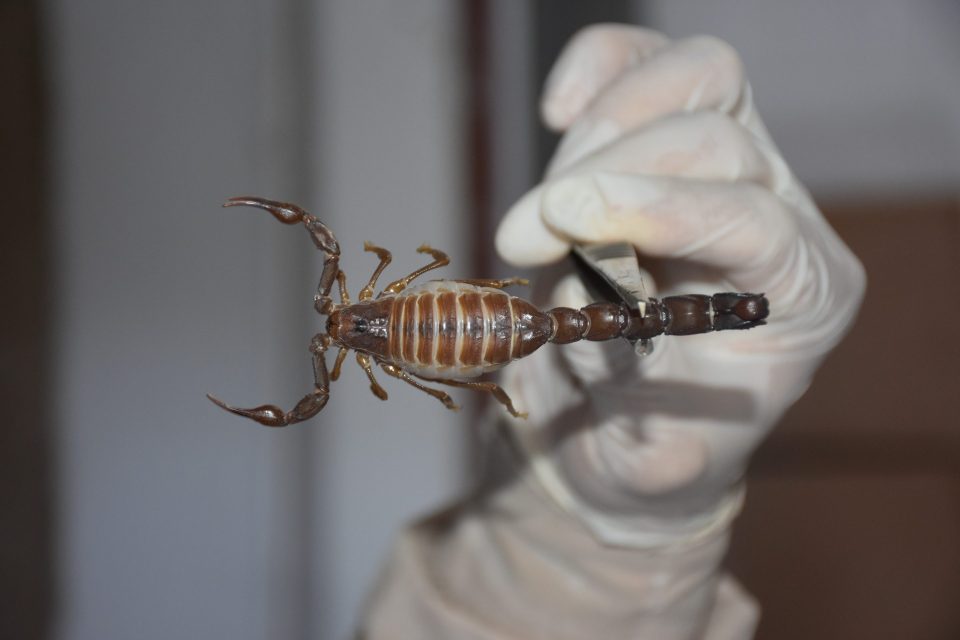
The Turkish pharmaceutical industry, meanwhile, is eyeing Europe more broadly as an exciting new export market for scorpion antivenom.
Is climate change to blame for this apparent arthropodal invasion?
The reality is rather less apocalyptic than the headlines suggest, says Dr Matt Green, principal entomologist at UK-based global pest control company Rentokil Initial, which has operations across the continent.
We’re nowhere close to Dengue becoming endemic. Reports of French bed bugs rose largely because people saw horror headlines and started looking under their mattresses. And if we are generally seeing more invasive species it’s mostly not due to rising temperatures.
“I’m often asked how climate change is affecting our business. Well, given that humans have already transported all the major pests to pretty much every country, and certainly every major human center of activity, not as much as you might think,” Green tells Fortune.
Is climate change to blame for this apparent arthropodal invasion?
The good news is that those worrying about bumping into errant Brazilian Wandering Spiders can relax.
Most species need more than a mere rise in temperatures to make a home in new and very different ecosystems. For example, the Sheerness docks near London have had a population of 10,000 yellow scorpions for centuries, since merchant ships brought them from continental Europe, but these harmless critters haven’t spread because conditions aren’t right.
What climate change is doing to Europe’s pest population
This is not to say climate change isn’t affecting Europe’s pest profile.
Termites—long a problem in Mediterranean countries—are munching their way into Northern Europe with rising temperatures, though the relative lack of timber buildings means they’re unlikely to cause widespread economic harm there.
Aedes mosquitoes—the genus which includes tiger mosquitoes—are well established in Italy, and getting there in France, which means countries like Switzerland are unlikely to be spared.
“Europe is already seeing how climate change is creating more favorable conditions for invasive mosquitoes to spread into previously unaffected areas,” European Centre for Disease Prevention and Control director Andrea Ammon told the BBC.
Fortunately, these are not the kind that carry malaria—that’s the Anopheles, which is unlikely to spread into Europe due to the absence of large bodies of standing water that—unlike Aedes—it needs to breed.
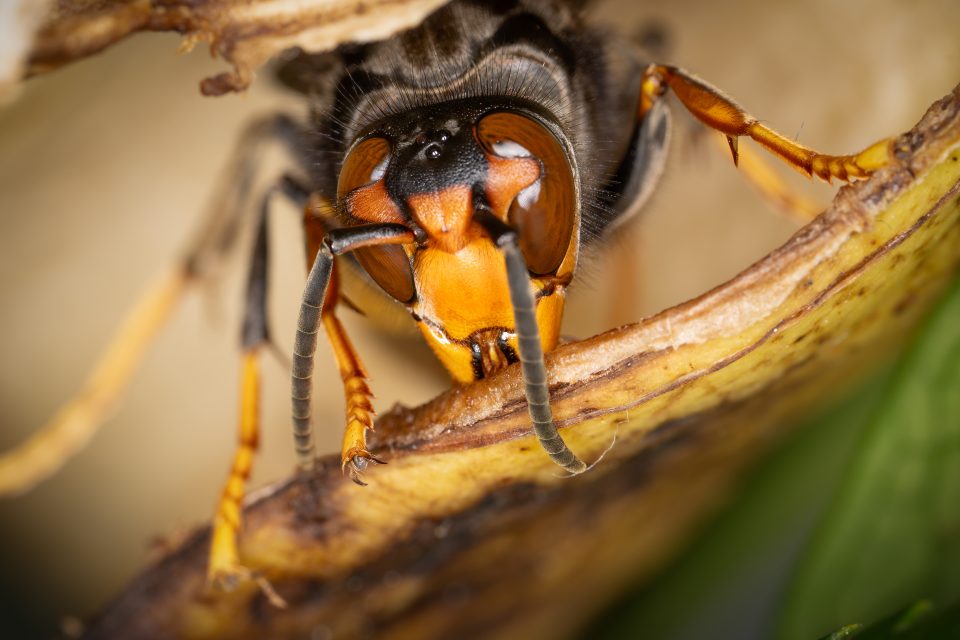
The same can’t be said for Asian hornets which, depending on where you live, could soon be coming to a picnic near you. “They’re moving through France pretty easily, and there have been instances of them overwintering in the U.K., which means we’ve probably got these now, so make your peace with it,” Green says.
Then there are bed bugs. Even before the recent surge, infestations were costing the French economy €230 million ($246 million) annually, according to health agency Anses. Callouts can set back hotels thousands of dollars in treatments and lost income, and could create hysteria and panic through the Paris Olympics.
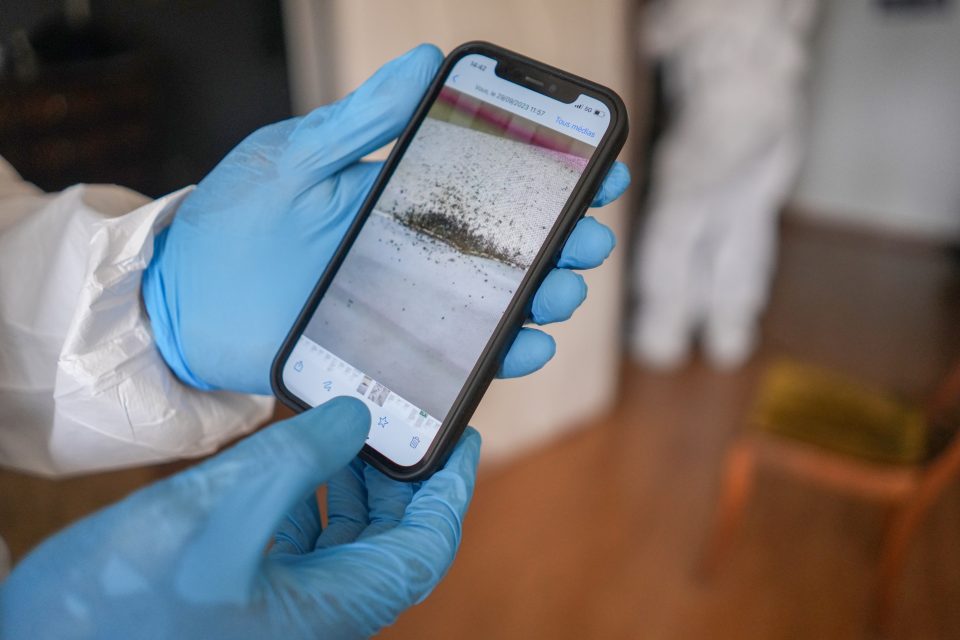
These six-legged vampires may have been there all along, but they do prefer warmer weather.
“When the temperature inside your house is 25 to 26 degrees Celsius (77 to 78.8 Fahrenheit), it takes only five days for the bed bug eggs to hatch. In normal conditions, when the temperature is around 20 degrees Celsius, it takes 10 days,” entomologist and National Institute for the Study and Fight Against Bedbugs cofounder Jean-Michel Bérenger told Wired during the height of the panic last year
How Europe’s pests are changing beyond climate change
Whether helped by rising temperatures or not, the pests we’re likely to see more of are the ones that are best adapted to humans and our behavior—and it is our behavior that is helping them to spread.
In rural settings this is most often through monocultural agriculture, though sometimes all it takes is a penchant for importing non-native plants.
The oak processionary moth—a species endemic to Southern Europe, which damages forests and releases hairs that can irritate skin, eyes and airways—established a foothold in the U.K. in the 2000s, when an oak was shipped from Europe. Ironically, it happened very close to the Royal Botanical Gardens at Kew, where authorities monitor such things.
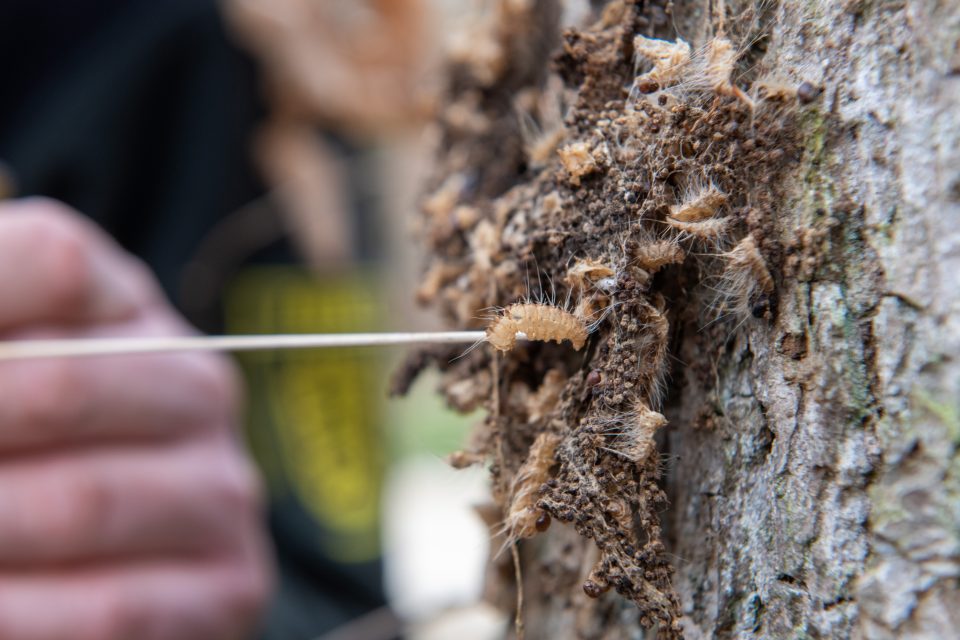
It’s the urban pests you’re more likely to notice, however.
Rats, mice, cockroaches and the like all share characteristics that make them ideally suited to living intimately with humans, whether we want them to or not. They’re small, capable of crawling through tight spaces, generally dark and nocturnal, making them hard to spot. Crucially, they’re also omnivorous.
“They’re massively flexible, so they won’t care about one or two degrees [change in temperature]. They’re already living in air conditioned buildings,” says Rentokil’s Green. “Some moths in warehouses barely fly these days. They don’t have to. They’ve just been living in a world full of food, getting moved around by humans. It’s a hell of a life.”
Sometimes it’s a well-intentioned or necessary change in human behavior that helps urban pests to proliferate.
Media frenzy aside, bed bug populations did rapidly increase around the world in the early 21st century. In Australia, the rise was between 500% and 4,500%; in New York City, bed bug complaints to the council jumped from 537 in 2004 to 10,985 in 2009, although they have since dropped.
Entomologists attribute the resurgence to the end of the DDT era—the infamous insecticide dramatically cut global insect pest numbers in the mid to late 20th century, before serious environmental and health concerns ended its use, and species started to develop resistance. In essence, we’re returning to historical norms from a period of unusually low insect activity.
Don’t expect this to change. Although the pest control industry is deploying increasingly sophisticated monitoring strategies and ‘physical’ interventions, such as steam cleaning rooms with bed bugs, moving away from chemical controls means we lose what had been a powerful weapon against infestation.
Something similar may be about to happen with rats, at least in Europe, where regulators are taking an increasingly dim view on the use of anticoagulant rodenticides.
This may be for good reasons, but it has pest controllers nervous. As one put it off the record, “there’s a whole generation of pest controllers that have been trained to put rat poison into bait boxes. If you take that away from the market, what do you have left? To quote Aliens, what are we supposed to use, harsh language?”
The future
Humanity has made many species extinct, mostly unintentionally, and it is continuing to do so. The species that at least some of us would like less of, however, have proven stubbornly resilient. Almost by definition, pests thrive when we do.
So what can we expect? In Europe, climate change and human activity are unlikely to make lethal spiders a regular part of grocery shopping, or to bring about tropical levels of mosquito-borne diseases.
But they will alter the populations of fauna we share our environment with. Get used to Aedes and Asian hornets; be vigilant for rats and bed bugs.
What perhaps will change the most, though, is our expectation of what pest control means. With the spray-it-first-ask-questions-later approach firmly consigned to the history books, eliminating pests at first appearance may end up being remembered as a very 20th century idea.