• Home
  • Latest
  • Fortune 500
  • Finance
  • Tech
  • Leadership
  • Lifestyle
  • Rankings
  • Multimedia
European Union
Europe

How the EU wants to police human rights abuses in global supply chains for every firm with 500 workers and $162 million in revenue

By
Rachel Chambers
Rachel Chambers
,
David Birchall
and
The Conversation
The Conversation
Down Arrow Button Icon
August 5, 2023, 3:43 PM ET
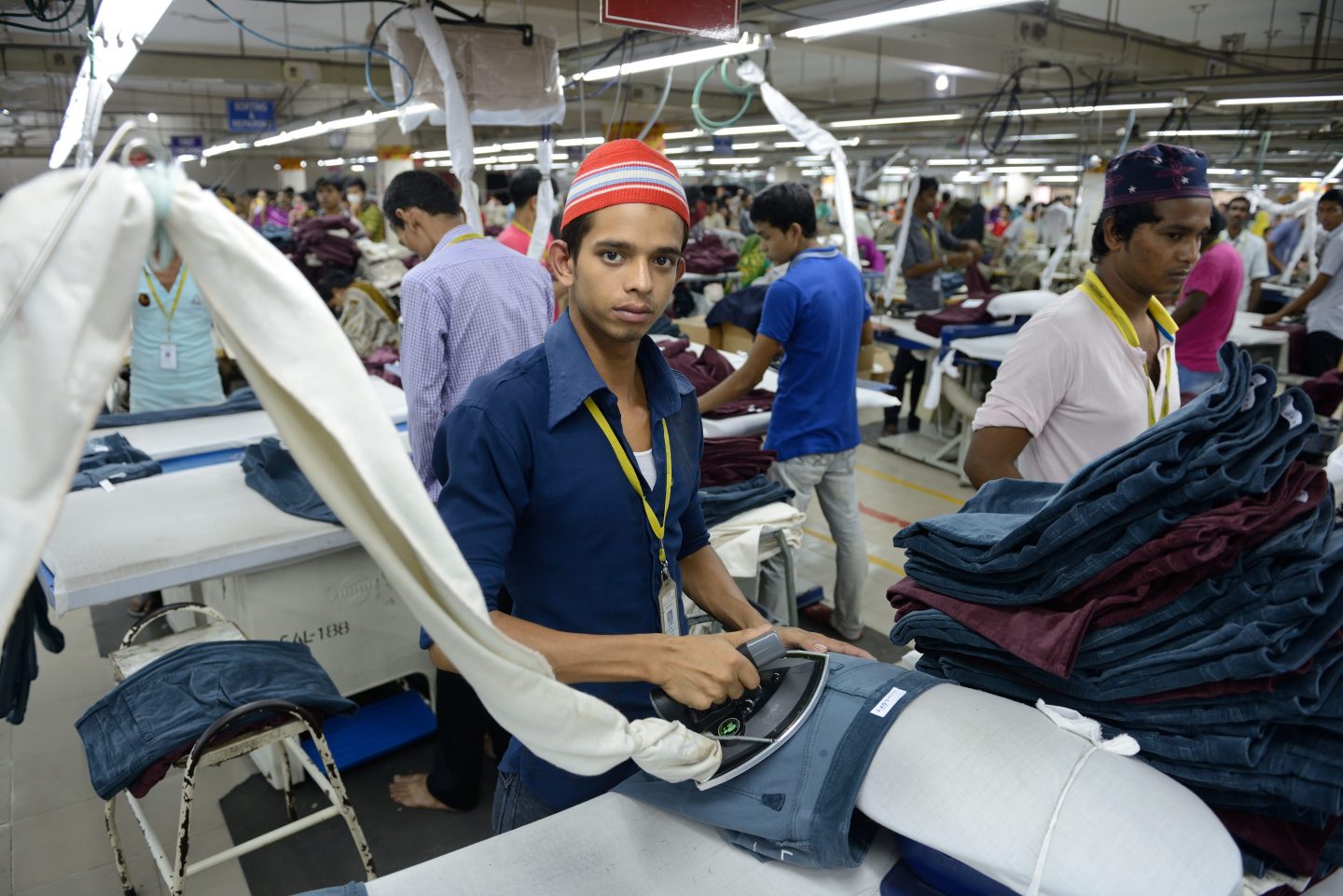
Bangladesh sweatshop
Textile factory in Savar, in the suburbs of Dhaka, Bangladesh, where about 6,000 employees work. Frédéric Soltan /Corbis via Getty Images

The European Union will soon require thousands of large companies to actively look for and reduce human rights abuses and environmental damage in their supply chains. And although it’s an EU law, it will also cover foreign businesses – including American ones – that have operations in the region.

Recommended Video

The European Parliament approved a draft of the new rules in June 2023, and now EU member states and the European Commission will negotiate to finalize the law, which is expected to begin rolling out in phases a few years from now.

We study the impacts of human rights disclosure and due diligence laws on businesses. In the past, governments have generally asked only that companies voluntarily comply with efforts to advance human rights. The EU law would be the biggest attempt yet to legally mandate compliance – with major implications for human rights and businesses around the world.

Human rights and big business

Human rights are those fundamental rights that all individuals hold simply by virtue of being human, such as rights to life and freedom of thought.

Human rights usually inform laws that limit what governments can do – for example, by obliging them to refrain from torturing people. Increasingly, however, they are also informing business regulations, because powerful companies can have serious impacts on individuals’ human rights.

Businesses have a long history of human rights abuses, from the British East India Co.’s pivotal role in the slave trade and IBM’s complicity in the Holocaust to more recent deadly environmental disasters involving oil and mining companies.

More contemporary examples of this are children in the Democratic Republic of Congo mining cobalt destined for cellphones or forced labor being used in the production of cotton in China’s heavily Muslim Xinjiang region.

In 2011, the United Nations Human Rights Council took a step toward policing these abuses by unanimously adopting “guiding principles” on business and human rights. These principles urge governments to compel companies in their jurisdictions to respect human rights wherever they operate. Such an approach stands in contrast to more common voluntary standards, such as supplier codes of conduct, which some observers have suggested have been ineffective.

In 2017, France became the first country to actually mandate that companies police their supply chains for human rights abuses.

The EU’s human rights due diligence law, first drafted in 2022, builds on the French version – but goes a few steps further.

Doing your due diligence

Human rights due diligence is a process by which companies are meant to map out, understand and address all potential human rights abuses that occur throughout their operations.

The term “due diligence” is borrowed from the common business practice of financial due diligence, wherein financial risks are investigated before any large investment. So just as businesses evaluate financial risks, human rights advocates argue companies should put similar effort into investigating the risk that an activity might violate someone’s human rights.

The EU law would mandate that all large companies that operate in the bloc conduct human rights due diligence among their suppliers – by, for example, making sure child or forced labor wasn’t involved – but also on how their products are used by consumers – such as when a piece of technology is used to surveil citizens.

The law would cover most human rights, including labor rights and environmental rights, past or present. In practice, that would mean companies would have to map any harmful impacts that have occurred or could occur and take action to remedy or prevent them.

The rules would also include provisions for enforcement and penalties for noncompliance through fines and other sanctions. And victims of abuse would be able to seek damages.

In its current form, the law would cover EU companies with at least 500 workers and 150 million euros ($162 million) in net revenue, but those thresholds fall to 250 workers and 40 million euros ($44.5 million) in sectors with a higher risk of abuse, such as clothing, footwear and agriculture. Non-European companies must comply if they have EU revenues that meet those thresholds. An estimated 13,000 EU companies and 4,000 based outside of Europe – including household names like Apple, Amazon and Nike – would be subject to the law.

If it works as intended, the EU law could be transformative in protecting human rights, including worker health and safety and workers’ free speech, around the world. According to a recent report by human rights scholars, it could be “particularly valuable in the context of transnational supply chains, where the fragmented nature of production has long presented formidable legal and practical barriers to efforts to secure greater corporate accountability for labor rights violations and poor working conditions.”

Bad for business?

While many companies have already endorsed mandatory due diligence rules, others worry this kind of government mandate would be too onerous.

A full map of risks in a company’s value chain – from raw materials to consumers – is difficult to establish when suppliers are separate companies operating on the other side of the world and global supply chains are frequently large and complex.

Some companies also strongly resist the idea of being held responsible for human rights violations that take place in their supply chains overseas.

Ripe for US rules

For this reason, the U.S. has so far preferred voluntary rules when it comes to pushing companies to respect human rights.

But that’s slowly beginning to change.

In 2012, California implemented the Supply Chain Transparency Act, which requires companies operating in the state to disclose their “efforts to eradicate human trafficking and slavery” in their global supply chains. And in 2021, Congress passed the Uyghur Forced Labor Prevention Act, which bans the importation of goods mined, produced or manufactured wholly or in part in the Xinjiang Uyghur Autonomous Region of China – home of the Uyghur people, who have been subjected to an intense program of state suppression since 2017.

Between these rules there is a clear trend developing of an increasing number of U.S. companies being obligated to implement some form of human rights due diligence. But these rules, unlike the developing European approach, are very narrowly tailored and don’t require companies to routinely undertake due diligence.

As a result, the U.S. companies that would be subject to the EU rules would be at a competitive disadvantage to many of their domestic rivals.

That’s why we believe the time may be ripe for Congress to consider its own more comprehensive human rights due diligence law, which would let the U.S. take the lead on the issue and have more of a say in these global standards. We believe that such a move would also be a major boon to protecting the human rights of marginalized groups across the world.

Rachel Chambers is Assistant Professor of Business Law, University of Connecticut and David Birchall is Senior Lecturer in Law, London South Bank University/

This article is republished from The Conversation under a Creative Commons license. Read the original article.


Join us at the Fortune Workplace Innovation Summit May 19–20, 2026, in Atlanta. The next era of workplace innovation is here—and the old playbook is being rewritten. At this exclusive, high-energy event, the world’s most innovative leaders will convene to explore how AI, humanity, and strategy converge to redefine, again, the future of work. Register now.
About the Authors
By Rachel Chambers
See full bioRight Arrow Button Icon
By David Birchall
See full bioRight Arrow Button Icon
By The Conversation
See full bioRight Arrow Button Icon

Latest in

Finance
Lorem ipsum dolor sit amet, consectetur adipiscing elit, sed do eiusmod tempor incididunt ut labore et dolore magna aliqua. Ut enim ad minim veniam
By Fortune Editors
October 20, 2025
Finance
Lorem ipsum dolor sit amet, consectetur adipiscing elit, sed do eiusmod tempor incididunt ut labore et dolore magna aliqua. Ut enim ad minim veniam
By Fortune Editors
October 20, 2025
Finance
Lorem ipsum dolor sit amet, consectetur adipiscing elit, sed do eiusmod tempor incididunt ut labore et dolore magna aliqua. Ut enim ad minim veniam
By Fortune Editors
October 20, 2025
Finance
Lorem ipsum dolor sit amet, consectetur adipiscing elit, sed do eiusmod tempor incididunt ut labore et dolore magna aliqua. Ut enim ad minim veniam
By Fortune Editors
October 20, 2025
Finance
Lorem ipsum dolor sit amet, consectetur adipiscing elit, sed do eiusmod tempor incididunt ut labore et dolore magna aliqua. Ut enim ad minim veniam
By Fortune Editors
October 20, 2025
Finance
Lorem ipsum dolor sit amet, consectetur adipiscing elit, sed do eiusmod tempor incididunt ut labore et dolore magna aliqua. Ut enim ad minim veniam
By Fortune Editors
October 20, 2025

Most Popular

Finance
Lorem ipsum dolor sit amet, consectetur adipiscing elit, sed do eiusmod tempor incididunt ut labore et dolore magna aliqua. Ut enim ad minim veniam
By Fortune Editors
October 20, 2025
Finance
Lorem ipsum dolor sit amet, consectetur adipiscing elit, sed do eiusmod tempor incididunt ut labore et dolore magna aliqua. Ut enim ad minim veniam
By Fortune Editors
October 20, 2025
Finance
Lorem ipsum dolor sit amet, consectetur adipiscing elit, sed do eiusmod tempor incididunt ut labore et dolore magna aliqua. Ut enim ad minim veniam
By Fortune Editors
October 20, 2025
Finance
Lorem ipsum dolor sit amet, consectetur adipiscing elit, sed do eiusmod tempor incididunt ut labore et dolore magna aliqua. Ut enim ad minim veniam
By Fortune Editors
October 20, 2025
Finance
Lorem ipsum dolor sit amet, consectetur adipiscing elit, sed do eiusmod tempor incididunt ut labore et dolore magna aliqua. Ut enim ad minim veniam
By Fortune Editors
October 20, 2025
Finance
Lorem ipsum dolor sit amet, consectetur adipiscing elit, sed do eiusmod tempor incididunt ut labore et dolore magna aliqua. Ut enim ad minim veniam
By Fortune Editors
October 20, 2025
Rankings
  • 100 Best Companies
  • Fortune 500
  • Global 500
  • Fortune 500 Europe
  • Most Powerful Women
  • Future 50
  • World’s Most Admired Companies
  • See All Rankings
Sections
  • Finance
  • Leadership
  • Success
  • Tech
  • Asia
  • Europe
  • Environment
  • Fortune Crypto
  • Health
  • Retail
  • Lifestyle
  • Politics
  • Newsletters
  • Magazine
  • Features
  • Commentary
  • Mpw
  • CEO Initiative
  • Conferences
  • Personal Finance
  • Education
Customer Support
  • Frequently Asked Questions
  • Customer Service Portal
  • Privacy Policy
  • Terms Of Use
  • Single Issues For Purchase
  • International Print
Commercial Services
  • Advertising
  • Fortune Brand Studio
  • Fortune Analytics
  • Fortune Conferences
  • Business Development
About Us
  • About Us
  • Editorial Calendar
  • Press Center
  • Work At Fortune
  • Diversity And Inclusion
  • Terms And Conditions
  • Site Map

© 2025 Fortune Media IP Limited. All Rights Reserved. Use of this site constitutes acceptance of our Terms of Use and Privacy Policy | CA Notice at Collection and Privacy Notice | Do Not Sell/Share My Personal Information
FORTUNE is a trademark of Fortune Media IP Limited, registered in the U.S. and other countries. FORTUNE may receive compensation for some links to products and services on this website. Offers may be subject to change without notice.


Most Popular

placeholder alt text
Economy
The $38 trillion national debt is to blame for over $1 trillion in annual interest payments from here on out, CRFB says
By Nick LichtenbergDecember 17, 2025
2 days ago
placeholder alt text
C-Suite
Red Lobster CEO Damola Adamolekun says the key to being a better leader is being a better person: ‘Leadership is self-improvement’
By Sydney LakeDecember 17, 2025
2 days ago
placeholder alt text
Success
As millions of Gen Zers face unemployment, McDonald's CEO dishes out some tough love career advice for navigating the market: ‘You've got to make things happen for yourself’
By Preston ForeDecember 16, 2025
3 days ago
placeholder alt text
AI
'Robots are going to be amongst us': Qualcomm exec says buckle up for the next 5 years. Your car is going to be the first shoe to drop
By Nino PaoliDecember 17, 2025
2 days ago
placeholder alt text
Future of Work
LinkedIn CEO says it's 'outdated' to have a five-year career plan: It's a 'little bit foolish' considering the pace AI is changing the workplace
By Sydney LakeDecember 18, 2025
20 hours ago
placeholder alt text
Economy
‘This is a wacky number’: economists cry foul as new government data assumes zero housing inflation in surprising November drop
By Eva RoytburgDecember 18, 2025
16 hours ago

Latest in

David Ko stands in front of a blue and purple "Fortune" background.
Healthchief executive officer (CEO)
The CEO behind the world’s top sleep and meditation app says most leaders are operating at ‘about 20%’ without a ‘fully recharged’ battery
By Sasha RogelbergDecember 19, 2025
36 minutes ago
NewslettersCEO Daily
BBDO International CEO: The biggest risks are the ones not taken
By Diane BradyDecember 19, 2025
50 minutes ago
Future of WorkColleges and Universities
The new American Dream has parents easing up on college expectations for their kids—1 in 3 are now open to trade school instead
By Sydney LakeDecember 19, 2025
1 hour ago
C-SuiteExecutives
An AT&T exec manifested his C-suite position when he was earning his MBA: ‘I literally came up with a plan to become a CISO’
By Brianna Monsanto and IT BrewDecember 19, 2025
2 hours ago
Personal FinanceCertificates of Deposit (CDs)
This CD still yields 4.18%—here are today’s best CD rates on Dec. 19, 2025
By Glen Luke FlanaganDecember 19, 2025
3 hours ago
Personal FinanceSavings accounts
Today’s best high-yield savings account rates on Dec. 19, 2025: Earn up to 5.00% APY
By Glen Luke FlanaganDecember 19, 2025
3 hours ago