The unwillingness of many leading countries in Africa, Asia and Latin America to stand with NATO over the war in Ukraine has brought to the fore once again the term “Global South.”
“Why does so much of the Global South support Russia?” inquired one recent headline; “Ukraine courts ‘Global South’ in push to challenge Russia,” declared another.
But what is meant by that term, and why has it gained currency in recent years?
The Global South refers to various countries around the world that are sometimes described as “developing,” “less developed” or “underdeveloped.” Many of these countries – although by no means all – are in the Southern Hemisphere, largely in Africa, Asia and Latin America.
In general, they are poorer, have higher levels of income inequality and suffer lower life expectancy and harsher living conditions than countries in the “Global North” — that is, richer nations that are located mostly in North America and Europe, with some additions in Oceania and elsewhere.
Going beyond the ‘Third World’
The term Global South appears to have been first used in 1969 by political activist Carl Oglesby. Writing in the liberal Catholic magazine Commonweal, Oglesby argued that the war in Vietnam was the culmination of a history of northern “dominance over the global south.”
But it was only after the 1991 breakup of the Soviet Union – which marked the end of the so-called “Second World” – that the term gained momentum.
Until then, the more common term for developing nations – countries that had yet to industrialize fully – was “Third World.”
That term was coined by Alfred Sauvy in 1952, in an analogy with France’s historical three estates: the nobility, the clergy and the bourgeoisie. The term “First World” referred to the advanced capitalist nations; the “Second World,” to the socialist nations led by the Soviet Union; and the “Third World,” to developing nations, many at the time still under the colonial yoke.
Sociologist Peter Worsley’s 1964 book, “The Third World: A Vital New Force in International Affairs,” further popularized the term. The book also made note of the “Third World” forming the backbone of the Non-Aligned Movement, which had been founded just three years earlier as a riposte to bipolar Cold War alignment.
Though Worsley’s view of this “Third World” was positive, the term became associated with countries plagued by poverty, squalor and instability. “Third World” became a synonym for banana republics ruled by tinpot dictators – a caricature spread by Western media.
The fall of the Soviet Union – and with it the end of the so-called Second World – gave a convenient pretext for the term “Third World” to disappear, too. Usage of the term fell rapidly in the 1990s.
Meanwhile “developed,” “developing” and “underdeveloped” also faced criticism for holding up Western countries as the ideal, while portraying those outside that club as backwards.
Increasingly the term that was being used to replace them was the more neutral-sounding “Global South.”
Geopolitical, not geographical
The term “Global South” is not geographical. In fact, the Global South’s two largest countries – China and India – lie entirely in the Northern Hemisphere.
Rather, its usage denotes a mix of political, geopolitical and economic commonalities between nations.
Countries in the Global South were mostly at the receiving end of imperialism and colonial rule, with African countries as perhaps the most visible example of this. It gives them a very different outlook on what dependency theorists have described as the relationship between the center and periphery in the world political economy – or, to put it in simple terms, the relationship between “the West and the rest.”
Given the imbalanced past relationship between many of the countries of the Global South and the Global North – both during the age of empire and the Cold War – it is little wonder that today many opt not to be aligned with any one great power.
And whereas the terms “Third World” and “underdeveloped” convey images of economic powerlessness, that isn’t true of the “Global South.”
Since the turn of the 21st century, a “shift in wealth,” as the World Bank has referred to it, from the North Atlantic to Asia Pacific has upended much of the conventional wisdom on where the world’s riches are being generated.
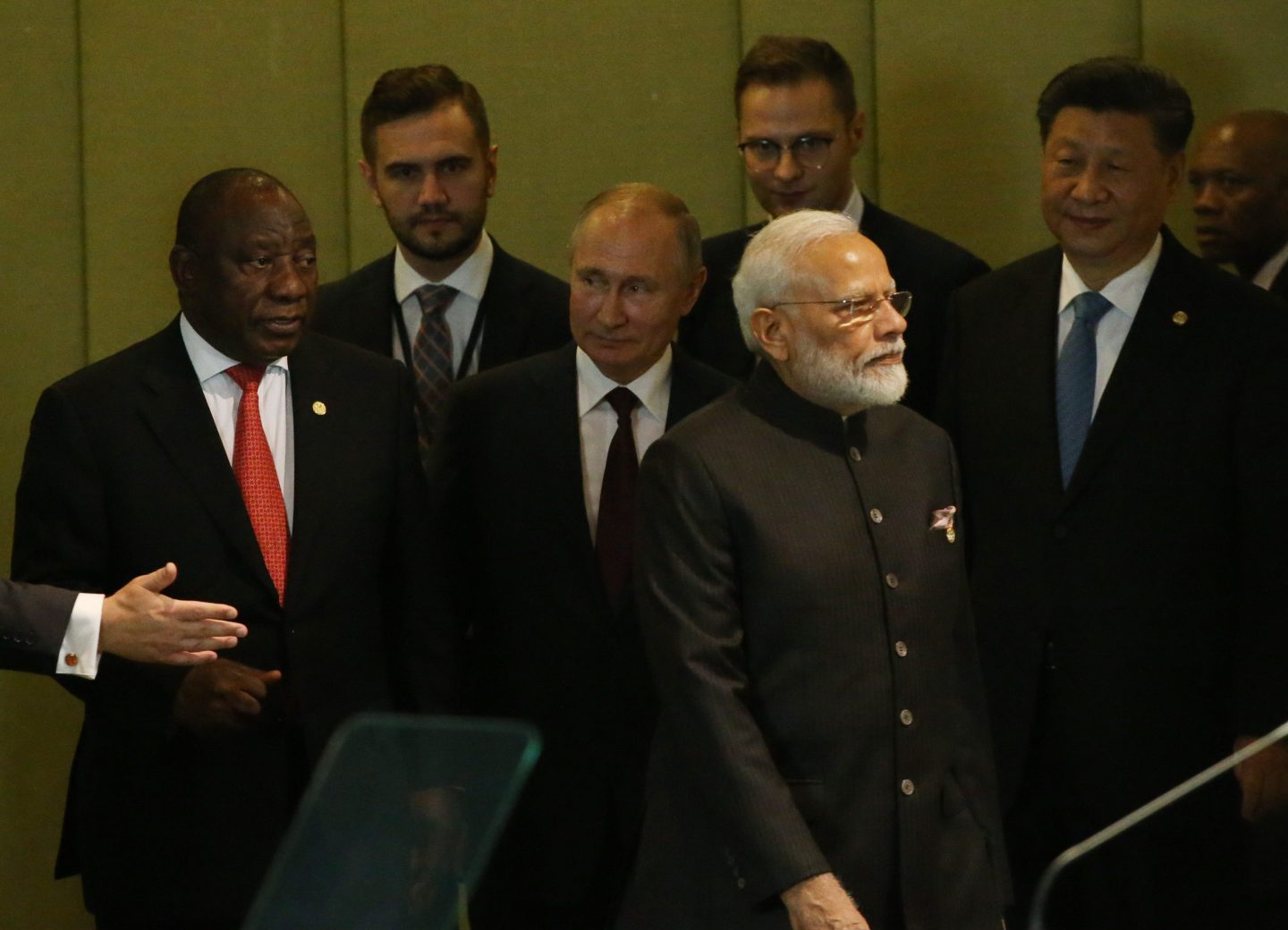
By 2030 it is projected that three of the four largest economies will be from the Global South – with the order being China, India, the United States and Indonesia. Already the GDP in terms of purchasing power of the the Global South-dominated BRICS nations – Brazil, Russia, India, China and South Africa – surpasses that of the Global North’s G7 club. And there are now more billionaires in Beijing than in New York City.
Global South on the march
This economic shift has gone hand in hand with enhanced political visibility. Countries in the Global South are increasingly asserting themselves on the global scene – be it China’s brokering of Iran and Saudi Arabia’s rapprochement or Brazil’s attempt to push a peace plan to end the war in Ukraine.
This shift in economic and political power has led experts in geopolitics like Parag Khanna and Kishore Mahbubani to write about the coming of an “Asian Century.” Others, like political scientist Oliver Stuenkel, have began talking about a “post-Western world.”
One thing is for sure: The Global South is flexing political and economic muscles that the “developing countries” and the “Third World” never had.
Jorge Heine is Interim Director of the Frederick S. Pardee Center for the Study of the Longer-Range Future, Boston University.
This article is republished from The Conversation under a Creative Commons license. Read the original article.