• Home
  • Latest
  • Fortune 500
  • Finance
  • Tech
  • Leadership
  • Lifestyle
  • Rankings
  • Multimedia
Some Fortune Crypto pricing data is provided by Binance.
CommentaryCryptocurrency

Does the future of money belong to Bitcoin, CBDCs, or stablecoins?

By
Alex Tapscott
Alex Tapscott
Down Arrow Button Icon
By
Alex Tapscott
Alex Tapscott
Down Arrow Button Icon
October 27, 2022, 12:23 PM ET
Two people exchanging coins
What's the future of money?Getty Images

Money, one of humanity’s greatest and most enduring creations, is once again on the brink of a historic transformation. After evolving over millennia from cowrie shells to clay tablets to precious metals, and then to paper notes and bank balances, money is taking another great leap forward: It is becoming entirely digital.

There are three leading contenders for the future of money—a central theme of the Blockchain Research Institute’s upcoming event, W3B and Blockchain World. The first are public cryptocurrencies like Bitcoin, which was designed from the outset to be a “peer-to-peer electronic cash system”—in other words, digital cash. The second are privately issued digital dollars, backed by dollars or some other collateral. These stablecoins today are mostly backed 1:1 to the U.S. dollar but could be designed to hold a peg to a basket of currencies, like Facebook’s ill-fated Libra project. The third are central bank digital currencies, aka CBDCs, created by governments and central banks. Each is radically different in composition and potential impact.

“The great majority of people in the Middle Ages never saw any money at all during their entire lives,” James Burnham, a noted 20th century intellectual and historian, said of the feudal economy, which was based on subsistence farming and barter. Capitalism changed the role of money from mere medium of exchange (a convenient way to exchange for goods when barter was not an option), to capital more generally—something that by its nature could be used to earn more money by investing in physical plant like factories, lending to entrepreneurs and so forth.

As in ancient times, precious metals like gold served as the foundation for money during the early industrial era of capitalism. Money, according to John Locke, was something that people “by mutual consent would take in exchange for the truly useful, but perishable supports of life.” In other words, gold is useful as a store of value and medium of exchange because it is not “truly useful.” Gold’s preeminent role as money began to wane in the late 19th century, starting with the U.S. civil war, when the federal government issued paper notes backed only by faith in the government itself. It ended a century later when President Richard Nixon finally closed the “gold window” and ended international convertibility of the U.S. dollar into gold. Today, currencies float against each other and are issued by government fiat.

If gold was the basis for the early industrial age and fiat currency the basis for our modern globalized economy, then some form of digital money will form the basis for the digital economy. Once again, we are on the brink of another epochal shift in money. But which one will succeed?

Three contenders

Bitcoin has been a remarkable success story. It is worth nearly half a billion dollars and is used everywhere as a store of value and a medium of exchange, and has been a lifeline to the unbanked who can stomach its volatility and sluggishness. It is permissionless and censorship resistant, which makes it a favorite of freedom fighters as well as alt-right groups. It is also energy-intensive and volatile, much like gold and other commodities. It will likely grow more important as a store of value but fall short as a medium of exchange.

CBDCs are touted by governments and central bankers as a better alternative that can make the economy more inclusive, reduce volatility, and improve the responsiveness of central banks to crises. But CBDC boosters must answer some tough questions. For example, how exactly do we protect privacy rights when the government can see in real time how every dollar is being spent in an economy? Because of the worrying impact on civil liberties, CBDCs are likely to find more success in authoritarian regimes like China than in the U.S. or Canada, where I expect they’ll be met with fierce resistance by some.

This brings us to the final contender to be the money of the future: stablecoins. A synthesis of CBDCs and cryptoassets like Bitcoin, they are digital assets issued by companies backed by fiat currencies held in financial institutions. The leading versions, USDC and USDT, are worth more than $100 billion combined. Facebook’s attempt at a stablecoin, Libra, originally was based on a basket of assets. This was met with fierce resistance by the U.S. government, which squashed it as a potential threat to the dollar system—a cautionary tale for any company trying to reinvent money.

There are also synthetic “decentralized” stablecoins, which are backed by assets held in smart contracts (like a piece of software with a bank account). DAI is an example, though even it is somewhat centralized as much of its collateral is in USDC and now U.S. treasuries. A decentralized stablecoin is the synthesis of privately issued money and public cryptoassets. They are pegged to the U.S. dollar but are permissionless and do not rely on a third party to work. They are hard to shut down, and free to use by anyone. Though small in comparison to others (the DAI outstanding is worth about $6 billion), they are the frontier of money, and we should all be paying attention. Intuitively, one would assume the decentralized digital economy of Web3 should adopt these kinds of decentralized money, but at this point it appears centralized stablecoins like USDC have the product market fit and first-mover advantage.

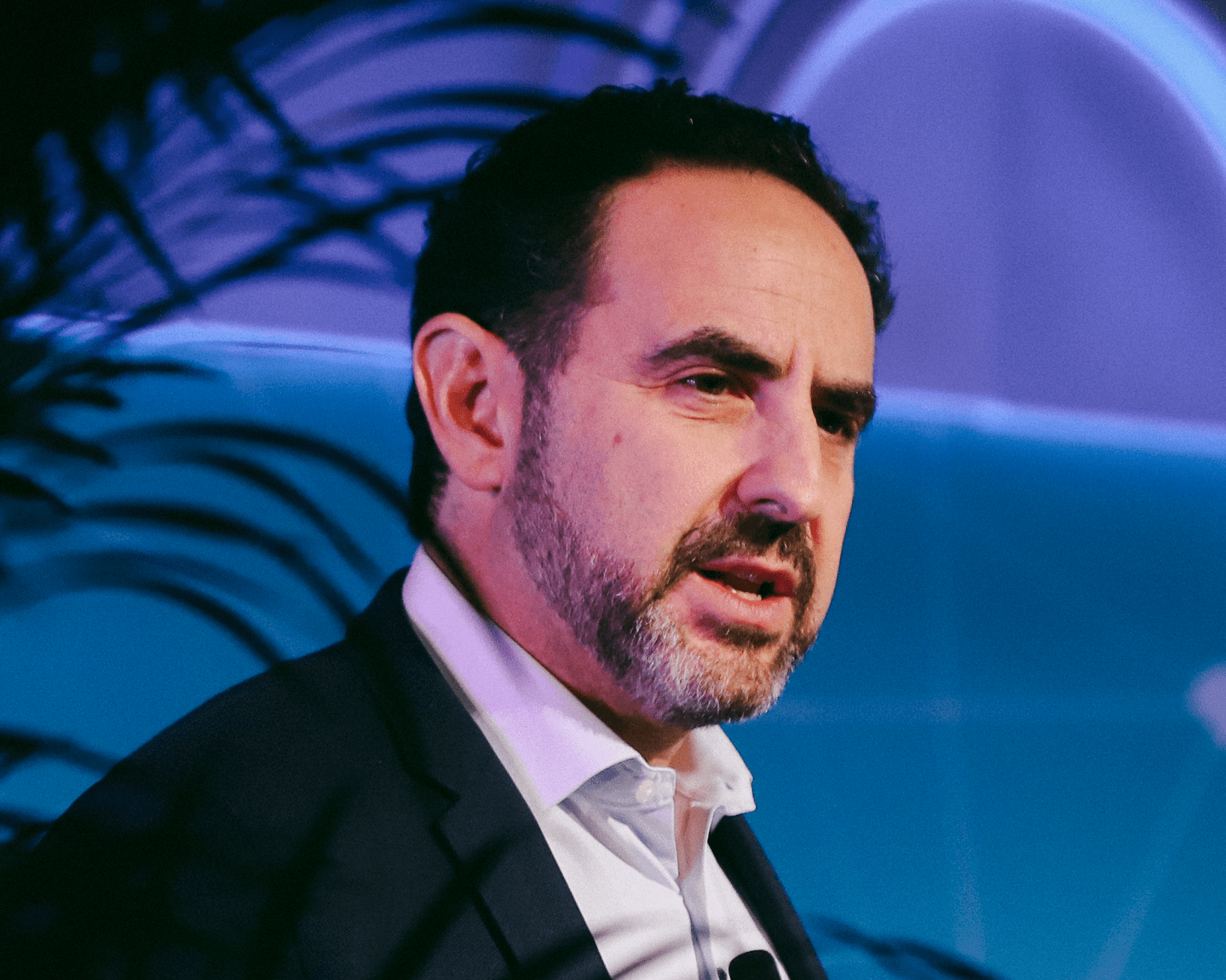
Alex Tapscott is a co-founder of The Blockchain Research Institute, host of W3B and Blockchain World, in Toronto, Nov. 8-9. Alex is also managing director of The Ninepoint Digital Asset Group. This article is for information purposes only and should not be relied upon as investment advice. A version of this article originally appeared in Ninepoint’s weekly note, Digital Asset Digest.

The opinions expressed in Fortune.com commentary pieces are solely the views of their authors and do not reflect the opinions or beliefs of Fortune.

Sign up for the Fortune Features email list so you don’t miss our biggest features, exclusive interviews, and investigations.


About the Author
By Alex Tapscott
See full bioRight Arrow Button Icon

Latest in Commentary

Finance
Lorem ipsum dolor sit amet, consectetur adipiscing elit, sed do eiusmod tempor incididunt ut labore et dolore magna aliqua. Ut enim ad minim veniam
By Fortune Editors
October 20, 2025
Finance
Lorem ipsum dolor sit amet, consectetur adipiscing elit, sed do eiusmod tempor incididunt ut labore et dolore magna aliqua. Ut enim ad minim veniam
By Fortune Editors
October 20, 2025
Finance
Lorem ipsum dolor sit amet, consectetur adipiscing elit, sed do eiusmod tempor incididunt ut labore et dolore magna aliqua. Ut enim ad minim veniam
By Fortune Editors
October 20, 2025
Finance
Lorem ipsum dolor sit amet, consectetur adipiscing elit, sed do eiusmod tempor incididunt ut labore et dolore magna aliqua. Ut enim ad minim veniam
By Fortune Editors
October 20, 2025
Finance
Lorem ipsum dolor sit amet, consectetur adipiscing elit, sed do eiusmod tempor incididunt ut labore et dolore magna aliqua. Ut enim ad minim veniam
By Fortune Editors
October 20, 2025
Finance
Lorem ipsum dolor sit amet, consectetur adipiscing elit, sed do eiusmod tempor incididunt ut labore et dolore magna aliqua. Ut enim ad minim veniam
By Fortune Editors
October 20, 2025

Most Popular

Finance
Lorem ipsum dolor sit amet, consectetur adipiscing elit, sed do eiusmod tempor incididunt ut labore et dolore magna aliqua. Ut enim ad minim veniam
By Fortune Editors
October 20, 2025
Finance
Lorem ipsum dolor sit amet, consectetur adipiscing elit, sed do eiusmod tempor incididunt ut labore et dolore magna aliqua. Ut enim ad minim veniam
By Fortune Editors
October 20, 2025
Finance
Lorem ipsum dolor sit amet, consectetur adipiscing elit, sed do eiusmod tempor incididunt ut labore et dolore magna aliqua. Ut enim ad minim veniam
By Fortune Editors
October 20, 2025
Finance
Lorem ipsum dolor sit amet, consectetur adipiscing elit, sed do eiusmod tempor incididunt ut labore et dolore magna aliqua. Ut enim ad minim veniam
By Fortune Editors
October 20, 2025
Finance
Lorem ipsum dolor sit amet, consectetur adipiscing elit, sed do eiusmod tempor incididunt ut labore et dolore magna aliqua. Ut enim ad minim veniam
By Fortune Editors
October 20, 2025
Finance
Lorem ipsum dolor sit amet, consectetur adipiscing elit, sed do eiusmod tempor incididunt ut labore et dolore magna aliqua. Ut enim ad minim veniam
By Fortune Editors
October 20, 2025
Rankings
  • 100 Best Companies
  • Fortune 500
  • Global 500
  • Fortune 500 Europe
  • Most Powerful Women
  • Future 50
  • World’s Most Admired Companies
  • See All Rankings
Sections
  • Finance
  • Leadership
  • Success
  • Tech
  • Asia
  • Europe
  • Environment
  • Fortune Crypto
  • Health
  • Retail
  • Lifestyle
  • Politics
  • Newsletters
  • Magazine
  • Features
  • Commentary
  • Mpw
  • CEO Initiative
  • Conferences
  • Personal Finance
  • Education
Customer Support
  • Frequently Asked Questions
  • Customer Service Portal
  • Privacy Policy
  • Terms Of Use
  • Single Issues For Purchase
  • International Print
Commercial Services
  • Advertising
  • Fortune Brand Studio
  • Fortune Analytics
  • Fortune Conferences
  • Business Development
About Us
  • About Us
  • Editorial Calendar
  • Press Center
  • Work At Fortune
  • Diversity And Inclusion
  • Terms And Conditions
  • Site Map
  • Facebook icon
  • Twitter icon
  • LinkedIn icon
  • Instagram icon
  • Pinterest icon

Latest in Commentary

sharma
CommentaryTraining
AI will infiltrate the industrial workforce in 2026—let’s apply it to training the next generation, not replacing them
By Kriti SharmaJanuary 15, 2026
17 hours ago
CommentaryBusiness
Using AI just to reduce costs is a woeful misuse of a transformative technology
By Nigel VazJanuary 15, 2026
19 hours ago
powell
CommentaryMiddle class
Forget the K-Shape: We have a barbell economy—and the middle class is buckling under the weight
By Katica RoyJanuary 14, 2026
1 day ago
engineer
Commentaryengineering
China graduates 1.3 million engineers per year, versus just 130,000 in the U.S. We need AI to bridge the gap
By Paul Eremenko and Ashish SrivastavaJanuary 14, 2026
2 days ago
powell/trump
CommentaryFederal Reserve
Is Powell’s Fed head independence dead? Trump outfoxes himself this time
By Jeffrey SonnenfeldJanuary 13, 2026
3 days ago
paramount
CommentaryM&A
A cautionary Hollywood tale: the Ellisons’ lose-lose Paramount positioning
By Jeffrey Sonnenfeld and Stephen HenriquesJanuary 12, 2026
4 days ago

Most Popular

placeholder alt text
Personal Finance
Peter Thiel makes his biggest donation in years to help defeat California’s billionaire wealth tax
By Nick LichtenbergJanuary 14, 2026
1 day ago
placeholder alt text
Europe
Americans have been quietly plundering Greenland for over 100 years, since a Navy officer chipped fragments off the Cape York iron meteorite
By Paul Bierman and The ConversationJanuary 14, 2026
1 day ago
placeholder alt text
Success
Despite a $45 million net worth, Big Bang Theory star still works tough, 16-hour days—he repeats one mantra when overwhelmed
By Orianna Rosa RoyleJanuary 15, 2026
17 hours ago
placeholder alt text
Economy
California's wealth tax doesn't fix the real problem: Cash-poor billionaires who borrow money, tax-free, to live on
By Nick LichtenbergJanuary 14, 2026
1 day ago
placeholder alt text
AI
Being mean to ChatGPT can boost its accuracy, but scientists warn you may regret it
By Marco Quiroz-GutierrezJanuary 13, 2026
2 days ago
placeholder alt text
Health
The head of marketing at Slate posted on LinkedIn requesting cleaning services as a benefit at her company. The next day, HR answered her call
By Sydney LakeJanuary 15, 2026
19 hours ago

© 2025 Fortune Media IP Limited. All Rights Reserved. Use of this site constitutes acceptance of our Terms of Use and Privacy Policy | CA Notice at Collection and Privacy Notice | Do Not Sell/Share My Personal Information
FORTUNE is a trademark of Fortune Media IP Limited, registered in the U.S. and other countries. FORTUNE may receive compensation for some links to products and services on this website. Offers may be subject to change without notice.