• Home
  • Latest
  • Fortune 500
  • Finance
  • Tech
  • Leadership
  • Lifestyle
  • Rankings
  • Multimedia
Leadership

Surviving tariffs: 5 steps small businesses should take now

Emma Burleigh
By
Emma Burleigh
Emma Burleigh
Reporter, Success
Down Arrow Button Icon
Emma Burleigh
By
Emma Burleigh
Emma Burleigh
Reporter, Success
Down Arrow Button Icon
May 1, 2025, 10:00 AM ET
Tariffs
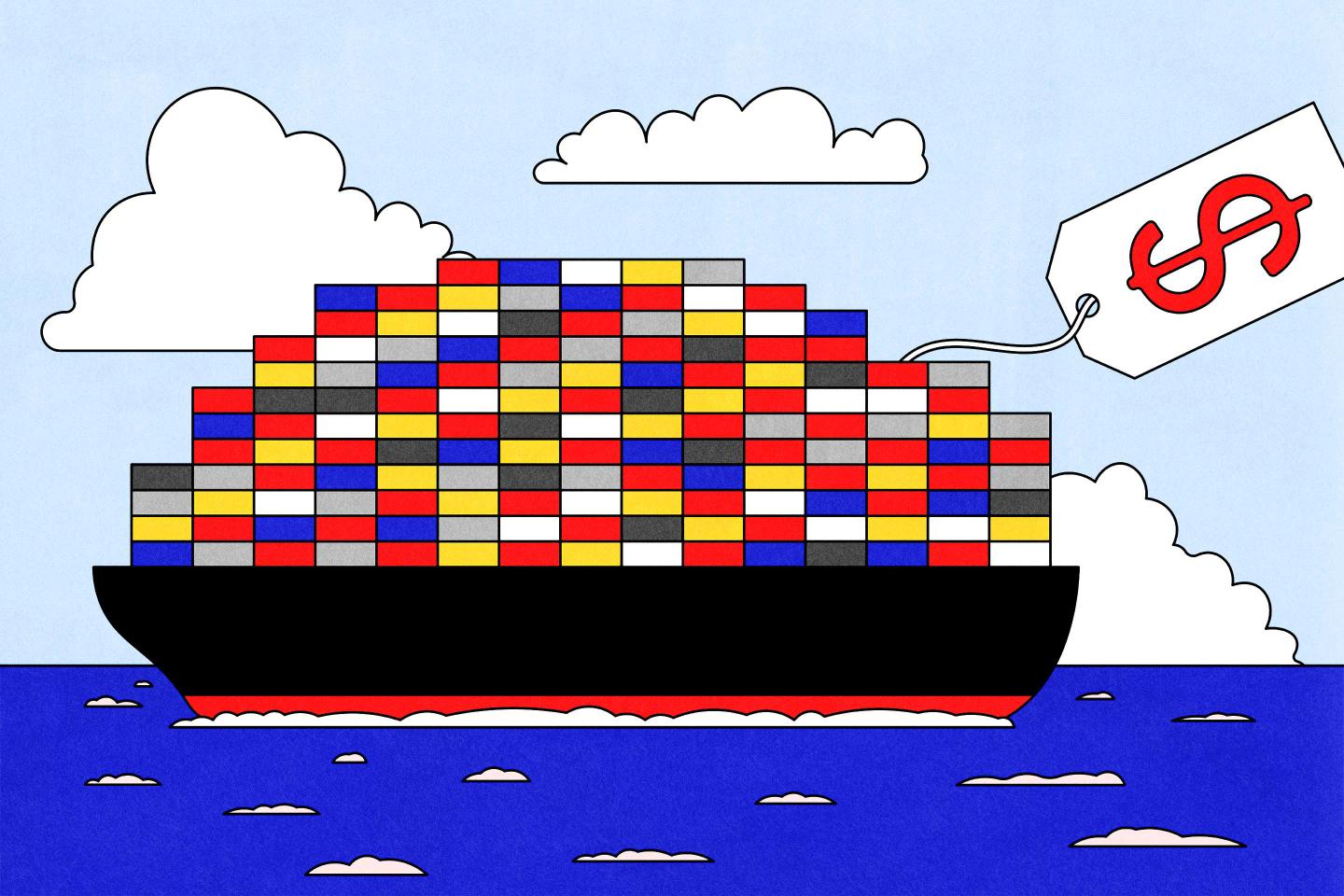
Illustration by Allie Sullberg

President Trump’s tariffs on foreign imports will hit small businesses hard. As the U.S. economy hangs in the balance of the tariff war, where America’s trade policies will land is still unknown. This has thrown many small businesses, which typically operate on lower margins, into a state of panic.  

Experts tell Fortune that vulnerable businesses, especially small ones, should batten down the hatches in five ways. Mom-and-pop shops should strategize with their suppliers, load up on the essentials, cut costs where possible, build consumer trust, and band together with other small companies. 

“Small corporations specifically are going to be hit first,” Isabelle Zdatny, head of thought leadership for experience management company Qualtrics, tells Fortune. “It’s much harder for a small business to financially weather the storm.”

America’s mom-and-pop businesses are up against a flat 10% tariff on all imported foreign goods, and a 145% rate on the world’s mega-manufacturer: China. Cars, steel, and aluminum also face a duty of 25%. Another 60 countries, which Trump dubbed “the worst offenders,” were hit with higher tariffs in early April. Small companies are especially sensitive to these price hikes; they have fewer resources to front-load ahead of duty increases, and less ability to keep prices low enough to compete with big-box competitors. 

“I have tips on what you can do with the boat, but at the end of the day, you’re facing a hurricane. It’s not your fault and there are limits practically to what you can do,” Joseph Foudy, clinical professor of economics at NYU Stern, tells Fortune. “You have to think about who your customers are, where existing contracts viewed as ‘safe’ may be threatened due to tariffs, government cutbacks, or just a recession.”

Experts outline five actionable steps small businesses should take to best protect themselves from tariff uncertainty. Leadership should strategize with suppliers, stock up on critical goods, trim costs wherever possible, lock in customers, and band together with other businesses.

Strategize with suppliers

From titans of industry to small artisanal brands, nearly everyone is sourcing part of their product from outside the U.S. No one will be safe from the effects of the tariffs—but the impacts will hit some more than others.

“Big business has resources—they have power with suppliers. So we say when big business gets a cold, small business gets the flu,” Foudy says. “And I don’t think that that’s changed in decades.”

The Stern professor suggests that small businesses first talk to their suppliers: Assess the situation and be open to re-strategizing. Experts contend that having a diverse supplier base is important to mitigate damage. Small businesses shouldn’t be putting all their eggs in one basket—they never know who’ll be the next target of Trump’s tariffs. 

“My first piece of advice is talk to your suppliers. You want to be on their radar,” Foudy recommends. “Look for multiple suppliers, and most importantly, try to make sure that they’re in different countries. We don’t know who’s going to get hit with what rate.”

Foudy outlines a few key questions to ask right off the bat: How many goods are sourced by country? What are suppliers doing to stockpile products? How vulnerable are they to the tariffs? Leaders should go down the supply-chain rabbit hole to get the full picture for broader strategization—plus, maintaining that conversation could be a perk down the line.

“You’re getting a window into that complex supply chain,” Foudy says. “Just to be perfectly cynical, if they can only fill some of their orders, at least you have that personal relationship.”

Stockpile the essentials

Experts also advise of a basic tactic: stockpiling essential items, if you can, before prices go up. 

“[Small businesses] should stockpile any key components or supplies that are mission-critical.” Foudy says. “What are things I have to stockpile, because I can’t find a substitute? Versus what might be more expensive, but are still replaceable?”

It could be a game changer for small businesses that have the capital to stock up in advance—but experts agree it’s not practical for most independent sellers. 

“Big businesses can front-load and buy a bunch of their products now before tariffs hit,” Allison Shrivastava, an economist at Indeed, tells Fortune. It’s much harder for a small business to do that financially… They really don’t have the same kind of means.”

Fine-tune business costs

To best protect themselves against tariff-related hardship, small businesses need to crunch the numbers. Experts advise that wherever it’s possible to shave down on costs, now would be the time to do so. 

“Fine-tune your costs as much as you can in preparation,” Shrivastava says. “If you do have a big reliance on countries that have been hit with tariffs, or potentially will, you should do a cost-benefit analysis on whether or not it’s worth it to pivot.”

But the answer isn’t to simply cut ties with major foreign suppliers, like China—sometimes it’s actually worth it to take the huge tariff hit. U.S. production is comparatively very expensive, and other countries may not be able to compete with such low manufacturing costs. Even with the price hike, it might be the best bet. Every small business should confront that question.

“It’s still probably more cost-effective to pay the premium on those goods than it is to pay U.S. labor,” Shrivastava says.

Build trust and loyalty with customers

Beyond suppliers, customers are at the core of the conversation. With tariffs come higher product prices, and recession-anxious consumers are already wary of high living costs. But Zdatny says small businesses can actually seize the moment.

“Large organizations would do better on the competence-level, because they have economies of scale. They’re able to deliver on things that customers expect,” she says. “For small businesses, they might have an advantage when it comes to benevolence and integrity.”

Experts advise that small businesses study their consumer bases, and be fully transparent about tariff-related price increases. Mom-and-pop shops and indie brands are more likely to connect with shoppers than large, faceless corporations. Tapping into this could be the secret weapon to win over and keep customers. 

“Small companies tend to have stronger emotional connections with customers, which is the strongest driver of consumer loyalty,” Zdatny explains. “If businesses can’t compete on price, they’re able to compete on building stronger trust, reducing that uncertainty, building those emotional connections with customers. This will give them a leg up.”

Band together to lobby

There’s safety in numbers—and small businesses are already catching on. Founders are banding together to ask the U.S. government for tariff exemptions on their companies. 

Just recently 38 female founders, helming over $800 million in combined revenue, urged the current administration to give them tariff-exempt status. In a letter sent to President Trump, Congress, and U.S. Trade Representative Jamieson Greer, they expressed their concerns and called for the support of America’s small businesses. 

“We are becoming unintended collateral damage in an escalating global trade war,” they wrote.

In April a band of e-commerce sellers came together at the 7-Figure Seller Summit 10, with the theme “Ecom Sellers Strike Back.” The event was conceived to bring small business owners together and dish on strategies to counterbalance rising costs—including leveraging AI. By combining forces, small enterprises might have a shot at tariff bargains or meaningful counteraction.

This article is part of The Must-Read Playbook for Small Business.

About the Author
Emma Burleigh
By Emma BurleighReporter, Success

Emma Burleigh is a reporter at Fortune, covering success, careers, entrepreneurship, and personal finance. Before joining the Success desk, she co-authored Fortune’s CHRO Daily newsletter, extensively covering the workplace and the future of jobs. Emma has also written for publications including the Observer and The China Project, publishing long-form stories on culture, entertainment, and geopolitics. She has a joint-master’s degree from New York University in Global Journalism and East Asian Studies.

See full bioRight Arrow Button Icon

Latest in Leadership

Finance
Lorem ipsum dolor sit amet, consectetur adipiscing elit, sed do eiusmod tempor incididunt ut labore et dolore magna aliqua. Ut enim ad minim veniam
By Fortune Editors
October 20, 2025
Finance
Lorem ipsum dolor sit amet, consectetur adipiscing elit, sed do eiusmod tempor incididunt ut labore et dolore magna aliqua. Ut enim ad minim veniam
By Fortune Editors
October 20, 2025
Finance
Lorem ipsum dolor sit amet, consectetur adipiscing elit, sed do eiusmod tempor incididunt ut labore et dolore magna aliqua. Ut enim ad minim veniam
By Fortune Editors
October 20, 2025
Finance
Lorem ipsum dolor sit amet, consectetur adipiscing elit, sed do eiusmod tempor incididunt ut labore et dolore magna aliqua. Ut enim ad minim veniam
By Fortune Editors
October 20, 2025
Finance
Lorem ipsum dolor sit amet, consectetur adipiscing elit, sed do eiusmod tempor incididunt ut labore et dolore magna aliqua. Ut enim ad minim veniam
By Fortune Editors
October 20, 2025
Finance
Lorem ipsum dolor sit amet, consectetur adipiscing elit, sed do eiusmod tempor incididunt ut labore et dolore magna aliqua. Ut enim ad minim veniam
By Fortune Editors
October 20, 2025

Most Popular

Finance
Lorem ipsum dolor sit amet, consectetur adipiscing elit, sed do eiusmod tempor incididunt ut labore et dolore magna aliqua. Ut enim ad minim veniam
By Fortune Editors
October 20, 2025
Finance
Lorem ipsum dolor sit amet, consectetur adipiscing elit, sed do eiusmod tempor incididunt ut labore et dolore magna aliqua. Ut enim ad minim veniam
By Fortune Editors
October 20, 2025
Finance
Lorem ipsum dolor sit amet, consectetur adipiscing elit, sed do eiusmod tempor incididunt ut labore et dolore magna aliqua. Ut enim ad minim veniam
By Fortune Editors
October 20, 2025
Finance
Lorem ipsum dolor sit amet, consectetur adipiscing elit, sed do eiusmod tempor incididunt ut labore et dolore magna aliqua. Ut enim ad minim veniam
By Fortune Editors
October 20, 2025
Finance
Lorem ipsum dolor sit amet, consectetur adipiscing elit, sed do eiusmod tempor incididunt ut labore et dolore magna aliqua. Ut enim ad minim veniam
By Fortune Editors
October 20, 2025
Finance
Lorem ipsum dolor sit amet, consectetur adipiscing elit, sed do eiusmod tempor incididunt ut labore et dolore magna aliqua. Ut enim ad minim veniam
By Fortune Editors
October 20, 2025
Fortune Secondary Logo
Rankings
  • 100 Best Companies
  • Fortune 500
  • Global 500
  • Fortune 500 Europe
  • Most Powerful Women
  • World's Most Admired Companies
  • See All Rankings
  • Lists Calendar
Sections
  • Finance
  • Fortune Crypto
  • Features
  • Leadership
  • Health
  • Commentary
  • Success
  • Retail
  • Mpw
  • Tech
  • Lifestyle
  • CEO Initiative
  • Asia
  • Politics
  • Conferences
  • Europe
  • Newsletters
  • Personal Finance
  • Environment
  • Magazine
  • Education
Customer Support
  • Frequently Asked Questions
  • Customer Service Portal
  • Privacy Policy
  • Terms Of Use
  • Single Issues For Purchase
  • International Print
Commercial Services
  • Advertising
  • Fortune Brand Studio
  • Fortune Analytics
  • Fortune Conferences
  • Business Development
  • Group Subscriptions
About Us
  • About Us
  • Press Center
  • Work At Fortune
  • Terms And Conditions
  • Site Map
  • About Us
  • Press Center
  • Work At Fortune
  • Terms And Conditions
  • Site Map
  • Facebook icon
  • Twitter icon
  • LinkedIn icon
  • Instagram icon
  • Pinterest icon

© 2026 Fortune Media IP Limited. All Rights Reserved. Use of this site constitutes acceptance of our Terms of Use and Privacy Policy | CA Notice at Collection and Privacy Notice | Do Not Sell/Share My Personal Information
FORTUNE is a trademark of Fortune Media IP Limited, registered in the U.S. and other countries. FORTUNE may receive compensation for some links to products and services on this website. Offers may be subject to change without notice.


Latest in Leadership

Aerie built a $2 billion brand by rejecting Victoria’s Secret’s old playbook. Now it wants to win the AI backlash.
C-SuiteRetail
Aerie built a $2 billion brand by rejecting Victoria’s Secret’s old playbook. Now it wants to win the AI backlash.
By Phil WahbaApril 30, 2026
3 hours ago
Google Cloud revenue is now 18% of Alphabet’s business. Is this the beginning of the end of Google’s search identity?
Big TechGoogle
Google Cloud revenue is now 18% of Alphabet’s business. Is this the beginning of the end of Google’s search identity?
By Alexei OreskovicApril 29, 2026
8 hours ago
A man in a suit and tie
InvestingMeta
Meta just bumped its 2026 capex forecast up to as much as $145 billion for the AI boom—and investors flinched
By Amanda GerutApril 29, 2026
10 hours ago
teri
BankingBanks
Exclusive: America’s largest Black-owned bank launches podcast with mission to unlock hidden shame holding back generational wealth
By Nick LichtenbergApril 29, 2026
10 hours ago
pete hegseth
PoliticsIran
‘A strategic blunder’: Democrats confront Hegseth as the Iran war’s price tag hits $25 billion
By The Associated Press, Ben Finley, Stephen Groves, David Klepper and Konstantin ToropinApril 29, 2026
13 hours ago
Jamie Dimon says bureaucracy sinks companies and the solution may be getting rid of the ‘jerks’ who don’t want to solve it
C-SuiteJamie Dimon
Jamie Dimon says bureaucracy sinks companies and the solution may be getting rid of the ‘jerks’ who don’t want to solve it
By Marco Quiroz-GutierrezApril 29, 2026
14 hours ago

Most Popular

Apple cofounder Ronald Wayne—whose stake would be worth up to $400 billion had he not sold it in 1976—says that at 91, he has no regrets
Success
Apple cofounder Ronald Wayne—whose stake would be worth up to $400 billion had he not sold it in 1976—says that at 91, he has no regrets
By Preston ForeApril 27, 2026
3 days ago
‘Take the money and run’: Johns Hopkins economist Steve Hanke on why the UAE quit OPEC
Energy
‘Take the money and run’: Johns Hopkins economist Steve Hanke on why the UAE quit OPEC
By Shawn TullyApril 29, 2026
1 day ago
‘The cost of compute is far beyond the costs of the employees’: Nvidia executive says right now AI is more expensive than paying human workers
AI
‘The cost of compute is far beyond the costs of the employees’: Nvidia executive says right now AI is more expensive than paying human workers
By Sasha RogelbergApril 28, 2026
2 days ago
Jamie Dimon gets candid about national debt: ‘There will be a bond crisis, and then we’ll have to deal with it’
Economy
Jamie Dimon gets candid about national debt: ‘There will be a bond crisis, and then we’ll have to deal with it’
By Eleanor PringleApril 29, 2026
23 hours ago
‘They left me no choice’: Powell isn’t going anywhere—blocking Trump from another Fed appointee
Banking
‘They left me no choice’: Powell isn’t going anywhere—blocking Trump from another Fed appointee
By Eva RoytburgApril 29, 2026
14 hours ago
More than two-thirds of U.S. schools say they’re unable to afford the cost of student free lunch—and MAHA’s dietary guidelines may make it worse
Economy
More than two-thirds of U.S. schools say they’re unable to afford the cost of student free lunch—and MAHA’s dietary guidelines may make it worse
By Sasha RogelbergApril 29, 2026
1 day ago