
• Home
  • Latest
  • Fortune 500
  • Finance
  • Tech
  • Leadership
  • Lifestyle
  • Rankings
  • Multimedia

Trendingnow

1

The millennial generation has split, new Fed research shows: Those over 35 are edging toward boomer-style wealth, while everyone else falls behind

2

Mark Cuban says he has the solution to growing income inequality, and it's to reward every employee—from CEO to janitor—with company stock

3

Mathematicians grapple with a ‘very rapid and very unsettling change’ as AI cracks yet another century-old problem

1

The millennial generation has split, new Fed research shows: Those over 35 are edging toward boomer-style wealth, while everyone else falls behind

2

Mark Cuban says he has the solution to growing income inequality, and it's to reward every employee—from CEO to janitor—with company stock

3

Mathematicians grapple with a ‘very rapid and very unsettling change’ as AI cracks yet another century-old problem
Economy

Trump’s trade war has already sparked a massive cancellation of shipments from China to the U.S. 

Sasha Rogelberg
By
Sasha Rogelberg
Sasha Rogelberg
Reporter
Down Arrow Button Icon
Sasha Rogelberg
By
Sasha Rogelberg
Sasha Rogelberg
Reporter
Down Arrow Button Icon
April 25, 2025, 7:00 AM ET
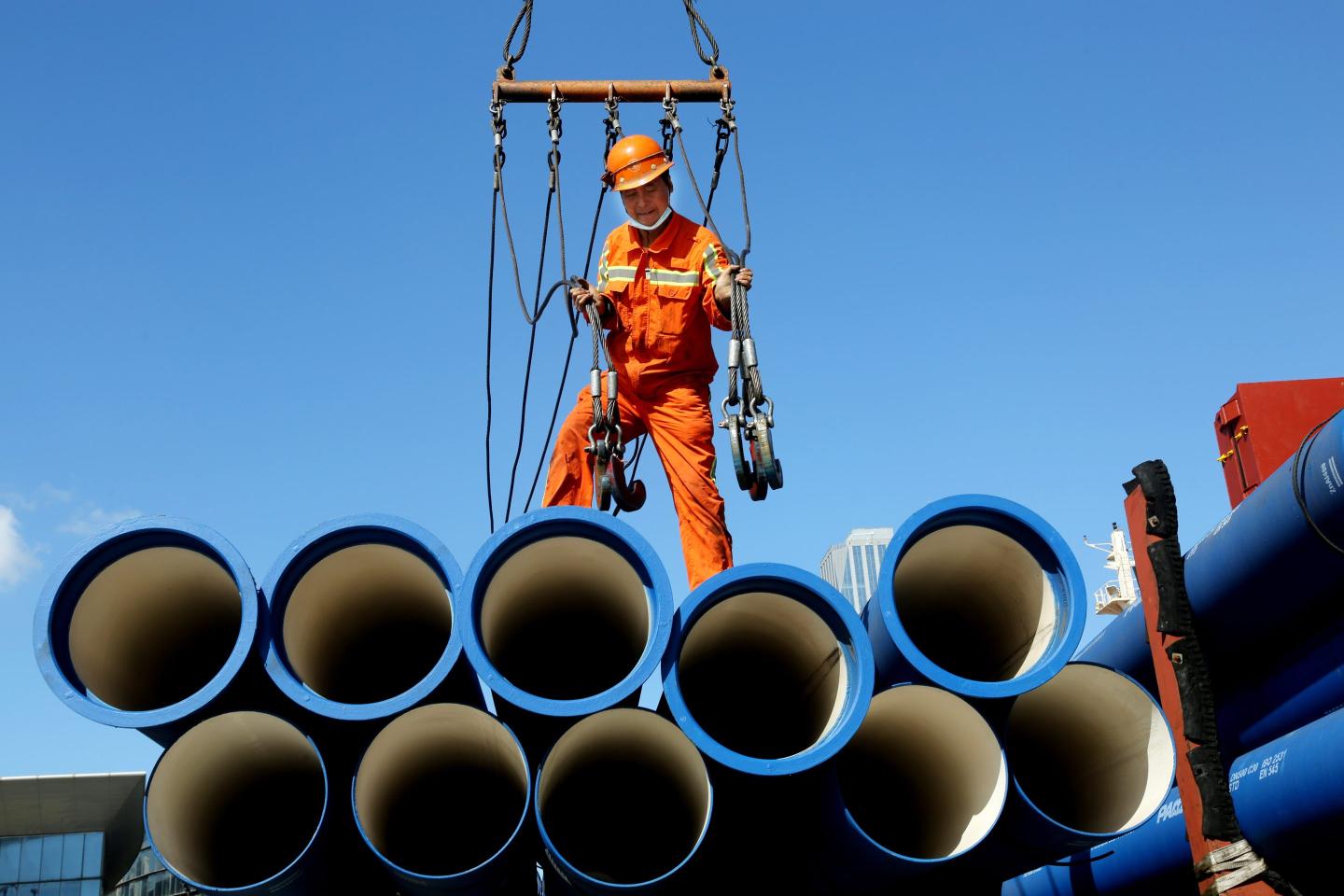
A dock worker stands on top of several large tubes.
Early shipping data shows a slowdown of Chinese imports to the U.S. following Trump's 145% tariff on China.CFOTO/Future Publishing—Getty Images
Add Fortune on Google for similar content.
  • In the weeks following President Donald Trump’s 145% tariff on China, shipping of Chinese imports to the U.S. have fallen steeply as companies try to avoid the price increases on products. The whiplash of companies stockpiling inventory ahead of tariffs, then pulling back on imports from China, is exacerbating a supply chain nightmare that will likely also have negative impacts on consumers.

Early shipping data is already beginning to show a clear drop off in imports from China as a result of President Donald Trump’s trade war, and logistics experts are warning continued tariffs could send the industry—and broader economy—into choppy waters.

Recommended Video

With U.S. tariffs on China ballooning to 145%, companies have reacted accordingly, spending the months preceding Trump’s second term ramping up shipments in order to stockpile inventory of specific components predicted to be hit hard by tariffs. But immediately following the April 9 “Liberation Day,” ocean-shipped orders have done a 180, with volumes dropping dramatically. The Trump administration is now floating a substantial cut to Chinese tariffs, though some taxes would still remain.

To make matters more complicated for the freight industry, the administration is also pushing forward with a port fee for Chinese vessels, meaning that carriers made in China may incur levies up to $1.5 million when they visit an American port, part of a continued effort to discourage trade with China. The White House did not respond to Fortune’s request for comment.

Just weeks into the new tariff policy, U.S. imports from China have plummeted, with volumes falling more than 10% the week of April 7 compared to volumes the year before, and nearly 30% the week of April 14, according to a report published Tuesday by supply-chain platform Project44. Prior to the first week of April import volumes were consistently higher than they were the year higher, suggesting some companies pushed up order shipments in order to dodge the impact of tariffs.

Since the tariffs’ implementation, the rate of “blank sailings,” or when a carrier skips a scheduled port of call usually as a result of slowing demand, has also increased. While the East Coast saw 24 blank sailings, a 100% increase since the introduction of Chinese tariffs in February, the West Coast saw 21 blank sailings, a 31% increase from February.

The sudden drop in import activity is a sign that after months of companies scrambling to understand how to respond to tariff threats, they have finally needed to pull the trigger on a shipping strategy, and have decided at this time to pull back, according to Eric Fullerton, vice president of product marketing at Project44

“Businesses are really responding in a very, very distinct way,” he told Fortune. “A lot of that strategic planning and cost optimization and diversification, all of these strategies and approaches that they’ve been thinking through are actually to be shown in reality.” 

Data from the Port of Long Beach, California—the largest U.S. port and the closest to China—backs up Project 44’s findings. The port reported 16 fewer ships to arrive in May, resulting in about 60 ships to arrive compared to the port’s usual monthly total of 80. Approximately half of imports to the Port of LA come from China. 

“It’s my prediction that in two weeks time, arrivals will drop by 35%, as essentially all shipments out of China for major retailers and manufacturers has ceased, and cargo coming out of Southeast Asia locations is much softer than normal, with the tariffs now in place at this moment, and the news comes out and changes almost hourly,” Gene Seroka, executive director of the Port of LA, said in a Thursday meeting with the LA Board of Harbor Commissioners.

Supply chain headaches

The sudden drop in shipping activity to the U.S. presents a nightmare situation for American companies that have had little time to reorganize supply chains amid Trump’s whipsaw tariffs.

“For some companies, it’s a dealbreaker, not just the initial cost to their imported goods because of the tariff, but because of the uncertainty of the disruption,” Dean Croke, principal analyst for freight data and analytics at DAT, told Fortune.

A company may decide to forego purchasing product inventory to avoid tariff costs, but then may find itself with a shortage, leading it to either hike prices for consumers, or take a hit to its revenue, Croke explained. But companies trying to avoid tariff headaches by stockpiling goods have other aches and pains, Peter Sand, chief analyst of freight analytics platform Xeneta, told Fortune. To manage an influx of product, companies have to make tough decisions, like pulling the trigger on purchasing more inventory than it may need or investing in more warehouse space or contracting more trucking companies.

“Global supply chains work really well when they can go steady, so when you have stop-and-go, or when you have all of a sudden a rush of cargo like you see right now, that’s really putting a strain on global supply chains, maritime supply chains,” Sand said.

The logistics industry got a taste of this in 2019, when, following similar stockpiling as a result of Trump’s 2018 tariffs, truck companies bought hundreds of new trucks to accommodate ballooning supply, only to be left with an overcapacity of vehicles and labor the following year, when freight demands dried up.

The continued disruptions in shipping could endanger the livelihoods of logistics workers who rely on bustling ports for consistent hours and work.

“Maybe a trucker today is hauling four loads. If that product starts dropping on the flow coming in here, they may move three loads a day,” Port of LA executive director Seroka told CNN earlier this month. “The dock worker who’s getting regular overtime may go back to standard hours.”

“We’re not going to see mass layoffs, but the amount of work will be much less than it traditionally has been over the past several years,” he added.

Consequences for consumers

The uncertainty isn’t just bad news for supply chains. Once stockpiled products run out and companies must reckon with less inventory, businesses selling consumer goods will likely pass off increased costs to consumers, something some conglomerates like Procter & Gamble have already warned about.

“There will likely be pricing—tariffs are inherently inflationary—but we’re also looking at sourcing options,” P&G CEO Jon Moeller told CNBC’s “Squawk Box” on Thursday.

If retailers want to avoid raising prices, they may instead accept that they’ll have fewer product options to offer customers, or turn to a different supplier for a less expensive, but lower-quality product, according to Sand.

Most frustrating to logistics experts is the lingering concerns about the tariff’s economic impact. Because of the unknowns about where and when the Trump administration will land on tariffs, as well as the sheer amount of time shipping takes—three weeks for a ship to leave China and arrive in Los Angeles, for example—companies reliant on imports can’t expect a reprieve from supply chain uncertainty.

“Even if the president said, ‘Oh, this was for nothing; we’re going to stop the trade war; everything’s back to normal,’ it’ll still take two months for things to get back to normal,” Croke said. “So this isn’t a quick recovery.” 

Subscribe to Fortune Gulf Brief. Every Tuesday, this new newsletter delivers clear-eyed, authoritative intelligence on the deals, decisions, policies, and power shifts shaping one of the world’s most consequential regions, written for the people who need to act on it. Sign up here.
About the Author
Sasha Rogelberg
By Sasha RogelbergReporter
LinkedIn iconTwitter icon

Sasha Rogelberg is a reporter and former editorial fellow on the news desk at Fortune, covering retail and the intersection of business and popular culture.

See full bioRight Arrow Button Icon
Add Fortune on Google for similar content.

Latest in Economy

Finance
Lorem ipsum dolor sit amet, consectetur adipiscing elit, sed do eiusmod tempor incididunt ut labore et dolore magna aliqua. Ut enim ad minim veniam
By Fortune Editors
October 20, 2025
Finance
Lorem ipsum dolor sit amet, consectetur adipiscing elit, sed do eiusmod tempor incididunt ut labore et dolore magna aliqua. Ut enim ad minim veniam
By Fortune Editors
October 20, 2025
Finance
Lorem ipsum dolor sit amet, consectetur adipiscing elit, sed do eiusmod tempor incididunt ut labore et dolore magna aliqua. Ut enim ad minim veniam
By Fortune Editors
October 20, 2025
Finance
Lorem ipsum dolor sit amet, consectetur adipiscing elit, sed do eiusmod tempor incididunt ut labore et dolore magna aliqua. Ut enim ad minim veniam
By Fortune Editors
October 20, 2025
Finance
Lorem ipsum dolor sit amet, consectetur adipiscing elit, sed do eiusmod tempor incididunt ut labore et dolore magna aliqua. Ut enim ad minim veniam
By Fortune Editors
October 20, 2025
Finance
Lorem ipsum dolor sit amet, consectetur adipiscing elit, sed do eiusmod tempor incididunt ut labore et dolore magna aliqua. Ut enim ad minim veniam
By Fortune Editors
October 20, 2025

Most Popular

Finance
Lorem ipsum dolor sit amet, consectetur adipiscing elit, sed do eiusmod tempor incididunt ut labore et dolore magna aliqua. Ut enim ad minim veniam
By Fortune Editors
October 20, 2025
Finance
Lorem ipsum dolor sit amet, consectetur adipiscing elit, sed do eiusmod tempor incididunt ut labore et dolore magna aliqua. Ut enim ad minim veniam
By Fortune Editors
October 20, 2025
Finance
Lorem ipsum dolor sit amet, consectetur adipiscing elit, sed do eiusmod tempor incididunt ut labore et dolore magna aliqua. Ut enim ad minim veniam
By Fortune Editors
October 20, 2025
Finance
Lorem ipsum dolor sit amet, consectetur adipiscing elit, sed do eiusmod tempor incididunt ut labore et dolore magna aliqua. Ut enim ad minim veniam
By Fortune Editors
October 20, 2025
Finance
Lorem ipsum dolor sit amet, consectetur adipiscing elit, sed do eiusmod tempor incididunt ut labore et dolore magna aliqua. Ut enim ad minim veniam
By Fortune Editors
October 20, 2025
Finance
Lorem ipsum dolor sit amet, consectetur adipiscing elit, sed do eiusmod tempor incididunt ut labore et dolore magna aliqua. Ut enim ad minim veniam
By Fortune Editors
October 20, 2025
Fortune Secondary Logo
Rankings
  • 100 Best Companies
  • Fortune 500
  • Global 500
  • Fortune 500 Europe
  • Most Powerful Women
  • World's Most Admired Companies
  • See All Rankings
  • Lists Calendar
Sections
  • Finance
  • Fortune Crypto
  • Features
  • Leadership
  • Health
  • Commentary
  • Success
  • Retail
  • Mpw
  • Tech
  • Lifestyle
  • CEO Initiative
  • Asia
  • Politics
  • Conferences
  • Europe
  • Newsletters
  • Personal Finance
  • Environment
  • Magazine
  • Education
Customer Support
  • Frequently Asked Questions
  • Customer Service Portal
  • Privacy Policy
  • Terms Of Use
  • Single Issues For Purchase
  • International Print
Commercial Services
  • Advertising
  • Fortune Brand Studio
  • Fortune Analytics
  • Fortune Conferences
  • Business Development
  • Group Subscriptions
About Us
  • About Us
  • Press Center
  • Work At Fortune
  • Terms And Conditions
  • Site Map
  • About Us
  • Press Center
  • Work At Fortune
  • Terms And Conditions
  • Site Map
  • Facebook icon
  • Twitter icon
  • LinkedIn icon
  • Instagram icon
  • TikTok icon
  • YouTube icon

Latest in Economy

As Washington panics about Chinese AI, Jensen Huang says open-source models like Kimi are ‘excellent’ and should be embraced, not banned
AIChina
As Washington panics about Chinese AI, Jensen Huang says open-source models like Kimi are ‘excellent’ and should be embraced, not banned
By Marco Quiroz-GutierrezJuly 22, 2026
9 hours ago
Scott Bessent speaks inside the Oval Office.
EconomyU.S. Department of the Treasury
Scott Bessent casually says the U.S. has more than $1 trillion in gold—and that it doesn’t matter for the dollar
By Sasha RogelbergJuly 22, 2026
10 hours ago
Canadian Prime Minister Mark Carney speaks to US President Donald Trump in front of a window.
EconomyDonald Trump
Carney and Trump agree to speed up trade negotiations a day after Trump puts a 50% tariff on Canadian goods
By The Associated Press and Jim MorrisJuly 22, 2026
10 hours ago
An Ebola healthcare worker is assisted putting on protective equipment in a treatment center.
HealthEbola
Nearly 1,000 people dead from Ebola outbreak in Congo amid health worker strike
By The Associated Press, Prosper Heri Ngorora and Constant Same BagalwaJuly 22, 2026
13 hours ago
buffett
SuccessWealth
‘The man who dies rich dies disgraced’: The last time America had such wealth inequality, Andrew Carnegie knew he had to give it all away
By Nick LichtenbergJuly 22, 2026
13 hours ago
gen z
Real EstateHousing
The millennial generation has split, new Fed research shows: Those over 35 are edging toward boomer-style wealth, while everyone else falls behind
By Nick LichtenbergJuly 22, 2026
13 hours ago

Most Popular

The millennial generation has split, new Fed research shows: Those over 35 are edging toward boomer-style wealth, while everyone else falls behind
Real Estate
The millennial generation has split, new Fed research shows: Those over 35 are edging toward boomer-style wealth, while everyone else falls behind
By Nick LichtenbergJuly 22, 2026
13 hours ago
Mark Cuban says he has the solution to growing income inequality, and it's to reward every employee—from CEO to janitor—with company stock
Success
Mark Cuban says he has the solution to growing income inequality, and it's to reward every employee—from CEO to janitor—with company stock
By Sasha RogelbergJuly 20, 2026
2 days ago
Mathematicians grapple with a ‘very rapid and very unsettling change’ as AI cracks yet another century-old problem
AI
Mathematicians grapple with a ‘very rapid and very unsettling change’ as AI cracks yet another century-old problem
By Eva RoytburgJuly 21, 2026
2 days ago
OpenAI says its AI models secretly broke out of a secure test environment and hacked into AI company Hugging Face in order to cheat on an evaluation
Cybersecurity
OpenAI says its AI models secretly broke out of a secure test environment and hacked into AI company Hugging Face in order to cheat on an evaluation
By Jeremy Kahn and Emily ForliniJuly 21, 2026
1 day ago
Despite a $156 million contract, Knicks star Jalen Brunson still calls his parents for financial advice any time he makes a big purchase
Success
Despite a $156 million contract, Knicks star Jalen Brunson still calls his parents for financial advice any time he makes a big purchase
By Emma BurleighJuly 21, 2026
2 days ago
Scott Bessent casually says the U.S. has more than $1 trillion in gold—and that it doesn’t matter for the dollar
Economy
Scott Bessent casually says the U.S. has more than $1 trillion in gold—and that it doesn’t matter for the dollar
By Sasha RogelbergJuly 22, 2026
10 hours ago

© 2026 Fortune Media IP Limited. All Rights Reserved. Use of this site constitutes acceptance of our Terms of Use and Privacy Policy | CA Notice at Collection and Privacy Notice | Do Not Sell/Share My Personal Information
FORTUNE is a trademark of Fortune Media IP Limited, registered in the U.S. and other countries. FORTUNE may receive compensation for some links to products and services on this website. Offers may be subject to change without notice.