
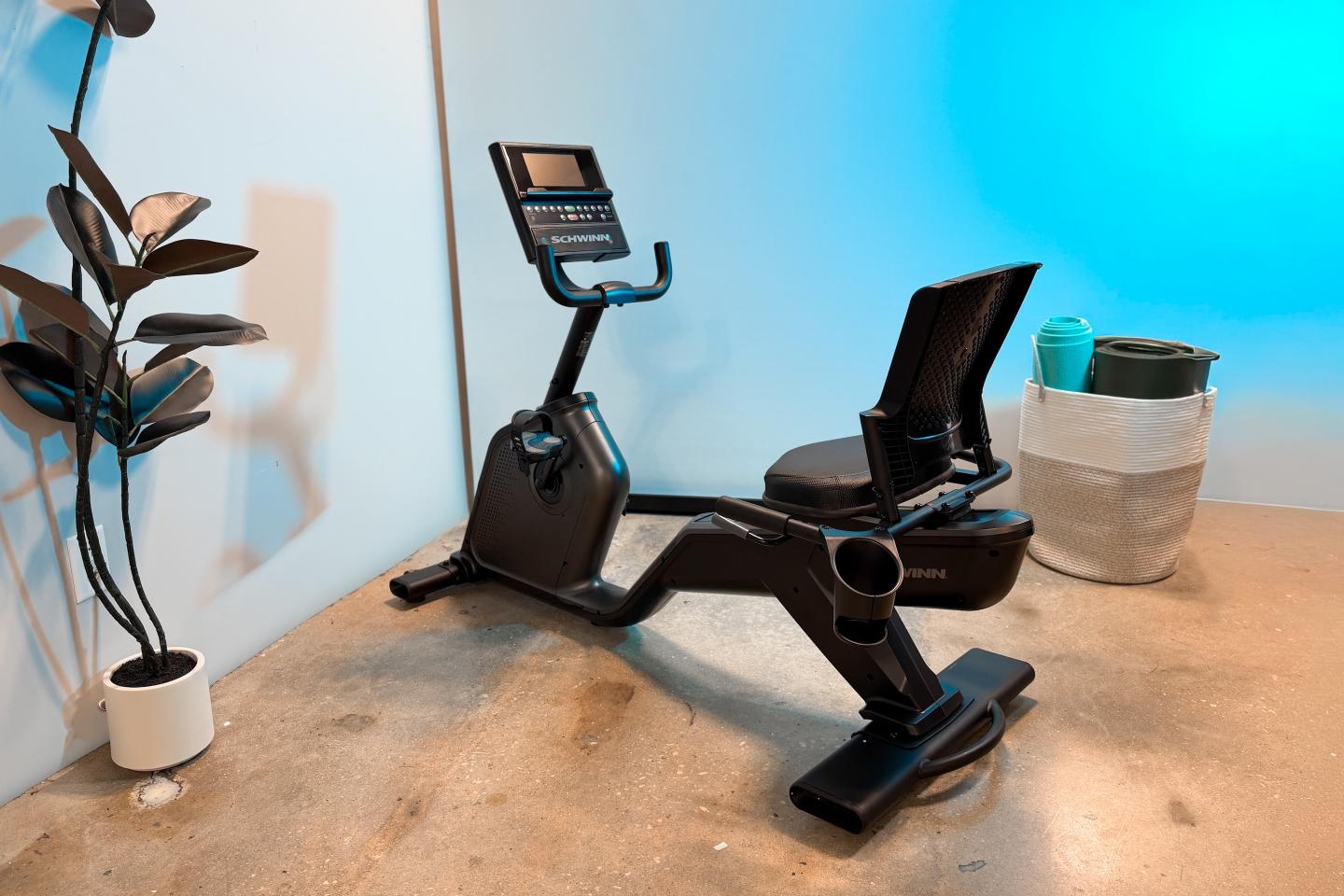
A recumbent bike can provide a low-impact, joint-friendly workout at your pace. You can read reports, catch up on your emails, or even strategize while working out. Recumbent bikes are also great for folks recovering from knee surgery or replacement, too.
Our team has selected two of our top picks for the year through hands-on testing. Read on for our testers’ full reviews, considering aspects such as durability and construction, technology, aesthetics and ergonomics, plus safety features, noise, and value. We will be testing more recumbent bikes soon, so stay tuned for our full list.
Best Recumbent Bikes of 2026
- Best Recumbent Bike Overall: NordicTrack 10 Recumbent Bike
- Best Recumbent Bike for Classes: Schwinn 290
Best Recumbent Bikes Comparison Table
Best Recumbent Bike Overall: NordicTrack 10 Recumbent Bike
NordicTrack 10 Recumbent Bike
| Fortune score | 4/5 |
at NordicTrack
- Our thoughts: Our tester thinks this recumbent bike is extremely solid and well-built, even at high speeds and high resistance
- Who it’s for: Folks who want trainers to lead them through workouts via iFIT
- What makes it different: It has 26 levels of silent magnetic resistance, which is more than many other recumbent bikes on the market
Pros
- Has a 10-inch HD touchscreen
- It’s very quiet
- The tech is easy to use, and intuitive
Cons
- iFIT membership is required for workout and trainer access
- May need two people to move it
- Pricey
Our Thoughts on NordicTrack 10 Recumbent Bike
The NordicTrack 10 Recumbent Bike is our pick for the best overall recumbent bike because it’s stable and durable, great for long-term use. This recumbent bike is also quiet and tech-forward, with an intuitive touchscreen.
Carter tested the NordicTrack 10 Recumbent Bike. He is a triathlete and has ridden road and mountain bikes. He completed a 10-minute workout on the bike and rated his overall experience a 4 out of 5. “My experience was great! I would ride this again,” Carter said. “The only negative was the rigid back and the bike’s weight. It makes it sturdy, but it’s really difficult to move. There are wheels on the front, but no handle on the back to pivot it up onto the wheels.”
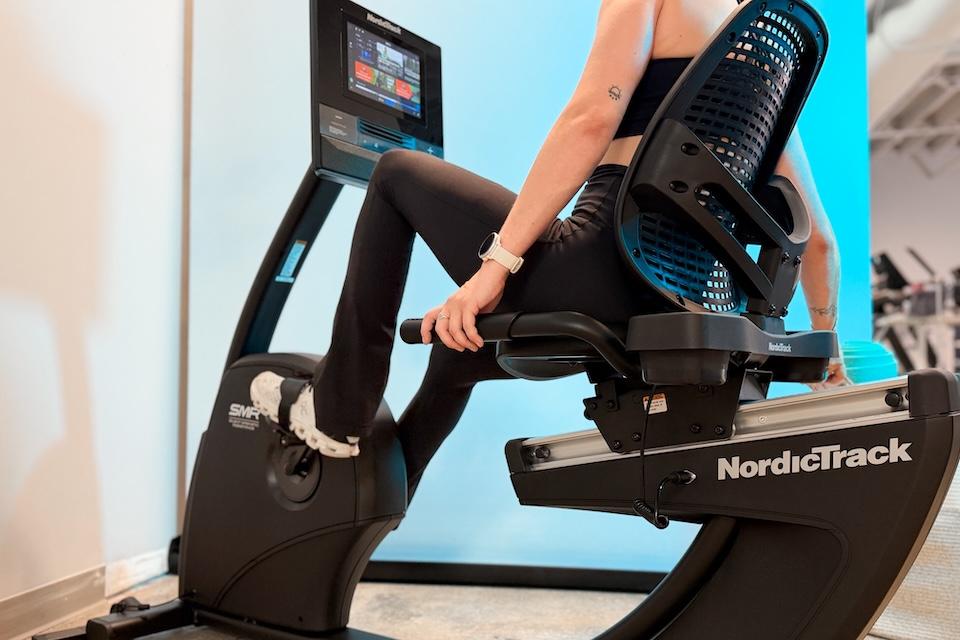
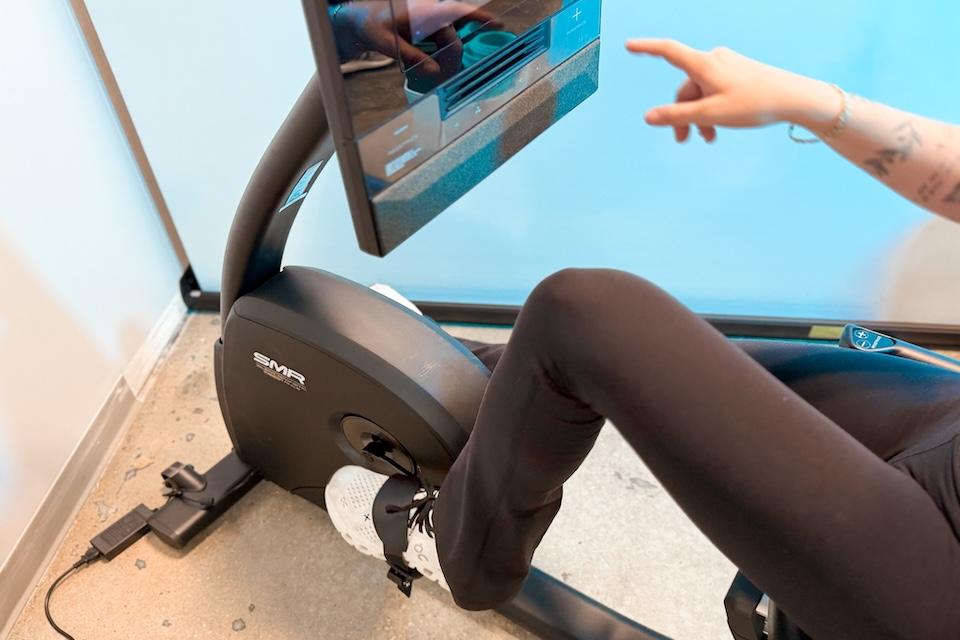
When it comes to ergonomics, Carter noted that the seat is comfortable, but the back of the seat is very rigid and can’t be adjusted. The pedals are standard platform pedals. They are flat with an adjustable strap that covers the shoe. There’s just one set of grips, which he found comfortable for the recumbent position, rating ergonomics a 4 out of 5.
Carter said this recumbent bike is “extremely heavy, though it does have wheels. There are no handles to help you lift it. If anything, it’s a two-person job.” This makes sense, given that the in-box product weight of this bike is 186 pounds. While the product page doesn’t specify the weight without the box and packaging, it’s likely just a few pounds lighter than that when assembled. Our tester rated portability a 3 out of 5.
The NordicTrack 10 Recumbent Bike doesn’t have any built-in safety features, per our tester. “It is easy to get on and off the bike,” he said. “It was a bit confusing to figure out how to adjust the seat forward and backward. The handle itself was a tension rod that had to be twisted in an awkward direction and is best adjusted while standing next to the bike.”
Specs:
- Dimensions: 67.2 inches long by 23.3 inches wide by 51.9 inches tall
- Weight capacity: 350 pounds
- Screen: 10-inch tilting HD touchscreen
- Resistance levels: 26
Best Recumbent Bike for Classes: Schwinn 290
Schwinn 290
| Fortune score | 4/5 |
at Schwinn
- Our thoughts: We like that it has 25 resistance levels
- Who it’s for: Folks of all strengths would do well with this bike and the different difficulty levels, per our tester
- What makes it different: This bike connects to JRNY and Zwift for additional classes
Pros
- Has onboard programming built in (13 workouts)
- Very quiet
- Smooth magnetic resistance
Cons
- The seat is difficult to adjust
- The bike frame lost control during Emily’s test
- Very uncomfortable seat
Our Thoughts on Schwinn 290
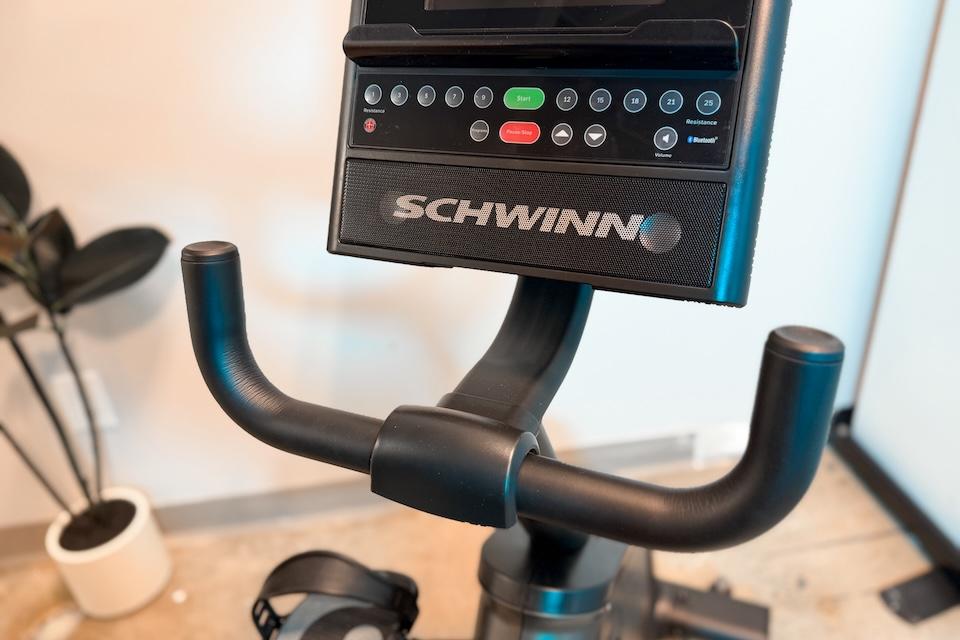
The Schwinn 290 is our pick for the best recumbent bike for classes. This recumbent bike includes 13 built-in classes. You can also sync the bike with JRNY and Swift for more classes!
Emily tested the Schwinn 290, rating her overall experience a 3 out of 5. “This bike is good, and I felt like I got a good workout in. If using it for longer than 10 minutes, the seat would be really uncomfortable,” she said. “The bottom cushion was comfortable, but the back of it was hard plastic.”
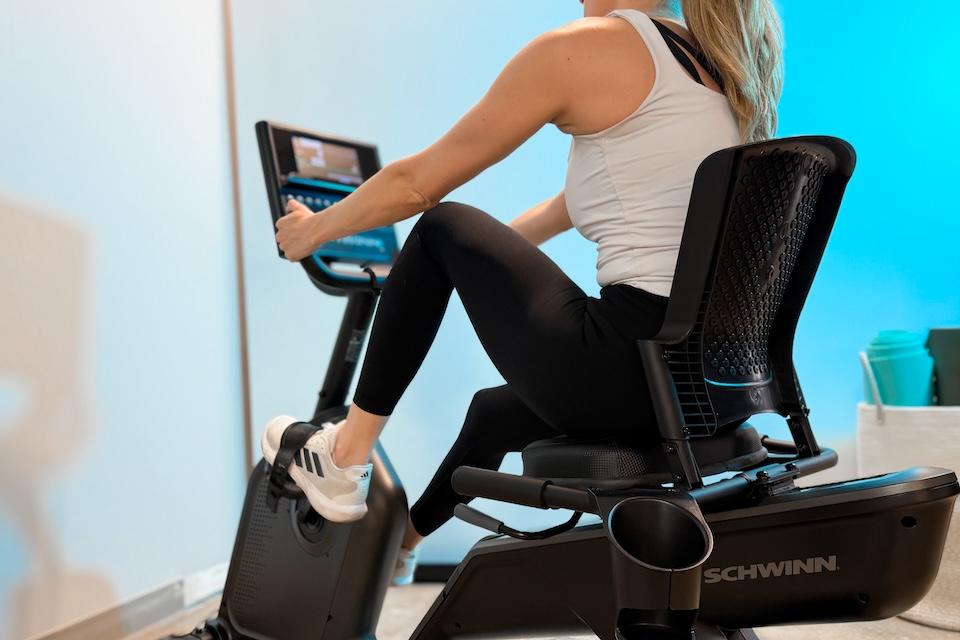
When it comes to ergonomics, Emily again mentioned that the back of the recumbent bike is very uncomfortable. “Additionally, you can adjust the distance of the seat from the pedals, but not the height,” she said. “There are two sets of handlebars, one on the sides of the seat and another near the console. There’s no way you could sit up on this bike, however, so I’m not sure how usable I would say they are.” She rated the Schwinn 290 a 3 out of 5 in this category.
Our tester thinks it’s relatively portable, rating this recumbent bike a 4 out of 5. “The handle on the back makes it easy to lift and move around. There are no wheels, but you can drag it,” she said.
For safety features, this recumbent bike has foot holders, but Emily said they weren’t very secure.
Specs:
- Dimensions: 66.4 inches long by 28 inches wide by 47 inches tall
- Weight capacity: 330 pounds
- Screen: 7-inch LCD display screen
- Resistance levels: 25
Why the Right Fitness Equipment Matters to Professionals
For leaders and time-crunched professionals, using a recumbent bike can be a great way to reduce stress and move your lower body. Because recumbent bikes allow you to lean back while pedaling, you could put one in a big office or in your basement and answer emails while riding, achieving two goals at once.
Recumbent Bikes vs. Exercise Bikes
The main difference between a recumbent bike and an exercise bike is the way you sit and are positioned on the bike. Recumbent bikes typically have a large, wide seat with a back. Your legs are stretched forward on a recumbent bike, too.
An exercise bike is more like a regular bicycle; the seat (or saddle) is much smaller, there’s no backrest, and your body is positioned more forward than on a recumbent bike.
How We Tested and Selected the Best Recumbent Bikes
Here’s how our team tested and selected the best recumbent bikes.
Durability and Construction
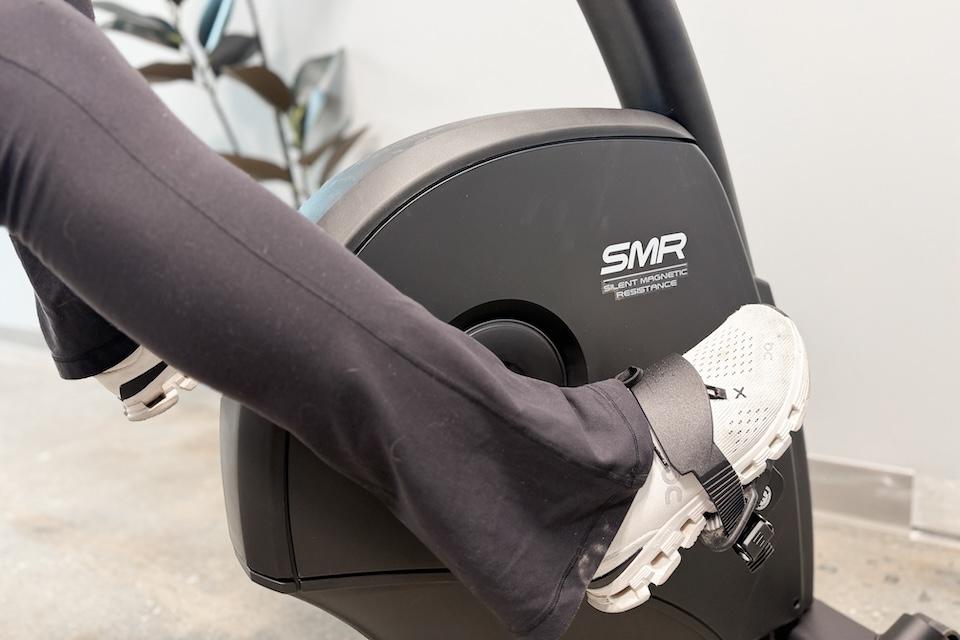
Testers recorded their overall impression of the recumbent bikes’ construction, noticing any potential defects or weaknesses. They also paid close attention to any shaking, wobbling, and noise during their workout.
Technology
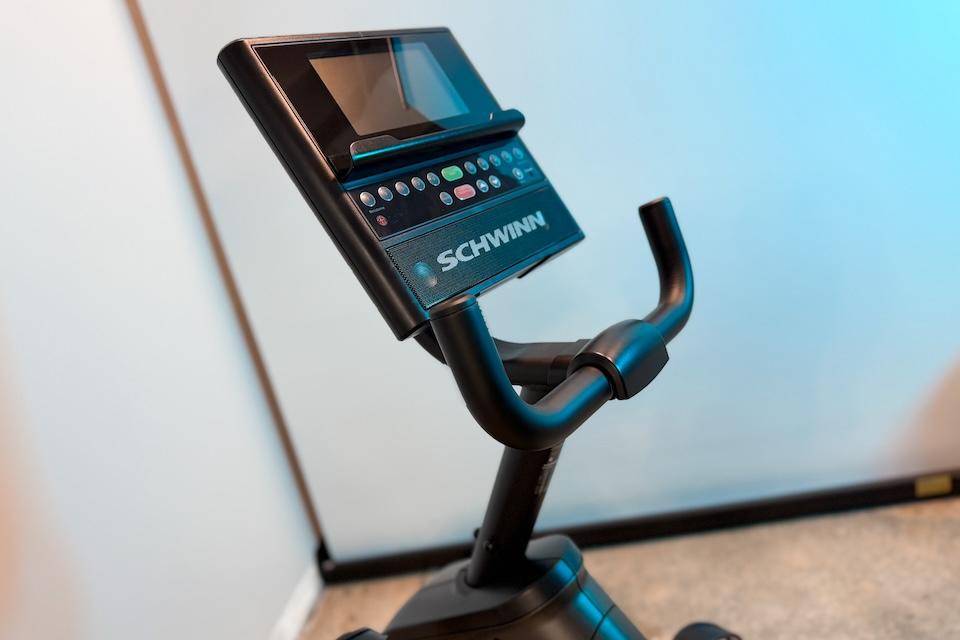
Our testers reviewed the recumbent bikes’ tech features, considering if the display/touchscreen is easy to use, intuitive, and could be tilted or angled differently. They also checked to be sure the Bluetooth or Wi-Fi setup worked properly. Testers also made note if the recumbent bikes had a heart rate monitor.
Aesthetics and Ergonomics
When examining the ergonomics of the recumbent bikes, testers shared how the bike seat felt. Testers also shared if there are multiple grip placements for your hands.
For aesthetics, testers noted if the recumbent bike looks appealing, especially within a home. They also shared if the recumbent bike had aesthetic features that give it an edge over similar products.
Safety Features
Testers checked for any safety features on the recumbent bike and made note of whether the bike was easy to get on and off of.
Noise
Testers rated the noise of the recumbent bikes on a scale of 1 to 5; 1 being the loudest or worst, and 5 being the quietest or best.
Value
Benefits of Recumbent Bikes
Here are some benefits of recumbent bikes.
- Low-impact exercise
- May reduce lower back strain
- Biking may improve your cardiovascular health
What to Avoid in Recumbent Bikes
Here’s what to avoid when shopping for a recumbent bike.
- We recommend testing recumbent bikes in person before purchasing (if it doesn’t feel comfortable for at minimum 10 minutes of riding, avoid buying)
- Poorly constructed machines
- Low-quality materials
How to Find the Best Recumbent Bike for You
Here’s how to shop for the best recumbent bike for you.
Your Fitness Goals
If you are a beginner, recovering from an injury, or an older adult, a recumbent bike could work well, depending on your fitness goals and health.
Size
Check the total footprint of the recumbent bike before purchasing. You’ll also want to measure the space in your home, basement, home gym, or garage to ensure the bike fits.
Portability
Before purchasing the recumbent bike, check the projected weight of the assembled bike and other specs. Does it have wheels to move it? Is the assembled bike a weight that is manageable to lift if you plan to move it?
Cost
Consider the cost of the recumbent bike. Can it be financed? Will you use it in place of a gym membership? And other aspects (tech features, touchscreen, membership) that may add to the total cost over time.
Fortune’s Final Thoughts
Recumbent bikes can be a great way to get started exercising, recover from knee surgery, or do low-impact exercise. Because you get to lean back and simply pedal, you can use your exercise time to take a mental break, or you could use it to catch up on your inbox or make calls.
Frequently asked questions
How many minutes on a recumbent bike equals 10,000 steps?
There’s no definitive equivalent, though Ohio State University has an Activities to Steps Conversion Chart that lists bicycling at 10 mph as equal to about 133 steps per minute. While biking on a recumbent bike isn’t exactly the same as biking at 10 mph, to get in approximately 9,975 steps, you’d have to use the recumbent bike for about 75 minutes, which would be quite a long recumbent bike workout.
What are the disadvantages of recumbent bikes?
Using a recumbent bike can have a few drawbacks, such as only working your lower body, and you may burn fewer calories than spinning or using a regular exercise bike.
Is a recumbent bike good after knee surgery?
Use of a recumbent bike is often recommended after knee surgery (including knee replacement) because it is a low-impact exercise that may help restore your range of motion and strength without stressing your joints. As always, if you have questions specific to your situation, it’s smart to check with your health care professional.