
If you’re juggling a packed calendar, finding time to plan meals, track nutrition, or even drink enough water is no small feat. Fortunately, the best nutrition apps in 2026 are designed with busy lifestyles in mind, to help you stay healthy without adding another task to your day.
If you want to manage energy levels for peak performance, make smarter food choices on business trips, or simply build healthier habits, these apps serve as your on-demand nutrition coach—right in your pocket. Here’s a look at the best nutrition apps of 2026.
Best Nutrition Apps of 2026
- Best Nutrition App Overall: Nourish
- Best Free Nutrition App: Simple App
- Best Nutrition App for Meal Planning: Fay
- Best Nutrition App for Athletes: BetterMe
- Best Nutrition App for Calorie Tracking: Cronometer
Best Nutrition Apps Comparison Table
Best Nutrition App Overall: Nourish
Nourish
| Fortune score | 4/5 |

at Nourish
- Our thoughts: Nourish functions more like a modern, digital nutrition clinic than a typical tracking app, which makes it uniquely powerful for busy professionals
- Who it’s for: Executives and busy professionals who want personalized guidance from a credentialed expert
- What makes it different: Nourish is built around registered dietitians and insurance-covered medical nutrition therapy, not just macros and calories
Pros
- Access to licensed registered dietitians
- Often covered by insurance
- Structured, evidence-based support for complex health and nutrition goals
Cons
- Depends on insurance coverage and network, so availability varies by location and plan
- Not ideal if you only want a simple calorie-counting or macro-tracking app
- Requires scheduled sessions, which may feel like more commitment than a casual app check-in
Our Thoughts on Nourish
Nourish is our pick for the best overall nutrition app because it goes beyond simply tracking calories–it’s a true expert-led care app that fits into a demanding professional life. Instead of asking you to piece together advice from generic content, the app connects you directly with registered dietitians who can tailor strategies to travel schedules, stress, medical conditions, and performance goals. This combination of clinical credibility, virtual convenience, and widespread insurance coverage makes it a uniquely strong choice for busy executives who want meaningful, sustainable results rather than another app to manage.
Pete rated Nourish a 4 out of 5 overall, based on user reviews and app functionality. Unlike calorie-counting apps, Nourish is “designed to help you improve eating habits, meet health goals, and manage nutrition-related conditions rather than just track calories,” as Pete describes it.
For instruction and education, Nourish earned a perfect 5 out of 5 because “your registered dietitian explains your personalized plan during appointments and through in-app summaries, and they break things down based on your goals and lifestyle rather than giving generic diet jargon.”
The app provides healthy recipes and meal ideas curated to support individual goals, and the educational components are tied directly to your goals through dietitian guidance rather than generic nutrition articles. Pete emphasized that everything is highly customizable because it’s based on your one-on-one work with a registered dietitian, who builds targets and recommendations around personal goals, health history, food preferences, and lifestyle.
Accountability scored a 4 out of 5. While Nourish does not have a built-in community, our tester notes that “the regular check-ins with your registered dietitian serve as your main accountability system,” and “many people find this one-on-one support non-judgmental and encouraging rather than shaming.”
For user interface, Pete gave it a 3 out of 5, noting that while the app lets users log meals and estimate calories and macros using AI, “Nourish isn’t designed as a standalone food-tracking app the way Cronometer or MyFitnessPal is. The tracking features are meant to support the dietitian-led guidance you’re getting rather than coach you by themselves.”
Best Free Nutrition App: Simple App
Simple App
| Fortune score | 3.75/5 |

at Simple
- Our thoughts: Simple App lives up to its name by stripping away the clutter and focusing on a few high-impact behaviors
- Who it’s for: Professionals and executives who want structure around eating windows and basic nutrition habits
- What makes it different: Simple App centers on fasting schedules, gentle coaching, and small daily wins
Pros
- Clean, easy-to-use interface with minimal setup
- Helpful reminders and coaching-style prompts that support habit building
- Strong free tier with enough features for most casual users
Cons
- Limited detailed nutrition and micronutrient data in the free version
- Focus on fasting may not fit everyone’s preferred approach to eating
- Some advanced insights and personalization locked behind paid features
Our Thoughts on Simple App
Simple App is our pick for the best free nutrition app because it gives busy professionals exactly what they need to start changing habits without demanding a huge time investment or a paid subscription. Its focus on fasting windows, simple guidance, and small daily actions makes it easy to stay consistent, even when workdays are unpredictable.
Pete tested the free version of the Simple App for seven days to support an intermittent fasting routine and rated his overall experience a 4 out of 5, describing the week as positive and consistent.
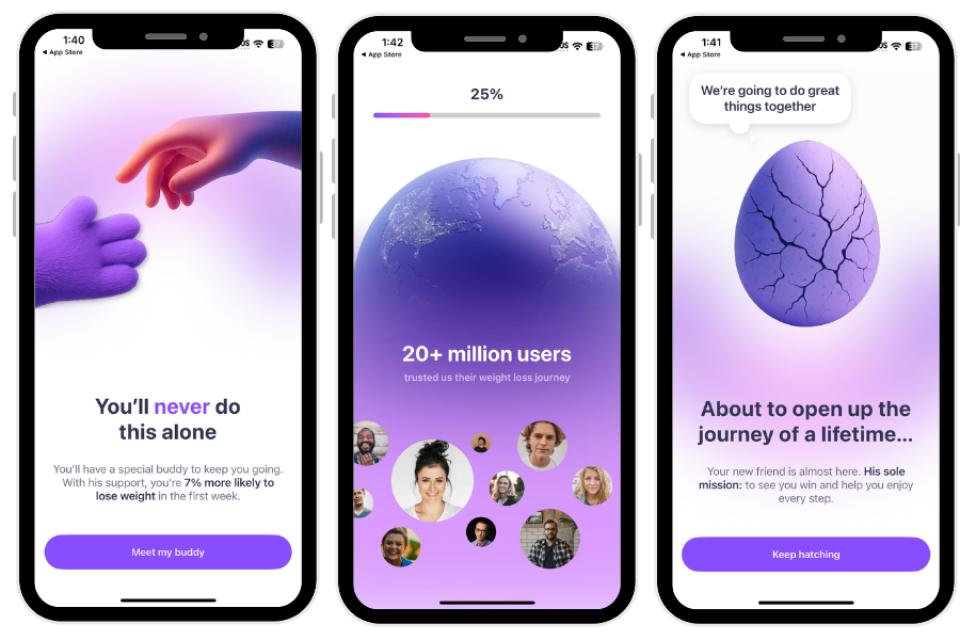
For instruction and education, Pete gave Simple a 4 out of 5, noting that its recommendations are “clear and easy‑to‑understand.” Onboarding begins with a detailed questionnaire about age, current weight, dietary preferences, eating habits, sleep patterns, activity level, and goals, which allows the app to recommend a tailored fasting plan and, if applicable, connect that plan to a goal weight or event like an upcoming 5K.
He also appreciated that the app provides some educational content on nutritious eating, exercise, and eating psychology, helping users see how mood and mental health affect eating behaviors. However, in the free version, access to the full recipe database is locked behind a premium subscription, so free users mainly get habit tracking, fasting windows, and basic educational material.
Accountability earned a 3.5 out of 5 because there is no true community feature or personalized coaching. Instead, accountability comes from reminders and an in‑app AI assistant that can answer questions, suggest healthy recipes or workouts, and help improve meal scores.
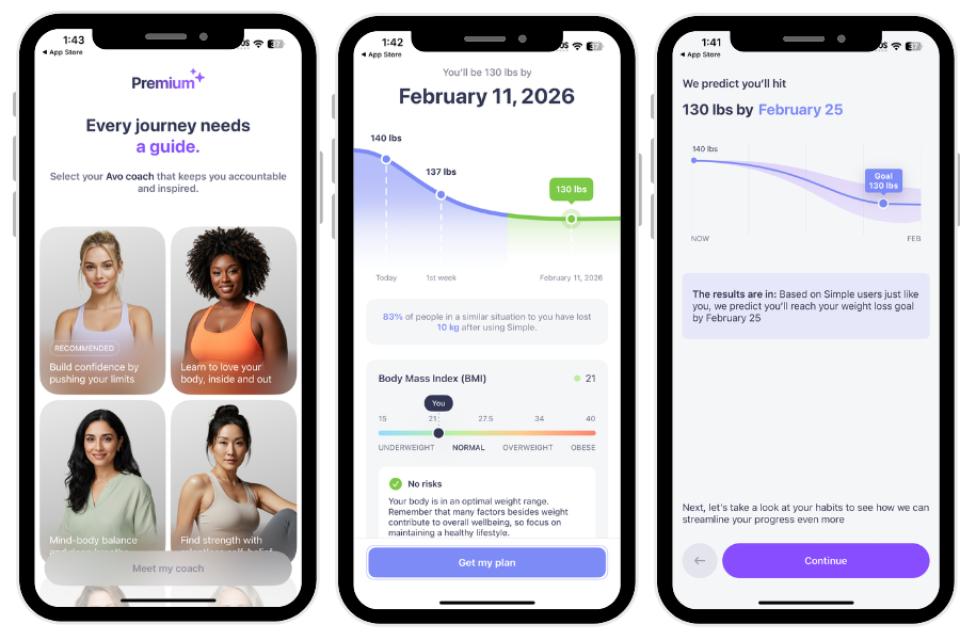
Pete also rated safety a 3.5 out of 5, explaining that the app promotes healthy eating without food or body shaming, and that its meal‑scoring system—rating meals from 1 (low quality) to 4 (high‑quality) based on protein, fiber, saturated fat, sodium, and calcium—offers a simple educational tool, even if it has limitations for certain foods.
On the plus, sustainability received a 4 out of 5. Our tester found the fasting guidance easy to follow, liked the reminder system for starting and ending fasts, and felt his nutritional needs were generally met, though he noted that the nutrition data is approximate because the app does not ask for portion sizes.
Best Nutrition App for Meal Planning: Fay
Fay
| Fortune score | 4/5 |

at Fay
- Our thoughts: Fay stands out because it treats meal planning as an ongoing partnership with an expert, not a solo task
- Who it’s for: Busy professionals and executives who want structured meal plans tailored to their lifestyle, travel, and health goals
- What makes it different: With Fay, you work with a dietitian who helps you adapt meal plans week to week, making it more personalized and realistic for a demanding schedule
Pros
- Personalized meal planning support from a nutrition professional
- Collaborative app tools that make adjustments easy
- Can align meals with broader health and performance goals
Cons
- Less appealing if you prefer fully DIY planning with no professional input
- Quality of experience can vary by individual provider
- May require insurance eligibility or out-of-pocket investment
Our Thoughts on Fay
Fay is our pick for the best nutrition app for meal planning because it directly addresses the hardest part for busy professionals: translating good intentions into specific meals that actually work in a packed week. Instead of leaving users alone with recipe lists and grocery features, it adds a human expert who can design and adjust plans around meetings, travel, and family needs. That blend of professional guidance and flexible digital tools makes meal planning feel less like a burden and more like a strategic system that quietly supports long-term health.
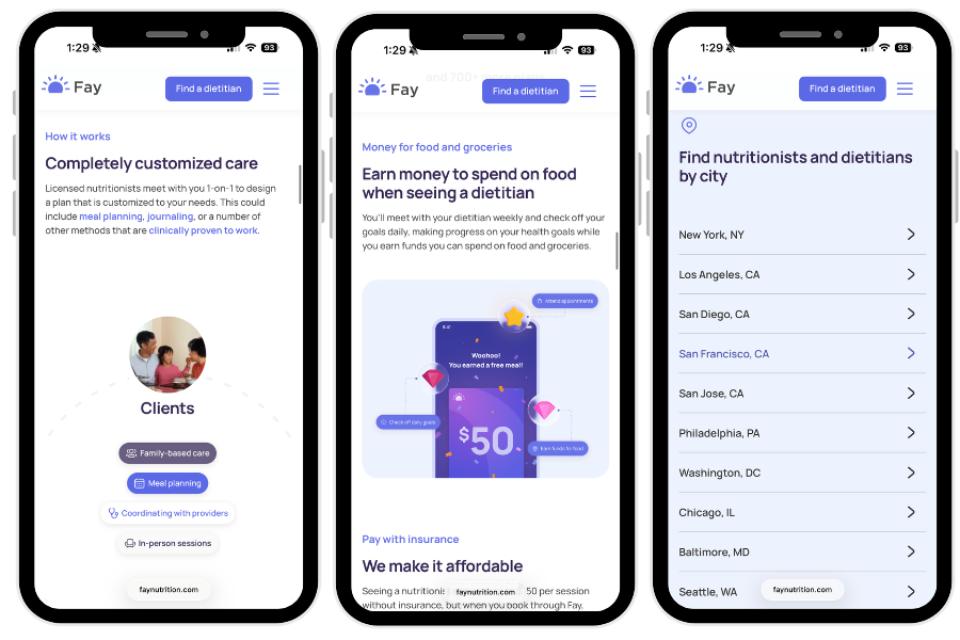
Pete researched Fay Nutrition, which connects users with a registered dietitian for one-on-one personalized guidance, and rated the overall program a 4 out of 5 based on its highly praised app store ratings (4.9 stars with over 5,000 reviews). Our tester found that this app operates primarily as a platform for professional guidance rather than automated tracking or recommendations, allowing users to schedule appointments, message their dietitian, and keep food and mood logs all in one place.
For instruction and education, Fay earned a perfect 5 out of 5: “The nutrition guidance and recommendations you receive are from a registered dietitian who works with you on a one-on-one basis. So I’d say the program is 100% customizable to your needs,” Pete wrote.
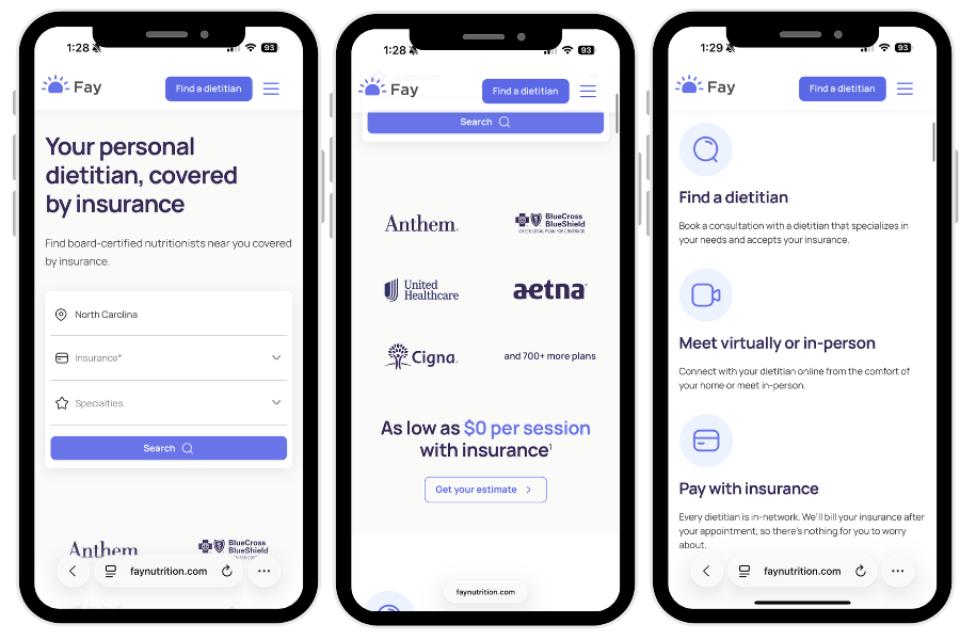
Accountability scored a top-notch 5 out of 5 because “the main source of accountability comes directly from your one-on-one coaching sessions with your registered dietitian,” typically scheduled weekly. Pete noted that these meetings focus on goals, habits, and progress “without any food or body shaming,” and that the personalized guidance helps users “learn healthy, sustainable food habits that you can carry forward even when you’re no longer actively using the app.”
For safety, this app also earned a 5 out of 5. The program does not promote shame, users are not required to weigh, measure, or photograph themselves, and as our tester noted, “Interactions happen through one-on-one video sessions, in-app messaging, and check-ins, typically once a week, though the frequency can be adjusted based on your needs.”
Best Nutrition App for Athletes: BetterMe
BetterMe
| Fortune score | 4/5 |

at BetterMe
- Our thoughts: BetterMe brings workouts and nutrition under one roof, which is especially valuable for athletes
- Who it’s for: Recreational and competitive athletes who want accessible, app-based guidance on how to eat and train
- What makes it different: The app links training intensity, recovery, and nutrition
Pros
- Integrated training and nutrition guidance tailored to goals
- Habit and behavior tools that support consistency over time
- Wide variety of programs to match different fitness levels and sports
Cons
- May feel too general for elite athletes needing sport-specific periodization
- Some of the more advanced features require a paid subscription
- Nutrition guidance may not replace personalized advice from a sports dietitian
Our Thoughts on BetterMe
BetterMe is our pick for the best nutrition app for athletes because, with over 20 balanced nutrition plans, it treats food as a core part of performance, not an afterthought. By pairing structured workout plans with practical nutrition guidance, it helps athletes think about fueling and recovery in the same context as their training load.
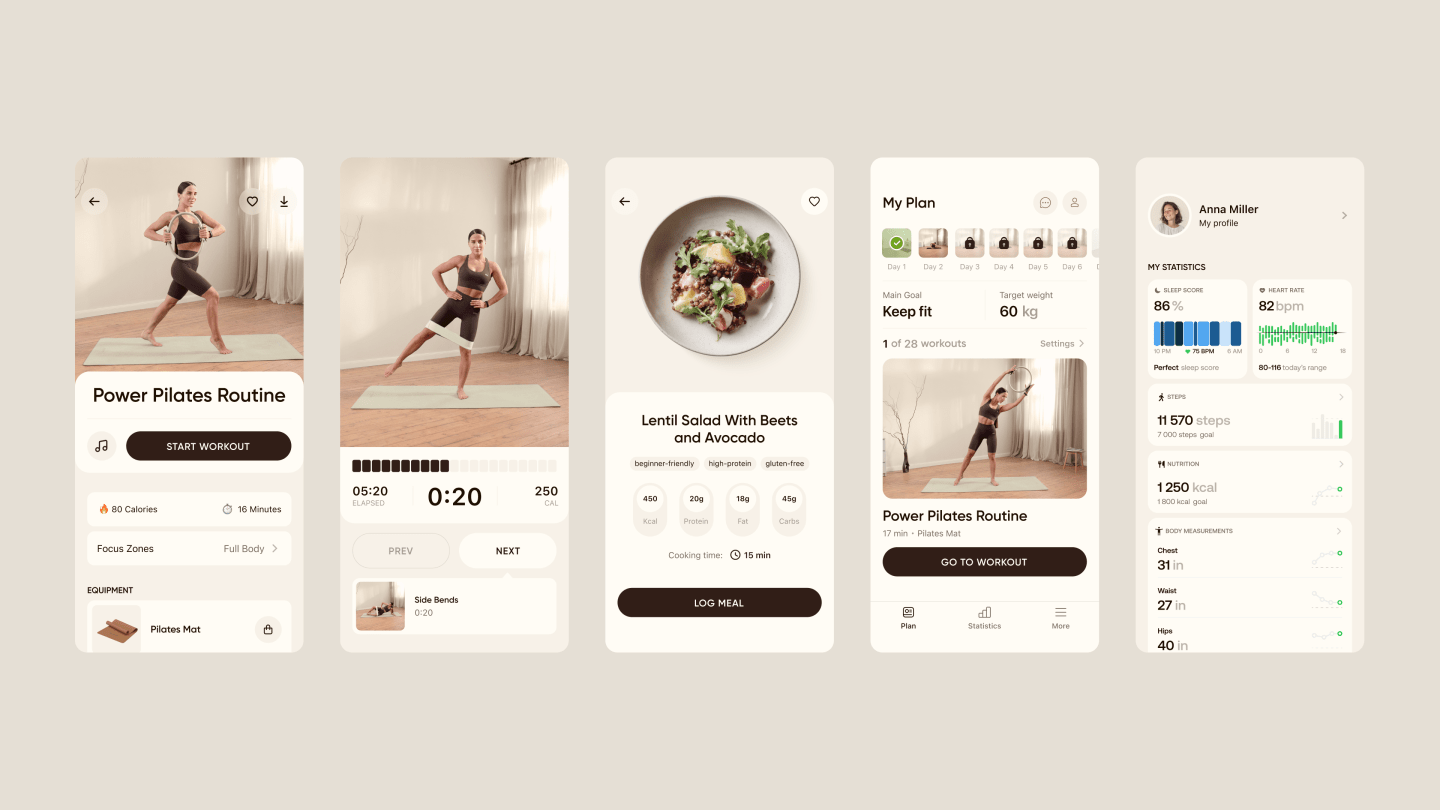
Paige tested BetterMe and found it reasonably priced, giving the pricing a 4 out of 5. She explained, “The baseline price is $14.99 per month. The app was easy to set up but there were so many pop ups encouraging me to upgrade to lose weight faster, when my goal wasn’t weight loss,” she said.
Once she moved past the initial upsell prompts, our tester rated overall ease of use a 5 out of 5 for its clean layout and intuitive navigation: “There are easy tabs listed at the bottom and it is very cleanly laid out and self-explanatory. It easily describes what it recommends doing every day.”
In terms of accountability and workout quality, BetterMe performed well. Paige gave accountability a 4 out of 5, noting that while the app offers challenges and group workouts you can join, these features are an extra up charge. “There are also push notifications that remind you to keep accountable,” she added.
Workout variety and instructions both earned 5 out of 5, as Paige shared, “There is an extensive list of workouts within each genre of workout … I really appreciate the workout variety and felt it kept me excited,” adding that the videos include audio prompts, timers, and even the ability to cast to a larger screen. For progressive overload, Paige also awarded a 5 out of 5, emphasizing that “Each workout is labeled as newbie, medium, advanced. And I feel like it really aligns with the workout and allows for progressive overload.”
Paige concluded on a positive note, mentioning that “the chat was easy to open. Someone responded immediately and was very willing to help with my request.”
Best Nutrition App for Calorie Tracking: Cronometer
Cronometer
| Fortune score | 4/5 |

at Cronometer
- Our thoughts: The app pairs with a vetted food database with granular macro- and micronutrient data so you can see exactly what you are consuming
- Who it’s for: Professionals, athletes, and health-focused users who care about precise calorie counts
- What makes it different: Unlike many calorie apps that rely heavily on user-generated entries, Cronometer has a curated database and full nutrient information
Pros
- Very detailed calorie and nutrient tracking
- Strong free version with plenty of functionality
- Supports custom targets and advanced metrics for power users
Cons
- Level of detail can feel overwhelming for more casual users
- Some premium analytics and features require a paid upgrade
- Interface is more data-dense than habit- or coaching-focused
Our Thoughts on Cronometer
Cronometer is our pick for the best nutrition app for calorie counting because it delivers both accuracy and depth, going far beyond basic “calories in, calories out.” Its curated database, full nutrient panels, and flexible goal-setting tools make it uniquely well-suited for busy professionals who want to be precise about their intake without second-guessing the numbers.
Pete has been using Cronometer on and off since 2020 for serious calorie and macro tracking and rated his overall experience a 4 out of 5, calling it “one of the food tracking apps I consistently come back to because it’s easy to use and provides a lot of functionality, even in the free version.” He particularly appreciated that “the barcode scanning feature, which many other apps lock behind a paywall,” makes food logging fast and efficient, and that he can “fully customize my calorie and macronutrient targets rather than being limited to preset percentage increments.”
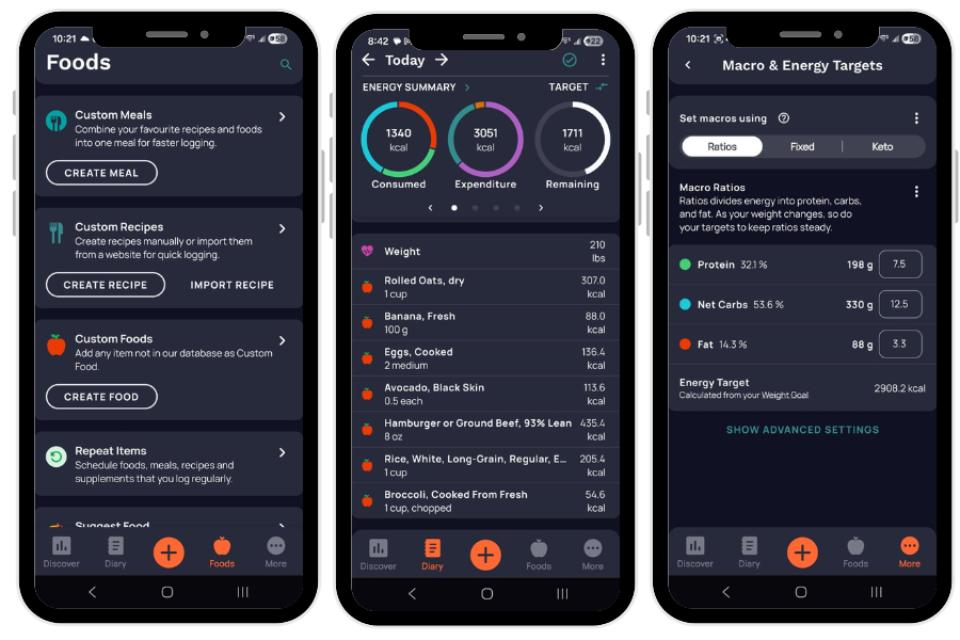
For instruction and education, Pete rated Cronometer a 1 out of 5, emphasizing that it is “best suited for individuals who already have a detailed nutrition plan in place for their calorie and macronutrient goals and want a reliable way to track and verify that they’re hitting those targets.”
The app does not include built-in educational content or structured meal plans, though a paid feature—the Recipe Importer—lets you paste recipe URLs to create custom recipes with verified nutritional data.
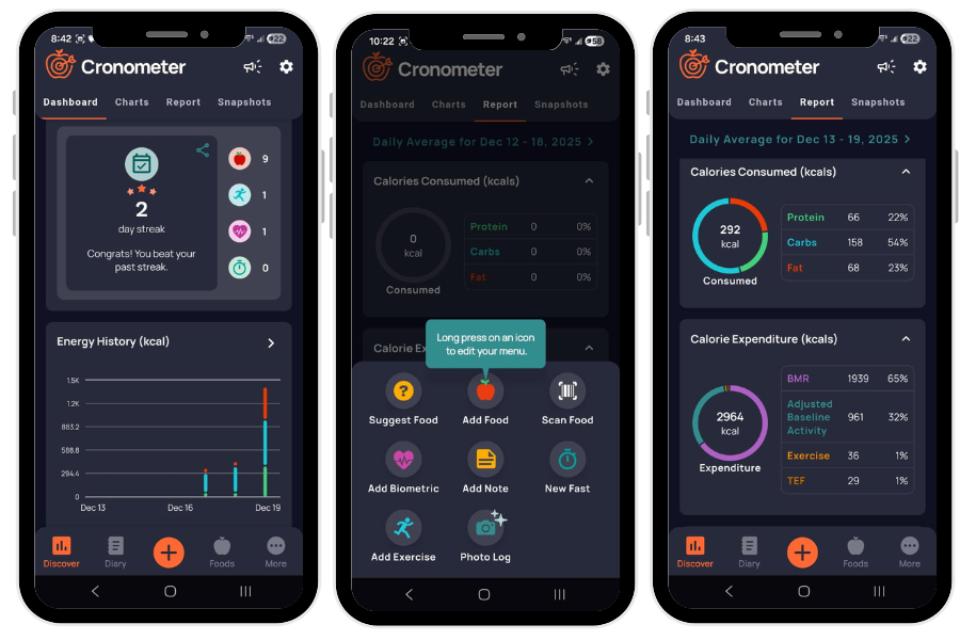
Sustainability scored a 4 out of 5. “Cronometer is very easy to understand and use from a logistical standpoint, especially if you’ve tracked food before,” Pete noted. He added: “Whenever I track consistently, I notice improvements in my energy levels and mood simply because it helps ensure I’m eating enough calories each day.”
Similarly, the user interface received a 4 out of 5 for making it easy to log food and track both calories and macronutrients and track other important metrics like fiber and a few different vitamins and minerals, plus seamless wearable device integration.
How We Tested and Selected the Best Nutrition Apps
Choosing the right app matters when you’re already juggling a demanding schedule, so this list focuses on tools that are not only effective but realistic to use in daily life. Each recommendation reflects a mix of hands-on experience, user feedback, and expert-informed criteria centered on usability, accountability, tracking depth, programming quality, and overall value.
Setup and Ease of Use
We prioritized apps that feel intuitive from the moment you download them, with clear onboarding, simple account creation, and uncluttered dashboards. Testers paid close attention to how easy it was to log food, find features, and complete key tasks in just a few taps, since busy professionals rarely have time for a steep learning curve.
Accountability
Because different users thrive with different levels of support, apps were evaluated on the variety and quality of accountability tools they offer. That included options like real-life coaches or dietitians, in-app check-ins, reminders, streaks, and progress prompts, so readers can choose the level of encouragement that best matches their personality and goals.
Tracking
Strong tracking was a must, especially for readers who want to see how their choices add up over time. We favored apps that make it easy to log food, habits, and other health data, and that turn those entries into clear, easy-to-read insights and nutrition guidance so it feels simpler—not harder—to build healthier routines.

Programming
Where applicable, preference went to apps with programs informed by dietitians or other qualified professionals, particularly when they offered structured plans rather than random tips. However, these tools are meant to complement, not replace, personalized advice from a healthcare provider, especially for anyone with preexisting conditions or specific medical concerns.
Value
Value wasn’t just about the lowest price; it was about what you actually get for what you pay. We weighed feature depth, coaching access, and tracking quality against subscription costs, highlighting options that deliver strong functionality at a reasonable monthly rate and noting approximate price-per-month costs.
How to Find the Best Nutrition App for You
Choosing a nutrition app is a lot easier when you’re clear on what you need it to do for your real life, not someone else’s ideal routine. Think about your goals, your schedule, and the level of support you actually want so you can focus on the tools that will genuinely help.
Your Goals
Different people use nutrition apps for very different reasons, from eating more regularly to optimizing performance. Clarifying whether your priority is eating more whole foods, diversifying your diet, staying consistent with a specific plan, or hitting body-composition targets will quickly narrow your options. The clearer your goal, the easier it is to pick an app whose features (like meal planning, macro tracking, or habit coaching) match what you actually want to change.
Accountability
Accountability is one of the biggest levers for long-term success, but the right level depends on your personality and lifestyle. If you thrive with external support, you may benefit from apps that include real coaches, dietitians, or structured check-ins; if you’re more self-directed, simple reminders, streaks, and progress graphs might be enough. Matching accountability style to your preferences helps you avoid apps that feel either too hands-off or too intense, which often leads to quitting.
Instructions
Some users just need a place to log data, while others want clear, step-by-step guidance. If you’re newer to nutrition or feel overwhelmed by food choices, look for apps that offer structured programs, prompts, and educational content; if you’re more experienced, a flexible tracker with fewer pop-ups may feel better. Choosing the right level of instruction prevents both confusion on one end and notification fatigue on the other.

Cost
Budget matters, especially when subscriptions stack up with other fitness tools and services. Many nutrition apps offer powerful free tiers or reasonably priced monthly plans that are still far more affordable than weekly one-on-one nutrition visits.
Benefits of Nutrition Apps
Nutrition apps can make healthy choices more visible, more structured, and more convenient. Here are some other benefits:
- Help you see patterns in your eating, energy, and mood so you can make smarter adjustments instead of guessing
- Provide structure through reminders, plans, and goals so it’s easier to stay consistent on busy days
- Offer educational insights that build your nutrition knowledge over time, not just your tracking streak
- Integrate with other health tools (like wearables or training apps) so your food choices align with your overall wellness or performance plan
What to Avoid in Nutrition Apps
Not every app is built with your health in mind, and some features can work against long-term well-being. Here’s what you should avoid when choosing a nutrition app:
- Apps that overemphasize extreme restriction, quick fixes, or rapid weight loss without regard for sustainability or mental health
- Tools that feel confusing, cluttered, or hard to navigate, which often become digital clutter instead of real support
- Apps that give rigid, one-size-fits-all advice without acknowledging medical conditions, cultural preferences, or athletic demands
Frequently asked questions
What is the most accurate nutrition app?
Accuracy depends on the quality of the food database and how carefully you log your meals. Apps that rely on curated, verified entries and provide full nutrient breakdowns tend to be more precise than those built mainly on user-generated entries.
What app do nutritionists use?
Many nutrition professionals use a mix of consumer-facing apps and professional platforms, often choosing tools that allow detailed nutrient tracking and easy data sharing with clients. The best choice often depends on whether they prioritize behavior coaching, medical nutrition therapy, or performance-focused work.
Can a nutrition app help me lose weight?
A nutrition app can support weight loss by making your intake visible, setting realistic targets, and helping you build consistent habits. The biggest impact comes when you use it regularly, pair it with movement and sleep habits, and treat it as a long-term support tool rather than a short-term fix.