The best memory foam mattresses in 2026 blend comfort, contouring support, and value, offering a sleep surface that adapts to your body without inflating your budget. Known for pressure relief and motion isolation, today’s memory foam options go beyond traditional foam—they often feature cooling technology, CertiPUR-US® safety certifications, and generous trial periods to ensure a worry-free purchase. Many high-quality models are available for under $2,000 for a queen size, proving that top-tier comfort doesn’t have to come at a luxury mattress price.
Since quality sleep is linked to better memory and productivity, the right memory foam mattress isn’t just about rest—it’s an investment in your mind and well-being. Explore our picks for the best memory foam mattresses of the year to find your perfect match for restorative, budget-friendly sleep.
Best Memory Foam Mattresses of 2026
- Best Memory Foam Mattress Overall: Nectar Classic Memory Foam
- Best Memory Foam Mattress for Side Sleepers: DreamCloud Premier Memory Foam
- Best Affordable Memory Foam Mattress: Brooklyn Bedding CopperFlex Memory Foam
- Best Firm Memory Foam Mattress: Bear Original
- Best Memory Foam Mattress for Couples: Siena Memory Foam
Best Memory Foam Mattress Comparison Table
Best Memory Foam Mattress Overall: Nectar Classic Memory Foam
Nectar Classic Memory Foam
| Fortune score | 4.5/5 |
at Nectar
- Our thoughts: Our tester appreciated its impressive motion isolation — it nearly eliminates movement transfer between sleepers
- What it does: Features a soft, breathable cover infused with cooling fibers and an antimicrobial finish to maintain a fresh, comfortable sleep environment
- Who it’s for: Ideal for hot sleepers and couples who want minimal motion disruption
- What makes it different: Contains up to six inches of memory foam for improved pressure relief and a plush, supportive feel
Pros
- 365-night sleep trial
- Cools down and returns to normal temperature quickly
- All foam layers are CertiPUR-US® certified
Cons
- Limited bounce may make shifting positions or getting up more difficult
- Firmer than some memory foam models
- Might not provide enough contouring for side sleepers
Our Thoughts on the Nectar Classic Memory Foam
The Nectar Classic Memory Foam is our pick for the best overall memory foam mattress because its multi-layer foam construction provides deep pressure relief and support for a range of sleep positions, while the cooling cover and temperature-regulating materials prevent overheating throughout the night. Another major plus is that its price tag is around $700, making it hundreds of dollars cheaper than other memory foam mattresses.
Courtney, a 29-year-old combination sleeper of average weight (defined here as 130 to 220 pounds), tested the Nectar and gave it a perfect 5 out of 5 for both motion isolation and couple’s performance. During the motion test, she observed that the container of balls placed on the bed stayed completely still when she sat down and lay on the mattress. “The mattress felt solid underneath me, and I didn’t feel movement transferring through it,” she said. Even as she rolled onto her back and got up, the balls continued to spin gently without bouncing or shifting noticeably.
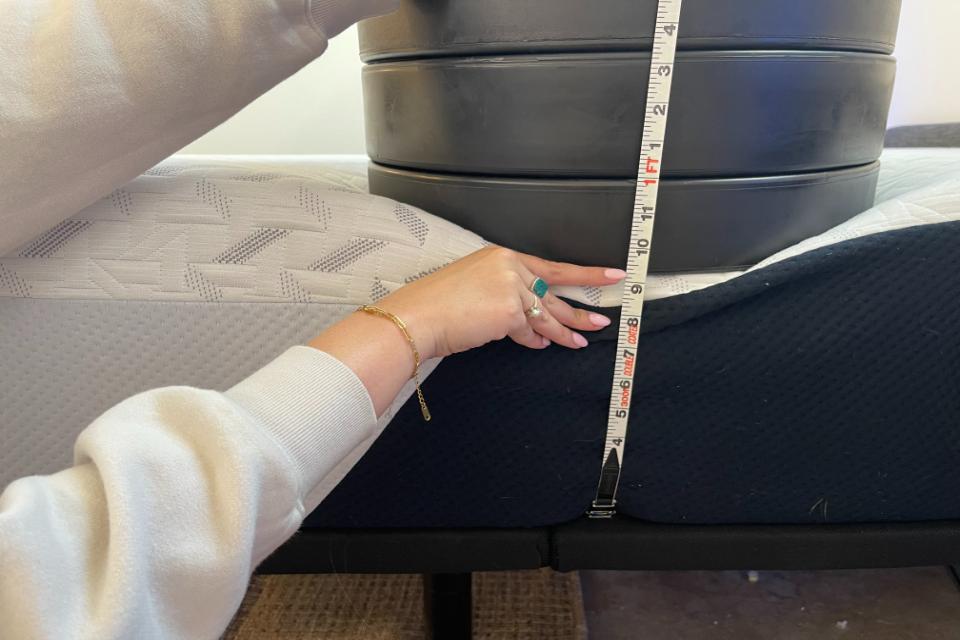
In the couple’s motion test, Courtney experienced minimal disturbance when her partner got into bed and changed positions. “There was one moment when I felt a faint motion, but it wasn’t very noticeable,” she explained. “If I’d been asleep, I doubt it would’ve woken me.” True to the nature of quality memory foam designs, the Nectar provides outstanding motion isolation—great for light sleepers or those sharing a bed.
Our tester was also impressed by the Nectar’s cooling performance, awarding it another 5 out of 5. After Courtney stood up, the mattress returned to its normal temperature in about 3 minutes and 15 seconds. Its poly-blend cover, woven with cooling polyethylene fibers, effectively dissipates heat—and it’s included as part of the mattress’s standard design.
Best Memory Foam Mattress for Side Sleepers: DreamCloud Premier Memory Foam
DreamCloud Premier Memory Foam
| Fortune score | 4/5 |
at DreamCloud
- Our thoughts: This mattress is cushioning yet supportive, offering a “cloud-like” hug without letting the body sink too deeply
- What it does: Delivers deep pressure relief around the shoulders and hips while keeping the spine relatively aligned
- Who it’s for: Side sleepers and combo sleepers
- What makes it different: This mattress balances plush contouring with enough underlying support that testers reported comfort in multiple positions
Pros
- Strong pressure relief for shoulders and hips
- Comfortable for multiple sleep positions
- Good motion isolation for couples
Cons
- Softer feel may not suit strict stomach sleepers
- Edge support is only moderate when sitting right on the perimeter
- Not ideal for those who prefer an extra-firm, “on-top” feel
Our Thoughts on the DreamCloud Premier Memory Foam
The DreamCloud Premier Memory Foam is our pick for the Best Memory Foam Mattress for Side Sleepers because testers found it exceptionally comfortable in a side-lying position, with noticeable pressure relief at the shoulders and hips without sharp pressure points or awkward spinal angles.
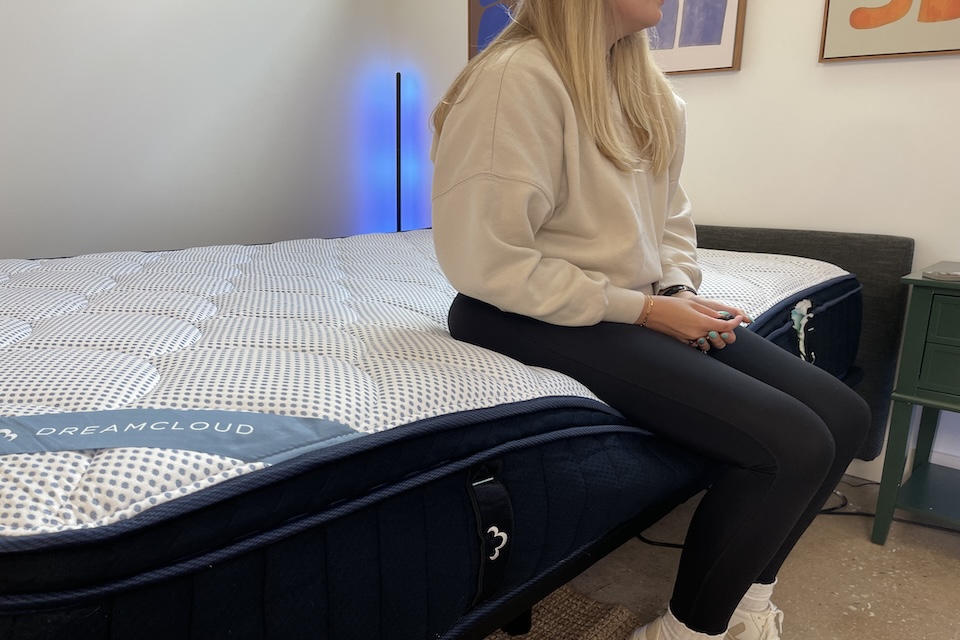
Courtney tested the DreamCloud Premier Memory Foam and gave it a 5 out of 5 for solo motion isolation and a 4 out of 5 for couples’ motion performance. During the motion test, she observed: “slight motion of the balls when I initially got on the mattress, but the motion did not increase during position changes.” We think this mattress does a good job absorbing movement rather than amplifying it. She also noted that the container of balls quickly calmed after she settled, with “minimal to no motion during a roll adjustment and when I got off the mattress.”
In the couple’s motion test, Courtney reported that she did not feel her partner as they first got on the bed, but she did notice some movement during more deliberate shifts and repositioning. “I felt some motion during adjustments and repositioning,” she explained, adding that smaller, subtler pivots were barely detectable. When her partner began to get off the mattress, Courtney initially felt a bit of motion, “but as they continued to get off the bed the motion I felt decreased,” which contributed to her 4 out of 5 rating for couples’ motion isolation and reinforced that everyday movements are unlikely to be overly disruptive.
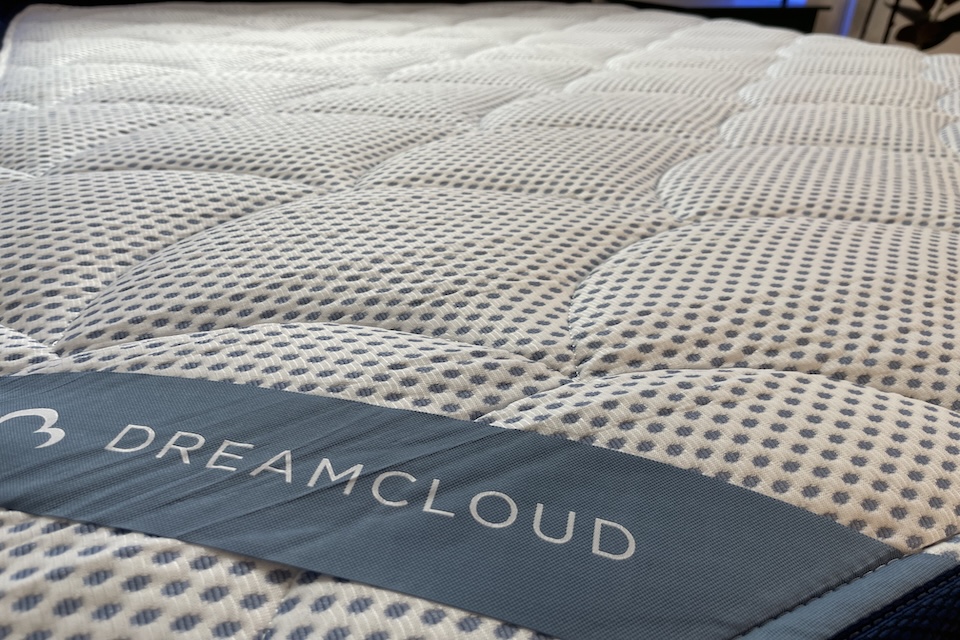
Based on our team’s testing, the DreamCloud Premier Memory Foam offers a stable, pressure-relieving surface that still feels responsive enough for combination sleepers. Between its strong solo motion isolation, above-average couples’ performance, and overall absorbing feel, this mattress stands out as a solid pick for side and combo sleepers who want memory foam’s contouring without excessive motion transfer across the bed.
Best Affordable Memory Foam Mattress: Brooklyn Bedding Copperflex Memory Foam
Brooklyn Bedding Copperflex
| Fortune score | 4.5/5 |
at Brooklyn Bedding
- Our thoughts: Our tester was impressed by this mattress’s strong cooling performance and excellent motion isolation
- What it does: Delivers outstanding value compared to similar memory foam options on the market
- Who it’s for: Heavier sleepers who need extra support or back sleepers who prefer a firmer feel
- What makes it different: The CopperFlex® memory foam layer wicks away sweat, promotes airflow, and helps regulate body temperature throughout the night
Pros
- CertiPUR-US® certified
- 120-night trial period
- Available in memory foam or hybrid versions
Cons
- May feel too firm for lightweight individuals or dedicated side sleepers
- Limited sink-in feel; lacks deep contouring comfort
- Less bounce and responsiveness than some similar models
Our Thoughts on the Brooklyn Bedding CopperFlex Memory Foam
The Brooklyn Bedding’s CopperFlex Memory Foam is our pick for the most affordable foam mattress because it combines standout performance with a price that undercuts many comparable beds on the market, retailing for less than $700. Its CopperFlex® memory foam layer provides strong temperature regulation and moisture-wicking, so budget-conscious shoppers do not have to sacrifice cooling or cleanliness for cost. The mattress also delivers excellent motion isolation and solid comfort for a range of sleepers, making it a high-value pick.
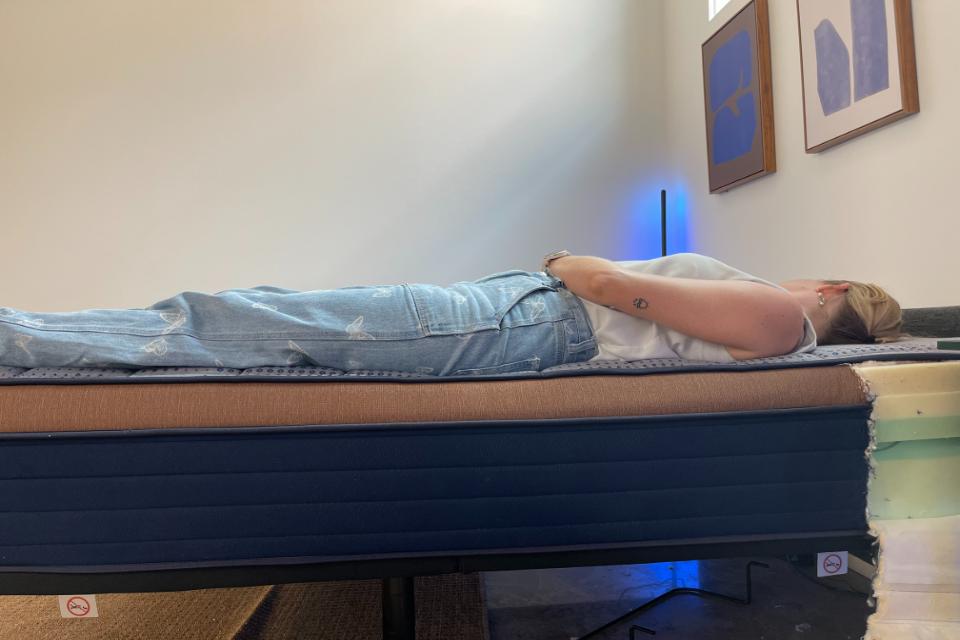
Kate, a 25-year-old lightweight side sleeper (under 130 pounds), tested the Copperflex and described it as “cool to the touch,” noting that it initially felt almost slightly chilly—but pleasantly so—before gently warming up as she continued lying on it. After she got off the mattress, it returned to its starting temperature in roughly three and a half minutes, earning a 5 out of 5 on the team’s cooling gun assessment and ranking among the quickest-cooling models evaluated.
During the motion isolation test, Kate reported that “there was basically no disturbance from the bouncy balls whatsoever. They kept floating along like there was nothing on the bed with them!” Even when she rolled toward the container, the balls barely reacted, underscoring how effectively the memory foam absorbed movement. She awarded the Copperflex a 5 out of 5 in this category.
In the couple’s motion test, Kate did not feel her partner getting in or out of bed, though she did perceive some movement when her partner changed positions. She emphasized that these shifts felt like “more of a gentle sinking when she moved around rather than being rocked around the mattress,” concluding that most sleepers could rest undisturbed even next to someone who tosses and turns and rating the mattress a 4 out of 5 for couples’ motion isolation.
For more budget-friendly and comfortable mattress options, see full lineup of the best affordable mattresses.
Best Firm Memory Foam Mattress: Bear Original
Bear Original
| Fortune score | 4/5 |
at Bear
- Our thoughts: With its three-layer foam construction, this model is especially well-suited to people who want a firmer, more supportive feel—particularly those in higher weight ranges
- What it does: Provides excellent motion isolation and sturdy, even support across the surface
- Who it’s for: Couples and combination sleepers who prefer a firm mattress profile
- What makes it different: This mattress uses a distinctive graphite gel-infused memory foam comfort layer that boosts pressure relief while helping draw heat away from the body for a cooler sleep experience
Pros
- 120-night sleep trial for an extended at-home test window
- GreenGuard Gold Certified, indicating low chemical emissions
- Fiberglass-free construction, designed to improve safety and reduce flammability risks
Cons
- May feel too firm for lightweight sleepers who prefer more cushioning
- Celliant-infused cooling cover is an extra-cost upgrade rather than standard
- Edge support is on the weaker side, which can make sitting or sleeping near the perimeter less comfortable
Our Thoughts on the Bear Original
The Bear Original is our pick for the Best Firm Memory Foam Mattress because it has a firm feel while still offering strong pressure relief and motion control, a combination that can be hard to find at this price point. Its multi-layer all-foam construction creates a stable, supportive surface that works especially well for higher-weight sleepers and those who prefer to sleep “on” rather than “in” their mattress. The Bear Original also performs well in motion isolation tests, making it a smart option for couples who prefer a firm bed that won’t transfer every toss and turn across the surface.
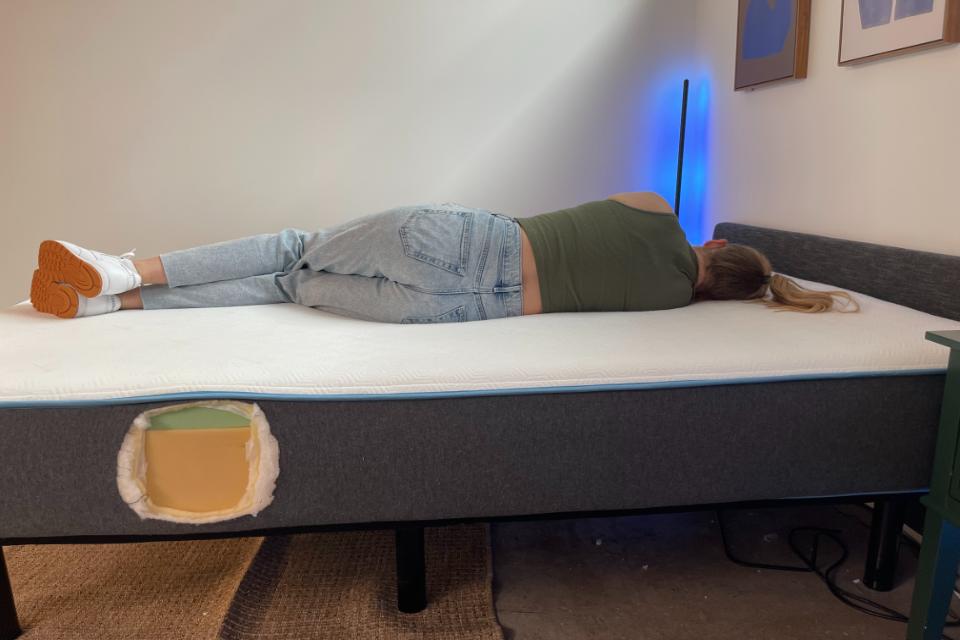
Kate tested the Bear Original and gave it a 5 out of 5 for both solo motion isolation and couples’ motion performance. She says, “I couldn’t feel any movements when my testing partner was getting in or out, or when she was moving around, adjusting in the bed.” During her individual motion test, she also observed that the bouncy balls were barely disturbed, only shifting slightly when she changed positions before settling down quickly. We think this mattress is a strong pick for sleepers who value both budget and motion control.
Our tester also appreciated the Bear Original’s cooling performance, saying, “It didn’t noticeably heat up by any means, and the fabric didn’t feel too warm,” and she felt it would remain comfortably cool over the course of the night. In testing, the mattress started at a baseline of 68.8 degrees and warmed to 78.6 degrees after she lay on it, which translated to an average cooling score of 3.5 on the team’s scale. For shoppers prioritizing stronger cooling at a similar price point, Brooklyn Bedding’s Copperflex mattress is a compelling alternative thanks to its dedicated temperature-regulating features.
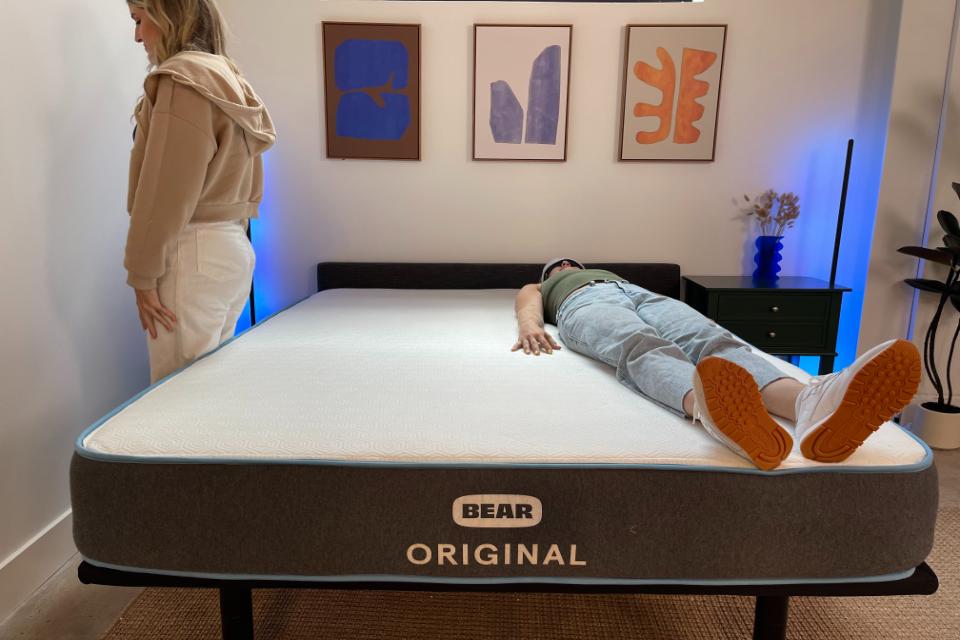
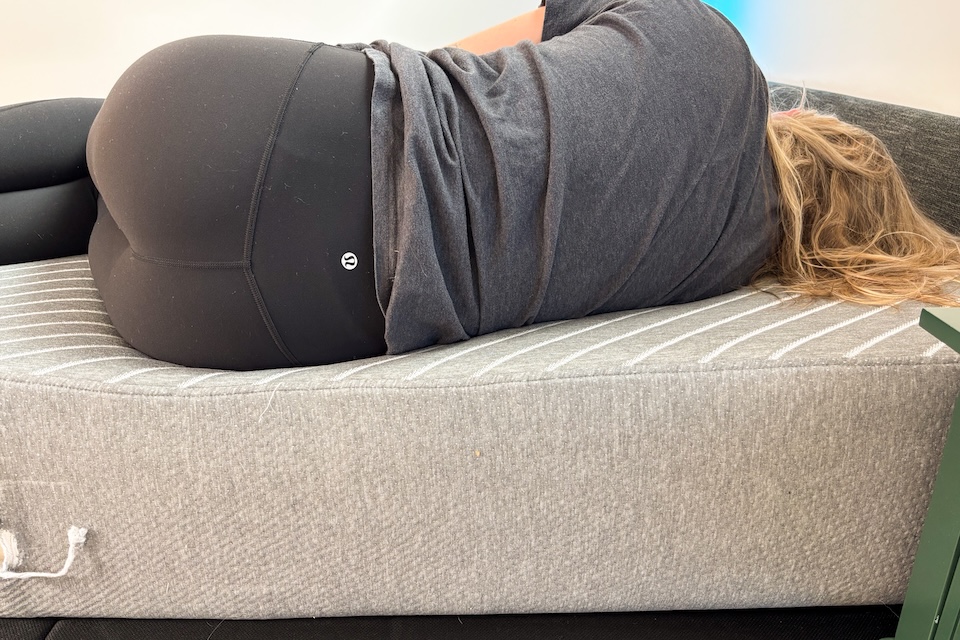
The Bear Original is notably firm at 9 out of 10 for firmness. In fact, Kate described it as the firmest mattress she has tested so far. Because of her lighter body weight, she experienced some pressure buildup when lying on her back, explaining: “On this mattress, I cannot sink down at all, which leaves my shoulders and hips at a very awkward angle.” As a result, this mattress is better suited to higher-weight sleepers who prefer a more supportive, less contouring sleep surface.
Best Memory Foam Mattress for Couples: Siena Memory Foam
Siena Memory Foam
| Fortune score | 4.5/5 |
at Siena
- Our thoughts: Its foam construction feels soft and pressure-relieving without being overly bouncy
- What it does: Absorbs motion across the surface so that getting in, out, or changing positions is less likely to disturb the person next to you
- Who it’s for: Couples and light sleepers who prioritize minimizing nighttime disturbances
- What makes it different: This mattress has a comfortable, contouring feel that still feels stable, making it especially well-suited to partners sharing a smaller sleep surface
Pros
- Excellent motion isolation for partners
- Contouring foam that cushions pressure points
- Accessible price point for budget-minded couples
Cons
- Softer feel may not suit strict stomach sleepers
- Edge support can feel weaker when sitting right on the side
- Not ideal for those wanting a very bouncy, responsive mattress
Our Thoughts on the Siena Memory Foam
The Siena Memory Foam is our pick for the Best Memory Foam Mattress for Couples because it consistently dampened movement in testing, keeping visually observed motion in the ball test and felt motion between partners to a minimum. Testers noted that even when one person changed positions more actively, the other felt only subtle waves instead of jarring jolts, which is crucial for light sleepers sharing a bed.
Kate, a lightweight side sleeper, found the Siena Memory Foam to be a standout option for couples and light sleepers, particularly for motion control. In her solo motion test, she observed that “the bouncy balls stayed pretty chill and relaxed, with only a tiny bit of movement,” even when she got into bed and rolled near the container and noted that significant disturbance only happened during more aggressive position changes. “For the most part, I think that the mattress absorbed most of the motion!” She gave the Siena a 5 out of 5 for motion isolation in the solo test.
During the couple’s motion test, the Siena performed just as well. “This felt really good with my partner getting in and out of the bed! I could hardly tell anyone was in the bed with me,” Kate said, explaining that the only movement she noticed was when her partner changed positions—but even then, it was “So subtle and wouldn’t cause any disturbances throughout the night”. When both were lying still, “It felt like I was lying in the bed alone,” which underscores how effectively this mattress keeps partner movement from traveling across the surface and supports her 5 out of 5 couples’ motion score.
How We Tested and Selected the Best Memory Foam Mattress
Choosing the right memory foam mattress comes down to matching features of the mattress to how you actually sleep. Pressure relief, cooling, motion isolation, bounce, edge support, durability, and overall value all play a role in comfort and long-term satisfaction, and each sleeper will prioritize these factors differently depending on body weight, sleep position, and whether they share a bed.
Pressure Relief
Pressure relief is one of memory foam’s biggest strengths, so this was a core focus of testing. Testers with different body types and sleep positions spent time on each mattress, paying close attention to common pressure spots such as shoulders, hips, and lower back, and noting whether they felt cradled or jammed at those points. Mattresses that allowed testers to sink just enough to cushion joints without letting the spine bow or sag scored highest for pressure relief.
Cooling
Memory foam can trap heat, so cooling performance was carefully measured instead of assumed. Each mattress started at a recorded baseline surface temperature, then a tester got on the bed for a set period before the surface was measured again to see how much it warmed up. Testers also noted how the cover and comfort layers felt in real time, too.
Mattresses that returned to their baseline temperature relatively quickly earned higher cooling scores, since a faster cooldown suggests better airflow and heat dissipation. Special cooling features such as phase-change fabrics, gel- or copper-infused foams, and breathable covers were considered, but only when they translated into measurable temperature control and more comfortable experiences for testers who typically sleep hot.
Motion Isolation
To evaluate motion isolation, every mattress underwent both a solo motion test and a couples’ test. In the solo test, a container of balls was placed on the surface while the tester got in, out, and changed positions, and testers rated how much disturbance they saw and felt. Mattresses where the balls barely moved—especially when the tester rolled or shifted more aggressively—earned higher scores, indicating that the foam was absorbing motion instead of transferring it across the bed.
During the couples’ motion test, a second person joined the bed and performed the same set of movements while the first tester noted what they could actually feel. Testers recorded whether they felt major jolts, gentle waves, or almost nothing at all when their partner got in and out of bed or changed positions. Picks for couples emphasize models that minimized noticeable movement and that testers said would be unlikely to wake a light sleeper.
Bounce
Bounce was measured using a simple, repeatable drop test paired with subjective feedback. A ball was dropped from a consistent height on each mattress to record how high it rebounded and to assign a bounce score, giving an objective sense of how springy or “dead” a surface felt. At the same time, testers evaluated how easy it was to change positions or move across the bed, since too little bounce can make a mattress feel stuck, while too much can feel jarring.
The goal was not to find the bounciest mattress, but to identify memory foam models that strike a comfortable balance: responsive enough for combination sleepers, without so much rebound that partners feel every shift. Beds with moderate bounce that still maintained good motion isolation tended to rise to the top in this category.
Edge Support
Edge support testing focused on how stable and secure the perimeter felt while sitting and lying near the edge. Testers recorded how far the edge compressed (sinkage) when they sat on the side, along with whether they felt like they might slide or roll off the mattress. Mattresses with excessive sinkage or a collapsing edge received lower scores, as these make it harder to use the full surface of the bed.
Durability & Materials
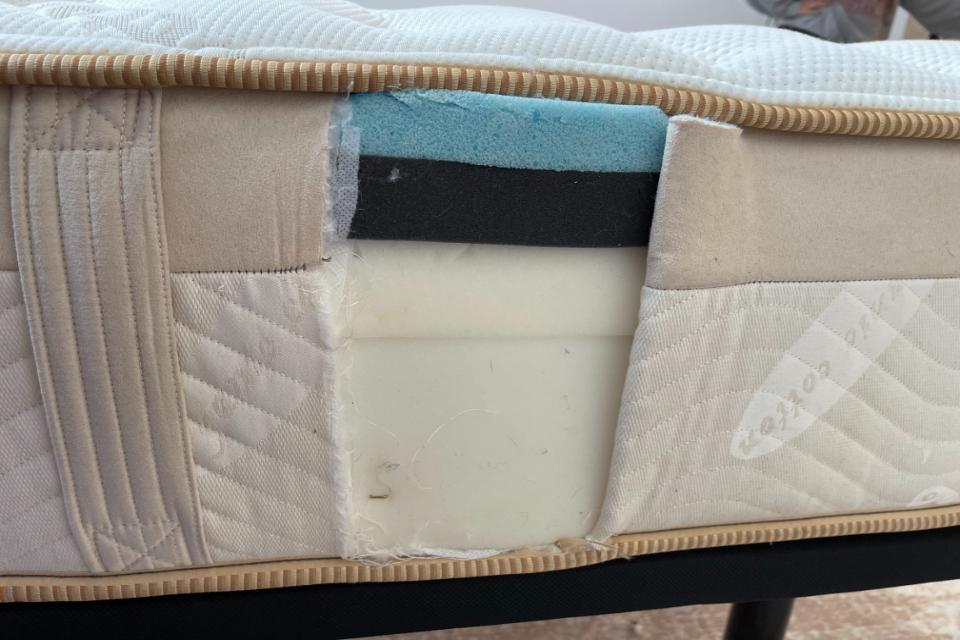
Durability and materials were assessed by looking at construction details, including foam types, layer design, and any third-party safety or emissions certifications. Denser foams in support and transition layers generally point to better long-term performance, so these specs, when available, were considered alongside how sturdy and stable the mattress felt in testing. Testers also noted whether the cover and seams felt substantial or flimsy during handling and use.
Value
Finally, value was judged by weighing each mattress’s price against its performance. A lower price point alone was not enough; the mattress also needed to perform well in core categories like pressure relief, motion isolation, cooling, and durability for its intended sleeper type. Trial lengths, return policies, and warranties were considered part of the value equation, since they affect how much risk a shopper takes on.
How to Find the Best Memory Foam Mattress for You
Finding the right memory foam mattress starts with understanding how you sleep and what your body needs for support and comfort. Factors like sleep position, body size, room dimensions, materials, and budget all influence which mattress will feel best and perform well over time.
Sleep Position
Different sleep positions put pressure on different parts of the body, so the ideal feel and firmness can vary.
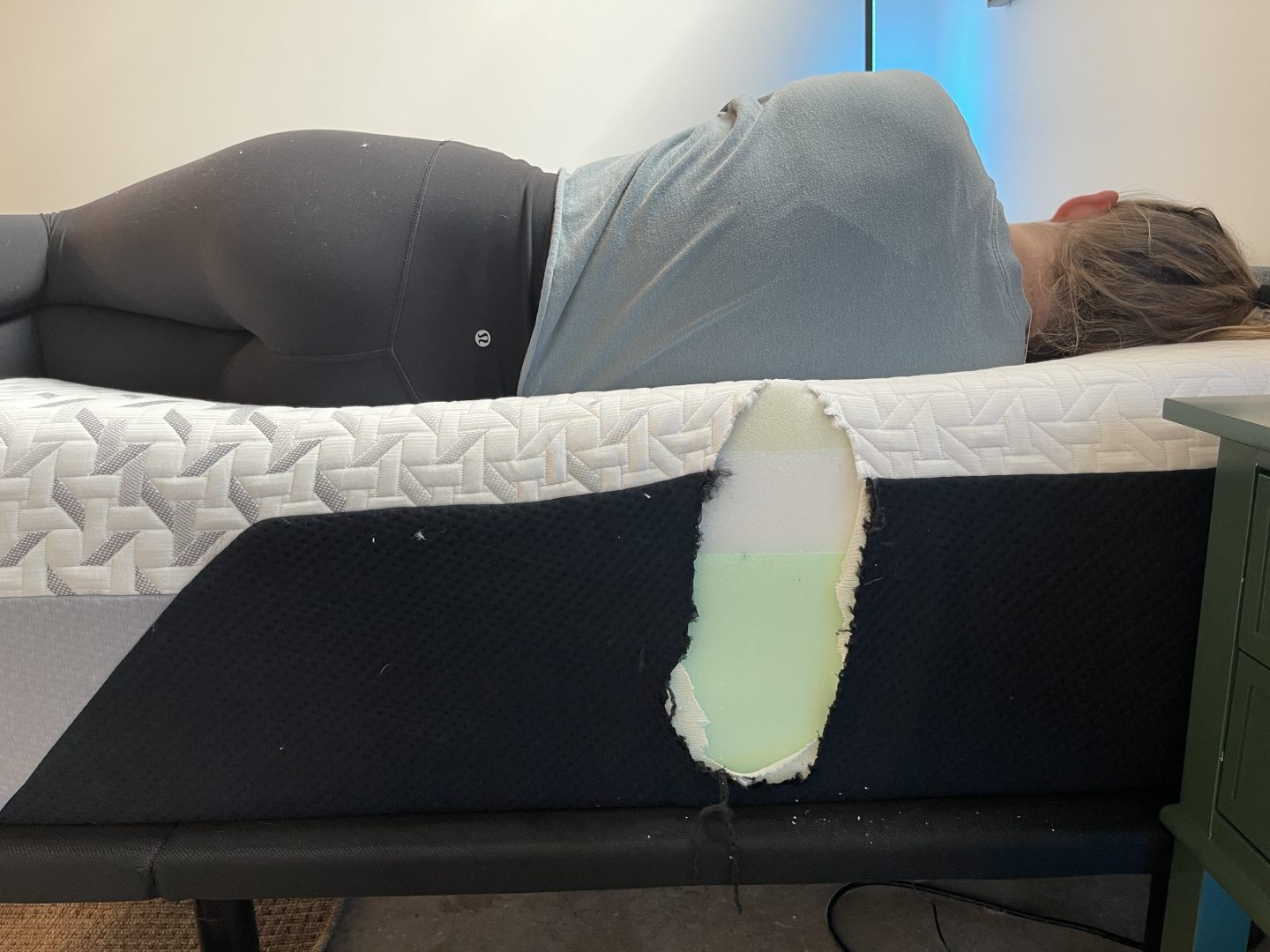
- Side sleepers typically need more pressure relief around the shoulders and hips, which often means a slightly softer, more contouring memory foam surface.
- Back sleepers tend to do best on medium to medium-firm foam that keeps the spine aligned without letting the hips sink too deeply.
- Stomach sleepers usually need a firmer mattress to keep the midsection from dipping and stressing the lower back.
If you toss and turn or share a bed, a larger mattress can be a big advantage. A queen or king gives combination sleepers and couples more room to change positions without crowding each other.
Weight and Height
Body weight and height affect how deeply you sink into memory foam, which changes how firm or soft a mattress feels in real life.
- Lighter sleepers (under about 130 pounds) may find some mattresses feel firmer than advertised and often benefit from slightly softer foam for adequate pressure relief.
- Average-weight sleepers (roughly 130 to 230 pounds) usually have the broadest range of suitable options, from medium-soft to medium-firm.
- Higher-weight sleepers (above about 230 pounds) often need thicker, denser foams and firmer support to prevent excessive sinkage and maintain spinal alignment.
Room Size
When choosing a memory foam mattress, it’s important to consider the size of your room for both comfort and practicality. Measure the length and width of your space and think about how much room you’d like around your bed for walking, other furniture, and storage.
Mattress Material
Even among memory foam mattresses, material choices can significantly change the feel, responsiveness, and temperature. Common mattress types include:
- Memory foam: Offers deep contouring and excellent pressure relief, often with strong motion isolation; can sleep warmer if not engineered for cooling.
- Latex (natural or synthetic): Generally more responsive and bouncy, with good pressure relief and better airflow; often preferred by those who dislike the “sinking in” feel of traditional memory foam.
- Hybrid (foam + coils): Combines foam comfort layers with innerspring support for added bounce, edge support, and airflow; can feel more “lifted” than all-foam beds.
- Polyfoam: Typically more affordable and lighter than premium memory foams; quality and durability can vary depending on density and construction.
Memory foam itself can be tailored with additives like gel, copper, or graphite for cooling, or layered with firmer transition and support foams to fine-tune firmness and support. As you shop, pay attention to whether you want a slow, body-hugging feel or a more responsive, buoyant surface.
Prior Aches and Pains
Existing aches and pains—such as back pain, hip or shoulder discomfort, or joint issues—can influence which mattress will feel best. Some sleepers find that a more contouring memory foam mattress eases pressure on sensitive areas, while others feel better on something slightly firmer and more supportive. Because pain and comfort are highly individual, there is no single “correct” mattress type for every condition.
Mattresses are ultimately a matter of personal preference, and anyone with preexisting medical conditions, chronic pain, or recent injuries should consider speaking with your doctor or other medical professional before making a purchase.
Certifications
Third-party certifications help verify that a mattress meets certain safety, emissions, or environmental standards beyond what a brand claims. Certifications for foam and textiles often focus on limiting harmful chemical emissions, ensuring materials meet defined criteria for indoor air quality, and sometimes addressing responsible sourcing.
Cost
Budget plays a major role in mattress shopping, but cost should always be weighed against long-term value. A mattress is used every day and can significantly affect sleep quality, mood, and even physical comfort, so it is often worth investing in a model that offers reliable support, durability, and features that address your specific needs.
When comparing options, look not just at the sticker price but also at what you receive in return—such as trial periods, return policies, warranties, and performance in areas like pressure relief, motion isolation, and cooling. A slightly higher upfront cost may be justified if the mattress performs better, lasts longer, and helps you sleep more comfortably for years.
Frequently asked questions
What is considered the best memory foam mattress?
There is no single best memory foam mattress for everyone, because the right choice depends on your body type, sleep position, and preferences for firmness, cooling, and feel. A top memory foam mattress typically offers strong pressure relief, good motion isolation, and adequate support for your specific needs, all backed by a solid trial period and warranty.
Which brand of memory foam mattress is best?
The best brand will vary by person and priority. Some brands excel at budget-friendly comfort, others at cooling technology, eco-conscious materials, or extra-firm support. It is usually more helpful to look at how a given model performs in areas like pressure relief, cooling, and durability than to focus on brand name alone, and to choose from brands that offer transparent policies and independent certifications.
Which mattress do they use in 5-star hotels?
Luxury hotels often use custom or hotel-specific versions of well-known mattresses, many of which are hybrid or innerspring models with plush foam or pillow-top layers. While you may not be able to buy the exact hotel configuration, many brands sell consumer versions inspired by their hotel collections, and you can often recreate a similar feel at home with a supportive mattress plus a high-quality topper and bedding.