• Home
  • Latest
  • Fortune 500
  • Finance
  • Tech
  • Leadership
  • Lifestyle
  • Rankings
  • Multimedia

Trendingnow

1

AI CEOs from OpenAI, Anthropic, and Microsoft set aside their rivalry to warn Congress AI is making it too easy to design and create bioweapons

2

Billionaires Elon Musk and Mark Zuckerberg used mortgages to buy multimillion-dollar mansions. Here’s why that’s a savvy financial decision

3

The Strait of Hormuz is more open than previously thought as the U.S. shoots down Iranian drones threatening ships and provides 'naval overwatch'

1

AI CEOs from OpenAI, Anthropic, and Microsoft set aside their rivalry to warn Congress AI is making it too easy to design and create bioweapons

2

Billionaires Elon Musk and Mark Zuckerberg used mortgages to buy multimillion-dollar mansions. Here’s why that’s a savvy financial decision

3

The Strait of Hormuz is more open than previously thought as the U.S. shoots down Iranian drones threatening ships and provides 'naval overwatch'
Commentaryfertilizer

Former president of Costa Rica on de-risking fertilizer shocks: how $700 billion in subsidies can do more

By
Carlos Alvarado Quesada
Down Arrow Button Icon
By
Carlos Alvarado Quesada
Down Arrow Button Icon
April 27, 2026, 3:33 PM ET
quesada
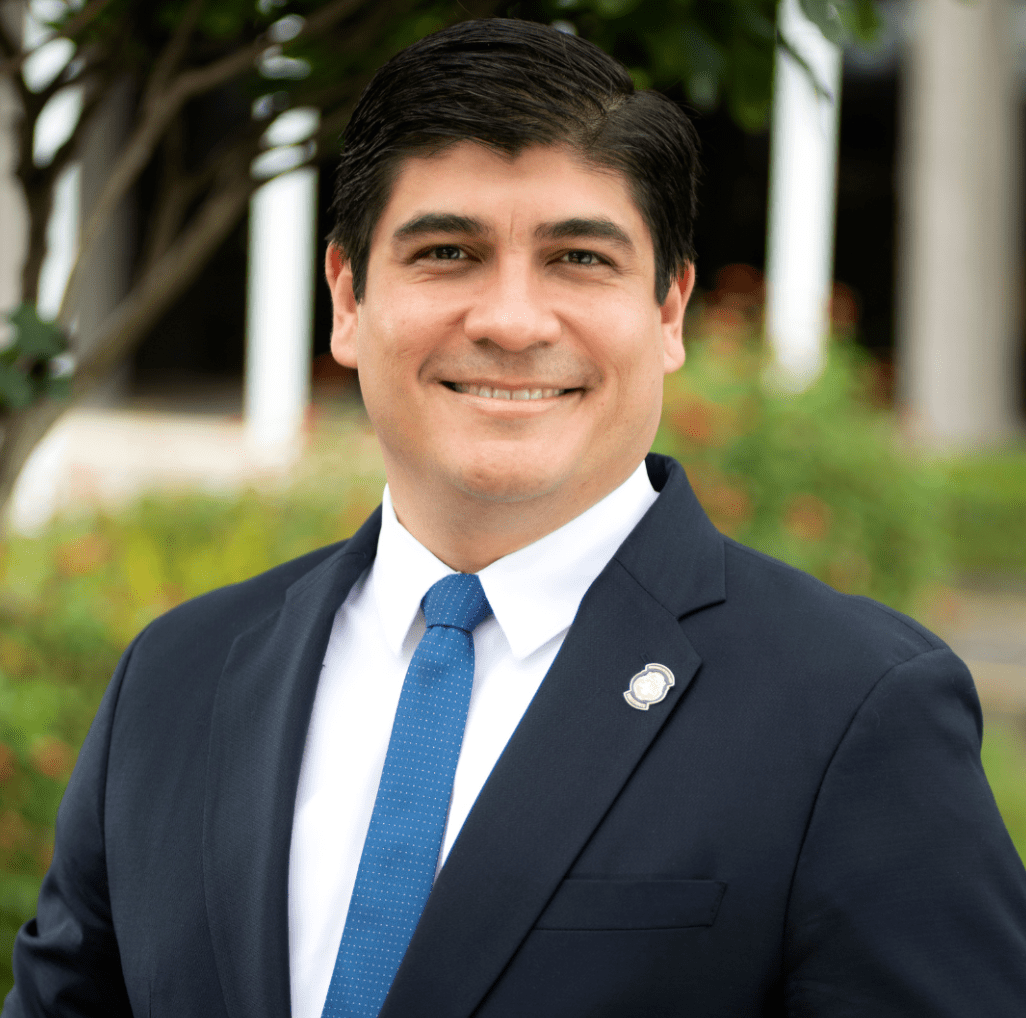
Carlos Alvarado Quesada, former president of Costa Rica.courtesy of Carlos Alvarado Quesada

In 2022, my final year in office, Russia’s invasion of Ukraine sent fertilizer prices surging several-fold, and farmers across Central America—and around the world—saw production costs spike almost overnight, raising fears of food shortages.

Recommended Video

Today those fears have resurfaced. Conflict in the Middle East is rattling energy markets, pushing up the cost of natural gas—the backbone of nitrogen fertilizer production—and exposing once again just how vulnerable farmers and families are to shocks beyond their control. Fertilizer prices have skyrocketed by up to 40%, compromising livelihoods and food security.

This vulnerability is not accidental and it is not cheap either. Governments spend more than $700 billion a year subsidising agriculture, much of it bankrolling the very fertilizers and fossil fuel inputs that make farming so exposed to price shocks. Yet farmers see just 35 cents of real value for every dollar spent.

This is not some distant policy concern. Companies with agricultural supply chains — from food and beverage manufacturers to commodity traders, insurers, and logistics firms — absorb fertilizer shocks through input costs, contract failures, and sovereign credit risk in key sourcing markets.

The estimated $700 billion in annual agricultural subsidies also represents one of the largest untapped pools of patient capital for the agri-food transition: firms that position early in soil health technology, precision nutrient management, and climate-adaptive crop systems stand to capture significant upside as governments increasingly move to align public spending with climate goals. This is not philanthropy. It is the next infrastructure trade.

It is therefore time to reimagine how these billions in public support are used, repurposing them to reduce exposure to shocks in fuel and fertilizer markets, while placing the wellbeing of both farmers and consumers at the center.

Research and fieldwork has shown that this same public funding could instead support soil restoration, integrated soil fertility management, farm diversification, climate-resilient practices, and essential services such as climate-informed advisory systems. Done right, these investments would lower input costs, strengthen long-term productivity, and help protect more than 500 million smallholder farmers worldwide.

Many of these solutions already exist at the local level, developed by smallholder farmers themselves—and with the right support, they can deliver far greater benefits.

Let’s be clear: this is not an argument for cutting subsidies outright, nor for imposing a one-size-fits-all solution on farmers around the world.

In a geopolitical context where countries are seeking greater strategic autonomy, aid and cooperation budgets are shrinking, and many in the Global South remain highly indebted, there is a strong case for rethinking public investment toward approaches that boost productivity, reduce environmental impacts, and strengthen food security.

A just rural transition requires recognizing the diversity of voices across food systems. This is what the High-Level Panel for a Just Rural Transition, led by Clim-Eat aims to achieve. The Panel brings together farmers, policymakers, and civil society to advance practical reforms and shape international policy building on the momentum of past initiatives such as the Commission on Sustainable Agriculture and Climate Change.

Today, 87% of agricultural subsidies are environmentally or socially harmful. The Panel will explore alternatives: smarter subsidies tied to sustainable practices, greater investment in agricultural research, rural infrastructure and extension services, and direct support to help smallholder farmers transition away from fossil-fuel-intensive inputs and methods. Crucially, it is designed so that the perspectives of farmers and frontline communities inform policy from the outset.

In 2026, all three COPs on land, biodiversity, and climate will converge, creating a corridor of political opportunity. From UNCCD COP17 in Mongolia, addressing land degradation and drought intensified by input-heavy farming, to CBD COP17 in Armenia, where governments will review progress on redirecting harmful subsidies, and UNFCCC COP31 in Türkiye, where agriculture, responsible for roughly a third of global emissions, can be brought to the center of climate action, the opportunity is to carry commitments across these forums with enough force to translate them into real change.

Fertilizer prices may ease again, and the headlines will move on. But the opportunity will remain. Political problems have political solutions, if matched with the right ideas and the will to act. For every government that has signed a climate agreement, a biodiversity framework, or a land restoration target, this is the moment to turn commitments into delivery: stronger food security, lower risk and greater resilience, and more sustainable and healthy production systems.

In a world hungry for hope and often short on it, let’s make food—the one thing that brings us all to the same table—a source of shared, win-win solutions.

The opinions expressed in Fortune.com commentary pieces are solely the views of their authors and do not necessarily reflect the opinions and beliefs of Fortune.

About the Author
By Carlos Alvarado Quesada
See full bioRight Arrow Button Icon

Latest in Commentary

Finance
Lorem ipsum dolor sit amet, consectetur adipiscing elit, sed do eiusmod tempor incididunt ut labore et dolore magna aliqua. Ut enim ad minim veniam
By Fortune Editors
October 20, 2025
Finance
Lorem ipsum dolor sit amet, consectetur adipiscing elit, sed do eiusmod tempor incididunt ut labore et dolore magna aliqua. Ut enim ad minim veniam
By Fortune Editors
October 20, 2025
Finance
Lorem ipsum dolor sit amet, consectetur adipiscing elit, sed do eiusmod tempor incididunt ut labore et dolore magna aliqua. Ut enim ad minim veniam
By Fortune Editors
October 20, 2025
Finance
Lorem ipsum dolor sit amet, consectetur adipiscing elit, sed do eiusmod tempor incididunt ut labore et dolore magna aliqua. Ut enim ad minim veniam
By Fortune Editors
October 20, 2025
Finance
Lorem ipsum dolor sit amet, consectetur adipiscing elit, sed do eiusmod tempor incididunt ut labore et dolore magna aliqua. Ut enim ad minim veniam
By Fortune Editors
October 20, 2025
Finance
Lorem ipsum dolor sit amet, consectetur adipiscing elit, sed do eiusmod tempor incididunt ut labore et dolore magna aliqua. Ut enim ad minim veniam
By Fortune Editors
October 20, 2025

Most Popular

Finance
Lorem ipsum dolor sit amet, consectetur adipiscing elit, sed do eiusmod tempor incididunt ut labore et dolore magna aliqua. Ut enim ad minim veniam
By Fortune Editors
October 20, 2025
Finance
Lorem ipsum dolor sit amet, consectetur adipiscing elit, sed do eiusmod tempor incididunt ut labore et dolore magna aliqua. Ut enim ad minim veniam
By Fortune Editors
October 20, 2025
Finance
Lorem ipsum dolor sit amet, consectetur adipiscing elit, sed do eiusmod tempor incididunt ut labore et dolore magna aliqua. Ut enim ad minim veniam
By Fortune Editors
October 20, 2025
Finance
Lorem ipsum dolor sit amet, consectetur adipiscing elit, sed do eiusmod tempor incididunt ut labore et dolore magna aliqua. Ut enim ad minim veniam
By Fortune Editors
October 20, 2025
Finance
Lorem ipsum dolor sit amet, consectetur adipiscing elit, sed do eiusmod tempor incididunt ut labore et dolore magna aliqua. Ut enim ad minim veniam
By Fortune Editors
October 20, 2025
Finance
Lorem ipsum dolor sit amet, consectetur adipiscing elit, sed do eiusmod tempor incididunt ut labore et dolore magna aliqua. Ut enim ad minim veniam
By Fortune Editors
October 20, 2025
Fortune Secondary Logo
Rankings
  • 100 Best Companies
  • Fortune 500
  • Global 500
  • Fortune 500 Europe
  • Most Powerful Women
  • World's Most Admired Companies
  • See All Rankings
  • Lists Calendar
Sections
  • Finance
  • Fortune Crypto
  • Features
  • Leadership
  • Health
  • Commentary
  • Success
  • Retail
  • Mpw
  • Tech
  • Lifestyle
  • CEO Initiative
  • Asia
  • Politics
  • Conferences
  • Europe
  • Newsletters
  • Personal Finance
  • Environment
  • Magazine
  • Education
Customer Support
  • Frequently Asked Questions
  • Customer Service Portal
  • Privacy Policy
  • Terms Of Use
  • Single Issues For Purchase
  • International Print
Commercial Services
  • Advertising
  • Fortune Brand Studio
  • Fortune Analytics
  • Fortune Conferences
  • Business Development
  • Group Subscriptions
About Us
  • About Us
  • Press Center
  • Work At Fortune
  • Terms And Conditions
  • Site Map
  • About Us
  • Press Center
  • Work At Fortune
  • Terms And Conditions
  • Site Map
  • Facebook icon
  • Twitter icon
  • LinkedIn icon
  • Instagram icon
  • Pinterest icon
Carlos Alvarado Quesada is former president of Costa Rica and chair of the High-Level Panel for a Just Rural Transition
He served as the 48th President of the Republic of Costa Rica from May 2018 to May 2022, when his constitutionally limited term ended. Under President Alvarado's leadership, Costa Rica contributed to global efforts to combat climate change and defended human rights, democracy, and multilateralism. President Alvarado is a recipient of the 2022 Planetary Leadership Award by the National Geographic Society for his outstanding commitment and action toward protecting the ocean and in September 2019 he received on behalf of his country the Champion on the Earth Award for policy leadership, presented by the United Nations Environment Program. In November 2019, he was named one of TIME’s 100 Next emerging leaders around the world who are shaping the future and defining the next generation of leadership. President Alvarado's prior government leadership service includes a tenure as Minister of Labor and Social Security (2016-2018) and as Minister of Human Development and Social Inclusion (2014 – 2016) and Executive President of the Joint Social Welfare Institute, responsible for implementing social protection and promoting poverty alleviation programs. Before entering politics, he worked for Procter and Gamble, Latin America.

Latest in Commentary

250
Commentary250 Years of Innovation
America turns 250. Its greatest innovation was never a product — it was a system that let anyone build one
By Keith KrachJune 7, 2026
9 hours ago
retirement
CommentaryRetirement
Retiring at 62 costs the average American $250,000. Here’s the math (and the neuroscience) that explain why
By Jon SabesJune 7, 2026
10 hours ago
da
CommentaryIPOs
The short seller’s argument nobody on the coming mega IPO roadshow wants you to make
By Bhaskar ChakravortiJune 7, 2026
11 hours ago
bs
CommentaryCalifornia
I’ve sold property on California’s Central Coast for decades. The buyers chasing ranch and winery estates are after more than a lifestyle
By Lindsey HarnJune 6, 2026
1 day ago
home
CommentaryHousing
One in five homebuyers is a single woman – here’s what’s driving the shift
By Kathy CollinsJune 6, 2026
1 day ago
sa
CommentaryIPOs
When good money goes bad: the question SpaceX and OpenAI investors aren’t asking
By Rory McDonaldJune 6, 2026
1 day ago

Most Popular

AI CEOs from OpenAI, Anthropic, and Microsoft set aside their rivalry to warn Congress AI is making it too easy to design and create bioweapons
AI
AI CEOs from OpenAI, Anthropic, and Microsoft set aside their rivalry to warn Congress AI is making it too easy to design and create bioweapons
By Marco Quiroz-GutierrezJune 5, 2026
2 days ago
Billionaires Elon Musk and Mark Zuckerberg used mortgages to buy multimillion-dollar mansions. Here’s why that’s a savvy financial decision
Real Estate
Billionaires Elon Musk and Mark Zuckerberg used mortgages to buy multimillion-dollar mansions. Here’s why that’s a savvy financial decision
By Sydney LakeJune 6, 2026
1 day ago
The Strait of Hormuz is more open than previously thought as the U.S. shoots down Iranian drones threatening ships and provides 'naval overwatch'
Energy
The Strait of Hormuz is more open than previously thought as the U.S. shoots down Iranian drones threatening ships and provides 'naval overwatch'
By Jason MaJune 6, 2026
17 hours ago
'The golden years are not golden': Boomers are hoarding most of America's wealth and power because they're terrified of outliving their money
Economy
'The golden years are not golden': Boomers are hoarding most of America's wealth and power because they're terrified of outliving their money
By Nick LichtenbergJune 7, 2026
9 hours ago
I've sold property on California's Central Coast for decades. The buyers chasing ranch and winery estates are after more than a lifestyle
Commentary
I've sold property on California's Central Coast for decades. The buyers chasing ranch and winery estates are after more than a lifestyle
By Lindsey HarnJune 6, 2026
1 day ago
Here's where U.S. debt may become unsustainable with interest payments triggering a default crisis that even steep tax hikes can't fix
Economy
Here's where U.S. debt may become unsustainable with interest payments triggering a default crisis that even steep tax hikes can't fix
By Jason MaJune 6, 2026
21 hours ago

© 2026 Fortune Media IP Limited. All Rights Reserved. Use of this site constitutes acceptance of our Terms of Use and Privacy Policy | CA Notice at Collection and Privacy Notice | Do Not Sell/Share My Personal Information
FORTUNE is a trademark of Fortune Media IP Limited, registered in the U.S. and other countries. FORTUNE may receive compensation for some links to products and services on this website. Offers may be subject to change without notice.