• Home
  • Latest
  • Fortune 500
  • Finance
  • Tech
  • Leadership
  • Lifestyle
  • Rankings
  • Multimedia

Trendingnow

1

MacKenzie Scott alone accounted for one-third of America's $19.2 billion in megagifts last year

2

Now worth $200 million, Sarah Jessica Parker credits being ‘one of eight kids that struggled financially’ for her hunger, ambition, and work ethic

3

Ikea’s billionaire founder was so frugal that he bought clothes from flea markets and took free salt and pepper from restaurants

1

MacKenzie Scott alone accounted for one-third of America's $19.2 billion in megagifts last year

2

Now worth $200 million, Sarah Jessica Parker credits being ‘one of eight kids that struggled financially’ for her hunger, ambition, and work ethic

3

Ikea’s billionaire founder was so frugal that he bought clothes from flea markets and took free salt and pepper from restaurants
CommentaryIran

ICC Secretary General: The Hormuz clock that matters isn’t diplomatic — it’s agricultural

By
John W.H. Denton AO
John W.H. Denton AO
Down Arrow Button Icon
By
John W.H. Denton AO
John W.H. Denton AO
Down Arrow Button Icon
June 6, 2026, 3:00 AM ET
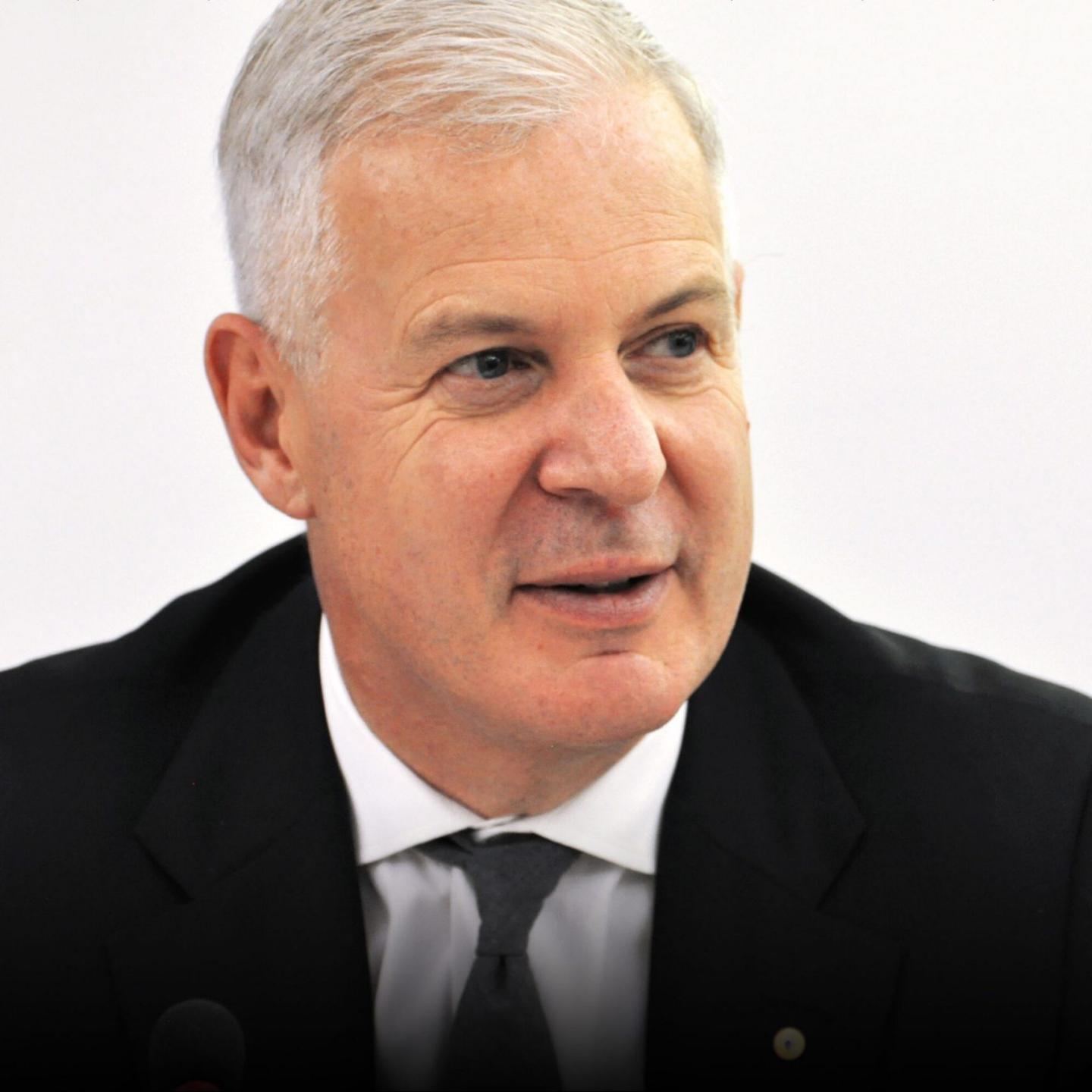
John W.H. Denton, Secretary General of the International Chamber of Commerce
denton
John W.H. Denton AO, Secretary General of the International Chamber of Commerce.courtesy of John Denton
Add Fortune on Google for similar content.

The closure of the Strait continues to be treated mainly as an energy shock. But the longer it lasts, the greater the risk that today’s disruption becomes tomorrow’s harvest failure in America and across the world.

Recommended Video

The Hormuz crisis will not end when oil markets stop twitching. Some economic shocks travel slowly – a danger to which many governments seem oblivious.

The Persian Gulf is not merely a conduit for hydrocarbons. It is a critical artery for fertilizers and the inputs needed to produce them. Urea, ammonia, sulphur and phosphorus sit at the unglamorous heart of modern agriculture. They do not make headlines in the way oil does. But without them, yields fall, food prices rise and food insecurity spreads.

 This is the risk policymakers are still underestimating. A delayed oil shipment can sometimes be replaced or rerouted. A missed fertilizer application cannot. Farming runs to biological deadlines: if farmers miss planting or application windows, the consequences are harvested months later – in lower wheat, rice and maize output.

The Food and Agriculture Organization has warned that a closure of Hormuz beyond 90 days could trigger a systemic agrifood shock and a severe food-price crisis within six to 12 months. The economic and social consequences of today’s blockage will not be fully visible today. They will appear in the next harvest, the next import bill and the next food-price index.

The early signals are already ugly. Urea prices have surged, reportedly up 55% in Kentucky. Fertilizer affordability has deteriorated to levels not seen since the Arab Spring. Farmers in import-dependent economies are being forced to make decisions now about how much they can apply, what they can plant and what risks they can bear. These are not marginal choices. At scale, lower fertilizer use means lower yields of staple crops. What begins as a price signal in commodity markets becomes a calorie deficit in poorer households.

The geography of the risk is equally clear. The most exposed countries are those that import both food and fuel, carry limited fiscal space and have populations already stretched by inflation. Many are in Africa and Asia. For them, the closure of Hormuz is not an abstract disruption to global trade. It is a direct threat to balance sheets, budgets and bread prices. But the impact is being felt in the West, too. 70% of farmers in the United States already report being unable to afford enough fertilizer for spring planting season. 

The problem is not confined to finished fertilizer shipments. The Gulf is also vital to the movement of inputs that keep fertilizer production running elsewhere. Sulphur matters for phosphate fertilizers. Natural gas matters for nitrogen. Ammonia matters across the system. If these inputs do not move, the shock does not remain in the Strait. It cascades through factories, traders, distributors, cooperatives and farms across multiple continents.

This is why a “no rush” approach to reopening trade from the Persian Gulf is so dangerous. It assumes time is neutral. In agriculture, time is compound interest in reverse. Every week of delay raises the probability that the final bill will be paid in lower yields, higher food prices and deeper instability.

The priority must be the full reopening of the Strait. But if that cannot be achieved as a part of the latest negotiations, governments should not let the perfect become the enemy of the urgent. They should establish a protected shipping lane for fertilizers and essential fertilizer inputs immediately, backed by robust transparency and deconfliction processes.

Such a mechanism would need to be practical, not performative. It should give shipowners, insurers and traders confidence that vessels carrying fertilizers and essential fertilizer inputs can move without arbitrary interference or unacceptable security risk. That means clear notification procedures, credible monitoring and reliable deconfliction backed by the United Nations. We need to see the restoration of market flows quickly enough to prevent today’s logistics disruption from becoming a crop-yield crisis.

Governments should also resist the usual bad reflex: export restrictions. In every food shock, the temptation is to hoard. It is politically understandable but economically self-defeating. Export bans do not create more fertilizer or more grain. They compound market scarcity, amplify price spikes and invite retaliation.

Multilateral institutions should move now to support import-dependent countries with trade finance, emergency credit and targeted support for farmers. The objective should not be to smother markets with blanket subsidies. It should be to keep viable farmers buying inputs, logistics firms moving cargo and food-importing countries from being priced out at the worst possible moment.

Food systems rarely collapse in a single dramatic moment. They weaken by sequence. By the time the crisis is apparent, the choices that made it inevitable were taken months earlier.

That is the lesson of Hormuz. The world is still debating whether this is a short-term disruption while farmers are already being forced to make decisions today that will have consequences next year. The clock that matters is not the diplomatic calendar. It is the agricultural one.

###

The opinions expressed in Fortune.com commentary pieces are solely the views of their authors and do not necessarily reflect the opinions and beliefs of Fortune.

About the Author
By John W.H. Denton AO
See full bioRight Arrow Button Icon
Add Fortune on Google for similar content.

Latest in Commentary

Finance
Lorem ipsum dolor sit amet, consectetur adipiscing elit, sed do eiusmod tempor incididunt ut labore et dolore magna aliqua. Ut enim ad minim veniam
By Fortune Editors
October 20, 2025
Finance
Lorem ipsum dolor sit amet, consectetur adipiscing elit, sed do eiusmod tempor incididunt ut labore et dolore magna aliqua. Ut enim ad minim veniam
By Fortune Editors
October 20, 2025
Finance
Lorem ipsum dolor sit amet, consectetur adipiscing elit, sed do eiusmod tempor incididunt ut labore et dolore magna aliqua. Ut enim ad minim veniam
By Fortune Editors
October 20, 2025
Finance
Lorem ipsum dolor sit amet, consectetur adipiscing elit, sed do eiusmod tempor incididunt ut labore et dolore magna aliqua. Ut enim ad minim veniam
By Fortune Editors
October 20, 2025
Finance
Lorem ipsum dolor sit amet, consectetur adipiscing elit, sed do eiusmod tempor incididunt ut labore et dolore magna aliqua. Ut enim ad minim veniam
By Fortune Editors
October 20, 2025
Finance
Lorem ipsum dolor sit amet, consectetur adipiscing elit, sed do eiusmod tempor incididunt ut labore et dolore magna aliqua. Ut enim ad minim veniam
By Fortune Editors
October 20, 2025

Most Popular

Finance
Lorem ipsum dolor sit amet, consectetur adipiscing elit, sed do eiusmod tempor incididunt ut labore et dolore magna aliqua. Ut enim ad minim veniam
By Fortune Editors
October 20, 2025
Finance
Lorem ipsum dolor sit amet, consectetur adipiscing elit, sed do eiusmod tempor incididunt ut labore et dolore magna aliqua. Ut enim ad minim veniam
By Fortune Editors
October 20, 2025
Finance
Lorem ipsum dolor sit amet, consectetur adipiscing elit, sed do eiusmod tempor incididunt ut labore et dolore magna aliqua. Ut enim ad minim veniam
By Fortune Editors
October 20, 2025
Finance
Lorem ipsum dolor sit amet, consectetur adipiscing elit, sed do eiusmod tempor incididunt ut labore et dolore magna aliqua. Ut enim ad minim veniam
By Fortune Editors
October 20, 2025
Finance
Lorem ipsum dolor sit amet, consectetur adipiscing elit, sed do eiusmod tempor incididunt ut labore et dolore magna aliqua. Ut enim ad minim veniam
By Fortune Editors
October 20, 2025
Finance
Lorem ipsum dolor sit amet, consectetur adipiscing elit, sed do eiusmod tempor incididunt ut labore et dolore magna aliqua. Ut enim ad minim veniam
By Fortune Editors
October 20, 2025
Fortune Secondary Logo
Rankings
  • 100 Best Companies
  • Fortune 500
  • Global 500
  • Fortune 500 Europe
  • Most Powerful Women
  • World's Most Admired Companies
  • See All Rankings
  • Lists Calendar
Sections
  • Finance
  • Fortune Crypto
  • Features
  • Leadership
  • Health
  • Commentary
  • Success
  • Retail
  • Mpw
  • Tech
  • Lifestyle
  • CEO Initiative
  • Asia
  • Politics
  • Conferences
  • Europe
  • Newsletters
  • Personal Finance
  • Environment
  • Magazine
  • Education
Customer Support
  • Frequently Asked Questions
  • Customer Service Portal
  • Privacy Policy
  • Terms Of Use
  • Single Issues For Purchase
  • International Print
Commercial Services
  • Advertising
  • Fortune Brand Studio
  • Fortune Analytics
  • Fortune Conferences
  • Business Development
  • Group Subscriptions
About Us
  • About Us
  • Press Center
  • Work At Fortune
  • Terms And Conditions
  • Site Map
  • About Us
  • Press Center
  • Work At Fortune
  • Terms And Conditions
  • Site Map
  • Facebook icon
  • Twitter icon
  • LinkedIn icon
  • Instagram icon
  • Pinterest icon

Latest in Commentary

jon
Commentaryphilanthropy
Shell Foundation CEO: climate tech works. Getting it to a billion people who need it is the hard part
By Nick LichtenbergJune 26, 2026
1 hour ago
mj
CommentarySuccession
Morgan Stanley on life after selling your business: a roadmap for entrepreneurs
By Mark JansenJune 26, 2026
3 hours ago
nido
Commentary250 Years of Innovation
As an immigrant turned entrepreneur and college president, here is why I celebrate our nation as it turns 250
By Nido R. QubeinJune 25, 2026
1 day ago
Asia’s defense boom is rewiring the global arms supply chain
Commentaryarms, weapons, and defense
Asia’s defense boom is rewiring the global arms supply chain
By Chris OberoiJune 24, 2026
2 days ago
steve
Commentary250 Years of Innovation
Steve Case: America was built by entrepreneurs. Here’s how we keep that edge for the next 250 years
By Steve CaseJune 24, 2026
2 days ago
t
CommentaryWhite House
Trump mistakes the bully pulpit for bullying leadership — history’s villains were never heroes
By Jeffrey Sonnenfeld and Steven TianJune 24, 2026
2 days ago

Most Popular

MacKenzie Scott alone accounted for one-third of America's $19.2 billion in megagifts last year
Success
MacKenzie Scott alone accounted for one-third of America's $19.2 billion in megagifts last year
By Sydney LakeJune 25, 2026
1 day ago
Now worth $200 million, Sarah Jessica Parker credits being ‘one of eight kids that struggled financially’ for her hunger, ambition, and work ethic
Success
Now worth $200 million, Sarah Jessica Parker credits being ‘one of eight kids that struggled financially’ for her hunger, ambition, and work ethic
By Orianna Rosa RoyleJune 24, 2026
2 days ago
Ikea’s billionaire founder was so frugal that he bought clothes from flea markets and took free salt and pepper from restaurants
Success
Ikea’s billionaire founder was so frugal that he bought clothes from flea markets and took free salt and pepper from restaurants
By Orianna Rosa RoyleJune 25, 2026
1 day ago
Current price of oil as of June 25, 2026
Personal Finance
Current price of oil as of June 25, 2026
By Joseph HostetlerJune 25, 2026
1 day ago
Ray Dalio says the U.S. just had its 'Suez moment'—and history says what comes next could end an empire
Economy
Ray Dalio says the U.S. just had its 'Suez moment'—and history says what comes next could end an empire
By Nick LichtenbergJune 26, 2026
7 hours ago
Trump turns on Big Oil donors who spent nearly $100 million to get him elected—now he wants the DOJ to investigate them for price gouging
Economy
Trump turns on Big Oil donors who spent nearly $100 million to get him elected—now he wants the DOJ to investigate them for price gouging
By Tristan BoveJune 25, 2026
18 hours ago

© 2026 Fortune Media IP Limited. All Rights Reserved. Use of this site constitutes acceptance of our Terms of Use and Privacy Policy | CA Notice at Collection and Privacy Notice | Do Not Sell/Share My Personal Information
FORTUNE is a trademark of Fortune Media IP Limited, registered in the U.S. and other countries. FORTUNE may receive compensation for some links to products and services on this website. Offers may be subject to change without notice.