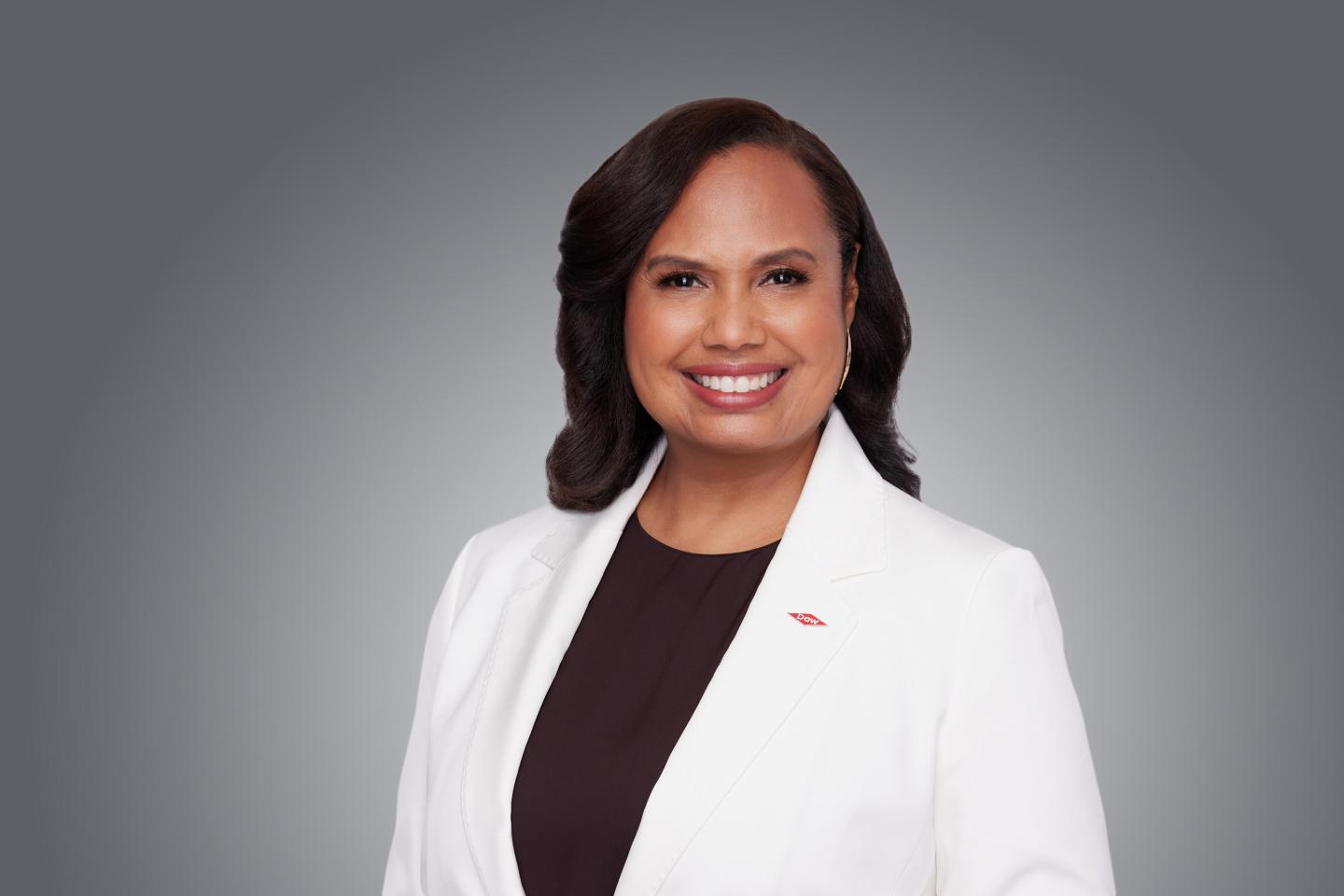
Dow is making a closely watched leadership change at a pivotal moment for the chemical industry.
The company said Tuesday that Karen Carter, Dow’s current chief operating officer, will become CEO on July 1, 2026, succeeding Jim Fitterling, who has led the materials science giant since 2018. Fitterling will become executive chair of the board, and Carter will join Dow’s board on the same date. Independent lead director Richard Davis will remain in his role.
The handoff caps what Dow described as a multiyear succession process and puts one of its most seasoned operators in the top job as the company contends with weak industrial demand, geopolitical uncertainty, and investor scrutiny of sustainability spending, plastics recycling, and capital discipline.
When Carter takes over, she will join a small group of women running Fortune 500 companies and an even smaller group of Black women leading them. As of the June 2025 Fortune 500, 55 women held CEO roles, a record high, and only two were Black women.
Inside Dow, her rise reflects a practical calculation. The board chose an executive with deep operational roots, long tenure, and experience across manufacturing, commercial, and human capital roles.
Carter has spent more than three decades at Dow. As COO, she has helped steer the company through a period of pressure on earnings, a broader push to simplify operations, and a restructuring aimed at delivering a $2 billion annual earnings lift. Earlier in her career, she led packaging and specialty plastics, Dow’s largest operating segment and a key driver of core earnings. In 2025, that business generated $19.97 billion in sales, nearly half of Dow’s total revenue of $39.97 billion.

Her leadership profile extends beyond operations. Carter also served as Dow’s chief human resources officer and its first chief inclusion officer, giving her a central role in shaping the culture of a company with more than 35,000 employees. That experience could matter as Dow carries out a restructuring that includes 4,500 job cuts, or about 13% of its workforce.
In choosing Carter, Dow’s board is betting that she can carry forward the strategy Fitterling put in place while bringing a sharper operating focus to the CEO role.
Fitterling’s tenure has been one of the more consequential in Dow’s recent history. Since becoming CEO in 2018, he has led the company through its separation from DowDuPont and helped define its identity as a stand-alone materials science company. Under his leadership, Dow sharpened its focus on higher-value materials markets tied to packaging, infrastructure, and consumer applications. The company also pushed sustainability deeper into its strategy through investments in recycling technologies, circular product development, and lower-carbon production.
Fitterling, who is widely recognized as one of the few openly gay CEOs of a Fortune 500 company, also won praise for pushing Dow toward greater openness on LGBTQ+ inclusion and diversity.
In his move to executive chair, Fitterling will focus on long-term strategy, governance, and key external relationships, while Carter will take charge of execution across the business. That split follows a familiar succession model in corporate America, especially when boards want continuity for employees, investors, and customers during a leadership transition.
The choice of a homegrown executive may also reassure Wall Street. Dow is grappling with weak demand, restructuring, and a broader review of its global footprint. It is also reviewing European and noncore assets and plans to cut about 800 more jobs there by the end of 2027. For full-year 2025, net sales fell 7% from $43 billion in 2024 to $40 billion.
What investors want now is a clear read on Carter’s playbook: how she will deploy capital, protect earnings in a soft market, and decide which recycling and sustainability projects still merit investment. They will also be watching to see whether she can keep Dow’s packaging and specialty plastics businesses growing while more cyclical chemical markets remain under pressure.
Now comes the hard part for Carter: proving that she can turn operational credibility into growth.