Good morning. Of all the tech press events and product launches I’ve attended over the years, Perplexity’s conference on Wednesday was a first: a church. To be fair, this particular baroque style church in San Francisco’s North Beach neighborhood, is now a full-time event space. Still, the symbolism of a tech company preaching the AI gospel to a congregation of developers was almost too on the nose.
Perplexity CEO Aravind Srinivas invoked the legacy of pioneering astronomers—the “curious” people, like Edmond Halley, who asked questions and changed the world. Back then, Srinivas noted, a computer was the name for an astronomer’s apprentice; the underling tasked with doing the calculations to support the boss’ celestial theories. And just as a computer eventually morphed into a physical object with a circuit board and chips, another evolution is now underway. A computer is not a tangible piece of hardware anymore, Srinivas said, it’s the functionality that the AI provides—the LLMs and agents toiling away for you.
Of course, the speech also had a more mundane, commercial message: Perplexity is launching a new set of agentic AI products—including the Perplexity “Personal Computer”—designed to challenge the OpenClaw build-your-own agents craze. Perplexity says its approach is safer and more reliable. Ultimately, the market will decide which agentic platforms work best. But Perplexity showed it can tell a good story—and in tech, even in the age of AI, that counts for a lot.
Today’s tech news below.
Alexei Oreskovic
@lexnfx
alexei.oreskovic@fortune.com
Want to send thoughts or suggestions to Fortune Tech? Drop a line here.
Was this newsletter forwarded to you? Subscribe here!
Uber adds Amazon-owned Zoox robotaxis to the roster
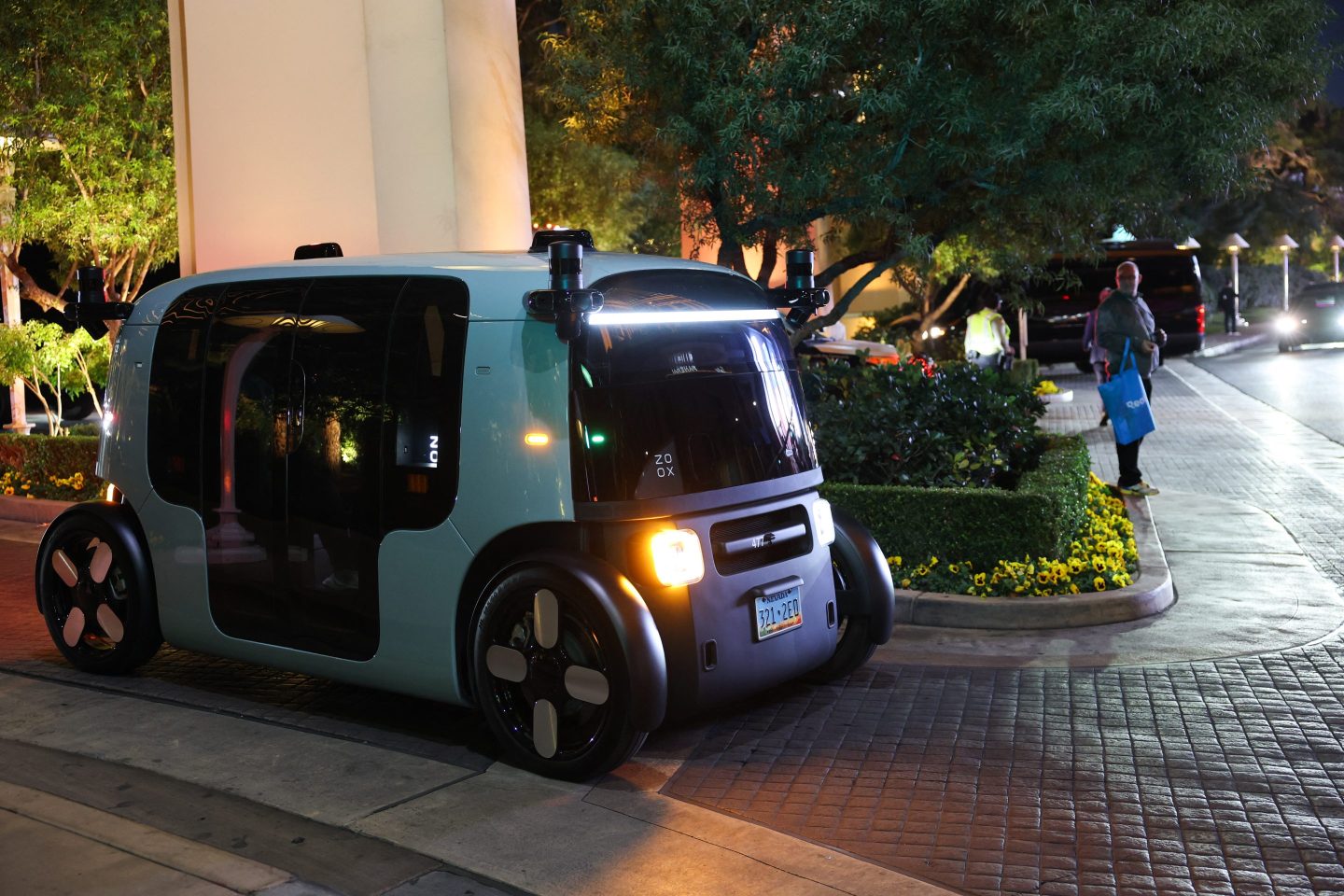
Uber said on Wednesday that it was working with yet another AV company—this time Zoox. Starting in Las Vegas this summer, residents will be able to start summoning Zoox’s toaster-shaped robotaxi—the only self-driving passenger taxi on the streets without a steering wheel or pedals—from the Uber app. The companies said the service is expected to expand to Los Angeles, too, by the middle of 2027.
The latest partnership underscores Uber’s ongoing strategy to play the field, rather than get too close to one autonomous driving provider. Uber is now working with Waymo in Austin and Atlanta, has a partnership with Lucid Motors via the “Nuro Driver,” and, eventually, freight services via Aurora—plus partnerships with Pony.ai, WeRide, May Mobility, and others. The only prominent robotaxi company Uber isn’t working with right now is Tesla, which has thus far rebutted Uber’s partnership offer and determined to go its own direction.
Zoox, which is owned by Amazon, has been slower to launch than competitors, and has wrestled with regulatory hurdles and safety reviews, but remains a clear innovator and frontrunner in the race to get self-driving vehicles on the roads. The company’s CEO, Aicha Evans, was one of three AV company representatives to speak at the White House’s AV Safety Forum in D.C. on Tuesday. While NHTSA Administrator Jonathan Morrison expressed enthusiasm regarding Zoox’s participation, the Department of Transportation was less enthusiastic about learning how to spell the company’s name. In a press release sent to reporters Wednesday, the agency twice referred to the company as “Zooks.”—Jessica Mathews
Meta rolls out new alerts to protect users from scams
Meta is rolling out a fresh batch of scam-detection features across Facebook, WhatsApp, and Messenger.
On WhatsApp, users will now get warnings when a device-linking request looks suspicious, with details on where the request is coming from. The goal is to stop scammers from hijacking accounts through tricks like fake talent competitions or misleading QR codes. Facebook is testing similar alerts for friend requests that show red flags—things like no mutual friends, a foreign location, or generally sketchy account activity will trigger the alerts.
Facebook Messenger is also expanding its AI-powered scam detection to more countries. If the tool spots patterns common to scams—like suspicious job offers from new contacts—it'll prompt users to submit the chat for review, then encourage them to report or block the account. The changes reflect Meta's acknowledgment that scammers are getting better at flying under the radar with the help of AI tools.—Beatrice Nolan
China cracks down on OpenClaw
Chinese authorities are taking steps to prevent businesses and government agencies from using OpenClaw AI apps, according to Bloomberg. Several state-run banks and agencies in China recently received notices from the government warning not to install OpenClaw software on office devices due to security reasons. Some employees were even banned from installing OpenClaw on their personal phones, the report said.
The news sent stocks of several Chinese tech companies, including Tencent, sliding. Since OpenClaw debuted a few months ago, Chinese tech companies have released a slew of OpenClaw apps.
OpenClaw, a free, open-source autonomous artificial intelligence agent has won fans all over the world, giving users the power to create custom AI agents that can do everything from sending emails on their behalf to making hotel reservations. But it has also raised serious security concerns, since users effectively give AI agents full access to the data and software on their PCs.—AO
More tech
—Apple foldable phone will sport an iPad-like layout. Plus, side-by-side apps!
—Xbox Helix coming in 2027. But that's for prototypes of Microsoft new game console.
—Meta rolls out new in-house AI chips. Silicon supply diversity
—Google officially closes $32 billion Wiz deal. Big Tech M&A lives.
—Rivian founder's robots biz raises $500 million. AI-powered robots for factory work.