
What do you get when you combine deep uncertainty about the biggest technological bet in a generation, a new crop of inexperienced retail investors whose primary analyst is their social media feed, and algorithms engineered to reward panic and hype in equal measure? It’s not the setup to a joke, but here’s the punch line: a market that can move 6% thanks to a post on X.
The global economy is facing a distinctly modern macroeconomic threat, one born not from failing banks or collapsing supply chains, but from the screens of mobile devices. Financial markets are demonstrating extreme fragility as sensationalized rumors, fictionalized economic scenarios, and viral “doomscrolling” on smartphones drive erratic trading behavior. With retail investors now wielding unprecedented market power, experts warn that panic-induced equity corrections sparked by unverified digital narratives could actively drag down global economic growth.
The current danger is rooted in a fundamental disconnect between empirical data and public sentiment. As Paul Donovan, chief economist at UBS Global Wealth Management, recently observed, reporting on actual economic realities no longer reflects economic perceptions. Instead, “people judge through the sensationalized media output of their smartphone.”
The recent volatility was seemingly sparked by a weekend blog post from Citrini Research that went viral across social media platforms, detailing a hypothetical scenario where artificial intelligence rapidly displaces white-collar workers, pushes the U.S. unemployment rate above 10% by 2028, and drives a 38% stock market correction. The widely circulated post painted a picture of a “ghost GDP” environment in which corporate output continues to rise through automation, but human consumption withers completely. This in turn creates a catastrophic “negative feedback loop” for the consumer economy that would permanently impair the incomes of prime borrowers and eventually fracture the $13 trillion residential mortgage market.
The Citrini post was similar in both reach and tone to another viral essay, an adapted version of which was published in Fortune. That one was written by AI executive Matt Shumer and argued that, at the moment, white-collar work represents February 2020, days before the COVID pandemic fully arrived on U.S. shores.
Despite Citrini explicitly framing the post as a scenario rather than a firm prediction, the narrative risked mutating into fact as it bounced across investors’ mobile devices. Financial analysts noted that the market is jittery, weeks after the so-called SaaSpocalypse saw $2 trillion and counting get wiped off software-as-a-service valuations after new capabilities from Anthropic’s Claude seemed to make them vulnerable, if not obsolete.
In fact, a market crash catalyzed by such viral panic is emerging as the leading threat to near-term economic stability. A Truth Social post from the president sent the market into a frenzy last October, mirroring the more recent global stock selloffs this past January following reports of Trump enacting punitive land grabs and tariff hikes in retribution for a perceived Nobel Prize diss. Even Moody’s Analytics top economist Mark Zandi warns of the increased risks thanks to unsubstantiated rumors. “Markets appear increasingly tainted by speculation,” Zandi wrote, conveniently on social media. “Markets risk moving in a big way, causality is reversed, and falling asset prices threaten an already vulnerable economy. This is one of those times.
“There are times when I feel markets are overdone and increasingly disconnected from the economy,” he added.
Meanwhile, Apollo Global Management chief economist Torsten Slok, whose Daily Spark is a widely read, influential jolt of data analysis for market watchers, warned on Tuesday that “tail risks” are rising for the U.S. economy. Slok’s proprietary analysis of GDP, which is falling—along with the contribution to growth from AI, which is rising—paints a picture full of greater risk. Geopolitics, government debt levels, and rapid changes in interest rates are all risks, he wrote, but “predicting the future path of AI adoption and productivity is particularly challenging.” If AI fails to meet expectations, he added, the probability of a recession goes up, but if AI were to trigger a sharp rise in unemployment, that could have a “disruptive impact on the economy and financial markets.”
Goldman Sachs warned the same day that a sharp stock market correction represents the most significant downside risk to its 2026 GDP growth forecast. Economist Pierfrancesco Mei estimated that a 10% equity price drop, sustained through the second quarter of 2026, would reduce U.S. GDP growth by about 0.5 percentage points, severely weighing on consumer spending and overall business investment. If this equity selloff were to coincide with AI actually displacing workers without delivering expected productivity gains, it would create a substantial growth headwind, he added.
In other words, we are in real danger of talking—or scrolling—ourselves into a downturn.
The ‘dumb money’ is more powerful than ever
This vulnerability is heavily exacerbated by the changing demographics of stock market participation. Once known as the “dumb money,” retail investors are no longer a marginalized group; they are a dominant market force. In 2025, individual retail investors accounted for a record-breaking $5.4 trillion in trading activity across stocks and ETFs. Driven by mobile trading apps, online chat groups, and social media communities, millions of Americans are making split-second financial decisions from their phones. For example, high school students are now executing options trades on mobile apps like Robinhood, based entirely on daily tech news. As Steve Sosnick, chief strategist at Interactive Brokers, told the Associated Press: “If you put enough ants together, they can move a very big log.”
When these highly active, digitally connected retail traders act on sensationalized smartphone news en masse, the consequences jump from the digital realm into the real economy. Diane Swonk, chief economist at KPMG, warned that in the current climate “workers are more anxious, investors more herdlike, and markets … more vulnerable to shocks than headlines suggest.”
Macro 101
Ironically, the viral narrative triggering this potential market crash is considered incoherent by several leading economists. The Financial Times’ Robert Armstrong noted that the Citrini scenario ignores the basic identity of national accounts: If AI is generating massive output, something on the other side—like consumption or investment—must also be rising. Furthermore, the Unhedged columnist wrote, corporate investment only makes sense if there is future human consumption to absorb the AI-generated goods. While cautioning that he has a “nonexistent formal education in economics,” Armstrong said the hypothetical collapse in consumption just doesn’t pass the smell test.
Economist Tyler Cowen, a longtime influential financial blogger at Marginal Revolution, argued that the whole idea is “incorrect right off the bat … Very little of it is based on sound macroeconomic reasoning.” In the radical deflation scenario contemplated by Citrini, he argued, there would be no problem of aggregate demand, “even if the social situation feels volatile or uncomfortable.” If AI produces a lot more stuff in the future economy, he explained, income would be generated from that, and the economy would keep going with prices adjusting. If unemployment surges past 10%, then economics dictates that prices would fall, for instance, even if this resulting distribution of income doesn’t please everyone’s “sense of morality,” Cowen wrote. “I am not saying everyone ends up happy here, but you cannot have a) a flood of goods and services, b) billions accruing to the AI owners, without also c) prices are at a level where most people can afford to buy a whole bunch of things. Otherwise, where do you think all the AI revenue is coming from?”
The market is not widely down despite the SaaSpocalypse and the vibe trading that is happening in response to viral essays like Citrini’s and Shumer’s. The S&P 500 is just weeks removed from an all-time high and is down less than 2% over the past month. The “rotation” taking place away from tech stocks and toward more “boring,” value stocks has been dubbed “HALO” by Josh Brown, CEO of Ritholtz Wealth Management. It stands for “heavy assets, low obsolescence” and represents the flip side of the AI trade, to Cowen’s point that aggregate demand doesn’t just disappear.
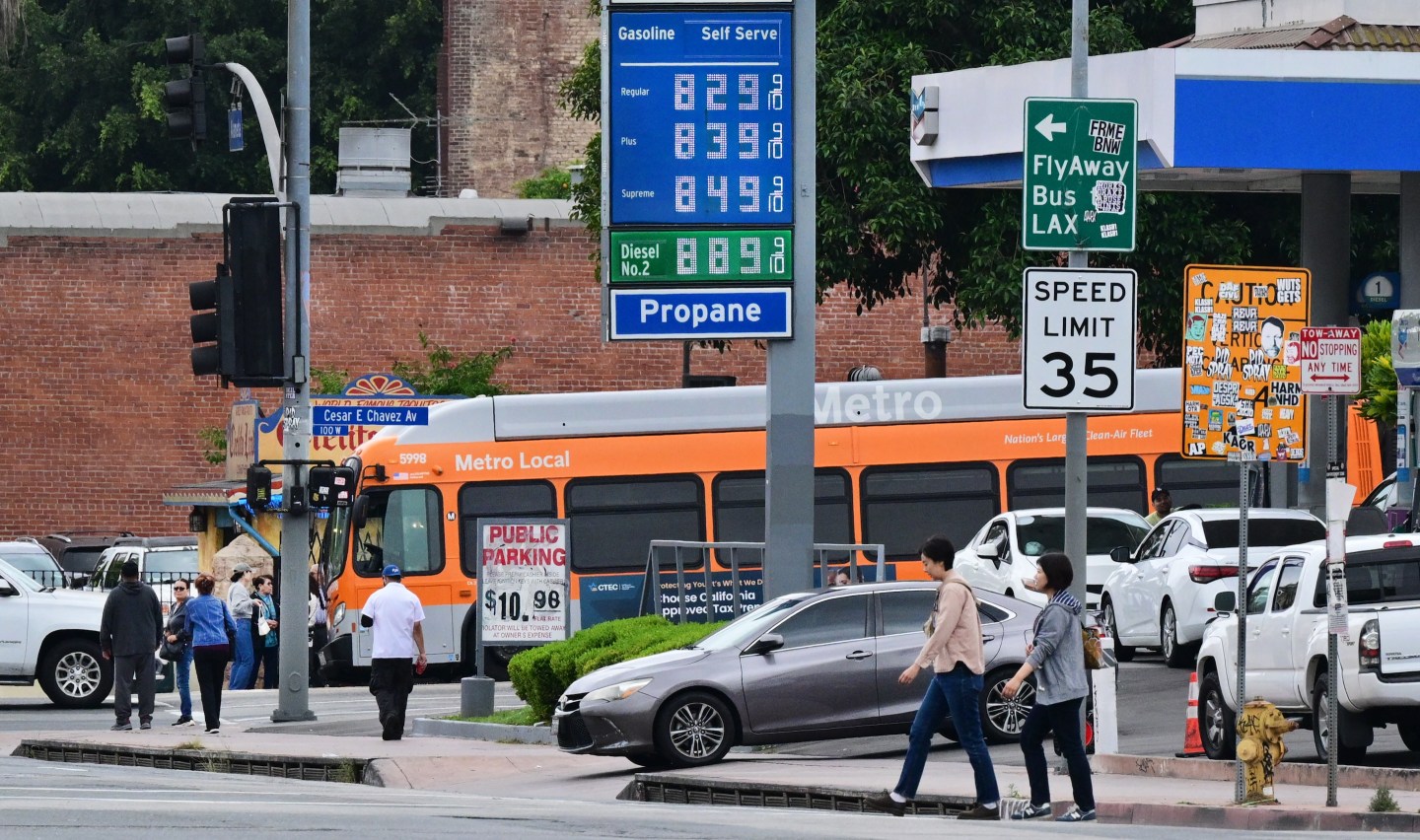
UBS’s Donovan argued that “economic perceptions” don’t match up with “economic realities” in the current zeitgeist. For months a prescient critic of the “affordability” crisis, Donovan argued that U.S. consumers “perceive higher grocery and electricity prices and do not acknowledge lower television or used car prices (because most people have not bought used cars recently).”
Donovan’s arguments align with the views of Penn Wharton Budget Model director Kent Smetters, who told Fortune last month that he believes many people are falling victim to the behavioral economics phenomenon known as the “money illusion,” where sticker shock essentially clouds the perception of what is in reality increased wealth. “The reality is that, in fact, we have a much higher standard of living than we had even 20 or 30 years ago,” he said. (Smetters also argued: “The reality is that AI is not going to be as impactful as people think.”)
Ultimately, the recent market trembles reveal less about the immediate dangers of AI and more about the precarious psychology of modern trading. Viral essays are tapping into fears of robots turning on their creators—a trope dating back centuries—rather than elucidating present economic conditions. The stock market has reached a point where smartphone rumors can cause significant stock moves, providing further evidence that we are in an expensive market that is simply, in Armstrong’s words, “looking for an excuse to fall.”