
• Home
  • Latest
  • Fortune 500
  • Finance
  • Tech
  • Leadership
  • Lifestyle
  • Rankings
  • Multimedia

Trendingnow

1

Jeff Bezos pledged $10 billion for climate change. With the 2030 clock ticking, his wife, Lauren Sánchez Bezos, is leading the charge to spend it

2

'I literally was crying last night because I’m nervous about what I’m going to find out': a record 51% of Americans aren't 'cost secure' on health

3

Anne Hathaway says she was spammed with ChatGPT-written thank you notes after hiring for a recent role: ‘Nobody on that list gets that job’

1

Jeff Bezos pledged $10 billion for climate change. With the 2030 clock ticking, his wife, Lauren Sánchez Bezos, is leading the charge to spend it

2

'I literally was crying last night because I’m nervous about what I’m going to find out': a record 51% of Americans aren't 'cost secure' on health

3

Anne Hathaway says she was spammed with ChatGPT-written thank you notes after hiring for a recent role: ‘Nobody on that list gets that job’
AIdisruption

‘Ghost GDP,’ a white-collar recession, and the death of friction: Substack’s top finance writer warns of the 2028 AI crisis nobody sees coming

Nick Lichtenberg
By
Nick Lichtenberg
Nick Lichtenberg
Business Editor
Down Arrow Button Icon
Nick Lichtenberg
By
Nick Lichtenberg
Nick Lichtenberg
Business Editor
Down Arrow Button Icon
February 23, 2026, 11:30 AM ET
ghost
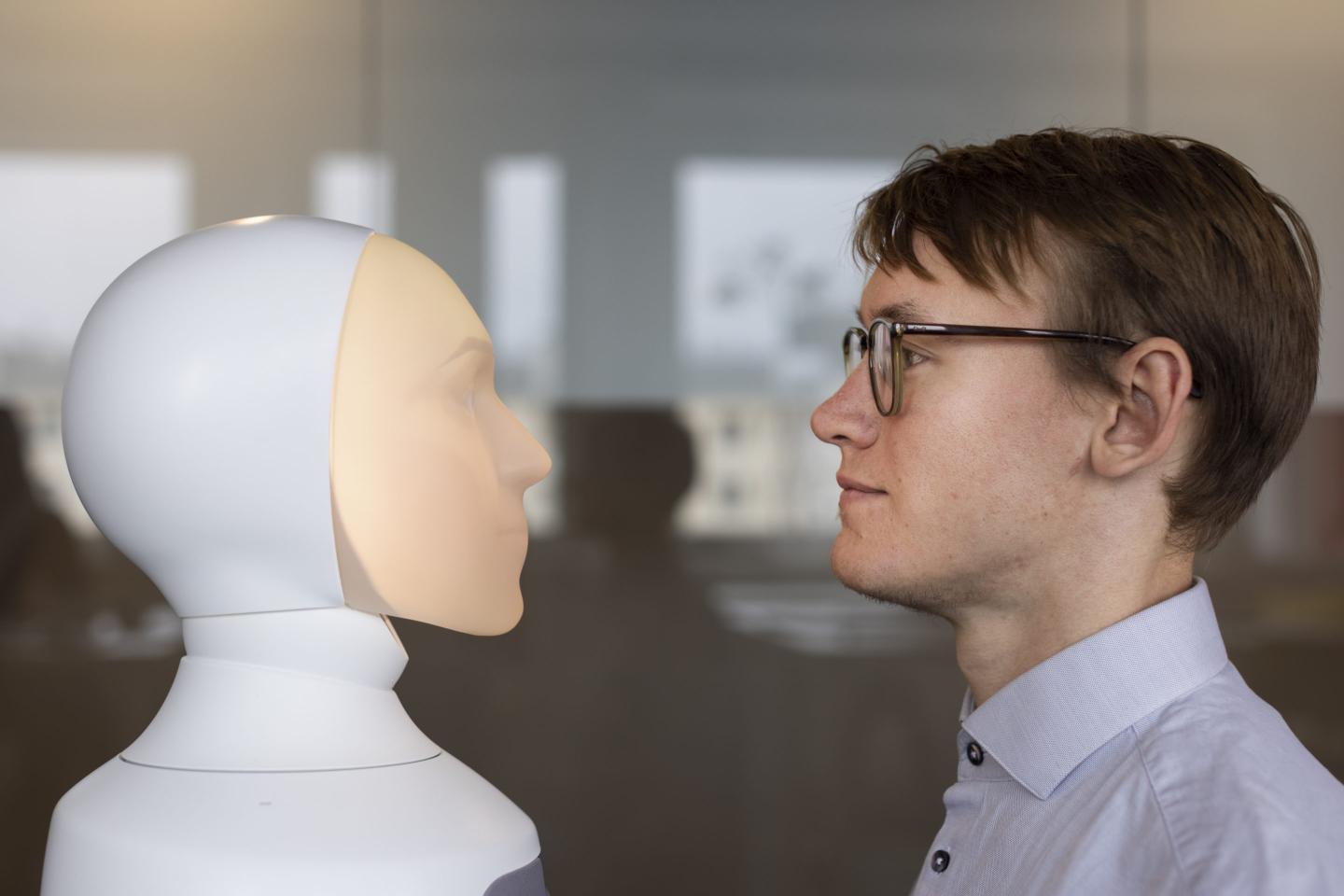
Will this robot create ghost GDP and take my job?Getty Images
Add Fortune on Google for similar content.

“Ghost in the machine” isn’t just an album by The Police. It’s a midcentury term, coined around 1949, to engage with an old philosophical debate that goes back hundreds of years: Is consciousness biological, driven by an organ called the brain? Or is there some kind of ghost in the machine that is our body, driving us on in almost supernatural fashion? The impact of artificial intelligence on the economy, having taken economics in philosophical directions by reviving the concept of the “superman,” is forcing analysts to grapple with its presence as a ghost in the machine of capitalism.

James Van Geelen, the top finance writer on Substack, is warning that the ghost has entered the machine, and we are not prepared for how dramatic the change will be as a result, and how quickly. Van Geelen, founder of analysis firm Citrini Research who recently claimed his real-world investment portfolio has surged more than 200% since May 2023, recently published a viral “thought exercise” detailing what the firm calls the “global intelligence crisis.” It has to do with “ghost GDP,” the death of the particular “friction” marked by human beings engaging in economics, and the displacement of the “scarce input” for all of economic history: human intelligence.

Van Geelen, a former Los Angeles paramedic with degrees in biology and psychology, has built his reputation on “second-order thinking,” looking past immediate headlines to anticipate what fundamentally must happen next. He’s been sounding the alarm on the coming white-collar recession for many months now, telling Demetri Kofinas of the Hidden Forces podcast in April 2025 that a “sword of Damocles” was hanging over the white-collar employee, referencing the famous Greek myth of a sword that could fall at any minute over a mythical leader. Citrini’s thesis for 2028 is plausible depending on how much “friction” you believe can be removed from daily economic life and how much of the economy actually reflects the fair price of what you pay for, every day.

Recommended Video

Van Geelen did not immediately respond to a request for comment.

The disaster to come 

Framed as a postmortem dispatch written from June 2028, Citrini’s memo describes a dystopian economy where aggressive AI adoption initially drives record corporate profits but—via mass layoffs—ultimately hollows out the American consumer base. There’s a simple problem at the heart of this picture. This is what Citrini calls “ghost GDP,” created by AI, inflating national accounts but never actually circulating through the real economy because of the inconvenient fact that “machines spend zero dollars on discretionary goods.” As companies adopt AI to protect their margins, Citrini forecasts, they will lay off white-collar workers, inevitably leading to a contraction in consumer spending, thereby forcing firms to implement even more AI cost-cutting measures. It will be a “negative feedback loop with no natural brake.”

A bigger issue is the displacement of the “scarce input” that has defined “the entirety of modern economic history”: human intelligence. With capital abundant and natural resources finite but replaceable, the unique ability of humans to analyze, decide, create, persuade, and coordinate was “the thing that could not be replicated at scale,” Citrini argued, and we are all underestimating how much of economic life is still structured around this scarcity. Citrini calls this “friction.”

Once AI agents begin operating 24/7 to optimize consumer decisions, businesses built on “habitual intermediation”—ranging from food delivery apps like DoorDash to the 2% to 3% interchange fees charged by credit card networks like Mastercard—will begin facing a relentless race to the bottom.

“Turns out that a lot of what people called relationships [is] simply friction with a friendly face,” Citrini wrote, offering the example of how humans don’t have time to do price comparisons on, say, boxes of protein bars but machines do. Technology’s ruthlessly deflationary force will first wipe out travel booking platforms, Citrini predicted, with agents able to assemble a complete travel itinerary by the fourth quarter of 2026, faster and cheaper than any platform could. Next are insurance renewals, financial advice, tax prep, “any category where the service provider’s value proposition [is] ultimately, ‘I will navigate complexity that you find tedious,’ [will be] disrupted, as the agents [find] nothing tedious.” Noting that AI will ruthlessly route around transaction fees, the memo states: “Their moats [are] made of friction. And friction [is] going to zero.”

Citrini sees the fallout disproportionately devastating the white-collar workers who currently make up 50% of U.S. employment and drive roughly 75% of the nation’s discretionary spending. In the fictional, hypothetical but scarily plausible 2028 scenario, the national unemployment rate prints at 10.2% and the S&P 500 suffers a massive 38% peak-to-trough crash. Unlike previous technological revolutions that eventually conjured new human jobs, AI serves as a general intelligence that improves at the exact tasks displaced workers would otherwise pivot toward. Consequently, high-earning professionals will be forced to downshift into gig economy roles, flooding the labor supply and pushing down wages across the entire economy.

This rapid unwinding of the “intelligence premium” would quickly metastasize into a systemic financial crisis in Citrini’s scenario. The memo warns that the $13 trillion residential mortgage market would fracture as prime borrowers with 780 FICO scores would see their incomes structurally and permanently impaired by AI displacement. Simultaneously, the private credit market would face a reckoning, as PE-backed software companies default on loans because AI coding agents allow their enterprise clients to bypass expensive SaaS contracts.

Reasons not to freak out

To be sure, while AI-induced deflation and labor shifts may cause turbulence, this scenario may be overlooking human adaptability and institutional response. Rather than hollowing out the consumer base, AI could eventually democratize access to abundance—so long as society retools faster than machine-fueled displacement, making the forecast jibe with your pessimism or optimism about humanity’s ability to respond to technological change.

Citrini’s “ghost GDP” argument assumes that displaced human wages will permanently vanish from the economy, ignoring how productivity gains have historically tended to reallocate value rather than destroy it. When AI drives costs down, goods and services become cheaper, effectively raising real purchasing power even for households with lower nominal income. Economic theory holds that this freed-up value should get redeployed—into new industries, new forms of demand, and new consumer behaviors we can’t yet model. Tom Lee of Fundstrat has been frequently citing the invention of flash-frozen food in the early 1900s as fundamentally disrupting the farming sector, which took farming as a share of jobs from 30% to 40% down to just 2% to 5%, but the economy reallocated value elsewhere.

Similarly, the vision of “frictionless” AI eliminating entire categories of work may be overstating how much humans actually place a value on complexity. Many services persist precisely because people want trust, aesthetic judgment, or human connection—not just efficiency. Financial advisors, personal trainers, chefs, and travel planners all sit at the intersection of expertise and empathy. The death of friction could lead to new kinds of differentiation, as firms would increasingly have to compete not on removing friction but on curating experience, creating narrative, and building identity—areas where human psychology still reigns.

Several billion-dollar CEOs recently spoke to Fortune about how fears of AI job displacement are overblown, while acknowledging that human jobs will have to change in response to the unfolding revolution. Tanmai Gopal of PromptQL estimated that 70% of tasks simply cannot be automated as AI needs to be trained on data and human context is too fluid for it to be updated often enough. “Our job as humans and people is that we are now context gatherers instead of just workers,” he said. “What makes us good at our job, and what gives us promotions, and what makes us more impactful is actually that ability to gather context. That’s what makes us good.” Ed Meyercord of Extreme Networks, who has been working with AI for a decade, since the time it was still called machine learning, said he thinks companies can choose to do more with less or they can hire the right (context-gathering) employees to do a lot more with these new tools.

Many analysts and economists are thinking along similar lines, with Deutsche Bank Research Institute recently prompting a proprietary AI tool to forecast what jobs its AI brethren would eliminate, and how. AI spit out a number of how many jobs it would eliminate: 92 million jobs by 2030. At the same time, it predicted that 170 million new roles would be created in the new, more frictionless economy. What you do next with your career, and how you invest, may come down to how much you believe in human beings to figure out this puzzle that we have created for ourselves.

Subscribe to Fortune Gulf Brief. Every Tuesday, this new newsletter delivers clear-eyed, authoritative intelligence on the deals, decisions, policies, and power shifts shaping one of the world’s most consequential regions, written for the people who need to act on it. Sign up here.
About the Author
Nick Lichtenberg
By Nick LichtenbergBusiness Editor
LinkedIn icon

Nick Lichtenberg is business editor and was formerly Fortune's executive editor of global news.

See full bioRight Arrow Button Icon
Add Fortune on Google for similar content.

Latest in AI

Finance
Lorem ipsum dolor sit amet, consectetur adipiscing elit, sed do eiusmod tempor incididunt ut labore et dolore magna aliqua. Ut enim ad minim veniam
By Fortune Editors
October 20, 2025
Finance
Lorem ipsum dolor sit amet, consectetur adipiscing elit, sed do eiusmod tempor incididunt ut labore et dolore magna aliqua. Ut enim ad minim veniam
By Fortune Editors
October 20, 2025
Finance
Lorem ipsum dolor sit amet, consectetur adipiscing elit, sed do eiusmod tempor incididunt ut labore et dolore magna aliqua. Ut enim ad minim veniam
By Fortune Editors
October 20, 2025
Finance
Lorem ipsum dolor sit amet, consectetur adipiscing elit, sed do eiusmod tempor incididunt ut labore et dolore magna aliqua. Ut enim ad minim veniam
By Fortune Editors
October 20, 2025
Finance
Lorem ipsum dolor sit amet, consectetur adipiscing elit, sed do eiusmod tempor incididunt ut labore et dolore magna aliqua. Ut enim ad minim veniam
By Fortune Editors
October 20, 2025
Finance
Lorem ipsum dolor sit amet, consectetur adipiscing elit, sed do eiusmod tempor incididunt ut labore et dolore magna aliqua. Ut enim ad minim veniam
By Fortune Editors
October 20, 2025

Most Popular

Finance
Lorem ipsum dolor sit amet, consectetur adipiscing elit, sed do eiusmod tempor incididunt ut labore et dolore magna aliqua. Ut enim ad minim veniam
By Fortune Editors
October 20, 2025
Finance
Lorem ipsum dolor sit amet, consectetur adipiscing elit, sed do eiusmod tempor incididunt ut labore et dolore magna aliqua. Ut enim ad minim veniam
By Fortune Editors
October 20, 2025
Finance
Lorem ipsum dolor sit amet, consectetur adipiscing elit, sed do eiusmod tempor incididunt ut labore et dolore magna aliqua. Ut enim ad minim veniam
By Fortune Editors
October 20, 2025
Finance
Lorem ipsum dolor sit amet, consectetur adipiscing elit, sed do eiusmod tempor incididunt ut labore et dolore magna aliqua. Ut enim ad minim veniam
By Fortune Editors
October 20, 2025
Finance
Lorem ipsum dolor sit amet, consectetur adipiscing elit, sed do eiusmod tempor incididunt ut labore et dolore magna aliqua. Ut enim ad minim veniam
By Fortune Editors
October 20, 2025
Finance
Lorem ipsum dolor sit amet, consectetur adipiscing elit, sed do eiusmod tempor incididunt ut labore et dolore magna aliqua. Ut enim ad minim veniam
By Fortune Editors
October 20, 2025
Fortune Secondary Logo
Rankings
  • 100 Best Companies
  • Fortune 500
  • Global 500
  • Fortune 500 Europe
  • Most Powerful Women
  • World's Most Admired Companies
  • See All Rankings
  • Lists Calendar
Sections
  • Finance
  • Fortune Crypto
  • Features
  • Leadership
  • Health
  • Commentary
  • Success
  • Retail
  • Mpw
  • Tech
  • Lifestyle
  • CEO Initiative
  • Asia
  • Politics
  • Conferences
  • Europe
  • Newsletters
  • Personal Finance
  • Environment
  • Magazine
  • Education
Customer Support
  • Frequently Asked Questions
  • Customer Service Portal
  • Privacy Policy
  • Terms Of Use
  • Single Issues For Purchase
  • International Print
Commercial Services
  • Advertising
  • Fortune Brand Studio
  • Fortune Analytics
  • Fortune Conferences
  • Business Development
  • Group Subscriptions
About Us
  • About Us
  • Press Center
  • Work At Fortune
  • Terms And Conditions
  • Site Map
  • About Us
  • Press Center
  • Work At Fortune
  • Terms And Conditions
  • Site Map
  • Facebook icon
  • Twitter icon
  • LinkedIn icon
  • Instagram icon
  • Pinterest icon

Latest in AI

Patricia Camden is EY Studio+ Customer Experience and Loyalty Leader
CommentaryConsulting
EY: we found your biggest AI blind spot. It’s called the ‘tempo gap’
By Patricia Camden and John DuboisJune 20, 2026
14 hours ago
SpaceX executives celebrate the IPO with confetti
C-SuiteSpaceX
Meet the SpaceX insiders Elon Musk trusts to run his $2.4 trillion dollar empire
By Lily Mae LazarusJune 20, 2026
19 hours ago
Both U.S. and Chinese AI firms are setting up shop in Singapore. Can the country become Asia’s neutral AI hub?
AsiaSingapore
Both U.S. and Chinese AI firms are setting up shop in Singapore. Can the country become Asia’s neutral AI hub?
By Angelica AngJune 19, 2026
1 day ago
Sam Altman looks down and to the side, frowning.
AIOpenAI
Sam Altman was ‘0%’ excited to be a CEO of a public company—but OpenAI is taking steps to compete in the AI IPO blitz anyway
By Sasha RogelbergJune 19, 2026
2 days ago
Record revenues. Record profits. Record revenue per employee. The Fortune 500 is richer than ever—and employing fewer people
EconomyFortune 500
Record revenues. Record profits. Record revenue per employee. The Fortune 500 is richer than ever—and employing fewer people
By Claire ZillmanJune 19, 2026
2 days ago
Samantha Gloede
CommentaryLeadership
Boards must avoid sleepwalking into the AI era. KPMG’s Global AI risk chief has a survival guide
By Samantha GloedeJune 19, 2026
2 days ago

Most Popular

Jeff Bezos pledged $10 billion for climate change. With the 2030 clock ticking, his wife, Lauren Sánchez Bezos, is leading the charge to spend it
Environment
Jeff Bezos pledged $10 billion for climate change. With the 2030 clock ticking, his wife, Lauren Sánchez Bezos, is leading the charge to spend it
By Sydney LakeJune 19, 2026
2 days ago
'I literally was crying last night because I’m nervous about what I’m going to find out': a record 51% of Americans aren't 'cost secure' on health
Health
'I literally was crying last night because I’m nervous about what I’m going to find out': a record 51% of Americans aren't 'cost secure' on health
By Ali Swenson, Amelia Thomson-Deveaux and The Associated PressJune 20, 2026
8 hours ago
Anne Hathaway says she was spammed with ChatGPT-written thank you notes after hiring for a recent role: ‘Nobody on that list gets that job’
Success
Anne Hathaway says she was spammed with ChatGPT-written thank you notes after hiring for a recent role: ‘Nobody on that list gets that job’
By Orianna Rosa RoyleJune 18, 2026
3 days ago
Nvidia CEO Jensen Huang says electricians and plumbers will be needed by the hundreds of thousands in the new working world
Success
Nvidia CEO Jensen Huang says electricians and plumbers will be needed by the hundreds of thousands in the new working world
By Preston ForeJune 20, 2026
14 hours ago
The Great Recession’s missing children are finally bringing college’s financial crisis into sight. Welcome to the ‘enrollment volatility’ era
Economy
The Great Recession’s missing children are finally bringing college’s financial crisis into sight. Welcome to the ‘enrollment volatility’ era
By Tristan BoveJune 20, 2026
17 hours ago
Microsoft boss Steve Ballmer publicly dismissed Chrome as a 'rounding error'—but Google’s CEO says he used the jab as fuel to win the browser-wars
Success
Microsoft boss Steve Ballmer publicly dismissed Chrome as a 'rounding error'—but Google’s CEO says he used the jab as fuel to win the browser-wars
By Preston ForeJune 17, 2026
3 days ago

© 2026 Fortune Media IP Limited. All Rights Reserved. Use of this site constitutes acceptance of our Terms of Use and Privacy Policy | CA Notice at Collection and Privacy Notice | Do Not Sell/Share My Personal Information
FORTUNE is a trademark of Fortune Media IP Limited, registered in the U.S. and other countries. FORTUNE may receive compensation for some links to products and services on this website. Offers may be subject to change without notice.