
• Home
  • Latest
  • Fortune 500
  • Finance
  • Tech
  • Leadership
  • Lifestyle
  • Rankings
  • Multimedia
Workplace CultureProductivity

In the age of AI, better meetings might be your company’s secret weapon

Claire Zillman
By
Claire Zillman
Claire Zillman
Editor, Leadership
Down Arrow Button Icon
Claire Zillman
By
Claire Zillman
Claire Zillman
Editor, Leadership
Down Arrow Button Icon
February 1, 2026, 7:00 AM ET
Could this meeting have been an email?
Could this meeting have been an email?Getty Images

CEOs have had it with meetings. They see them as unproductive time-sucks that clog up calendars and sap creativity. And they’ve taken drastic action to rid their workplaces of unnecessary brainstorms. 

Recommended Video

In recent years, Shopify cancelled all recurring meetings with more than two people to free up employees to work on other tasks. At Block, CEO Jack Dorsey declared Tuesdays a company‑wide no‑meeting day to shift the balance from “talking about work” to actually doing it. Instagram head Adam Mosseri has vowed to cancel all recurring meetings every six months, adding back only ones that are “absolutely necessary.” At Southwest Airlines, CEO Bob Jordan made a public declaration that meetings are not work. He blocks out some of his own afternoons from meetings. JPMorgan Chase CEO Jamie Dimon, meanwhile, encouraged employees to “kill meetings” in his 2024 letter to shareholders. 

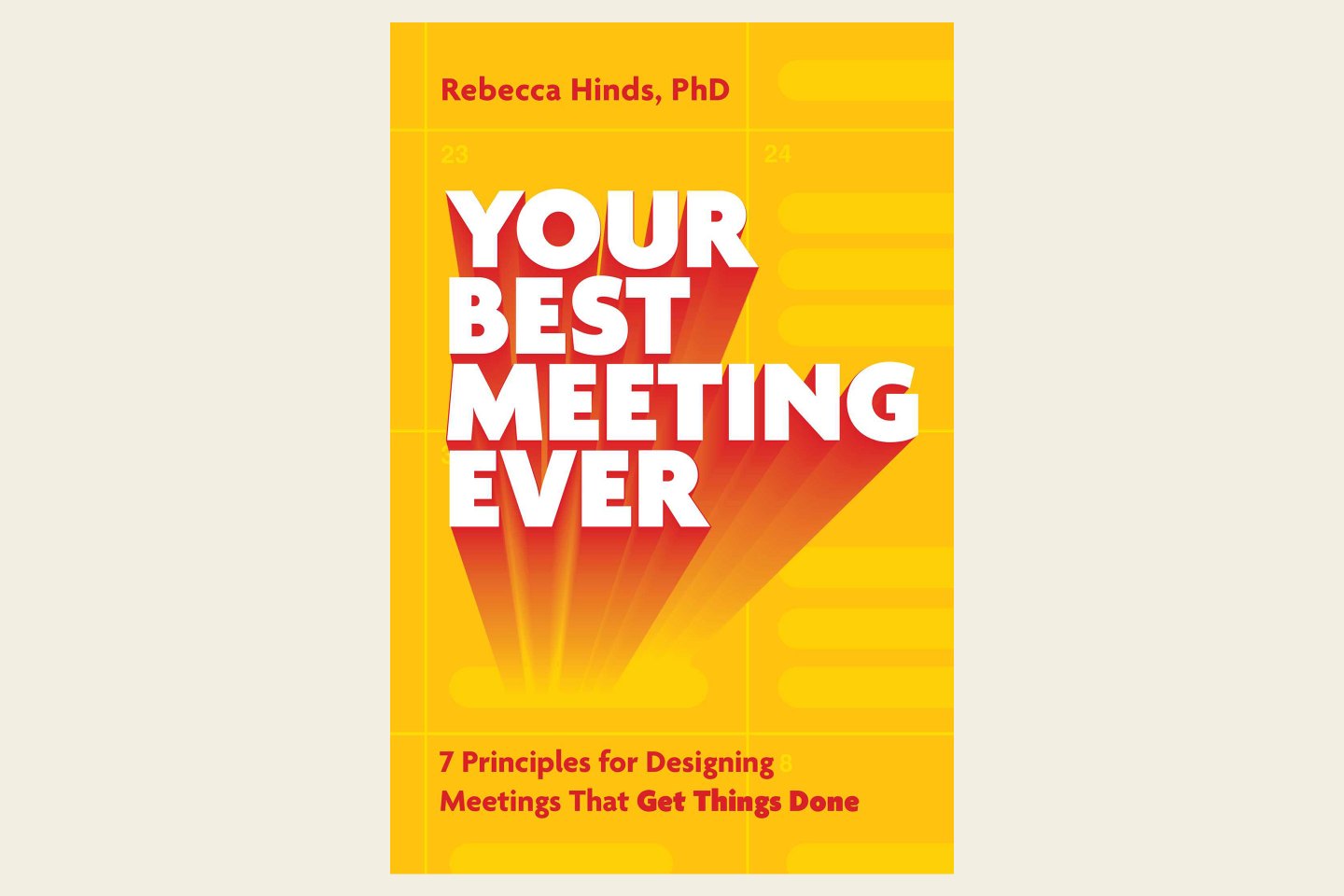
Such actions may seem like an overzealous crusade against a fundamental—if loathed—feature of the modern workplace, but Rebecca Hinds, author of the new book Your Best Meeting Ever, says these bosses might not be going far enough. The Stanford PhD, who has studied meetings for 15 years and advised nearly 100 companies, says that organizations could benefit from what she calls “Armeetingeddon” or a “Meeting Doomsday”—tearing meetings down completely and starting from scratch. 

According to her research, individual contributors, managers, and executives spent an average of 3.7, 5.8, and 5.3 hours per week, respectively, in unproductive meetings in 2024—an increase of 118%, 87%, and 51% since 2019. 

“As knowledge workers, we spend 85 to 90% of our time collaborating,” she says. “There’s no activity that we spend more time on than meetings, and yet they’re highly, highly dysfunctional.” Meetings have assumed a starring role in workplaces’ “productivity theater” partly because they are so visible, she adds: “There’s nothing that says you’re more important than being double- or triple-booked for a meeting, so we orient around showing productivity through meetings, as opposed to actually designing the meeting to move things forward.” In organizations where the collective mission and individual goals are unclear, meetings have become a sort of status symbol—“a way to show progress, show productivity,” Hinds says, calling that tendency “harmful.”

Hinds’s solution is to treat meetings as “the most important, most expensive, and most overlooked products in your entire organization,” she writes in her book. An Armeetingeddon or a calendar cleanse is a good place to start. Hinds’ former employer Dropbox famously pulled this off in 2013 when, “in one sweeping move,” Hinds writes, the IT department “wiped recurring meetings from employees’ calendars overnight.” For weeks, only a few essential meetings were spared from the company’s “meeting moratorium.” 

“The relentless drumbeat of meetings vanished overnight, leaving behind something unfamiliar: uninterrupted time for employees to do their work,” writes Hinds, who joined Dropbox the following year. In the “meeting Doomsdays” Hinds has led, participants have reclaimed up to 11 hours per week—gains with staying power, she writes.
But wiping calendars clean is only the first step. Hinds recommends rebuilding after a 48-hour “meeting detox,” and only then adding back meetings that have real impact and are well-designed. 

Among her top tips for such meetings is taking the default meeting length—be it 30 minutes or an hour—and cutting it in half, creating a sense of urgency and the need for attendees to prepare. The same rule can apply to the invite list. In fact, Bain & Company research found that when a meeting includes more than seven people, decision quality drops by 10% per extra body. 

Still, meetings have a way of creeping back onto calendars, so leaders need to empower their employees to defend their time and decline meetings, which can feel awkward or even insulting to the organizer. Companies like Dropbox and GitLab have given employees pre-written scripts to politely decline, along the lines of: “Thanks for including me! I’m wondering if we could try to solve this over email instead?”

Hinds isn’t surprised that so many CEOs are taking aim at meetings now: “We’re living in this era of efficiency,” she says. And when workers have fewer meetings, productivity often increases. Cooperation increases too “because people are forced to find new, more intentional ways to communicate without meetings.” At the same time, micromanagement is reduced because managers can no longer use meetings “as surveillance tools for their team.”

It doesn’t have to come from the top: This is a good moment for the average employee to crack down on meetings too, as they face pressure to develop skills that make the best use of AI. “We know that so much of that is being done through personal experimentation and on personal time,” Hinds says. “We owe it to ourselves to think about those pockets of time that we can take back [and devote] to the things that are truly going to advance our own career and improve our organization’s ability to execute.”

That said, there’s one innovation in meeting tech that Hinds is not a fan of: AI notetakers. She never uses them herself. The temptation to send a bot to a meeting, she says, is “a sign to me that the meeting has not been intentionally designed.”
Join us at the Fortune Workplace Innovation Summit May 19–20, 2026, in Atlanta. The next era of workplace innovation is here—and the old playbook is being rewritten. At this exclusive, high-energy event, the world’s most innovative leaders will convene to explore how AI, humanity, and strategy converge to redefine, again, the future of work. Register now.
About the Author
Claire Zillman
By Claire ZillmanEditor, Leadership
LinkedIn iconTwitter icon

Claire Zillman is a senior editor at Fortune, overseeing leadership stories. 

See full bioRight Arrow Button Icon

Latest in Workplace Culture

Finance
Lorem ipsum dolor sit amet, consectetur adipiscing elit, sed do eiusmod tempor incididunt ut labore et dolore magna aliqua. Ut enim ad minim veniam
By Fortune Editors
October 20, 2025
Finance
Lorem ipsum dolor sit amet, consectetur adipiscing elit, sed do eiusmod tempor incididunt ut labore et dolore magna aliqua. Ut enim ad minim veniam
By Fortune Editors
October 20, 2025
Finance
Lorem ipsum dolor sit amet, consectetur adipiscing elit, sed do eiusmod tempor incididunt ut labore et dolore magna aliqua. Ut enim ad minim veniam
By Fortune Editors
October 20, 2025
Finance
Lorem ipsum dolor sit amet, consectetur adipiscing elit, sed do eiusmod tempor incididunt ut labore et dolore magna aliqua. Ut enim ad minim veniam
By Fortune Editors
October 20, 2025
Finance
Lorem ipsum dolor sit amet, consectetur adipiscing elit, sed do eiusmod tempor incididunt ut labore et dolore magna aliqua. Ut enim ad minim veniam
By Fortune Editors
October 20, 2025
Finance
Lorem ipsum dolor sit amet, consectetur adipiscing elit, sed do eiusmod tempor incididunt ut labore et dolore magna aliqua. Ut enim ad minim veniam
By Fortune Editors
October 20, 2025

Most Popular

Finance
Lorem ipsum dolor sit amet, consectetur adipiscing elit, sed do eiusmod tempor incididunt ut labore et dolore magna aliqua. Ut enim ad minim veniam
By Fortune Editors
October 20, 2025
Finance
Lorem ipsum dolor sit amet, consectetur adipiscing elit, sed do eiusmod tempor incididunt ut labore et dolore magna aliqua. Ut enim ad minim veniam
By Fortune Editors
October 20, 2025
Finance
Lorem ipsum dolor sit amet, consectetur adipiscing elit, sed do eiusmod tempor incididunt ut labore et dolore magna aliqua. Ut enim ad minim veniam
By Fortune Editors
October 20, 2025
Finance
Lorem ipsum dolor sit amet, consectetur adipiscing elit, sed do eiusmod tempor incididunt ut labore et dolore magna aliqua. Ut enim ad minim veniam
By Fortune Editors
October 20, 2025
Finance
Lorem ipsum dolor sit amet, consectetur adipiscing elit, sed do eiusmod tempor incididunt ut labore et dolore magna aliqua. Ut enim ad minim veniam
By Fortune Editors
October 20, 2025
Finance
Lorem ipsum dolor sit amet, consectetur adipiscing elit, sed do eiusmod tempor incididunt ut labore et dolore magna aliqua. Ut enim ad minim veniam
By Fortune Editors
October 20, 2025
Rankings
  • 100 Best Companies
  • Fortune 500
  • Global 500
  • Fortune 500 Europe
  • Most Powerful Women
  • Future 50
  • World’s Most Admired Companies
  • See All Rankings
Sections
  • Finance
  • Leadership
  • Success
  • Tech
  • Asia
  • Europe
  • Environment
  • Fortune Crypto
  • Health
  • Retail
  • Lifestyle
  • Politics
  • Newsletters
  • Magazine
  • Features
  • Commentary
  • Mpw
  • CEO Initiative
  • Conferences
  • Personal Finance
  • Education
Customer Support
  • Frequently Asked Questions
  • Customer Service Portal
  • Privacy Policy
  • Terms Of Use
  • Single Issues For Purchase
  • International Print
Commercial Services
  • Advertising
  • Fortune Brand Studio
  • Fortune Analytics
  • Fortune Conferences
  • Business Development
About Us
  • About Us
  • Editorial Calendar
  • Press Center
  • Work At Fortune
  • Diversity And Inclusion
  • Terms And Conditions
  • Site Map
  • Facebook icon
  • Twitter icon
  • LinkedIn icon
  • Instagram icon
  • Pinterest icon

Most Popular

placeholder alt text
Economy
'I just don't have a good feeling about this': Top economist Claudia Sahm says the economy quietly shifted and everyone's now looking at the wrong alarm
By Eleanor PringleJanuary 31, 2026
1 day ago
placeholder alt text
Future of Work
Ford CEO has 5,000 open mechanic jobs with up to 6-figure salaries from the shortage of manually skilled workers: 'We are in trouble in our country'
By Marco Quiroz-GutierrezJanuary 31, 2026
1 day ago
placeholder alt text
Success
Ryan Serhant starts work at 4:30 a.m.—he says most people don’t achieve their dreams because ‘what they really want is just to be lazy’
By Preston ForeJanuary 31, 2026
1 day ago
placeholder alt text
Success
Alexis Ohanian walked out of the LSAT 20 minutes in, went to a Waffle House, and decided he was 'gonna invent a career.' He founded Reddit
By Preston ForeJanuary 31, 2026
1 day ago
placeholder alt text
Economy
Meet the first CEO of the IRS: A Jamie Dimon protege facing a $5 trillion test this tax season
By Shawn TullyJanuary 31, 2026
1 day ago
placeholder alt text
Startups & Venture
Silicon Valley legend Kleiner Perkins was written off. Then an unlikely VC showed up
By Allie GarfinkleJanuary 31, 2026
21 hours ago

© 2026 Fortune Media IP Limited. All Rights Reserved. Use of this site constitutes acceptance of our Terms of Use and Privacy Policy | CA Notice at Collection and Privacy Notice | Do Not Sell/Share My Personal Information
FORTUNE is a trademark of Fortune Media IP Limited, registered in the U.S. and other countries. FORTUNE may receive compensation for some links to products and services on this website. Offers may be subject to change without notice.


Latest in Workplace Culture

dewar
CommentaryLeadership
The AI adoption story is haunted by fear as today’s efficiency programs look like tomorrow’s job cuts. Leaders need to win workers’ trust
By Carolyn DewarFebruary 1, 2026
3 hours ago
Workplace CultureProductivity
In the age of AI, better meetings might be your company’s secret weapon
By Claire ZillmanFebruary 1, 2026
5 hours ago
SuccessCareers
Despite Airbnb CEO Brian Chesky and Steve Jobs praising micromanagers, a new survey ranks them among the most annoying coworkers
By Orianna Rosa RoyleFebruary 1, 2026
5 hours ago
The founder and CEO of $1.25 billion AI identity verification platform Incode, Ricardo Amper
SuccessGen Z
CEO of $1.25 billion AI company says he hires Gen Z because they’re ‘less biased’ than older generations—too much knowledge is actually bad, he warns
By Emma BurleighFebruary 1, 2026
7 hours ago
texas A&M
PoliticsColleges and Universities
Conservative cancel culture clashes with college and social media at Texas A&M to bring curtain down on women’s and gender studies
By Juan A. Lozano and The Associated PressJanuary 31, 2026
1 day ago
Ryan Serhant taking a selfie
SuccessProductivity
Ryan Serhant starts work at 4:30 a.m.—he says most people don’t achieve their dreams because ‘what they really want is just to be lazy’
By Preston ForeJanuary 31, 2026
1 day ago