• Home
  • Latest
  • Fortune 500
  • Finance
  • Tech
  • Leadership
  • Lifestyle
  • Rankings
  • Multimedia
CommentarySocial Media

How social media upended the 75-year-old playbook of big CPG

By
Oisín Hanrahan
Oisín Hanrahan
Down Arrow Button Icon
By
Oisín Hanrahan
Oisín Hanrahan
Down Arrow Button Icon
January 28, 2026, 9:30 AM ET
hanrahan
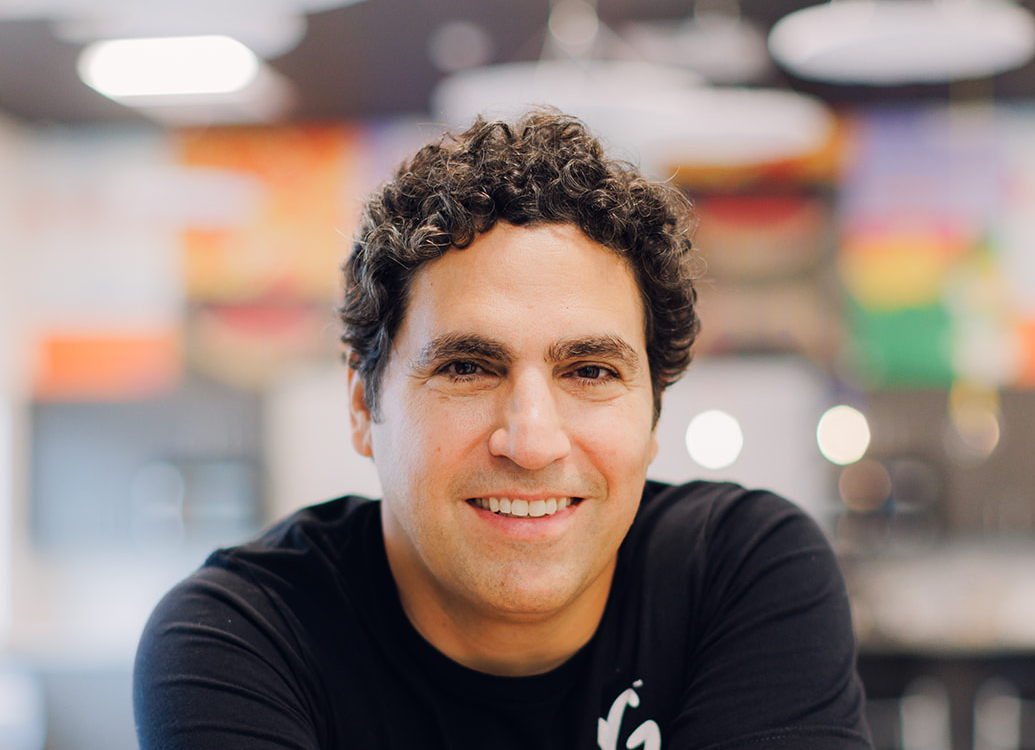
Oisin Hanrahan is the Co-founder and CEO of Keychain.courtesy of Keychain

For the better part of the last century, America’s largest consumer packaged goods companies ran an undefeated business playbook. All of the iconic consumer brands of our lifetimes—Coca-Cola, Lay’s, Cheerios, Oreos, and more–-were built on a simple, three-part formula.

Recommended Video

First, generate massive demand by placing huge national ad buys. Next, create ubiquity by stocking the brand across every conceivable grocery store shelf. Third, harvest as much profit as possible through the economies of scale created by giant production runs.

This model worked especially well in America because this country is huge, rich, and culturally homogeneous. National TV ad campaigns could shape popular tastes at scale so that, in turn, a single formulation of a cereal, snack, or soda could satisfy tens of millions.

But that world is now gone, and gone with it is the reliable engine of big CPG company growth. The culprit? Social media.

The truth is that consumers no longer look to television and mass-market media for guidance on what to buy at the supermarket. A recent International Food Information Council survey showed that half of respondents tried a new recipe based on information from social media. Another 42% tried a new product and nearly a third changed their eating habits entirely. 

This is the result of more and more people finding themselves pulled into one of the thousands of nutrition-themed micro-communities on TikTok, Instagram, and YouTube. Some avoid seed oils. Some will only buy high-protein or plastic-free products. Still others are looking for collagen, prebiotics, creatine, or adaptogens.

In response, hundreds of direct-to-consumer brands have emerged to serve these niche tastes, many growing more quickly than ever. And with the ease of online shopping, picky shoppers aren’t constrained by what they can find at the store. These upstarts include brands like Day Out, which sells protein-packed, plant-based snacks; Lucky Energy, focused on zero-sugar energy drinks; and Goodles, a line of better-for-you macaroni and cheese.

For incumbent CPG companies, the logical response to this trend would be to acquire the biggest brands emerging from these communities. But that approach is fundamentally misaligned with the formula they’ve relied on for 75 years. 

The problem is scale. Because they are rooted in tightly defined micro-communities, even the best of these startups often plateau at $50 million in annual sales. Those numbers don’t work for companies like PepsiCo, which has more than $90 billion in annual sales, or even General Mills, with $20 billion. A $50 million startup, with a slim chance of growing further, isn’t worth the effort.

This has led to a broader shift in the innovation pecking order. Ten years ago, startups still served as the sources of innovation for food and household products. But incumbent companies could reliably acquire them once they reached over $100 million in sales, improve their margins, and scale them up by a factor of ten or more. This meant that they could fast-follow consumer trends to refresh their product lines and stay relevant. Private label brands run by retailers—Target’s Good & Gather, Whole Foods’ 365, or Walmart’s Great Value—often moved slowest, happy to focus on tried-and-true staples.

But retailers’ private label brands have moved ahead. Because retailers already control distribution, branding, and merchandising, they can now identify a trend, develop a product, and distribute it instantly via their own stores and websites. And they don’t need another $1 billion in sales to justify the effort. A $40 million product can make a meaningful impact, especially with the fatter margins of private label.

That now leaves big CPG companies in the uncomfortable position of dead last in innovation. Desperate for something new, they rely on what’s known as a “line extension,” meaning a new flavor of a legacy brand. In practice, that means creating hundreds of different variations of products like Oreos, some with flavors as egregious as Swedish Fish and Fruit Punch. It means Flamin’ Hot Mountain Dew and Mac N’ Cheetos. Or Heinz Mayochup, a combination of mayonnaise and ketchup.

These stunty concoctions are good for a burst of PR and sales, but they’re hardly the stuff of a sustainable long-term strategy. Consumers aren’t looking for the 300th variation of Oreos. In fact, many have stopped eating cookies altogether, and those who haven’t often want something different, like high-protein, no-sugar brands built for the values of their micro-communities.

Taken as a whole, the CPG landscape starts to look a lot like the movie industry just before Netflix changed everything. The big studios kept doubling down on massive blockbusters even as audiences fragmented. Netflix won by producing and buying thousands of varied titles, catering to niche tastes at a speed no studio could match. Today, retailer-owned brands are Netflix and big CPG is the studio system.

Some companies are starting to take note. Unilever is shifting its ad budget to favor social media and influencer marketing, rather than big national campaigns. When Coca-Cola spotted people putting tea bags in Sprite on TikTok, they launched Sprite + Tea based on that grassroots demand. And just about every big CPG company has responded, if belatedly, to the protein trend with products like Cheerios Protein, Pop-Tarts Protein, and new protein-packed beverages.

But these initial forays aren’t enough. Legacy CPG companies need to dramatically increase their innovation velocity and build new product lines based on actual consumer trends rather than gimmicky mashups. That means creating more new products more often and accepting smaller initial revenue targets. It means building for niche audiences rather than trying to flatten them into a single homogenized national consumer. And it means reorganizing manufacturing around flexibility, not just volume.

Big CPG companies still have enormous strengths: capital, reach, manufacturing efficiency, and trusted brands. These companies can still win, but only if they stop trying to recreate the past and start building for the present.

The opinions expressed in Fortune.com commentary pieces are solely the views of their authors and do not necessarily reflect the opinions and beliefs of Fortune.

Join us at the Fortune Workplace Innovation Summit May 19–20, 2026, in Atlanta. The next era of workplace innovation is here—and the old playbook is being rewritten. At this exclusive, high-energy event, the world’s most innovative leaders will convene to explore how AI, humanity, and strategy converge to redefine, again, the future of work. Register now.
About the Author
By Oisín Hanrahan
See full bioRight Arrow Button Icon

Latest in Commentary

Finance
Lorem ipsum dolor sit amet, consectetur adipiscing elit, sed do eiusmod tempor incididunt ut labore et dolore magna aliqua. Ut enim ad minim veniam
By Fortune Editors
October 20, 2025
Finance
Lorem ipsum dolor sit amet, consectetur adipiscing elit, sed do eiusmod tempor incididunt ut labore et dolore magna aliqua. Ut enim ad minim veniam
By Fortune Editors
October 20, 2025
Finance
Lorem ipsum dolor sit amet, consectetur adipiscing elit, sed do eiusmod tempor incididunt ut labore et dolore magna aliqua. Ut enim ad minim veniam
By Fortune Editors
October 20, 2025
Finance
Lorem ipsum dolor sit amet, consectetur adipiscing elit, sed do eiusmod tempor incididunt ut labore et dolore magna aliqua. Ut enim ad minim veniam
By Fortune Editors
October 20, 2025
Finance
Lorem ipsum dolor sit amet, consectetur adipiscing elit, sed do eiusmod tempor incididunt ut labore et dolore magna aliqua. Ut enim ad minim veniam
By Fortune Editors
October 20, 2025
Finance
Lorem ipsum dolor sit amet, consectetur adipiscing elit, sed do eiusmod tempor incididunt ut labore et dolore magna aliqua. Ut enim ad minim veniam
By Fortune Editors
October 20, 2025

Most Popular

Finance
Lorem ipsum dolor sit amet, consectetur adipiscing elit, sed do eiusmod tempor incididunt ut labore et dolore magna aliqua. Ut enim ad minim veniam
By Fortune Editors
October 20, 2025
Finance
Lorem ipsum dolor sit amet, consectetur adipiscing elit, sed do eiusmod tempor incididunt ut labore et dolore magna aliqua. Ut enim ad minim veniam
By Fortune Editors
October 20, 2025
Finance
Lorem ipsum dolor sit amet, consectetur adipiscing elit, sed do eiusmod tempor incididunt ut labore et dolore magna aliqua. Ut enim ad minim veniam
By Fortune Editors
October 20, 2025
Finance
Lorem ipsum dolor sit amet, consectetur adipiscing elit, sed do eiusmod tempor incididunt ut labore et dolore magna aliqua. Ut enim ad minim veniam
By Fortune Editors
October 20, 2025
Finance
Lorem ipsum dolor sit amet, consectetur adipiscing elit, sed do eiusmod tempor incididunt ut labore et dolore magna aliqua. Ut enim ad minim veniam
By Fortune Editors
October 20, 2025
Finance
Lorem ipsum dolor sit amet, consectetur adipiscing elit, sed do eiusmod tempor incididunt ut labore et dolore magna aliqua. Ut enim ad minim veniam
By Fortune Editors
October 20, 2025
Fortune Secondary Logo
Rankings
  • 100 Best Companies
  • Fortune 500
  • Global 500
  • Fortune 500 Europe
  • Most Powerful Women
  • Future 50
  • World’s Most Admired Companies
  • See All Rankings
Sections
  • Finance
  • Fortune Crypto
  • Features
  • Leadership
  • Health
  • Commentary
  • Success
  • Retail
  • Mpw
  • Tech
  • Lifestyle
  • CEO Initiative
  • Asia
  • Politics
  • Conferences
  • Europe
  • Newsletters
  • Personal Finance
  • Environment
  • Magazine
  • Education
Customer Support
  • Frequently Asked Questions
  • Customer Service Portal
  • Privacy Policy
  • Terms Of Use
  • Single Issues For Purchase
  • International Print
Commercial Services
  • Advertising
  • Fortune Brand Studio
  • Fortune Analytics
  • Fortune Conferences
  • Business Development
  • Group Subscriptions
About Us
  • About Us
  • Editorial Calendar
  • Press Center
  • Work At Fortune
  • Diversity And Inclusion
  • Terms And Conditions
  • Site Map
Fortune Secondary Logo
  • About Us
  • Editorial Calendar
  • Press Center
  • Work At Fortune
  • Diversity And Inclusion
  • Terms And Conditions
  • Site Map
  • Facebook icon
  • Twitter icon
  • LinkedIn icon
  • Instagram icon
  • Pinterest icon

Oisin Hanrahan is the Co-founder and CEO of Keychain, an AI-powered manufacturing platform for the consumer packaged goods industry that’s raised $78 million to date, backed by Wellington Management and BoxGroup, as well as General Mills and Hershey’s.

Prior to Keychain, Hanrahan co-founded Handy, where he raised over $100 million in venture capital, leading it to a nine-figure acquisition by Angi (Angie's List). He later served as CEO of the combined, multi-billion-dollar public company with 5,200 employees.


Latest in Commentary

Europedigital transformation
Why Europe can lead in trusted, industrialized AI
By Dave McCannMarch 2, 2026
11 hours ago
heitmann
CommentaryEntrepreneurship
Here’s how to build something that lasts, from the founder of a $300 million bootstrapped company that’s been growing for 28 years straight
By Tim HeitmannMarch 1, 2026
2 days ago
world's fair
CommentaryRobots
Something big is happening in AI, but panic is the wrong reaction
By Peter CappelliFebruary 28, 2026
3 days ago
putin
CommentaryRussia
Exclusive analysis: we looked at the 400 western firms still in Russia. Their paltry size strips Putin’s bluff bare naked
By Jeffrey Sonnenfeld, Stephen Henriques, Jake Waldinger and Giuseppe ScottoFebruary 27, 2026
3 days ago
roth
CommentaryLeadership
The AI resource reallocation challenge: How can companies capture the value of time?
By Erik RothFebruary 27, 2026
4 days ago
will
CommentaryAdvertising
I’m one of America’s top pollsters and I’ve got a warning for the AI companies: customers aren’t sold on ads
By Will JohnsonFebruary 27, 2026
4 days ago

Most Popular

placeholder alt text
Middle East
U.S. military gives Iran a taste of its own medicine with cheap copycat Shahed drones, while concern shifts to munitions supply in extended conflict
By Jason MaMarch 1, 2026
1 day ago
placeholder alt text
Success
MacKenzie Scott's close relationship with Toni Morrison long before Amazon put Scott on the path to give more than $1 billion to HBCUs
By Sasha RogelbergMarch 1, 2026
1 day ago
placeholder alt text
Economy
Your grandparents are the reason the U.S. isn't in a recession right now. That won't last forever
By Eleanor PringleMarch 1, 2026
2 days ago
placeholder alt text
AI
American schools weren’t broken until Silicon Valley used a lie to convince them they were—now reading and math scores are plummeting
By Sasha RogelbergMarch 1, 2026
1 day ago
placeholder alt text
Health
Gen Z men are eating ‘boy kibble,’ the human equivalent to dog food, to load up on protein cheaply
By Jake AngeloMarch 1, 2026
1 day ago
placeholder alt text
Middle East
As Iran attacks Dubai, the tax-free haven for the global elite could see 'catastrophic' fallout — 'this can also send shockwaves globally'
By Jason MaMarch 1, 2026
1 day ago

© 2026 Fortune Media IP Limited. All Rights Reserved. Use of this site constitutes acceptance of our Terms of Use and Privacy Policy | CA Notice at Collection and Privacy Notice | Do Not Sell/Share My Personal Information
FORTUNE is a trademark of Fortune Media IP Limited, registered in the U.S. and other countries. FORTUNE may receive compensation for some links to products and services on this website. Offers may be subject to change without notice.