Good morning. Ah, earnings season. The quarterly ritual when companies publicly measure themselves up against analyst estimates, squirm through conference calls, and brace for big after-hours stock moves. Some reporters hate covering earnings; I’ve always found a special pleasure in the custom. Each company’s report is like a new episode in an ongoing storyline. (So here’s hoping Trump’s plan of ending quarterly earnings doesn’t go anywhere).
Netflix and Intel kicked off the festivities this week. But next week is the real action with Apple, Meta, and Microsoft all in the lineup.
Today’s news below.
Alexei Oreskovic
@lexnfx
alexei.oreskovic@fortune.com
Want to send thoughts or suggestions to Fortune Tech? Drop a line here.
TikTok’s U.S. spinoff is official
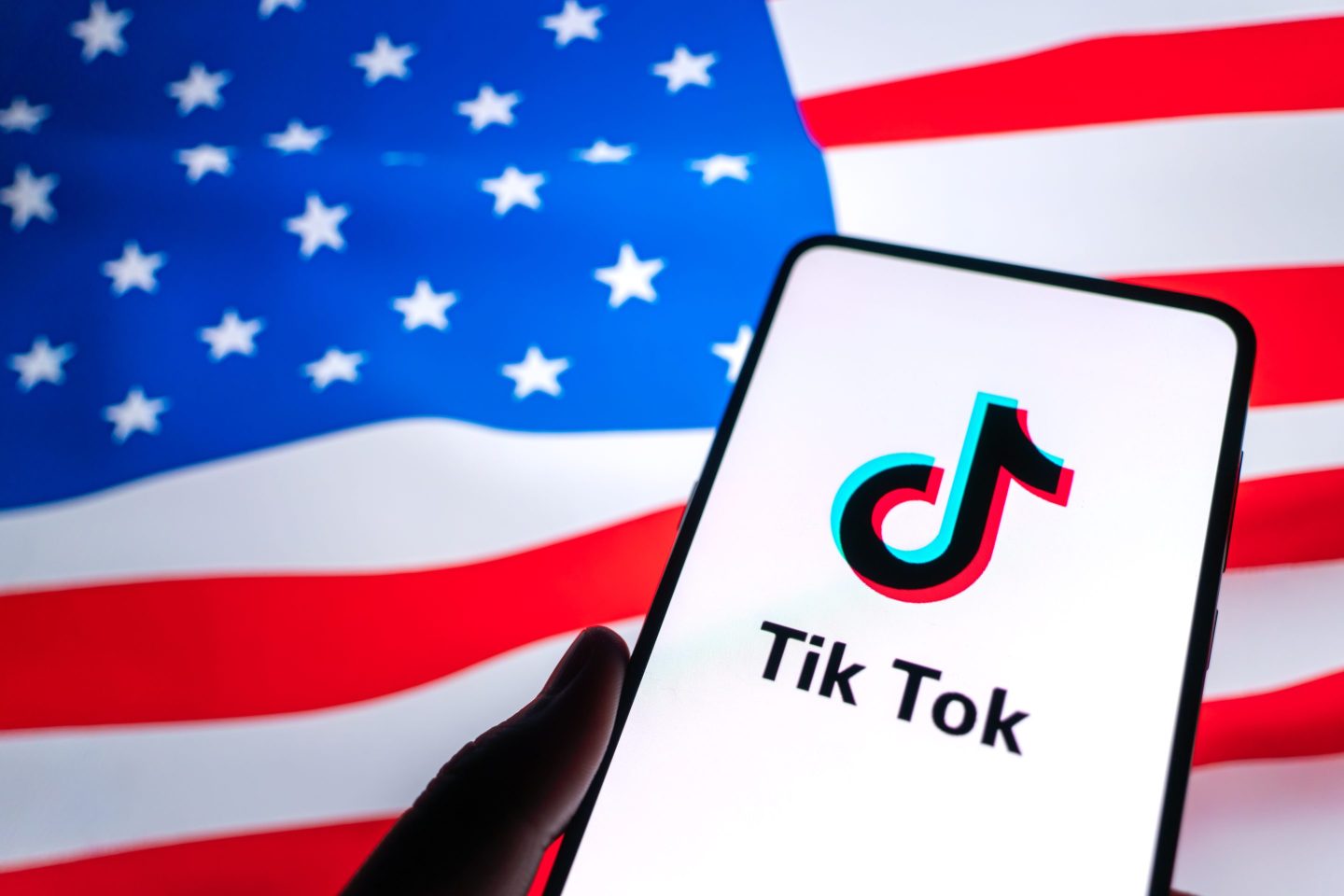
The years-long saga over TikTok’s future in the U.S. is finally at its end—and American users’ access to viral dance challenges is safe for the foreseeable future.
The company announced Thursday the creation of TikTok USDS Joint Venture LLC, a new entity spun out from China's ByteDance and owned by a consortium of mostly American investors led by Oracle and Silver Lake. The announcement comes right on the January 22 deadline tied to a Trump-era executive order. The deal caps a prolonged effort by U.S. officials to force ByteDance either to sell TikTok’s U.S. business to American owners or face a nationwide ban. U.S. authorities feared the Chinese government could use the platform to collect information about American users or conduct psy-ops, something ByteDance insisted would never happen.
The new company said it will retrain, test, and update TikTok's content recommendation algorithm on U.S. user data, but that U.S. users will still get the global content experience.
TikTok CEO Shou Chew will be a director of American TikTok, while Adam Presser, the current head of trust and safety, will become the U.S. company's CEO. Under the new structure, ByteDance retains a 19.9% stake in the U.S. business, while Oracle, Silver Lake, and Abu Dhabi–backed MGX each take 15%. Other investors include Susquehanna, Dragoneer, DFO, and Michael Dell’s family office. However, it remains unclear how much ByteDance received for the U.S. business.– Beatrice Nolan
Intel can’t catch a break
Intel’s big comeback is … still stuck in neutral.
The struggling chipmaker gave a weak sales outlook for the current quarter, even though its financial results in the last three months of 2025 came in ahead of targets.
Intel touted some of the organizational changes it’s made recently and celebrated the milestone of shipping chips built with its most advanced 18A technology. But the company also acknowledged that supply issues constrained its ability to meet demand, crimping its sales guidance. “Our yield and production manufacturing are not up to my standards,” CEO Lip Bu Tan told Bloomberg.
Intel’s comeback plan hinges on building chips for other companies based on its next-generation 14A technology, which would position Intel to compete with TSMC, the world’s No.1 contract chipmaker. Intel has not announced any customers for its 14A process yet, however, and it continued to stay mum during Thursday's earnings call, with no update on foundry customers. Result? Intel's stock sank 13% in after-hours trading.
Google’s AI wants to 'connect the dots' with your email and photos
Google announced a new feature Thursday that will connect the “AI mode” in its search engine to users’ Gmail accounts and Google Photos.
The feature, dubbed Personal Intelligence, is opt-in, meaning you need to actively select it. The benefit, Google says, is that the AI is more useful when it knows more about you. By seeing the brands you’ve shopped at and your personal sense of fashion, via your emails and photos, for example, Google’s AI could recommend the ideal jacket for the trip to Albuquerque it knows (again, via your emails) you’re taking next month.
This kind of personalization (Google calls it “connecting the dots" across your apps) could give Google a leg up as it competes with OpenAI’s ChatGPT, which has been working to offer similar levels of personalization by letting users save their chat history with its “Memory” feature.
One thing we know about AI and data though is that there's never enough. If users prove willing to give Google’s AI access to their emails and photos, don’t be surprised if Google asks for more access. From Maps to YouTube, Google has a lot of data-rich dots to connect.—AO
More tech
—Tesla robotaxi goes 'unsupervised' in Austin. No more human supervisors in a 'few' vehicles.
—Brex acquired by Capital One for $5.15 billion. The startup was worth $12 billion at its peak.
—Elon speaks at Davos. In case you don't hear enough from him on X.
—Mistral CEO says China is not lagging the West in AI. Unless you believe in 'fairy tales.'
—Binance files for EU-wide license. A MiCA in Greece.
—OpenAI's former sales boss goes VC.