
Good morning from CES in Las Vegas, where the future holds…flight delays and lengthy taxi lines. (In this economy?)
Our annual Fortune Brainstorm Tech dinner last night was a smash, by the way. Qualcomm CEO Cristiano Amon was in top form (Me: “Smartphones, robotics, industrial IoT, automotive, PCs….what businesses doesn’t Qualcomm want to be in?” Him: “Bad ones”) and our panel discussion about agentic AI was lively to say the least (“It’s more about psychology than technology,” said Disney CIO Susan Doniz, spitting verses on change management).
The gadget news is coming in fast and furious this week, so charge your batteries and read on. —Andrew Nusca
Want to send thoughts or suggestions to Fortune Tech? Drop a line here.
Nvidia rolls out Vera Rubin chips
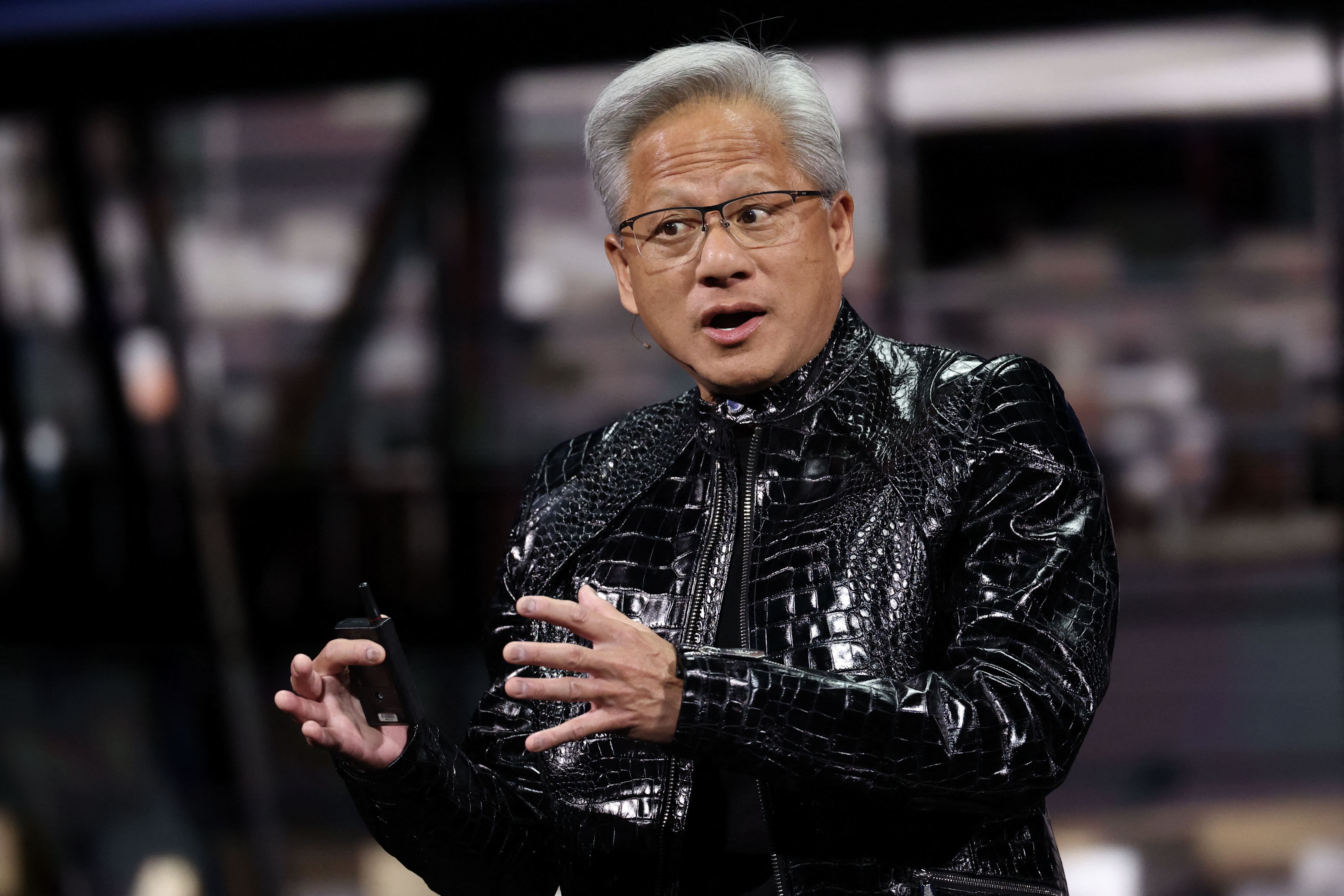
The world’s most valuable company kicked off CES on Monday by unveiling its latest AI chip platform: Vera Rubin, named after the pioneering American astronomer.
The six-chip family—combine them like Infinity Stones for an AI supercomputer—include a CPU, DPU, GPU, network accelerator, and pair of switches.
Nvidia will sell them ready to rack (if I may) and promises they’ll reduce expenses for frontier AI companies who care about things like inference token cost.
The pressure is on. Nvidia dominates the business of advanced AI chips for data centers—estimated global market share: 80%—but competition continues apace.
Rivals AMD and Intel want a bigger slice of a growing pie; customers Amazon, Google, and Microsoft hope to reduce their reliance on Jensen Huang’s company by producing their own chips in-house. Never mind the geopolitical complexities of Chinese competitors.
The Vera Rubin family will roll out in the second half of the year. —AN
Boston Dynamics installs Google DeepMind in its robots
If intelligent humanoid robots are the thing of your nightmares, maybe don’t keep reading this item, ya?
Boston Dynamics (of “those robots can’t be real, can they?” fame) said Monday that it was partnering with Google DeepMind (of “why is Google Gemini in all of my apps all of a sudden?” fame) to put Gemini’s AI smarts in the brains of BD’s industrial humanoid Atlas robots.
The companies’ goal, in their own words, is to enable “humanoids to complete a wide variety of industrial tasks,” with an eye toward manufacturing plants, namely those pumping out automobiles.
They’ll conduct research together as they drive toward their goal. (No pun intended, I swear.)
It’s worth noting that Boston Dynamics has been majority-owned by Hyundai Motor Co. since 2021, when the automaker purchased its stake from SoftBank.
At the time, Hyundai spoke lovingly of robots that would “take our current mobility services to new heights.” This week’s news, however, is far more practical: robots to navigate unfamiliar environments and identify and manipulate objects—”precisely the kinds of capabilities needed to perform manual labor,” as Wired put it. —AN
Intel deploys its 2-nanometer ‘Panther Lake’ chips
An American chipmaking icon came out swinging on Monday with new products that it hopes will prove to investors and partners that yes, customers really do want chips it makes itself.
Based on two-nanometer architecture, Intel’s so-called Panther Lake chips represent the first batch made with the company’s 18A semiconductor manufacturing process.
They’re also Intel’s first high-volume, home-grown laptop chips since the company prioritized outsourcing production.
The new chips, officially called Intel Core Ultra Series 3, are aimed at mobile gadgetmakers. The CPU and integrated graphics processor are more capable, promising better performance and graphics for less energy.
But the real juice comes courtesy of a revamped neural processing unit that’s more capable of handling AI workloads, bringing Intel into an industry conversation it hasn’t really been in as of late. —AN
More tech
—AMD has new chips, too. MI455 AI chips for use by OpenAI et al and MI440X for on-prem enterprise use.
—Dell revives XPS brand. Two models (and several changes) to quiet criticism of its premium laptop line.
—X faces fresh investigations about xAI’s Grok producing “undressed images” of people.
—Qualcomm goes all in on physical AI with new robotics architecture.
—Amazon Fire TV gets a facelift.
—Drama in food delivery. A viral whistleblower post alleging fraud is reported to be an AI-generated hoax.
—The future of LEGO: “Smart bricks” with embedded chips.