• Home
  • Latest
  • Fortune 500
  • Finance
  • Tech
  • Leadership
  • Lifestyle
  • Rankings
  • Multimedia
C-SuiteMarketing

When brands play hard to get: why you’re drawn to products that neg you

By
Jaclyn L. Tanenbaum
Jaclyn L. Tanenbaum
,
Karen Anne Wallach
Karen Anne Wallach
and
The Conversation
The Conversation
Down Arrow Button Icon
By
Jaclyn L. Tanenbaum
Jaclyn L. Tanenbaum
,
Karen Anne Wallach
Karen Anne Wallach
and
The Conversation
The Conversation
Down Arrow Button Icon
January 6, 2026, 3:16 PM ET
jon hamm
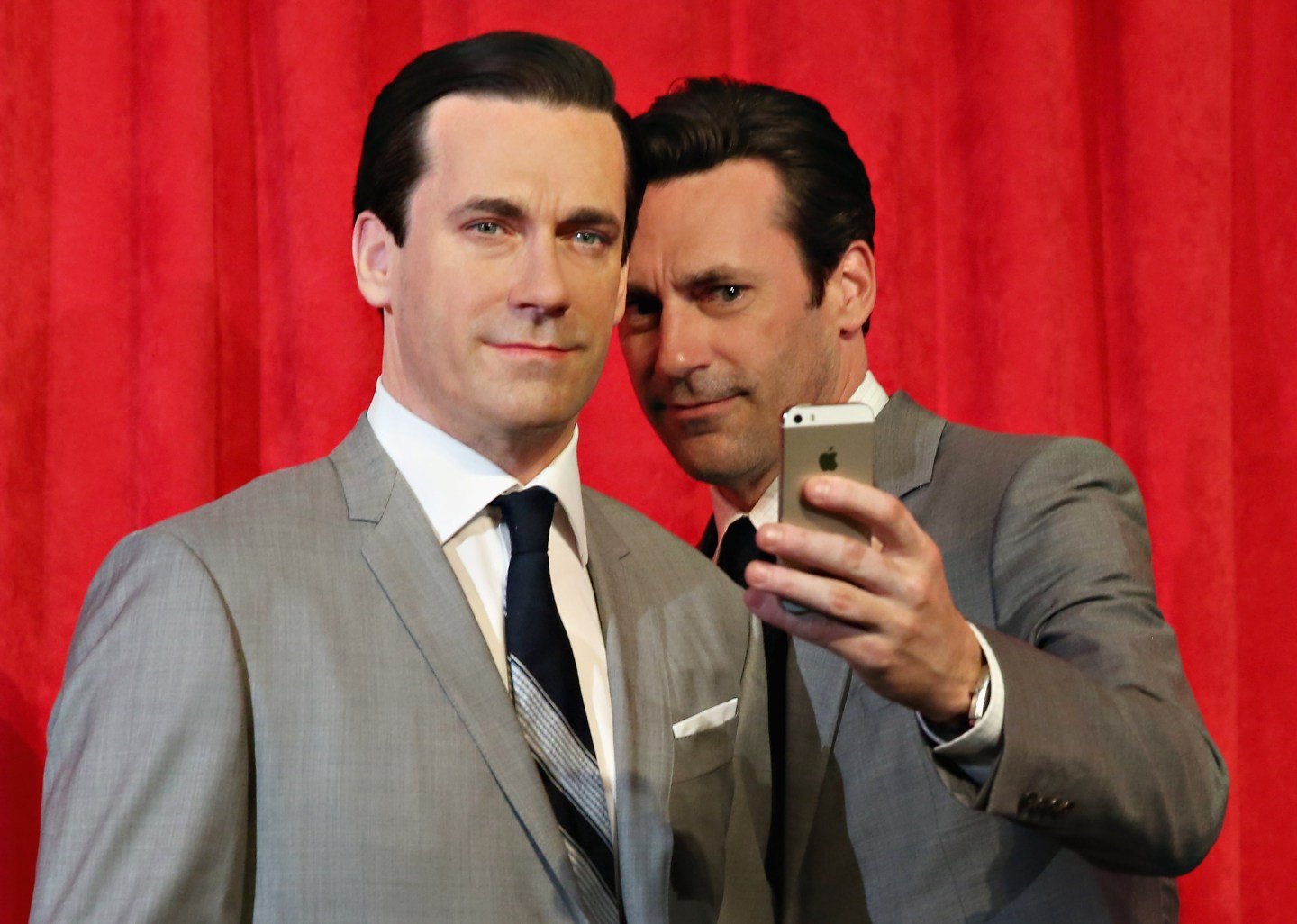
Jon Hamm, in character as adman/Mad Man Don Draper, with a wax figure of his character.Cindy Ord/Getty Images for Madame Tussauds

Imagine you are searching for a new mattress online and find something surprising. The retailer displays an ad featuring a “Mattress Comfort Scale” running from 1 (soft) to 10 (firm), followed by the message that if your firmness preference is at either end, this mattress is not for you. Wait … what? A retailer telling someone not to buy its product? No way!

Recommended Video

Why would a company tell potential buyers that the product might not suit them? Our team of professors – Karen Anne Wallach, Jaclyn L. Tanenbaum and Sean Blair – examines this question in a recently published article in the Journal of Consumer Research.

Marketers spend billions trying to persuade consumers that a product is right for them. But our research shows that sometimes the most effective way to market something is to say that it isn’t for them. In other words, effective marketing can mean discouraging the wrong customers rather than convincing everyone to buy.

We call this “dissuasive framing.” Instead of saying a product is perfect for everyone, a company is up front about who it might not be for. Surprisingly, that simple shift can make a big difference.

We ran experiments comparing ads with dissuasive versus persuasive framing. For example, one coffee ad said, “If you like dark roast, this is the coffee for you.” Another said, “If you don’t like dark roast, this isn’t the coffee for you.” Most marketers assume the first version would work better. But for people who prefer dark roast, the second message outperformed it.

Across different products, from salsa to mattresses, and in a real Facebook campaign for a toothbrush brand, we consistently saw the same results. The dissuasive ad drove more engagement and clicks, making the brand feel more specialized and its product more appealing for the right customers.

Why? You might think it’s about fear of missing out, or reverse psychology, but we ruled out those explanations. Instead, we found that what really drives the effect is the perception of a stronger match between personal preference and product attributes.

When a message signals that a product may not suit everyone, consumers see it as more focused on a specific set of preferences. This sense of focus, which we call “target specificity,” makes the product feel like a better match for customers whose preferences align with it. For others, it feels less relevant, which helps companies reach their goal of attracting those who are most likely to buy.

Our results show a clear trend: When companies set boundaries in their messages, products appear more focused. This messaging strategy makes the intended customer feel like the product is a better match for them. People assume that if a product isn’t meant for everyone, it must be more specialized. That sense of specificity makes those in the target audience feel the product was designed just for them.

Why it matters

These findings challenge one of marketing’s most enduring assumptions: that effective marketing comes from directly persuading customers that a product matches their needs. In today’s crowded marketplace, where nearly every brand claims to be “for you,” dissuasive messaging offers an alternative. By clearly signaling that a product may not be right for customers with different preferences, brands can communicate focus and specialization. Consumers see this as a sign that the company understands its own product and who it will best serve.

Our work also helps explain how people make what psychologists call compensatory inferences. This means consumers often believe that when a product tries to do too many things, it ends up doing each of them less well. Think of an all-in-one tool that can cut, twist, open and file – but few would say it performs any of those tasks better than the dedicated tool.

From a practical standpoint, dissuasive framing helps marketers communicate more effectively by defining the boundaries of their product’s appeal. In doing so, brands can build trust, strengthen connections with the right customers, and avoid spending their marketing dollars on those unlikely to purchase.

What still isn’t known

Our research focused on products with clear attributes, such as taste or comfort, and on consumers who already knew their preferences. Future work could test how this approach works when people are less certain about what they like or when choices reflect self-expression rather than product fit.

Even with these open questions, one conclusion stands out. Defining whom a product is not for can help the right customers see that it truly fits them. By focusing on preference matching rather than universal appeal, brands can make their messages more targeted, more efficient and ultimately more effective. In other words, telling the wrong customers “This isn’t for you” can actually help the right ones feel that it is.

Jaclyn L. Tanenbaum, Associate Teaching Professor, Florida International University and Karen Anne Wallach, Assistant Professor of Marketing, University of Alabama in Huntsville

This article is republished from The Conversation under a Creative Commons license. Read the original article.


The Conversation
Join us at the Fortune Workplace Innovation Summit May 19–20, 2026, in Atlanta. The next era of workplace innovation is here—and the old playbook is being rewritten. At this exclusive, high-energy event, the world’s most innovative leaders will convene to explore how AI, humanity, and strategy converge to redefine, again, the future of work. Register now.
About the Authors
By Jaclyn L. Tanenbaum
See full bioRight Arrow Button Icon
By Karen Anne Wallach
See full bioRight Arrow Button Icon
By The Conversation
See full bioRight Arrow Button Icon

Latest in C-Suite

Finance
Lorem ipsum dolor sit amet, consectetur adipiscing elit, sed do eiusmod tempor incididunt ut labore et dolore magna aliqua. Ut enim ad minim veniam
By Fortune Editors
October 20, 2025
Finance
Lorem ipsum dolor sit amet, consectetur adipiscing elit, sed do eiusmod tempor incididunt ut labore et dolore magna aliqua. Ut enim ad minim veniam
By Fortune Editors
October 20, 2025
Finance
Lorem ipsum dolor sit amet, consectetur adipiscing elit, sed do eiusmod tempor incididunt ut labore et dolore magna aliqua. Ut enim ad minim veniam
By Fortune Editors
October 20, 2025
Finance
Lorem ipsum dolor sit amet, consectetur adipiscing elit, sed do eiusmod tempor incididunt ut labore et dolore magna aliqua. Ut enim ad minim veniam
By Fortune Editors
October 20, 2025
Finance
Lorem ipsum dolor sit amet, consectetur adipiscing elit, sed do eiusmod tempor incididunt ut labore et dolore magna aliqua. Ut enim ad minim veniam
By Fortune Editors
October 20, 2025
Finance
Lorem ipsum dolor sit amet, consectetur adipiscing elit, sed do eiusmod tempor incididunt ut labore et dolore magna aliqua. Ut enim ad minim veniam
By Fortune Editors
October 20, 2025

Most Popular

Finance
Lorem ipsum dolor sit amet, consectetur adipiscing elit, sed do eiusmod tempor incididunt ut labore et dolore magna aliqua. Ut enim ad minim veniam
By Fortune Editors
October 20, 2025
Finance
Lorem ipsum dolor sit amet, consectetur adipiscing elit, sed do eiusmod tempor incididunt ut labore et dolore magna aliqua. Ut enim ad minim veniam
By Fortune Editors
October 20, 2025
Finance
Lorem ipsum dolor sit amet, consectetur adipiscing elit, sed do eiusmod tempor incididunt ut labore et dolore magna aliqua. Ut enim ad minim veniam
By Fortune Editors
October 20, 2025
Finance
Lorem ipsum dolor sit amet, consectetur adipiscing elit, sed do eiusmod tempor incididunt ut labore et dolore magna aliqua. Ut enim ad minim veniam
By Fortune Editors
October 20, 2025
Finance
Lorem ipsum dolor sit amet, consectetur adipiscing elit, sed do eiusmod tempor incididunt ut labore et dolore magna aliqua. Ut enim ad minim veniam
By Fortune Editors
October 20, 2025
Finance
Lorem ipsum dolor sit amet, consectetur adipiscing elit, sed do eiusmod tempor incididunt ut labore et dolore magna aliqua. Ut enim ad minim veniam
By Fortune Editors
October 20, 2025
Rankings
  • 100 Best Companies
  • Fortune 500
  • Global 500
  • Fortune 500 Europe
  • Most Powerful Women
  • Future 50
  • World’s Most Admired Companies
  • See All Rankings
Sections
  • Finance
  • Leadership
  • Success
  • Tech
  • Asia
  • Europe
  • Environment
  • Fortune Crypto
  • Health
  • Retail
  • Lifestyle
  • Politics
  • Newsletters
  • Magazine
  • Features
  • Commentary
  • Mpw
  • CEO Initiative
  • Conferences
  • Personal Finance
  • Education
Customer Support
  • Frequently Asked Questions
  • Customer Service Portal
  • Privacy Policy
  • Terms Of Use
  • Single Issues For Purchase
  • International Print
Commercial Services
  • Advertising
  • Fortune Brand Studio
  • Fortune Analytics
  • Fortune Conferences
  • Business Development
About Us
  • About Us
  • Editorial Calendar
  • Press Center
  • Work At Fortune
  • Diversity And Inclusion
  • Terms And Conditions
  • Site Map

Most Popular

placeholder alt text
Law
Amazon is cutting checks to millions of customers as part of a $2.5 billion FTC settlement. Here's who qualifies and how to get paid
By Sydney LakeJanuary 6, 2026
3 days ago
placeholder alt text
Success
Diary of a CEO founder says he hired someone with 'zero' work experience because she 'thanked the security guard by name' before the interview
By Emma BurleighJanuary 8, 2026
1 day ago
placeholder alt text
Workplace Culture
Amazon demands proof of productivity from employees, asking for list of accomplishments
By Jake AngeloJanuary 8, 2026
24 hours ago
placeholder alt text
Future of Work
AI layoffs are looking more and more like corporate fiction that's masking a darker reality, Oxford Economics suggests
By Nick LichtenbergJanuary 7, 2026
2 days ago
placeholder alt text
Real Estate
Google billionaire Larry Page copies the Jeff Bezos playbook, buying a $173 million Miami compound that will save him millions in taxes
By Nick LichtenbergJanuary 8, 2026
22 hours ago
placeholder alt text
Crypto
Russia and Iran are increasingly turning to crypto—especially stablecoins—to avoid sanctions, report finds
By Carlos GarciaJanuary 8, 2026
1 day ago

© 2025 Fortune Media IP Limited. All Rights Reserved. Use of this site constitutes acceptance of our Terms of Use and Privacy Policy | CA Notice at Collection and Privacy Notice | Do Not Sell/Share My Personal Information
FORTUNE is a trademark of Fortune Media IP Limited, registered in the U.S. and other countries. FORTUNE may receive compensation for some links to products and services on this website. Offers may be subject to change without notice.


Latest in C-Suite

sudhakar
CommentaryM&A
I’m the SolarWinds CEO. Here’s why a $4.4 billion move to go private was right for us
By Sudhakar RamakrishnaJanuary 8, 2026
23 hours ago
Jassy
Workplace CultureAmazon
Amazon demands proof of productivity from employees, asking for list of accomplishments
By Jake AngeloJanuary 8, 2026
24 hours ago
Mark DesJardine
CommentaryM&A
Warner Bros. Discovery’s board isn’t choosing a deal — it’s avoiding one
By Mark DesJardineJanuary 8, 2026
1 day ago
The Diary of a CEO founder Steven Bartlett
SuccessThe Interview Playbook
Diary of a CEO founder says he hired someone with ‘zero’ work experience because she ‘thanked the security guard by name’ before the interview
By Emma BurleighJanuary 8, 2026
1 day ago
A woman stands in front of a whiteboard speaking to a table of people.
Commentaryenterprise technology
AI isn’t failing your company. Your operating model is
By Katerin Le FolcalvezJanuary 8, 2026
1 day ago
Future of WorkTech
The typical American plan to study for 22 years and work for 40 ‘is broken,’ VC CEO says. Thanks to AI, employees can’t coast after graduation anymore
By Marco Quiroz-GutierrezJanuary 7, 2026
2 days ago