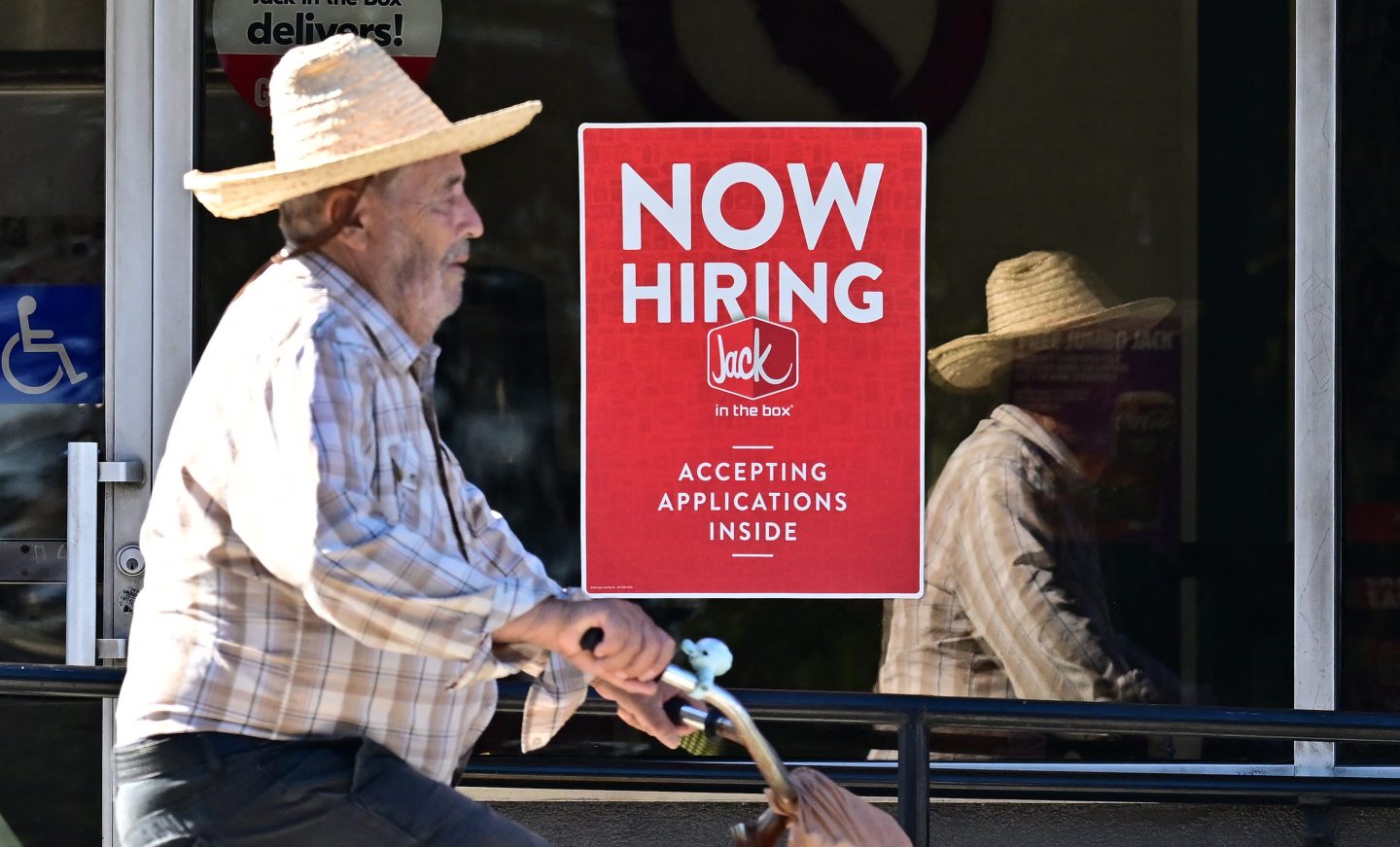
We are witnessing a false dawn of efficiency. Throughout 2025, corporate America has engaged in a frantic restructuring of the labor market, cutting more than 1.17 million jobs in the first 11 months of the year, a 54% increase from 2024. From the 14,000 corporate cuts at tech giants like Amazon to the nearly 300,000 federal civil service reductions, the narrative driving this contraction is uniform: we are shedding excess labor to make room for the streamlined, high-margin future of artificial intelligence.
But the data tells a different story. This is not a calculated pivot toward higher productivity. It is a hollowing-out strategy that trades immediate payroll savings for a catastrophic erosion of human capital. By viewing AI as a mechanism for replacement rather than augmentation, leaders are incurring a strategic debt that will erase future value, stifle innovation, and, crucially, institutionalize the kind of algorithmic bias that costs companies billions.
We are trying to build the future of work by burning down the infrastructure required to support it.
The Mathematics of the Hollowed-Out Workforce
The prevailing logic in the C-Suite is a simple subtraction equation: lower headcount plus automated tools equals higher margins. However, this ignores the negative externalities imposed on the workforce that remains.
While companies explicitly cited AI for roughly 55,000 cuts through November, there are far more job losses buried under the umbrella of restructuring, which accounted for over 128,000 job losses. Expert estimates suggest the true automation-influenced displacement is likely above 150,000. But the real cost isn’t on the severance line item; it is in the collapse of productivity among the survivors.
Seventy-four percent of employees who survive layoffs report a decline in their own productivity, while 77% witness an increase in operational errors. This phenomenon, often called the layoff survivor syndrome, is a drag on performance fueled by anxiety and the erosion of institutional trust. Volatility sends a signal to your top performers: leave before you are pushed out.
When companies cut costs by eliminating human capacity, they don’t get a leaner organization; they get an anxious, risk-averse, and error-prone one. The so-called productivity equation turns negative because the marginal productivity of the retained workforce plummets faster than the payroll costs decline.
The Tech-First Trap and the Compliance Gap
This productivity collapse is compounded by a fundamental misunderstanding of how AI generates value. While 85% of organizations are increasing their AI investment, only 6% are seeing a payback in under a year.
The answer lies in the implementation. A staggering 59% of organizations are taking a technology-first approach, treating AI as a bolt-on solution rather than undertaking organizational redesign. Even more alarming is where the cuts are happening. The 2025 layoffs are disproportionately targeting mid-layer management, including HR, talent acquisition, and compliance roles.
The result is a growing governance gap. At the exact moment companies are deploying black-box algorithms that require intense oversight, they are firing the overseers. 34% of organizations already expect a shortage in specialist compliance skills. By dismantling these internal guardrails, companies are not streamlining; they are removing the ethical braking systems required to prevent reputational and financial ruin.
AI is not a replacement for human judgment; it is an accelerator of it. But you cannot accelerate what you have already liquidated.
The Equity Penalty
Here is where the economic argument becomes inseparable from the equity argument. The hollowing out of 2025 has not been neutral. It has systematically targeted the very demographics that drive financial outperformance.
The data reveal a profound asymmetry in risk exposure. Women are significantly more vulnerable to the current wave of automation, with 79% of employed women concentrated in high-risk occupations compared to 58% of men. This differential means women are 1.4 times more exposed to displacement. We see this specifically in the hollowing out of critical pipeline positions that enable women to ascend to leadership.
However, the canary in the coal mine for the broader economy is the crisis facing Black women. By November 2025, the unemployment rate for Black women remained at a staggering 7.1%, more than double the 3.4% rate for White women. This was driven by a perfect storm: high exposure to private sector automation combined with the erasure of 300,000 federal jobs, a sector where Black women have historically found stability.
The reality on the ground confirms this is a systemic failure, not a skills gap. Keisha Bross, Director of Opportunity, Race and Justice at the NAACP, reports that she has “not seen interventions happening” to support this displaced workforce. The result? At recent NAACP job fairs, 80% of applicants held bachelor’s degrees yet were lining up for same-day interviews for low-wage roles. We are witnessing the hollowing out of the Black middle class in real-time.
Leaders often view these statistics as a social problem. They are wrong. This is a P&L problem.
There is a hard, quantitative link between intersectional equity and revenue. Research across more than 4,000 companies in 29 countries shows that for every 10% increase in intersectional gender equity, there is a 1% to 2% increase in revenue. Venture capital data further reinforces this, showing that investments in female-founded startups yield a 63% better return on investment than those with male founders. By allowing layoffs to disproportionately target women and people of color, companies are forfeiting a measurable economic dividend.
The Algorithmic Risk Multiplier
The financial danger of a homogenous workforce extends directly into the AI models themselves. If your AI team and your data sources lack diversity, your algorithms will be biased. This is no longer a theoretical risk—it is a tangible liability.
More than one-third of organizations have already suffered negative impacts from AI bias, with 62% reporting lost revenue and 61% reporting lost customers. The legal doctrine of disparate impact creates massive liability for companies whose algorithms discriminate in hiring or lending, regardless of intent.
This tension is starkly visible. On one side, we have the nation’s largest civil rights organization, the NAACP, flagging systemic risk. On the other, we have tech giants like Google and Meta, recently crowned Time’s ‘Person of the Year’, who landed on the NAACP’s Consumer Advisory List by rolling back the very protections meant to ensure that revolution is equitable. This contradiction is not ideological; it’s economic: alienating a demographic with $1.7 trillion in annual buying power. When you remove the diverse talent capable of spotting bias, and the compliance officers capable of reporting it, you guarantee that your AI products will be flawed, biased, and ultimately, litigated.
A Framework for Human-Centric ROI
To reverse this erosion of value, executives must stop viewing labor as a cost to be minimized and start viewing work design as the primary investment vehicle for AI success.
1. Governance as a Profit Center
AI governance must move from the server room to the Boardroom. Boards must include members with the technical literacy to challenge management on model stability and data quality. We must recognize that responsible AI unlocks value and accelerates development by ensuring reliability.
2. Redesign: From Automation to Augmentation
We must shift our strategy from automation (replacing heads) to augmentation (increasing value). Data shows that job numbers actually grow in AI-exposed fields when companies focus on augmentation. This requires a massive investment in skilling, specifically targeting the non-degree holders who are 3.5 times more likely to lose their jobs.
3. Equity as a Growth Engine
Finally, we must embed intersectional equity into the core business strategy. This means using advanced analytics to monitor the talent lifecycle and ensure that restructuring efforts do not decimate the diversity pipeline. It means recognizing that the $12 trillion global economic opportunity of gender equity is only accessible if we actively retain women in the workforce.
The Choice
The 1.17 million layoffs of 2025 represent a fork in the road.
One path leads to a hollowed-out future: a short-term spike in cash flow followed by a long-term decline in innovation, a rise in algorithmic liability, and a workforce paralyzed by fear.
The other path recognizes that in the age of AI, humanity is the premium asset. It acknowledges that the only way to capture the exponential ROI of automation is to pair it with a diverse, resilient, and empowered human workforce.
You can cut your way to a quarterly profit, but you cannot cut your way to the future. True productivity requires us to stop subtracting humans and start solving for the convergence of equity, economics, and engineering.
The opinions expressed in Fortune.com commentary pieces are solely the views of their authors and do not necessarily reflect the opinions and beliefs of Fortune.