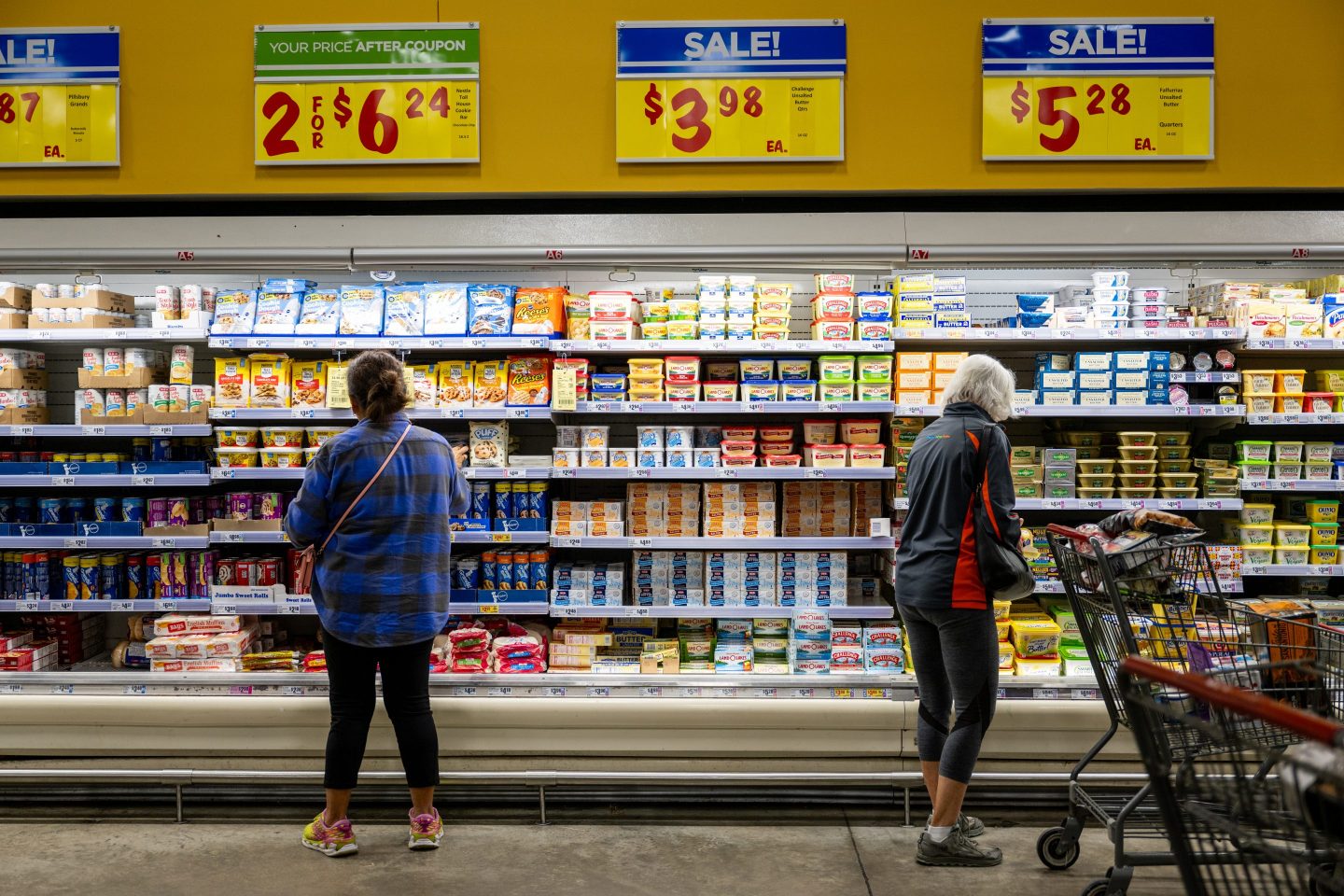
American shoppers are feeling the squeeze as food prices surge amid an affordability crisis—but one of the country’s fastest-growing discount grocery chains is meeting the consumer halfway this holiday season.
Lidl US is offering its first-ever holiday meal deal that serves 12 people for less than $4 per person. The shopping list includes a ham portion priced at $0.77 per pound, 12 ounces of Hawaiian rolls at $1.79, and 7.25 ounces of mac and cheese for $0.56, as well as many other food items like sweet potatoes and ingredients to make a pumpkin pie. The deal runs through Dec. 24, according to the company’s press release.
In total, the meal costs $42.66 and feeds 12 people. To qualify for the holiday meal at less than $4 per person, customers must be myLidl members. Other items not part of the holiday meal deal are offered at a discount, including a slightly pricier line featuring premium ham and an assortment of desserts.
“Lidl US is dedicated to making high-quality food accessible to everyone, especially during this time of year,” Lidl US CEO Joel Rampoldt said.
Holiday deals coming at the right time for consumers
The discount deal comes as American shoppers pull back on gift spending for the holidays and voters sour on grocery prices.
In November, President Donald Trump announced he was scrapping tariffs on beef, coffee, and other commodities as Democrats and Republicans alike decried a growing affordability crisis.
Despite inflation slowing since its pandemic spike, food price growth ticked up to 3.1% in September—the latest government data available—slightly outpacing headline inflation at 3% and well above the Fed’s target rate of 2%, according to the Bureau of Labor Statistics.
Still, the economy remains afloat, in large part due to a K-shaped economy, in which wealthier Americans who own financial and property assets have enjoyed the period of elevated inflation, while Americans with less financial means have been struck by sticker shock and rising energy prices. This has led to a downward trend in economic activity from low-income earners and an upward trend in assets owned by the wealthy, creating a “K” shape.
Mark Zandi, chief economist at Moody’s Analytics, estimated in September the top 10% of earners account for about 49.2% of all U.S. consumer spending—heights that haven’t been reached in data back since 1989. The top 20% accounted for more than 60% of total spending this year.
When announcing another 25 basis points cut last week, Fed Chair Jerome Powell was uneasy about the state of the K-shaped economy.
“As to how sustainable it is, I don’t know,” Powell said.