• Home
  • News
  • Fortune 500
  • Tech
  • Finance
  • Leadership
  • Lifestyle
  • Rankings
  • Multimedia
Workplace CultureBrainstorm Design

How two leaders used design thinking and a focus on outcomes to transform two Fortune 500 giants

By
Christina Pantin
Christina Pantin
Down Arrow Button Icon
By
Christina Pantin
Christina Pantin
Down Arrow Button Icon
December 4, 2025, 1:49 AM ET
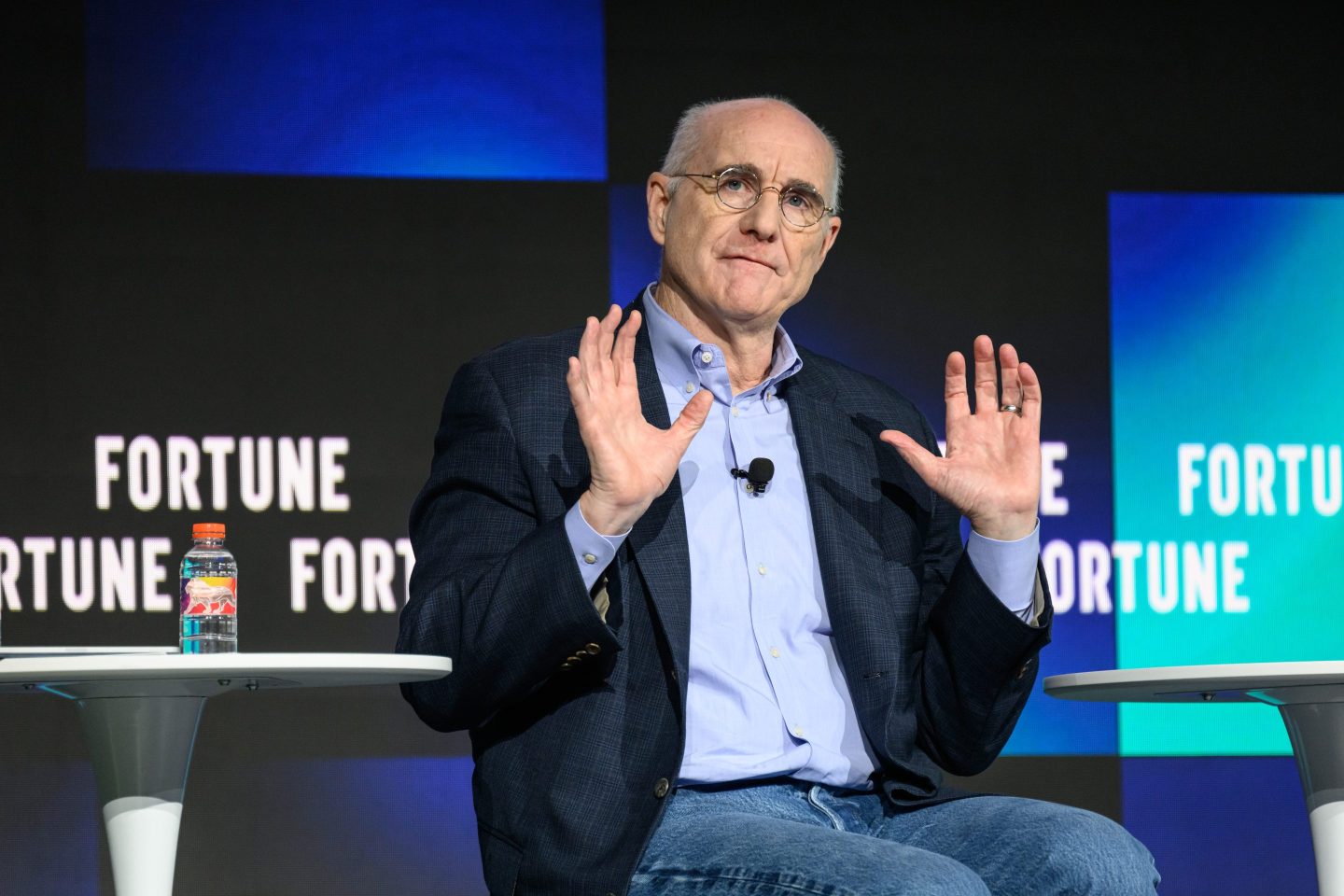
Phil Gilbert, managing partner of
Gilbert Workshop, speaking at Fortune Brainstorm Design on Dec. 2.
Phil Gilbert, managing partner of Gilbert Workshop, speaking at Fortune Brainstorm Design on Dec. 2.

How do you get 400,000 employees at one of the world’s most storied blue chip tech companies to adopt design thinking as a tool to transform the culture of its workforce?

Recommended Video

When entrepreneur Phil Gilbert was brought intoIBM, which in 2010 had acquired his Lombardi Software, he was convinced that his days were numbered. Tasked with teaching Big Blue how to grow as fast as his business software processing company did, he felt out of place: “I pretty much knew that I was a square peg in a round hole,” he says.

Speaking at Fortune Brainstorm Design in Macau on Tuesday, Gilbert noted ruefully that businesses typically enlist him “when some effort is failing”. IBM wanted him to replicate the secret sauce that made his Austin-based Lombardi so agile and its products so beloved by customers.

The reinvention required a radical approach. In 2012, appointed as the company’s general manager of design, Gilbert brought design thinking to IBM’s entire employee base. His first barrier? How to get “400,000 people to do something when none of them report to you,” he recalls.

His answer wasn’t to follow the usual corporate top-down mandate methods, but to treat the change program as a product, IBM as a marketplace, and teams as customers. Instead of using a technology-first approach, he focused on empathy and user outcomes.

And, breaking from corporate operational tradition, he also allowed employees to opt-in rather than be forced to participate. “It gives them agency and having agency makes all the difference,” he told the audience.

Design thinking became an organizing principle at IBM, putting the customer at the center. The company went on to hire over 1,000 designers to embed into cross-functional teams with engineers and developers. Results included faster product launches, better alignments of project teams and accelerated product development cycles.

Northwestern Mutual

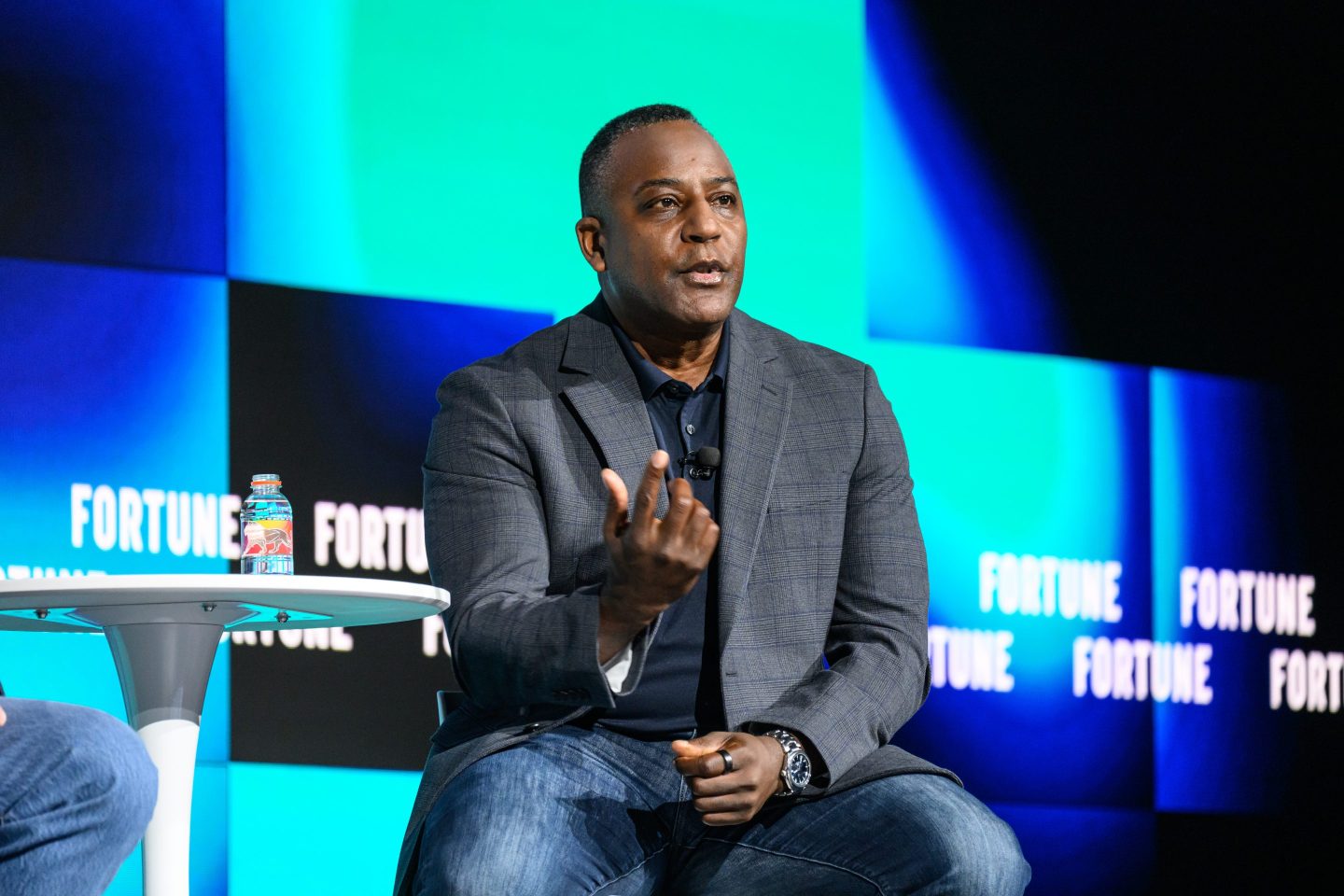
Fellow panelist Tony Bynum saw at his employer Northwestern Mutual the need for a center of excellence to represent a “single source of truth”. He founded the company’s Design Thinking Center of Excellence in 2020, after realizing that his small team that was interacting with other groups was using different languages, methods, and tools.

The “aha” moment for Bynum came with the idea about shifting away from outputs to outcomes. Using traditional methods was akin to the old fable of a group of blind men getting a different understanding of what an elephant was by touching different parts. “We’re all touching the same elephant and every person’s perspective has merit and value in reconstructing the elephant,” Bynum said.
Fortune

Bynum, now the director of Chicago-based Institute for Design’s new ID Academy, argued that “dexterity” is the key attribute that leaders need to succeed amid ambiguity and complexity. He described this as “using design-led capabilities to become ambidextrous, meaning you can perform and transform”

A successful leader in a culture of change requires “humility, bar none”, as a critical attitude, Bynum said.

Gilbert concurred with Bynum that humility is the “new name” to use in driving culture change. “We need humility first with ourselves, and then with our users.”

About the Author
By Christina Pantin
See full bioRight Arrow Button Icon

Latest in Workplace Culture

Workplace CultureBrainstorm Design
How two leaders used design thinking and a focus on outcomes to transform two Fortune 500 giants
By Christina PantinDecember 4, 2025
2 minutes ago
Mark Zuckerberg, chief executive officer of Meta Platforms Inc., during the Meta Connect event in Menlo Park, California, US, on Wednesday, Sept. 25, 2024.
AIMeta
Inside Silicon Valley’s ‘soup wars’: Why Mark Zuckerberg and OpenAI are hand-delivering soup to poach talent
By Eva RoytburgDecember 3, 2025
10 hours ago
Workplace CultureBrainstorm Design
Designer Kevin Bethune: Bringing ‘disparate disciplines around the table’ is how leaders can ‘problem solve the future’
By Fortune EditorsDecember 3, 2025
13 hours ago
AIBrainstorm Design
Microsoft AI’s design head wants her team to be AI-native by the end of the fiscal year
By Angelica AngDecember 3, 2025
14 hours ago
SuccessThe Promotion Playbook
L’Oréal CHRO cut her teeth at luxury brands Chanel and Kiehl’s. Like Walmart’s CEO she says the secret to her success was always saying yes
By Orianna Rosa RoyleDecember 3, 2025
16 hours ago
Workplace CultureSports
Exclusive: Billionaire Michele Kang launches $25 million U.S. Soccer institute that promises to transform the future of women’s sports
By Emma HinchliffeDecember 2, 2025
1 day ago

Most Popular

placeholder alt text
North America
Jeff Bezos and Lauren Sánchez Bezos commit $102.5 million to organizations combating homelessness across the U.S.: ‘This is just the beginning’
By Sydney LakeDecember 2, 2025
2 days ago
placeholder alt text
Economy
Ford workers told their CEO 'none of the young people want to work here.' So Jim Farley took a page out of the founder's playbook
By Sasha RogelbergNovember 28, 2025
6 days ago
placeholder alt text
North America
Anonymous $50 million donation helps cover the next 50 years of tuition for medical lab science students at University of Washington
By The Associated PressDecember 2, 2025
2 days ago
placeholder alt text
C-Suite
MacKenzie Scott's $19 billion donations have turned philanthropy on its head—why her style of giving actually works
By Sydney LakeDecember 2, 2025
2 days ago
placeholder alt text
Innovation
Google CEO Sundar Pichai says we’re just a decade away from a new normal of extraterrestrial data centers
By Sasha RogelbergDecember 1, 2025
3 days ago
placeholder alt text
Economy
Scott Bessent calls the Giving Pledge well-intentioned but ‘very amorphous,’ growing from ‘a panic among the billionaire class’
By Nick LichtenbergDecember 3, 2025
13 hours ago
Rankings
  • 100 Best Companies
  • Fortune 500
  • Global 500
  • Fortune 500 Europe
  • Most Powerful Women
  • Future 50
  • World’s Most Admired Companies
  • See All Rankings
Sections
  • Finance
  • Leadership
  • Success
  • Tech
  • Asia
  • Europe
  • Environment
  • Fortune Crypto
  • Health
  • Retail
  • Lifestyle
  • Politics
  • Newsletters
  • Magazine
  • Features
  • Commentary
  • Mpw
  • CEO Initiative
  • Conferences
  • Personal Finance
  • Education
Customer Support
  • Frequently Asked Questions
  • Customer Service Portal
  • Privacy Policy
  • Terms Of Use
  • Single Issues For Purchase
  • International Print
Commercial Services
  • Advertising
  • Fortune Brand Studio
  • Fortune Analytics
  • Fortune Conferences
  • Business Development
About Us
  • About Us
  • Editorial Calendar
  • Press Center
  • Work At Fortune
  • Diversity And Inclusion
  • Terms And Conditions
  • Site Map

© 2025 Fortune Media IP Limited. All Rights Reserved. Use of this site constitutes acceptance of our Terms of Use and Privacy Policy | CA Notice at Collection and Privacy Notice | Do Not Sell/Share My Personal Information
FORTUNE is a trademark of Fortune Media IP Limited, registered in the U.S. and other countries. FORTUNE may receive compensation for some links to products and services on this website. Offers may be subject to change without notice.