• Home
  • News
  • Fortune 500
  • Tech
  • Finance
  • Leadership
  • Lifestyle
  • Rankings
  • Multimedia
CommentaryManufacturing

AI is reimagining work. CEOs must rethink how we prepare future workers

By
Vimal Kapur
Vimal Kapur
Down Arrow Button Icon
By
Vimal Kapur
Vimal Kapur
Down Arrow Button Icon
November 12, 2025, 9:00 AM ET
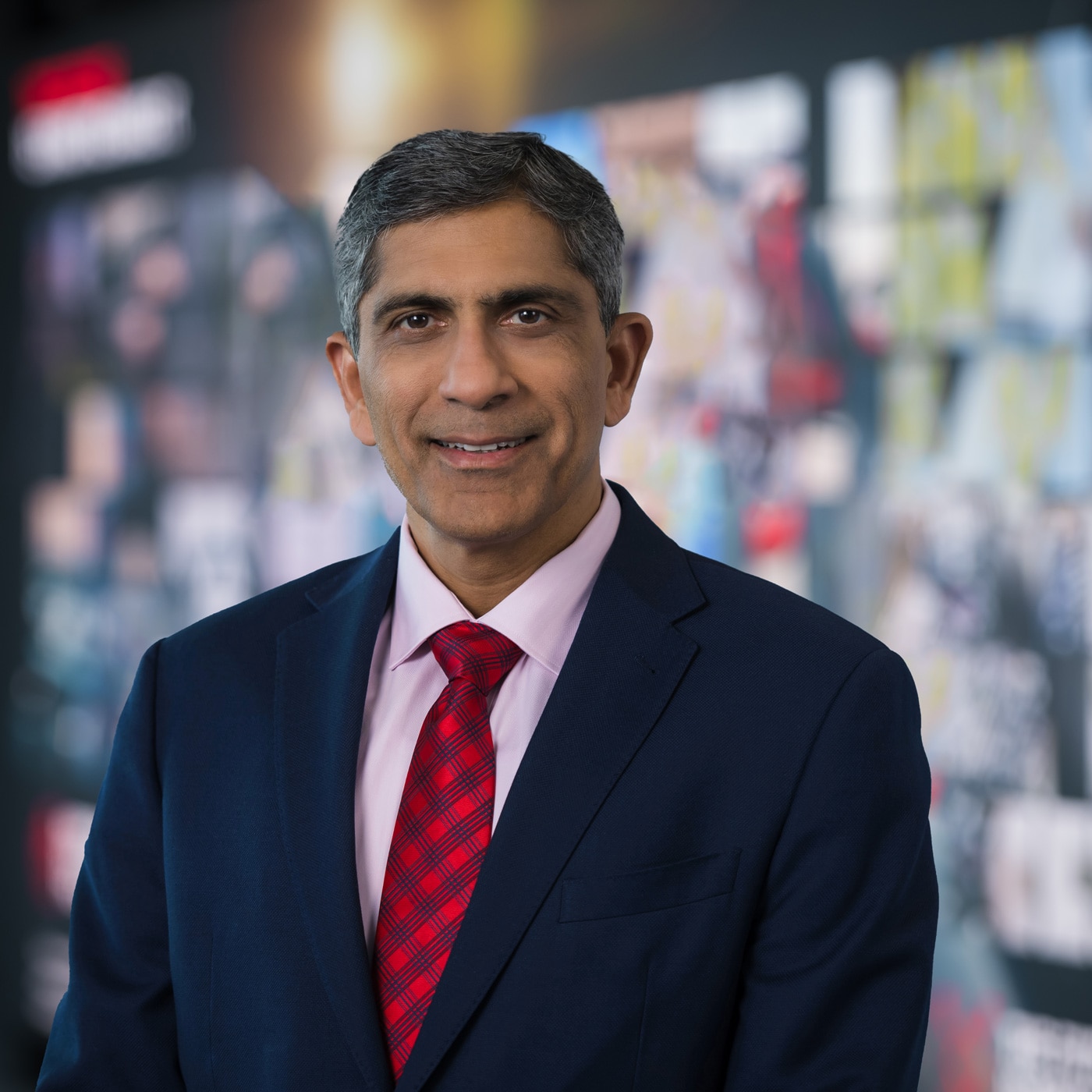
Vimal Kapur is Chairman and Chief Executive Officer of Honeywell, where over a more than three-decade career he has established a deep knowledge of the company’s businesses, end markets and customers and has evolved business strategies to address dynamic macroeconomic backdrops.  Vimal was appointed CEO in June 2023 and Chairman of the Board in June 2024. Prior to this, he was President and Chief Operating Officer of Honeywell, where he created new solutions to drive customers’ sustainability and digital transformations, oversaw the five strategic business groups, and managed the Accelerator Operating System.
Vimal Kapur
Vimal Kapur, chairman and CEO of Honeywell International.courtesy of Honeywell

Years ago, in a conversation about the responsibilities of leadership, one of my mentors offered advice I’ve never forgotten: CEOs are central to creating jobs. 

Recommended Video

At the time I was far from the C-suite, but the idea stuck with me. Over time, I came to understand that job creation has two tracks. First, it’s about building the conditions for growth inside your organization – expanding your business in ways that create opportunity for employees, particularly those at the start of their careers. If your revenue is not growing rapidly, you are likely not creating many new jobs. Second, it’s about looking outward – investing in and engaging with the communities you serve to cultivate the next generation of talent, molding the future workforce so that it is job ready. 

At Honeywell, our commitment to preparing the next generation for this technology-driven economy is enabled by a new model of public–private partnership, one in which industry, government, and educators collaborate to scale access, relevance and opportunity, bridging the gap between academic theory and real-world application. 

These are strategic investments in national competitiveness. They reflect our understanding that talent is everywhere, but opportunity is not, and the future of STEM careers depends on meeting students where they are at multiple points in their journey—in middle school, high school, college and with internship opportunities.  It’s essential to offer flexible, skill-based pathways to prepare the next generation for the realities of a rapidly changing workforce.

What does this mean in practice?

For government, it is a matter of realigning policy priorities with economic reality. Tax incentives, workforce grants, credentialing reform – the list of policy prescriptions is long. The short answer is that we must approach workforce education specifically which encourages how to build things as a national priority. Our global competitiveness demands it.

At the same time, our nation’s educational institutions must be open to collaborate with business. Just recently, Honeywell and the University of North Carolina Charlotte announced a unique partnership in which we will invest $10 million to help turn a dated campus facility into a modern innovation hub that will train the workforce of the future for the jobs of the future. While the approach may not follow the traditional philanthropic nature of the corporate/college relationship, it will drive the development of a collaborative vision of what that future is. I expect to be surprised more than once at the ideas that emerge.

Finally, companies must invest in future workers and leaders. At Honeywell, we’ve expanded our internship program – doubling participation to 2,500 students in 2025 – to give young graduates from all disciplines hands-on experience that aligns with industry needs. We’ve also deepened our support for FIRST Robotics, a global nonprofit that inspires students to pursue STEM education and now reaches 40,000 students worldwide. And through a partnership with Discovery Education, we’re helping scale a global environmental science curriculum aimed at reaching 10 million students by 2030. All our efforts are targeted to enable students to become employable.

In short, we recognize that our responsibility goes beyond hiring the best student engineers from the top ranks of our major institutions. It requires us to engage directly to excite, mold, and support this workforceof the future in full partnership with trade schools, colleges, and universities.  

The disruption we face is real – but the opportunity to tear down the walls that keep policymakers, educators, and CEOs from engaging collectively is equally real. To my colleagues in industry, I urge you to continue expanding from academic philanthropists to co-designers of the talent pipeline. To educational leaders, look to what UNC Charlotte has done – and bring industry to the table as an active partner, not just a funder. And, policymakers, we need your collaboration prioritizing the needs of America’s future workers, so they have access to the tools they need to thrive. 

AI and automation are already reshaping the future of work, but our collective choices will determine whether the disruption leads to decline or renewal. Deeper partnerships across government, academia, and industry will build a talent pipeline that is more innovative than ever before. 

These actions are even more important, as the 2025 job market has proven to be particularly challenging for college graduates, with many facing longer job searches, underemployment, or the need to pivot into alternative career paths.  Shared action and shared accountability will drive our initiatives, as well as the next era of American competitiveness.

The opinions expressed in Fortune.com commentary pieces are solely the views of their authors and do not necessarily reflect the opinions and beliefs of Fortune.
About the Author
By Vimal Kapur
See full bioRight Arrow Button Icon

Latest in Commentary

Rakesh Kumar
CommentarySemiconductors
China does not need Nvidia chips in the AI war — export controls only pushed it to build its own AI machine
By Rakesh KumarDecember 3, 2025
11 hours ago
Rochelle Witharana is Chief Financial and Investment Officer for The California Wellness Foundation
Commentarydiversity and inclusion
Fund managers from diverse backgrounds are delivering standout returns and the smart money is slowly starting to pay attention
By Rochelle WitharanaDecember 3, 2025
11 hours ago
Ayesha and Stephen Curry (L) and Arndrea Waters King and Martin Luther King III (R), who are behind Eat.Play.Learn and Realize the Dream, respectively.
Commentaryphilanthropy
Why time is becoming the new currency of giving
By Arndrea Waters King and Ayesha CurryDecember 2, 2025
1 day ago
Trump
CommentaryTariffs and trade
The trade war was never going to fix our deficit
By Daniel BunnDecember 2, 2025
1 day ago
Elizabeth Kelly
CommentaryNon-Profit
At Anthropic, we believe that AI can increase nonprofit capacity. And we’ve worked with over 100 organizations so far on getting it right
By Elizabeth KellyDecember 2, 2025
1 day ago
Decapitation
CommentaryLeadership
Decapitated by activists: the collapse of CEO tenure and how to fight back
By Mark ThompsonDecember 2, 2025
1 day ago

Most Popular

placeholder alt text
North America
Jeff Bezos and Lauren Sánchez Bezos commit $102.5 million to organizations combating homelessness across the U.S.: ‘This is just the beginning’
By Sydney LakeDecember 2, 2025
1 day ago
placeholder alt text
Economy
Ford workers told their CEO 'none of the young people want to work here.' So Jim Farley took a page out of the founder's playbook
By Sasha RogelbergNovember 28, 2025
5 days ago
placeholder alt text
North America
Anonymous $50 million donation helps cover the next 50 years of tuition for medical lab science students at University of Washington
By The Associated PressDecember 2, 2025
1 day ago
placeholder alt text
C-Suite
MacKenzie Scott's $19 billion donations have turned philanthropy on its head—why her style of giving actually works
By Sydney LakeDecember 2, 2025
2 days ago
placeholder alt text
Innovation
Google CEO Sundar Pichai says we’re just a decade away from a new normal of extraterrestrial data centers
By Sasha RogelbergDecember 1, 2025
2 days ago
placeholder alt text
Law
Netflix gave him $11 million to make his dream show. Instead, prosecutors say he spent it on Rolls-Royces, a Ferrari, and wildly expensive mattresses
By Dave SmithDecember 2, 2025
1 day ago
Rankings
  • 100 Best Companies
  • Fortune 500
  • Global 500
  • Fortune 500 Europe
  • Most Powerful Women
  • Future 50
  • World’s Most Admired Companies
  • See All Rankings
Sections
  • Finance
  • Leadership
  • Success
  • Tech
  • Asia
  • Europe
  • Environment
  • Fortune Crypto
  • Health
  • Retail
  • Lifestyle
  • Politics
  • Newsletters
  • Magazine
  • Features
  • Commentary
  • Mpw
  • CEO Initiative
  • Conferences
  • Personal Finance
  • Education
Customer Support
  • Frequently Asked Questions
  • Customer Service Portal
  • Privacy Policy
  • Terms Of Use
  • Single Issues For Purchase
  • International Print
Commercial Services
  • Advertising
  • Fortune Brand Studio
  • Fortune Analytics
  • Fortune Conferences
  • Business Development
About Us
  • About Us
  • Editorial Calendar
  • Press Center
  • Work At Fortune
  • Diversity And Inclusion
  • Terms And Conditions
  • Site Map

© 2025 Fortune Media IP Limited. All Rights Reserved. Use of this site constitutes acceptance of our Terms of Use and Privacy Policy | CA Notice at Collection and Privacy Notice | Do Not Sell/Share My Personal Information
FORTUNE is a trademark of Fortune Media IP Limited, registered in the U.S. and other countries. FORTUNE may receive compensation for some links to products and services on this website. Offers may be subject to change without notice.