• Home
  • Latest
  • Fortune 500
  • Finance
  • Tech
  • Leadership
  • Lifestyle
  • Rankings
  • Multimedia

Trendingnow

1

The U.S. and Iran can't agree on fully reopening the Strait of Hormuz. The solution could be straight out of the Old Testament

2

Wyoming officials say Meta’s 715,000-square-foot data center is responsible for contaminating its water system with a rare bacterium

3

'The first time ever in my career': Senior Citi executive on why the ultrawealthy want to diversify away from America

1

The U.S. and Iran can't agree on fully reopening the Strait of Hormuz. The solution could be straight out of the Old Testament

2

Wyoming officials say Meta’s 715,000-square-foot data center is responsible for contaminating its water system with a rare bacterium

3

'The first time ever in my career': Senior Citi executive on why the ultrawealthy want to diversify away from America
CommentaryCapitalism

We need more capitalists, not necessarily more capitalism

By
Seth Levine
Seth Levine
and
Elizabeth MacBride
Elizabeth MacBride
Down Arrow Button Icon
By
Seth Levine
Seth Levine
and
Elizabeth MacBride
Elizabeth MacBride
Down Arrow Button Icon
February 3, 2026, 8:30 AM ET
american dream
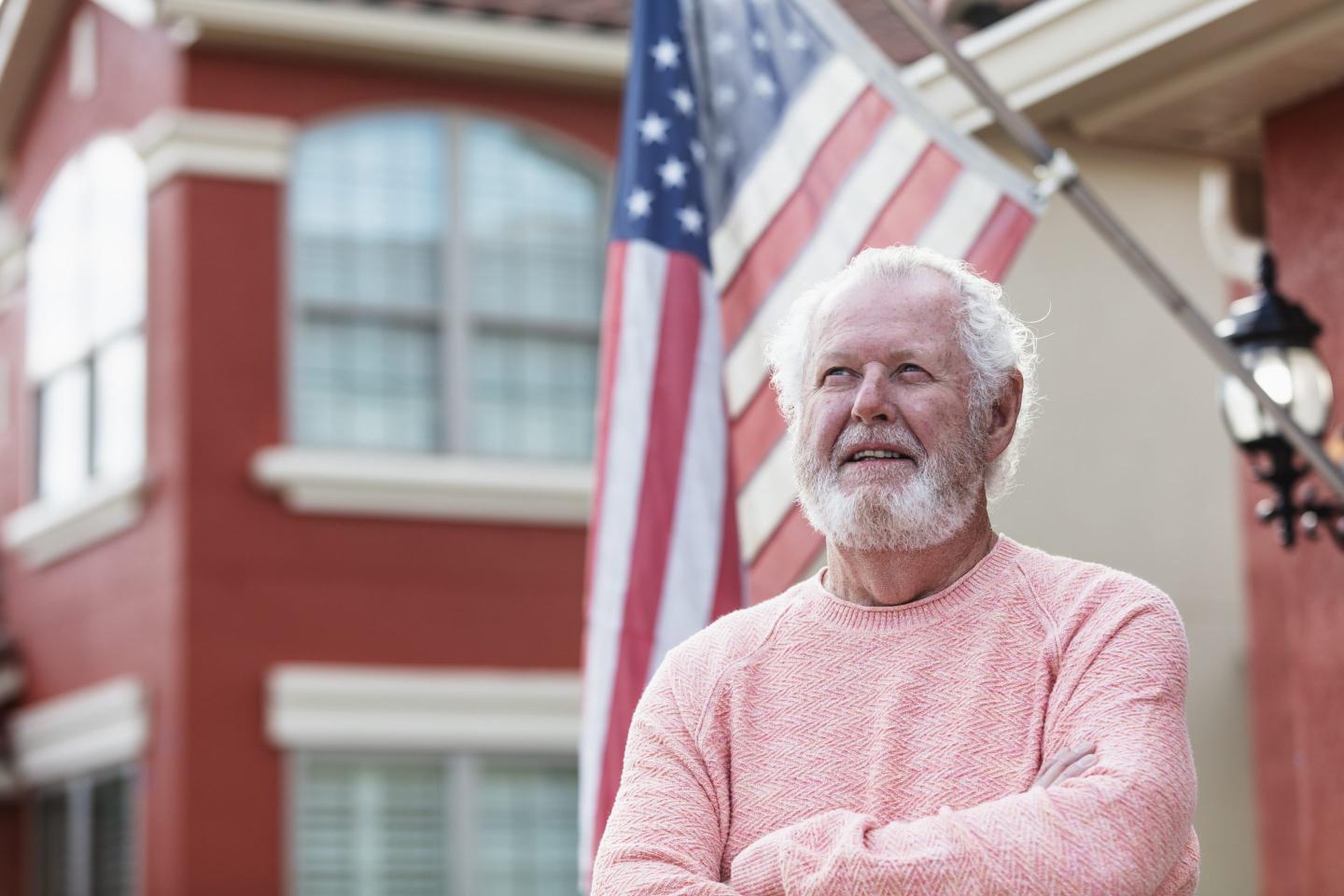
We think the world is getting nostalgic for American capitalism already.Getty Images
Add Fortune on Google for similar content.

Two things are clear after the World Economic Forum in Davos: longstanding American allies are growing skeptical of our nation’s leadership and simultaneously cannot stop imagining the possibilities of American-designed artificial intelligence technology. 

Recommended Video

Nearly every panel at Davos this year focused on how AI is transforming society. It’s no surprise why. In the venture capital world, 2025 was one of the biggest on record with about 70% of all deals going to AI companies. We have a different view. The checks were bigger, but there weren’t as many of them. In fact, the closing months of 2025 saw the fewest individual venture deals of the last 20 quarters. That could mean there are fewer people starting new companies, fewer new ideas entering the economy, and fewer jobs for those who need them. This is no recipe to Make America Great Again; in fact, it’s how we Make America Less Dynamic Again.

Canadian Prime Minister Mark Carney turned heads at Davos in a speech that challenged the conventional wisdom of “Pax Americana” arguing “nostalgia is not a strategy.” He’s right. The image of America as the land of opportunity may no longer match the economic reality. In 1940, 90% of children would go on to outearn their parents; today, only 50% of millennials (those born between 1981 and 1996) are expected to do the same. It’s now easier to climb the economic ladder in Sweden, Germany, France, and Japan than in the United States. The richest 1% of households had 15 times the combined wealth of the bottom 50% in 2021. That same 1% holds about one-third of the country’s assets. And the gaps may widen as the top quintile of earners take an ever larger share from everybody below. This declining dynamism has had negative repercussions for large segments of American society, harmed our democracy, contributed to rising polarization, and undermined American security. 

The good news is we can change course, and some in the business world are starting to do so. Over the course of the last year, we interviewed dozens of CEOs, academics, and other business leaders to understand how our economy is changing from one that rewards shareholders to one that cares about stakeholders.  The former CEO of PayPal, Dan Schulman, was appalled to learn one of his employees was selling plasma to pay their bills. He quickly set a goal of moving net disposable income for its employees from an average of 4% to 20%. They increased pay across the board, gave every employee stock options, and provided free financial literacy training. They also reduced employee healthcare costs by 60%. The result: “skyrocketing” productivity and less turnover. 

The co-head of Global Private Equity at KKR, Peter Stavros, told us: “It’s crazy to me that you wouldn’t want the folks on the front lines—the people interacting with customers and ensuring quality and on-time delivery—motivated by the company’s success.” That’s exactly what he did at KKR, modifying equity plans across the firm’s portfolio to ensure everyone had a stake in its success. When KKR sold CHI Overhead Doors in 2022, the average worker received $175,000.  Publix, one of the largest employee-owned companies in America, also tops a list of 11 of its peers in customer trust. Customers are 54% more likely to purchase from Publix than from their competitors as a result. 

More than 8,000 companies are designated benefit corporations or are B-Certified. These include businesses such as Room and Board, San Pellegrino, Danone, Aveda, Unilever, Nespresso, and Patagonia.  In the short term, there are trade-offs between profits and values. In the long term, that’s less likely to be true. Greg Curtis, former Deputy General Counsel of Patagonia, described their approach to us this way: “We were comfortable with the tension between profitability and giving back. We didn’t feel like we were making a trade-off but rather investing for our future.” 

Approximately 18% of US employees have an ownership stake in their employers. That’s a great start and something we should aggressively build upon. We should look to expand access to Employee Stock Ownership Plans and Employee Ownership Trusts. We need to expand access to retirement investing, giving people access to good quality savings plans. The “Trump Bonds” for every child, debuting this year will give every child a stake in capital markets and is a smart step towards building a more equitable society. 

We need to build transparency in capital markets so investors and employees can make investment decisions knowing which companies promote the top 1% and which are helping build value and equity in other ways. 

Most importantly, we need to lower barriers to starting a business in the first place. America’s power comes from our ideas. In 2021,  there were more venture deals than any other year but there was also a far larger diversity of industries represented than at any other point in the last 25 years. Today, the opposite is true. A dynamic America requires a broad base of thousands of AI applications including in manufacturing, logistics, and others, not only a few foundational models in Silicon Valley.

In his opening remarks at Davos, interim chairman Larry Fink made the point:  “Prosperity isn’t just growth in the aggregate. It can’t be measured by GDP or the market caps of the world’s largest companies alone. It has to be judged by how many people can see it, touch it and build a future on it.” 

That is the test America is failing, and the one the world needs us to pass.  Being the shining city on the hill doesn’t mean investing a lot of money on a handful of companies, saber rattling in Greenland, or watching the Dow Jones index soar. It means creating more prosperity, freedom,  and opportunity for our country and our neighbors. We will restore America’s strength in the world by living up to our ideals, not only as a liberal democracy but as a place where everyone who works hard can get ahead. 

The opinions expressed in Fortune.com commentary pieces are solely the views of their authors and do not necessarily reflect the opinions and beliefs of Fortune. This article has also been updated to correct the title of Pete Stavros, Co-Head of Global Private Equity at KKR.

About the Authors
By Seth Levine
See full bioRight Arrow Button Icon
By Elizabeth MacBride
See full bioRight Arrow Button Icon
Add Fortune on Google for similar content.

Latest in Commentary

Finance
Lorem ipsum dolor sit amet, consectetur adipiscing elit, sed do eiusmod tempor incididunt ut labore et dolore magna aliqua. Ut enim ad minim veniam
By Fortune Editors
October 20, 2025
Finance
Lorem ipsum dolor sit amet, consectetur adipiscing elit, sed do eiusmod tempor incididunt ut labore et dolore magna aliqua. Ut enim ad minim veniam
By Fortune Editors
October 20, 2025
Finance
Lorem ipsum dolor sit amet, consectetur adipiscing elit, sed do eiusmod tempor incididunt ut labore et dolore magna aliqua. Ut enim ad minim veniam
By Fortune Editors
October 20, 2025
Finance
Lorem ipsum dolor sit amet, consectetur adipiscing elit, sed do eiusmod tempor incididunt ut labore et dolore magna aliqua. Ut enim ad minim veniam
By Fortune Editors
October 20, 2025
Finance
Lorem ipsum dolor sit amet, consectetur adipiscing elit, sed do eiusmod tempor incididunt ut labore et dolore magna aliqua. Ut enim ad minim veniam
By Fortune Editors
October 20, 2025
Finance
Lorem ipsum dolor sit amet, consectetur adipiscing elit, sed do eiusmod tempor incididunt ut labore et dolore magna aliqua. Ut enim ad minim veniam
By Fortune Editors
October 20, 2025

Most Popular

Finance
Lorem ipsum dolor sit amet, consectetur adipiscing elit, sed do eiusmod tempor incididunt ut labore et dolore magna aliqua. Ut enim ad minim veniam
By Fortune Editors
October 20, 2025
Finance
Lorem ipsum dolor sit amet, consectetur adipiscing elit, sed do eiusmod tempor incididunt ut labore et dolore magna aliqua. Ut enim ad minim veniam
By Fortune Editors
October 20, 2025
Finance
Lorem ipsum dolor sit amet, consectetur adipiscing elit, sed do eiusmod tempor incididunt ut labore et dolore magna aliqua. Ut enim ad minim veniam
By Fortune Editors
October 20, 2025
Finance
Lorem ipsum dolor sit amet, consectetur adipiscing elit, sed do eiusmod tempor incididunt ut labore et dolore magna aliqua. Ut enim ad minim veniam
By Fortune Editors
October 20, 2025
Finance
Lorem ipsum dolor sit amet, consectetur adipiscing elit, sed do eiusmod tempor incididunt ut labore et dolore magna aliqua. Ut enim ad minim veniam
By Fortune Editors
October 20, 2025
Finance
Lorem ipsum dolor sit amet, consectetur adipiscing elit, sed do eiusmod tempor incididunt ut labore et dolore magna aliqua. Ut enim ad minim veniam
By Fortune Editors
October 20, 2025
Fortune Secondary Logo
Rankings
  • 100 Best Companies
  • Fortune 500
  • Global 500
  • Fortune 500 Europe
  • Most Powerful Women
  • World's Most Admired Companies
  • See All Rankings
  • Lists Calendar
Sections
  • Finance
  • Fortune Crypto
  • Features
  • Leadership
  • Health
  • Commentary
  • Success
  • Retail
  • Mpw
  • Tech
  • Lifestyle
  • CEO Initiative
  • Asia
  • Politics
  • Conferences
  • Europe
  • Newsletters
  • Personal Finance
  • Environment
  • Magazine
  • Education
Customer Support
  • Frequently Asked Questions
  • Customer Service Portal
  • Privacy Policy
  • Terms Of Use
  • Single Issues For Purchase
  • International Print
Commercial Services
  • Advertising
  • Fortune Brand Studio
  • Fortune Analytics
  • Fortune Conferences
  • Business Development
  • Group Subscriptions
About Us
  • About Us
  • Press Center
  • Work At Fortune
  • Terms And Conditions
  • Site Map
  • About Us
  • Press Center
  • Work At Fortune
  • Terms And Conditions
  • Site Map
  • Facebook icon
  • Twitter icon
  • LinkedIn icon
  • Instagram icon
  • Pinterest icon
Venture capitalist Seth Levine (investor in Fitbit, Whoop, Zygna, founder of Pledge 1%) and journalist Elizabeth MacBride spent the past year interviewing business leaders, academics, and civil society experts on this subject for their new book "Capital Evolution: The New American Economy." Their argument: one of America's biggest problems is that we've stopped sharing ownership; we need more capitalists, not necessarily more capitalism. They make the case for "dynamic capitalism" as a replacement for the shareholder driven capitalism of the last 50 years thats created vast inequality, political division, and distrust in the system. 

Latest in Commentary

usa
Commentary250 Years of Innovation
For 250 years, work defined American identity. That era Is ending
By Keith Ferrazzi and Wendy SmithJuly 11, 2026
1 day ago
m
Commentarymedicine
America’s bone health is quietly headed for a $19 billion crisis
By Matthew T. DrakeJuly 9, 2026
4 days ago
t
CommentaryEducation
AI is about to disrupt millions of jobs. A century ago, America’s answer was to build a new high school
By Tim KnowlesJuly 8, 2026
5 days ago
amit
CommentaryVenture Capital
Physical AI’s $50 trillion opportunity requires long-term conviction, but the payoff is huge 
By Amit ChaturvedyJuly 8, 2026
5 days ago
heat
Commentaryclimate change
McKinsey Global Institute: Climate planning has prioritized floods. Heat demands equal attention
By Sylvain Johansson, Mekala Krishnan, Kanmani Chockalingam and Annabel FarrJuly 7, 2026
5 days ago
j
CommentaryEducation
AI didn’t break higher education—It exposed the credential trap
By Jason BenedictJuly 7, 2026
6 days ago

Most Popular

The U.S. and Iran can't agree on fully reopening the Strait of Hormuz. The solution could be straight out of the Old Testament
Middle East
The U.S. and Iran can't agree on fully reopening the Strait of Hormuz. The solution could be straight out of the Old Testament
By Jason MaJuly 11, 2026
22 hours ago
Wyoming officials say Meta’s 715,000-square-foot data center is responsible for contaminating its water system with a rare bacterium
Environment
Wyoming officials say Meta’s 715,000-square-foot data center is responsible for contaminating its water system with a rare bacterium
By Sasha RogelbergJuly 10, 2026
2 days ago
'The first time ever in my career': Senior Citi executive on why the ultrawealthy want to diversify away from America
Banking
'The first time ever in my career': Senior Citi executive on why the ultrawealthy want to diversify away from America
By Nick LichtenbergJuly 11, 2026
1 day ago
A Trump Account could make your kid a millionaire by 45—but financial experts say the app's projections come with a catch
Personal Finance
A Trump Account could make your kid a millionaire by 45—but financial experts say the app's projections come with a catch
By Sydney LakeJuly 12, 2026
11 hours ago
The U.S. spent $30 billion to ditch textbooks for laptops and tablets: The result is the first generation less cognitively capable than their parents
Innovation
The U.S. spent $30 billion to ditch textbooks for laptops and tablets: The result is the first generation less cognitively capable than their parents
By Sasha RogelbergJuly 12, 2026
10 hours ago
Global oil demand is falling, and crude prices are down. But here's why gasoline, diesel and other refined products are still costly
Energy
Global oil demand is falling, and crude prices are down. But here's why gasoline, diesel and other refined products are still costly
By Cathy Bussewitz and The Associated PressJuly 11, 2026
1 day ago

© 2026 Fortune Media IP Limited. All Rights Reserved. Use of this site constitutes acceptance of our Terms of Use and Privacy Policy | CA Notice at Collection and Privacy Notice | Do Not Sell/Share My Personal Information
FORTUNE is a trademark of Fortune Media IP Limited, registered in the U.S. and other countries. FORTUNE may receive compensation for some links to products and services on this website. Offers may be subject to change without notice.