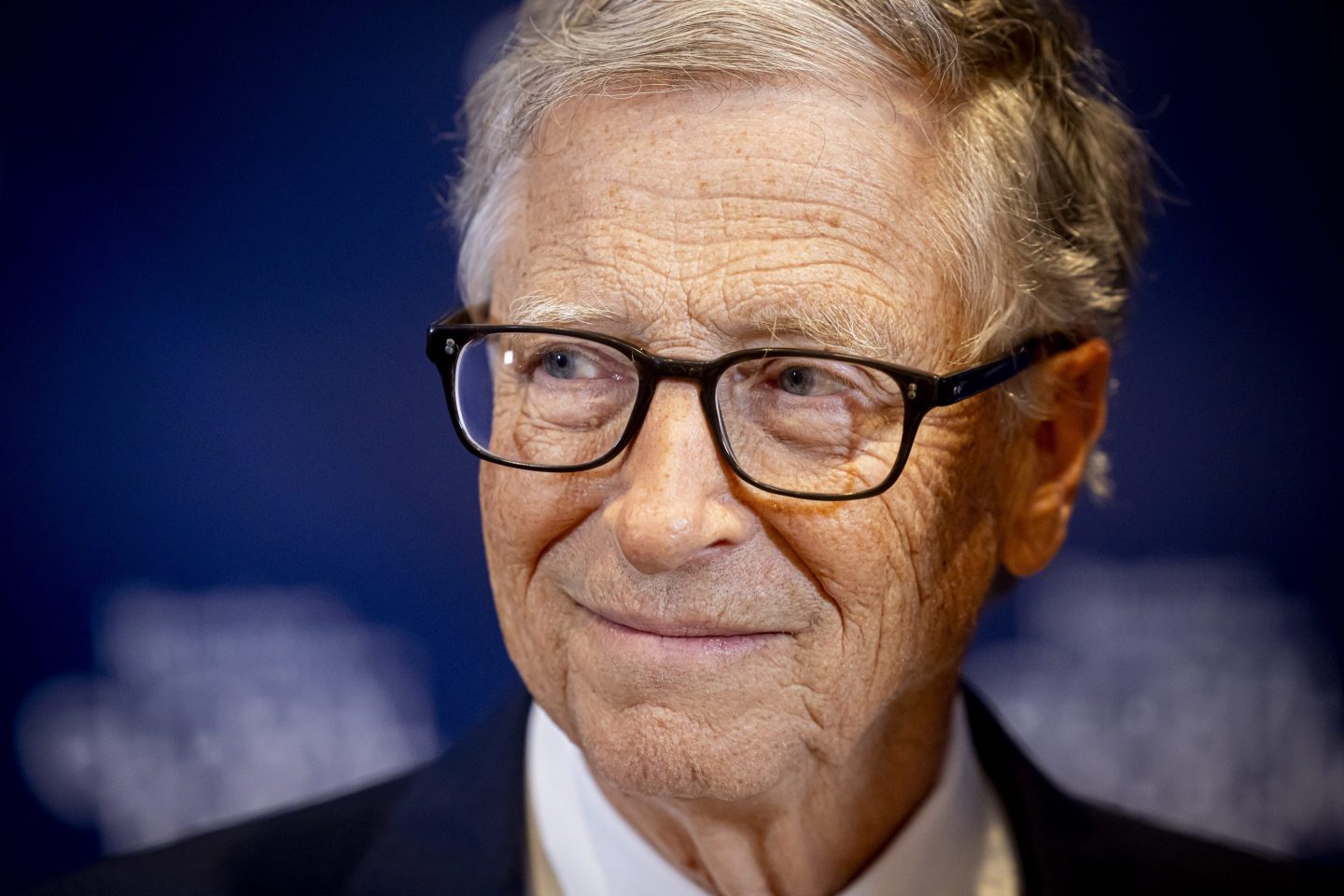
Bill Gates is urging the world to rethink its approach to climate change, arguing that an overly catastrophic narrative is driving resources away from the solutions that could have the greatest impact on human welfare. In a lengthy memo published Tuesday morning—coinciding with his 70th birthday—the Microsoft cofounder and billionaire philanthropist challenged what he called a “doomsday view of climate change” that he believes is causing policymakers to “focus too much on near-term emissions goals” at the expense of more effective interventions.
The memo arrives just two weeks before global leaders convene in Belém, Brazil, for COP30, the United Nations climate summit scheduled for Nov. 10–21.
“Although climate change will have serious consequences—particularly for people in the poorest countries—it will not lead to humanity’s demise,” Gates wrote in the memo. “People will be able to live and thrive in most places on Earth for the foreseeable future.”
Gates, who has invested billions through his climate venture fund, Breakthrough Energy, since 2015, argued the global climate community should make what he termed a “strategic pivot”—shifting from a primary focus on limiting temperature rise to prioritizing improvements in health, agriculture, and economic development in the world’s most vulnerable regions.
“This is a chance to refocus on the metric that should count even more than emissions and temperature change: improving lives,” Gates wrote. “Our chief goal should be to prevent suffering, particularly for those in the toughest conditions who live in the world’s poorest countries.”
The memo represents a notable evolution in Gates’ public messaging on climate. Just four years ago, he published a book titled How to Avoid a Climate Disaster, outlining an aggressive plan to reduce emissions. Now, while maintaining that climate change remains “a very important problem” that “needs to be solved,” Gates says for most people in poor countries, it will not be “the only or even the biggest threat to their lives and welfare,” citing poverty and disease as more pressing concerns.
Gates pointed to progress that he argued has been overlooked in climate discussions. Over the past decade, projected global emissions for 2040 have dropped from 50 billion tons to 30 billion tons of carbon dioxide annually, according to International Energy Agency forecasts—a reduction of more than 40%. He attributed this shift to innovations that have driven the “Green Premium”—his term for the cost difference between clean and polluting alternatives—to zero or below for technologies like solar, wind, battery storage, and electric vehicles.
“Read that again: In the past 10 years, we’ve cut projected emissions by more than 40%,” Gates wrote.
Solutions for a changing climate
Despite this optimism about technological progress, Gates acknowledged that the world is likely to reach 2 to 3 degrees Celsius of warming by 2100, well above the 1.5-degree target set in the 2015 Paris Agreement. But rather than viewing this as catastrophic, he argued for focusing resources on helping people adapt and thrive despite a changing climate.
Central to Gates’ argument is economic data suggesting that development itself serves as climate adaptation. He cited research from the University of Chicago’s Climate Impact Lab showing that projected deaths from climate change drop by more than 50% when accounting for expected economic growth in low-income countries over the remainder of the century.
Gates made a pointed case for prioritizing investments in agriculture and health systems in developing nations. He noted that excessively hot weather currently causes around 500,000 deaths annually, but that excessive cold kills nearly 10 times as many people—and that both figures have been declining as more people gain access to heating and air conditioning. Meanwhile, poverty-related health problems including malaria, tuberculosis, HIV/AIDS, respiratory infections, diarrheal diseases, and complications from childbirth kill approximately 8 million people per year.
In one example, Gates highlighted vaccines as “the undisputed champion of lives saved per dollar spent,” noting that Gavi, the vaccine-purchasing fund his foundation helped establish, can save a life for slightly more than $1,000. He contrasted this with climate initiatives that spend millions to eliminate thousands of tons of emissions, suggesting such projects “just don’t make the cut” when resources are limited.
Shrinking resources for global development
The memo arrives at a moment of shrinking resources for global development. Gates noted that aid designated for poor countries—already less than 1% of rich countries’ budgets at its peak—is declining as wealthy nations cut foreign assistance. Gavi will have 25% less funding for the next five years compared with the previous five, he wrote.
Gates called on governments, investors, and the climate community to rigorously measure the impact of every climate investment and prioritize initiatives that deliver the greatest return for human welfare. He urged COP30 participants to ask: “How do we make sure aid spending is delivering the greatest possible impact for the most vulnerable people? Is the money designated for climate being spent on the right things?”
Gates calls out two main priorities for climate going forward: driving the Green Premium to zero across all sectors of the economy through continued innovation, and using data-based analysis to identify the most cost-effective interventions for saving and improving lives. But he acknowledged his views would likely prove controversial. “I know that some climate advocates will disagree with me, call me a hypocrite because of my own carbon footprint (which I fully offset with legitimate carbon credits), or see this as a sneaky way of arguing that we shouldn’t take climate change seriously,” he wrote.
During a roundtable with reporters ahead of the memo’s release, Gates framed the choice starkly: “If given a choice between eradicating malaria and a tenth of a degree increase in warming, I’ll let the temperature go up 0.1 degree to get rid of malaria,” he said. “People don’t understand the suffering that exists today.”
For this story, Fortune used generative AI to help with an initial draft. An editor verified the accuracy of the information before publishing.