
• Home
  • Latest
  • Fortune 500
  • Finance
  • Tech
  • Leadership
  • Lifestyle
  • Rankings
  • Multimedia
SuccessEntrepreneurs

CEO of $8 billion AI company says it’s ‘mind-boggling’ that people think you can work 38 hours a week, have work-life balance, and be successful

Emma Burleigh
By
Emma Burleigh
Emma Burleigh
Reporter, Success
Down Arrow Button Icon
Emma Burleigh
By
Emma Burleigh
Emma Burleigh
Reporter, Success
Down Arrow Button Icon
October 13, 2025, 10:52 AM ET
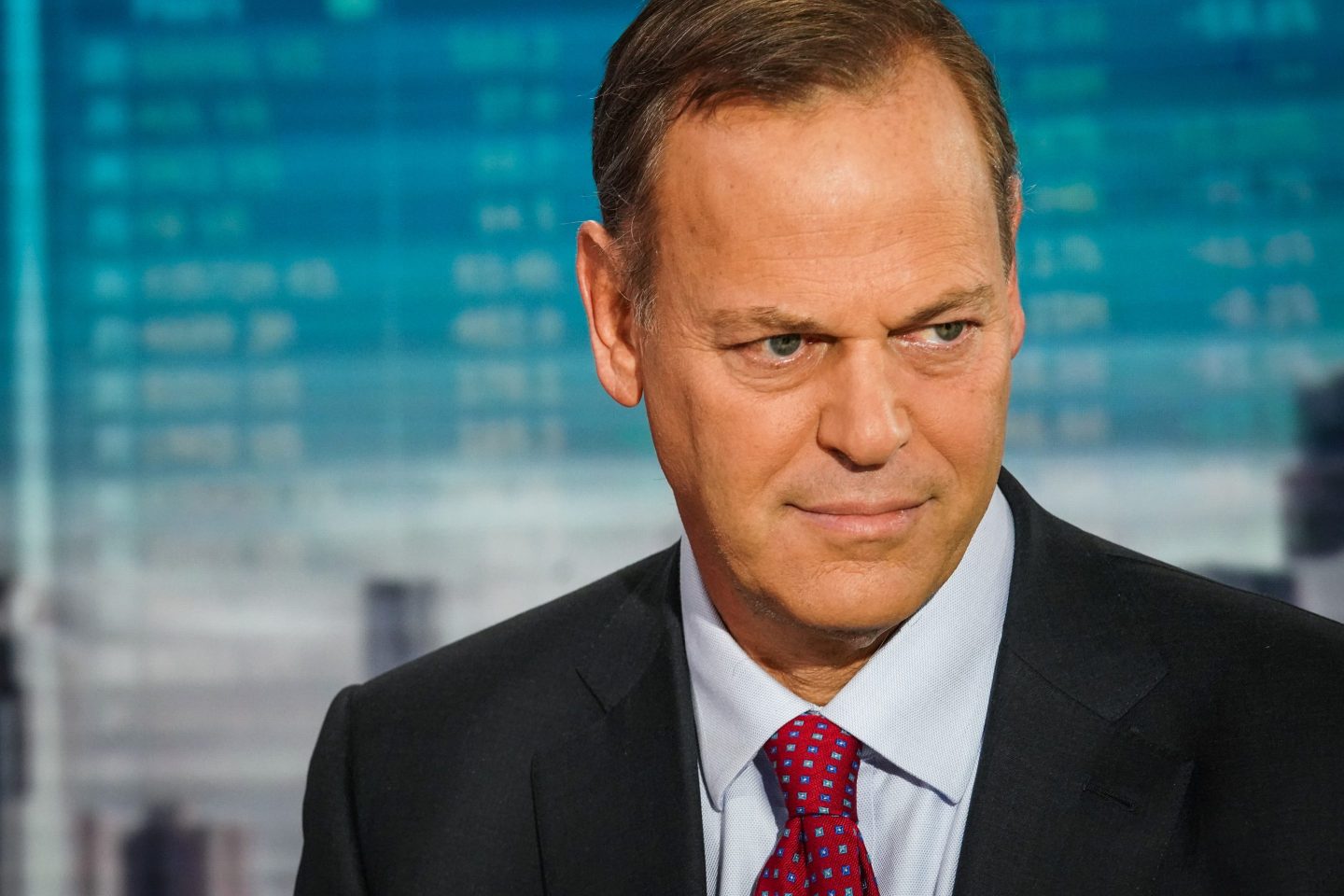
Andrew Feldman, Co-Founder and CEO, Cerebras Systems
Cerebras cofounder Andrew Feldman warned aspiring entrepreneurs they need to be working “every waking minute,” echoing the likes of Zoom CEO Eric Yuan and LinkedIn’s Reid Hoffman. Ramsey Cardy—Getty Images

Titans of Silicon Valley and Wall Street are setting the record straight: clocking in at 9 a.m. and throwing in the towel by 5 p.m. won’t get you to the top of the C-suite. Much to the dismay of Gen Z striving for success with a manageable work-life balance, CEOs are adamant that intense schedules are essential for anyone looking to make it in business. 

Recommended Video

“This notion that somehow you can achieve greatness, you can build something extraordinary by working 38 hours a week and having work-life balance, that is mind-boggling to me,” Andrew Feldman, cofounder and CEO of $8.1 billion AI chip company Cerebras, stressed recently on the 20VC podcast. “It’s not true in any part of life.”

As many U.S. workers push for shorter workweeks, America’s founders are still sticking with “grindset” culture as the formula for trillion-dollar success. Feldman is just one of many business leaders, including Google cofounder Sergey Brin and Shark Tank investor Kevin O’Leary, emphasizing the hard truth of success. 

Of course, professionals can stick to a 40-hour workweek and still be happy—but the Cerebras CEO stipulated that they won’t be the ones launching the next unicorn or rolling out generation-defining products. 

“You can have a great life. You can do many really good things, and there are lots of paths to happiness,” Feldman continued. “But the path to build something new out of nothing, and make it great, isn’t part-time work. It isn’t 30, 40, 50 hours a week. It’s every waking minute. And of course, there are costs.”

The myth of work-life balance—and a 60-hour ‘sweet spot’

Leaders at the top of their game have been dispelling the myth of work-life balance; Zoom CEO Eric Yuantold staffers that there’s “no way” to achieve harmony with the two, as “work is life, life is work”; former U.S. President Barack Obama said that to be “excellent at anything” requires a one-track mind at certain times; and even LinkedIn cofounder Reid Hoffmanwarned that launching a startup requires letting go of binge-watching Netflix after office hours. 

“If I ever hear a founder talking about, ‘This is how I have a balanced life,’ they’re not committed to winning,” Hoffman told Stanford University’s How to Start a Startup class in 2014. “The only really great founders are [the ones who are] like, ‘I am going to put literally everything into doing this.’”

Entrepreneurs looking to take their businesses to new heights may question where to draw the line and unplug from the chaos—and some Silicon Valley founders have pushed back on toxic 100-hour workweeks. But there seems to be a general consensus that nine-to-five schedules won’t lead to rapid career growth. 

The CEO of $17 billion businessTwilio, Khozema Shipchandler only gives himself eight hours on Saturdays to not think about work. Shipchandler told Fortunethat “every one of us has to make certain work-life choices,” and people can choose to pursue their hobbies and take evenings for themselves—however, he’s “never spoken to a peer” who doesn’t have the same schedule as he does. 

Likewise, Tennis champion Serena Williams said entrepreneurs have to “show up 28 hours out of 24” daily, and multimillionaire O’Leary advised founders to “forget about balance … You’re going to work 25 hours a day, seven days a week, forever.” Budding CEOs can’t take their advice literally—but one leader has set the record straight on just how many hours people should actually be working. Earlier this year billionaire computer scientist Brin toldGoogle Gemini staffers that “60 hours a week is the sweet spot of productivity,” and workplace experts say it’s actually about going the extra mile.

“The lesson for most young professionals is if you want to get ahead, you’re not going to get there [with] 40 hours a week,” Dan Kaplan, co-head of the CHRO practice at ZRG Partners, told Fortune earlier this year. “Part of the danger of the comment [about] the 60-hour workweek is it’s actually not about 60. It’s about working extra until the work is done.”

While entrepreneurs are conflicted on exactly how many hours they should work to hit optimum productivity, Feldman tells Fortune there is no magic number. Instead, the focus should be on getting things done.

“It’s not about logging hours,” Feldman explains. “It’s about being passionate and being consumed by the work. It’s about being driven to change the world, to be the best you can be, and to help your team be the best it can be.”


Join us at the Fortune Workplace Innovation Summit May 19–20, 2026, in Atlanta. The next era of workplace innovation is here—and the old playbook is being rewritten. At this exclusive, high-energy event, the world’s most innovative leaders will convene to explore how AI, humanity, and strategy converge to redefine, again, the future of work. Register now.
About the Author
Emma Burleigh
By Emma BurleighReporter, Success

Emma Burleigh is a reporter at Fortune, covering success, careers, entrepreneurship, and personal finance. Before joining the Success desk, she co-authored Fortune’s CHRO Daily newsletter, extensively covering the workplace and the future of jobs. Emma has also written for publications including the Observer and The China Project, publishing long-form stories on culture, entertainment, and geopolitics. She has a joint-master’s degree from New York University in Global Journalism and East Asian Studies.

See full bioRight Arrow Button Icon

Latest in Success

SuccessHow I made my first million
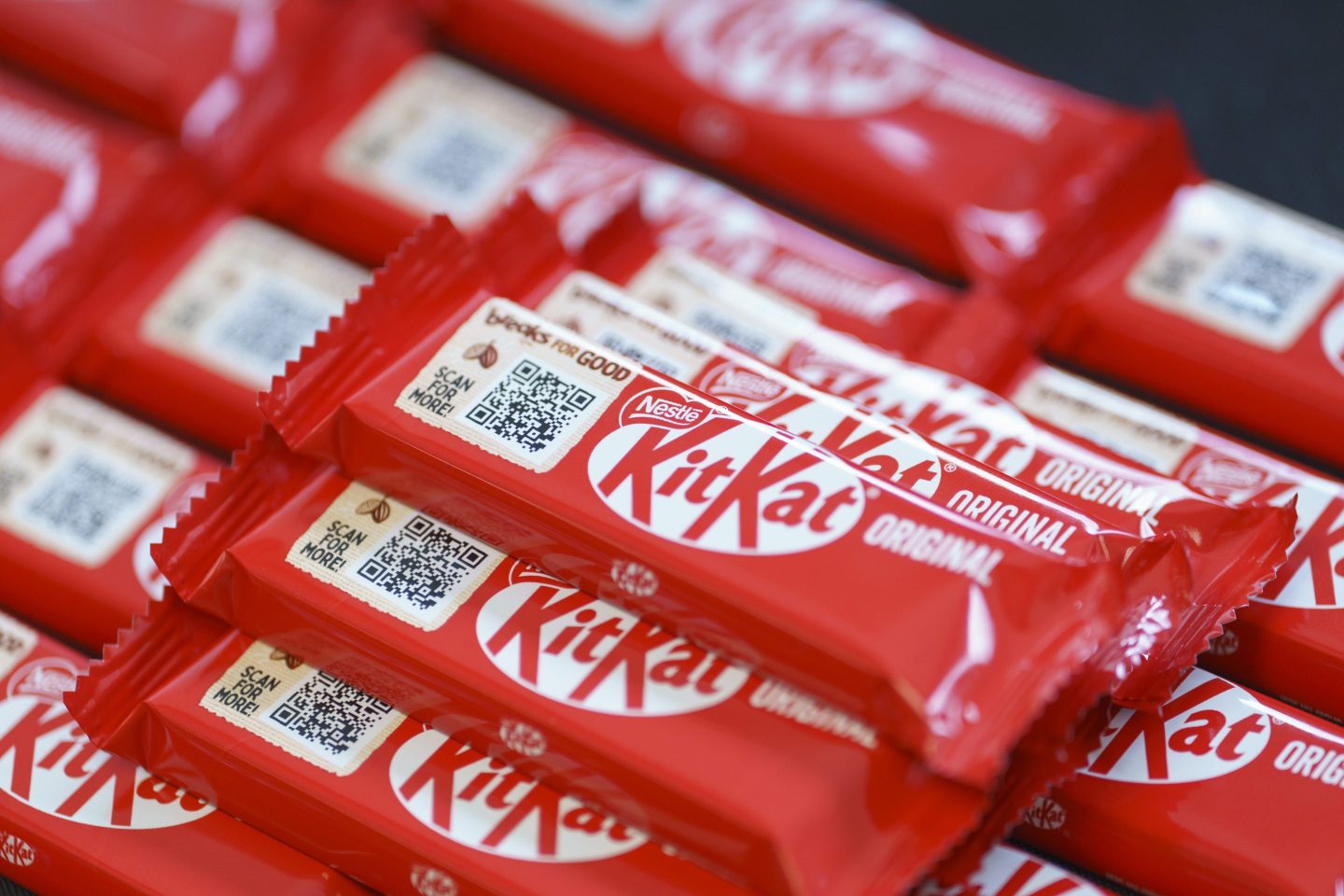
Hinge CEO says he bribed students with KitKats to get the $550 million-a-year business off the ground: ‘I had to beg and borrow a lot’
By Orianna Rosa RoyleDecember 12, 2025
21 minutes ago
Steve Jobs, Steve Wozniak, and Ronald Wayne's signatures on the bottom of Apple's founding contract.
SuccessWealth
Apple cofounder Ronald Wayne sold his 10% stake for $800 in 1976—today it’d be worth up to $400 billion
By Preston ForeDecember 12, 2025
27 minutes ago
Former Meta COO Sheryl Sandberg
SuccessWomen
Sheryl Sandberg breaks down why it’s a troubling time for women in the workplace right now
By Emma BurleighDecember 12, 2025
5 hours ago
Late Apple cofounder Steve Jobs
SuccessCareers
Apple’s Steve Jobs told students to never ‘settle’ in their careers: ‘If you haven’t found it yet, keep looking’
By Emma BurleighDecember 11, 2025
23 hours ago
Joe Lonsdale
SuccessColleges and Universities
Palantir cofounder calls elite college undergrads a ‘loser generation’ as data reveals rise in students seeking support for disabilities, like ADHD
By Preston ForeDecember 11, 2025
23 hours ago
A sign for Time magazine is displayed outside the New York Stock Exchange on Thursday, Dec. 11, 2025 in New York.
AIchief executive officer (CEO)
Time names ‘Architects of AI’ as its 2025 Person of the Year, a year when the tech’s ‘full potential roared into view’
By Mike Catalini and The Associated PressDecember 11, 2025
23 hours ago

Most Popular

placeholder alt text
Success
At 18, doctors gave him three hours to live. He played video games from his hospital bed—and now, he’s built a $10 million-a-year video game studio
By Preston ForeDecember 10, 2025
2 days ago
placeholder alt text
Success
Palantir cofounder calls elite college undergrads a ‘loser generation’ as data reveals rise in students seeking support for disabilities, like ADHD
By Preston ForeDecember 11, 2025
23 hours ago
placeholder alt text
Investing
Baby boomers have now 'gobbled up' nearly one-third of America's wealth share, and they're leaving Gen Z and millennials behind
By Sasha RogelbergDecember 8, 2025
4 days ago
placeholder alt text
Economy
‘We have not seen this rosy picture’: ADP’s chief economist warns the real economy is pretty different from Wall Street’s bullish outlook
By Eleanor PringleDecember 11, 2025
1 day ago
placeholder alt text
Uncategorized
Transforming customer support through intelligent AI operations
By Lauren ChomiukNovember 26, 2025
16 days ago
placeholder alt text
Success
What it takes to be wealthy in America: $2.3 million, Charles Schwab says
By Sydney LakeDecember 11, 2025
1 day ago
Rankings
  • 100 Best Companies
  • Fortune 500
  • Global 500
  • Fortune 500 Europe
  • Most Powerful Women
  • Future 50
  • World’s Most Admired Companies
  • See All Rankings
Sections
  • Finance
  • Leadership
  • Success
  • Tech
  • Asia
  • Europe
  • Environment
  • Fortune Crypto
  • Health
  • Retail
  • Lifestyle
  • Politics
  • Newsletters
  • Magazine
  • Features
  • Commentary
  • Mpw
  • CEO Initiative
  • Conferences
  • Personal Finance
  • Education
Customer Support
  • Frequently Asked Questions
  • Customer Service Portal
  • Privacy Policy
  • Terms Of Use
  • Single Issues For Purchase
  • International Print
Commercial Services
  • Advertising
  • Fortune Brand Studio
  • Fortune Analytics
  • Fortune Conferences
  • Business Development
About Us
  • About Us
  • Editorial Calendar
  • Press Center
  • Work At Fortune
  • Diversity And Inclusion
  • Terms And Conditions
  • Site Map

© 2025 Fortune Media IP Limited. All Rights Reserved. Use of this site constitutes acceptance of our Terms of Use and Privacy Policy | CA Notice at Collection and Privacy Notice | Do Not Sell/Share My Personal Information
FORTUNE is a trademark of Fortune Media IP Limited, registered in the U.S. and other countries. FORTUNE may receive compensation for some links to products and services on this website. Offers may be subject to change without notice.