• Home
  • News
  • Fortune 500
  • Tech
  • Finance
  • Leadership
  • Lifestyle
  • Rankings
  • Multimedia
HealthFortune Intelligence

Perfect storm to hit Obamacare: Millions of Americans could see insurance premiums surge 75% in 2026

Ashley Lutz
By
Ashley Lutz
Ashley Lutz
Executive Director, Editorial Growth
Down Arrow Button Icon
Ashley Lutz
By
Ashley Lutz
Ashley Lutz
Executive Director, Editorial Growth
Down Arrow Button Icon
August 13, 2025, 3:31 PM ET
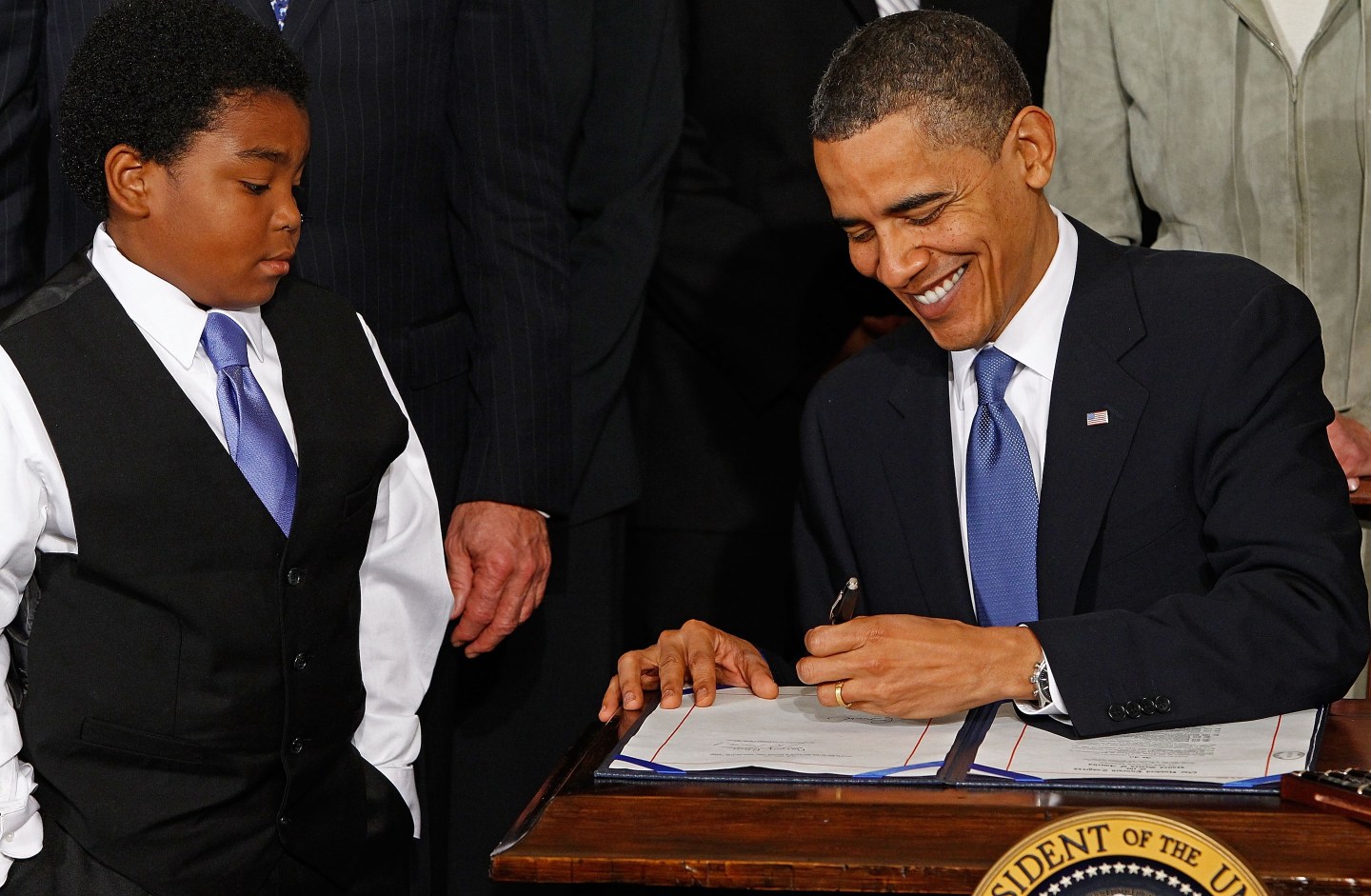
President Barack Obama signs the Affordable Health Care for America Act during a ceremony with fellow Democrats in the East Room of the White House March 23, 2010 in Washington, DC.
President Barack Obama signs the Affordable Health Care for America Act during a ceremony with fellow Democrats in the East Room of the White House March 23, 2010 in Washington, DC.Chip Somodevilla / Getty Images

A perfect storm of rising health care costs, expensive new drugs, and the scheduled end of enhanced federal subsidies could drive Obamacare’s Affordable Care Act (ACA) Marketplace premiums to their steepest levels in years—and hit more than 24 million Americans in their wallets.

Recommended Video

According to a new analysis of insurers’ 2026 filings by Peterson-KFF’s Health System Tracker, the median proposed premium hike across 312 marketplace insurers is 18%. Most increases range from 12% to 27%, with more than 125 insurers seeking hikes of 20% or more—the sharpest climb since 2018. Final rates will be locked in by late summer 2025.

What’s driving the surge

Runaway medical costs remain the primary culprit, with hospital services, physician visits, and prescription drugs, especially the booming category of GLP-1 medications for diabetes and weight-loss, leading the trend. Insurers report medical inflation running at 8% to 10% annually. Some have even dropped coverage for weight-loss GLP-1s in an attempt to contain costs.

Layered on top of that is a looming policy shift: the expiration of enhanced premium tax credits enacted in 2021 as part of pandemic relief. If Congress lets these subsidies lapse at the end of 2025, monthly out-of-pocket costs for subsidized enrollees are projected to jump roughly 75% on average. That hike is on top of, not instead of, insurers’ base premium increases. The subsidy rollback alone explains about 4 percentage points of the proposed 2026 rate jumps, partly because insurers expect healthier customers to drop coverage when subsidies shrink, leaving a riskier pool.

Insurers are also bracing for potential tariffs on medical supplies and pharmaceuticals, which could add about 3 percentage points to premiums.

What that means for consumers

For a subsidized enrollee paying $100 a month today, 2026 costs could rise to $175—a $900 increase per year—if enhanced subsidies expire. Someone paying $200 a month could see their bill swell to $350. And those figures don’t yet reflect underlying insurer rate hikes above the loss of subsidies.

The impact could be widespread: About 24.2 million Americans are currently enrolled in ACA Marketplace coverage, more than twice the total from four years ago. Much of that growth is tied to the enhanced subsidies now on the chopping block.

Even those with private insurance aren’t immune to rising costs: Fortune previously reported that 51% of companies plan to pass on higher premium costs to employees.

The stakes for Congress and consumers

If lawmakers extend the subsidies, many households could avoid most of the jump in what they pay out of pocket, though they would still face the underlying premium hikes driven by inflation and drug costs. Without action, however, the combined effect could create a price shock for millions who have depended on Marketplace coverage.

The 2025 federal budget reconciliation law passed earlier this year did not include a renewal of the enhanced subsidies, even as it addressed other major health provisions. That means unless Congress acts separately, the subsidies will expire at year’s end.

Republicans currently control both chambers. Some key GOP members have not ruled out discussing an extension due to pressure from constituents, especially in swing districts and states with high ACA enrollment. However, the party is generally resistant to large new spending on what many members still frame as “insurance company bailouts.” GOP leaders have not held serious negotiations over a renewal yet, and most observers rate the odds of passing an extension as low without a major shift in political priorities. Nearly 77% of the public—including a majority of Republican and MAGA-identifying voters—support extending the enhanced premium subsidies, according to a June 2025 KFF poll.

Some health-policy experts note a short-term extension (1-2 years) remains possible, especially if advocates tie it to government funding negotiations or “must-pass” legislation. However, the overall odds are still rated as long unless significant bipartisan compromise is reached, or the White House prioritizes the issue.

For this story, Fortune used generative AI to help with an initial draft. An editor verified the accuracy of the information before publishing. 

Fortune Brainstorm AI returns to San Francisco Dec. 8–9 to convene the smartest people we know—technologists, entrepreneurs, Fortune Global 500 executives, investors, policymakers, and the brilliant minds in between—to explore and interrogate the most pressing questions about AI at another pivotal moment. Register here.
About the Author
Ashley Lutz
By Ashley LutzExecutive Director, Editorial Growth

Ashley Lutz is an executive editor at Fortune, overseeing the Success, Well, syndication, and social teams. She was previously an editorial leader at Bankrate, The Points Guy, and Business Insider, and a reporter at Bloomberg News. Ashley is a graduate of Ohio University's Scripps School of Journalism.

See full bioRight Arrow Button Icon

Latest in Health

Workplace CultureSports
Exclusive: Billionaire Michele Kang launches $25 million U.S. Soccer institute that promises to transform the future of women’s sports
By Emma HinchliffeDecember 2, 2025
16 hours ago
North Americaphilanthropy
Anonymous $50 million donation helps cover the next 50 years of tuition for medical lab science students at University of Washington
By The Associated PressDecember 2, 2025
22 hours ago
Trump
PoliticsWhite House
Trump had MRI on heart and abdomen and it was ‘perfectly normal,’ doctor says
By The Associated PressDecember 2, 2025
22 hours ago
Medical Glasses
InnovationNews
New FDA-approved glasses can slow nearsightedness in kids
By The Associated Press and Matthew PerroneDecember 1, 2025
2 days ago
Luigi Mangione
LawNews
Luigi Mangione watches footage of cops approaching him at Altoona McDonald’s as courtroom hearings commence
By Michael R. Sisak and The Associated PressDecember 1, 2025
2 days ago
Our testers trying out a Nectar mattress.
Healthmattresses
Best Cyber Monday Mattress Deals of 2025: Saatva, Helix, and More
By Christina SnyderDecember 1, 2025
2 days ago

Most Popular

placeholder alt text
Economy
Ford workers told their CEO 'none of the young people want to work here.' So Jim Farley took a page out of the founder's playbook
By Sasha RogelbergNovember 28, 2025
5 days ago
placeholder alt text
Success
Warren Buffett used to give his family $10,000 each at Christmas—but when he saw how fast they were spending it, he started buying them shares instead
By Eleanor PringleDecember 2, 2025
1 day ago
placeholder alt text
Economy
Elon Musk says he warned Trump against tariffs, which U.S. manufacturers blame for a turn to more offshoring and diminishing American factory jobs
By Sasha RogelbergDecember 2, 2025
18 hours ago
placeholder alt text
North America
Jeff Bezos and Lauren Sánchez Bezos commit $102.5 million to organizations combating homelessness across the U.S.: ‘This is just the beginning’
By Sydney LakeDecember 2, 2025
20 hours ago
placeholder alt text
C-Suite
MacKenzie Scott's $19 billion donations have turned philanthropy on its head—why her style of giving actually works
By Sydney LakeDecember 2, 2025
1 day ago
placeholder alt text
North America
Anonymous $50 million donation helps cover the next 50 years of tuition for medical lab science students at University of Washington
By The Associated PressDecember 2, 2025
22 hours ago
Rankings
  • 100 Best Companies
  • Fortune 500
  • Global 500
  • Fortune 500 Europe
  • Most Powerful Women
  • Future 50
  • World’s Most Admired Companies
  • See All Rankings
Sections
  • Finance
  • Leadership
  • Success
  • Tech
  • Asia
  • Europe
  • Environment
  • Fortune Crypto
  • Health
  • Retail
  • Lifestyle
  • Politics
  • Newsletters
  • Magazine
  • Features
  • Commentary
  • Mpw
  • CEO Initiative
  • Conferences
  • Personal Finance
  • Education
Customer Support
  • Frequently Asked Questions
  • Customer Service Portal
  • Privacy Policy
  • Terms Of Use
  • Single Issues For Purchase
  • International Print
Commercial Services
  • Advertising
  • Fortune Brand Studio
  • Fortune Analytics
  • Fortune Conferences
  • Business Development
About Us
  • About Us
  • Editorial Calendar
  • Press Center
  • Work At Fortune
  • Diversity And Inclusion
  • Terms And Conditions
  • Site Map

© 2025 Fortune Media IP Limited. All Rights Reserved. Use of this site constitutes acceptance of our Terms of Use and Privacy Policy | CA Notice at Collection and Privacy Notice | Do Not Sell/Share My Personal Information
FORTUNE is a trademark of Fortune Media IP Limited, registered in the U.S. and other countries. FORTUNE may receive compensation for some links to products and services on this website. Offers may be subject to change without notice.