• Home
  • News
  • Fortune 500
  • Tech
  • Finance
  • Leadership
  • Lifestyle
  • Rankings
  • Multimedia
ConferencesASEAN-GCC-China

Chinese EV exec says China rollout of Tesla’s self-driving tech is a ‘DeepSeek moment’ for autonomous vehicles

Paolo Confino
By
Paolo Confino
Paolo Confino
Reporter
Down Arrow Button Icon
Paolo Confino
By
Paolo Confino
Paolo Confino
Reporter
Down Arrow Button Icon
May 31, 2025, 7:13 AM ET
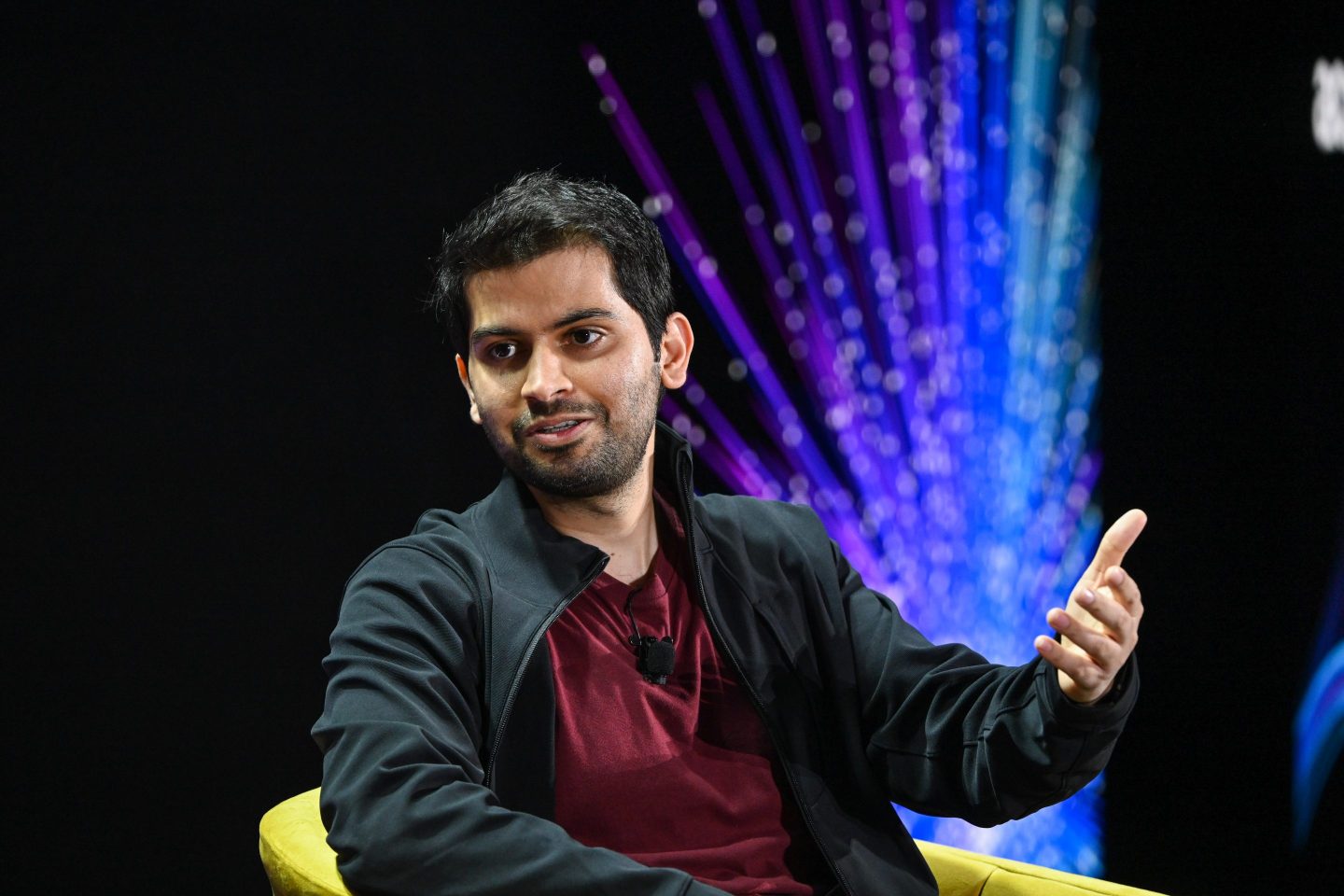
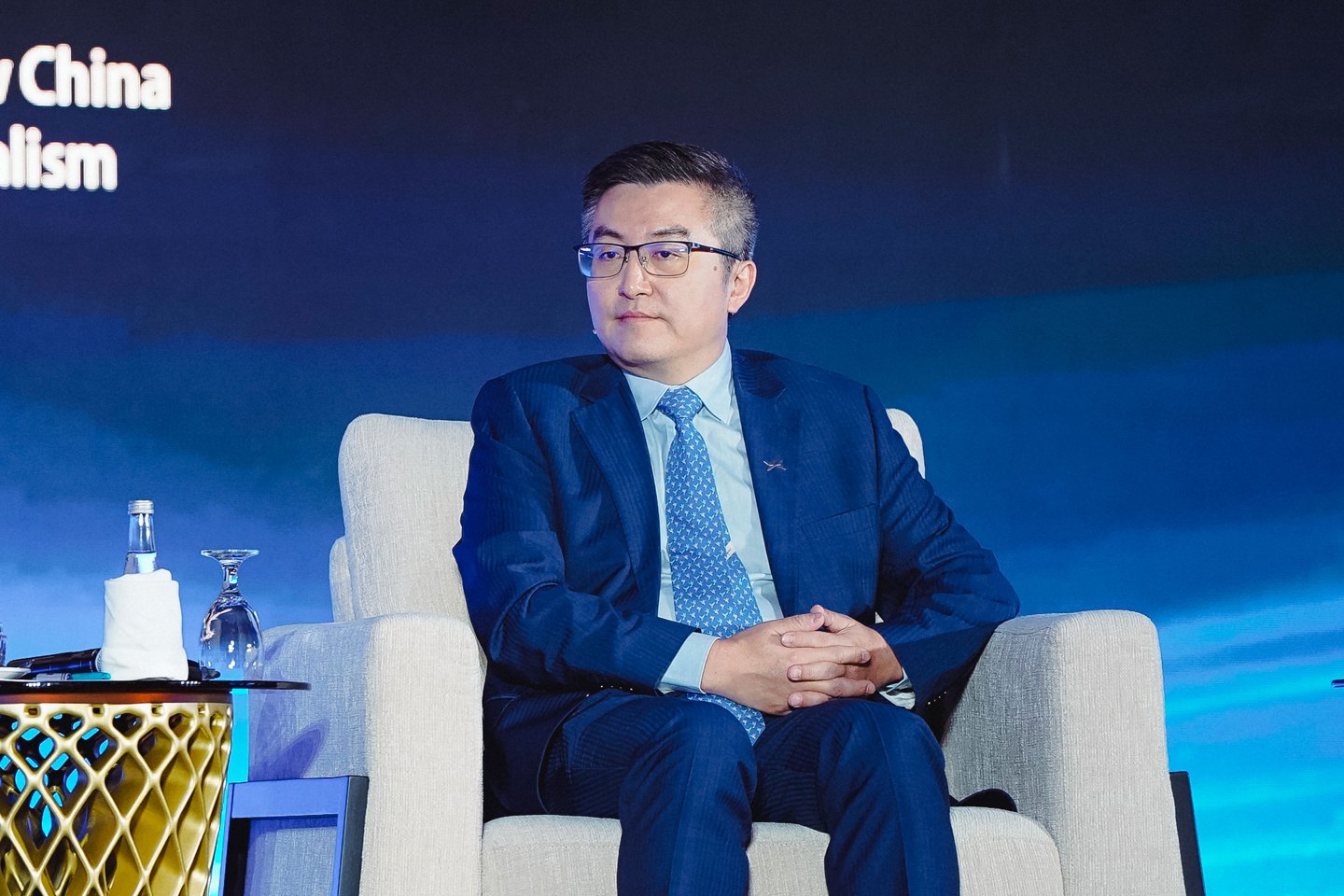
XPeng president Brian Gu compared said his company had performed better than Tesla when it came to self-driving capabilities in Chine despite having fewer resources.
XPeng president Brian Gu compared said his company had performed better than Tesla when it came to self-driving capabilities in Chine despite having fewer resources. Lee Ting Sheng for Fortune
  • The release of Tesla’s Full Self-Driving platform in China gave the carmaker to test its autonomous driving software against that of local Chinese companies, XPeng President Brian Gu said. Comparing the two products was like a “DeepSeek” moment for autonomous vehicles because it put U.S. and Chinese tech up against each other.

U.S. and Chinese autonomous vehicle companies finally got the chance to compete against one another in a head-to-head battle to see whose tech was better when Teslareleased its suite of self-driving capabilities in China earlier this year. 

The competition pits U.S. companies’ advanced tech and vast reserves of capital against their Chinese rivals’ “home court advantage” and underdog mentality. 

Brian Gu, president of XPeng, one of China’s leading EV manufacturers, called the release of Tesla’s Full Self Driving (FSD) platform in the country a “DeepSeek moment” for autonomous vehicles because it allowed Chinese companies to measure themselves against better-resourced U.S. companies in the same market.   

“In the past few years, we always try to see, can we do head-to-head comparison to what we have done in China versus what Tesla has done with FSD,” Brian Gu told Fortune on Wednesday during Fortune’s ASEAN-GCC Economic Forum in Kuala Lumpur. “We never had that chance.”

The February release of Tesla’s FSD service in China offered XPeng that chance. 

“This is actually the first time you saw the technology tackling complex driving conditions in Chinese streets to be used side-by-side,” Gu said. “The reason I say it’s very similar to a DeepSeek moment is that, compared to Tesla, the Chinese companies, including ourselves, are so much [more] under-resourced.”

Despite having fewer computing resources and capital available than its U.S. competitors, XPeng’s self-driving cars performed better than Tesla’s in China, according to Gu. 

“The net result is actually very encouraging,” Gu said. “The capability of Chinese autonomous driving cars actually did better than FSD in Chinese streets.” 

Gu did acknowledge Chinese companies like XPeng had a “home court advantage because we probably get better training of Chinese data.” 

When the Chinese AI startup DeepSeek released its R1 large language model in January, it shook the entire industry with its remarkable performance and efficiency. DeepSeek had spent a fraction of what the major U.S. companies such as Google and OpenAI had spent on their AI models, yet produced comparable results. 

The moment was a wakeup call for U.S. tech firms across Silicon Valley, as it became evident their Chinese rivals were producing similar results on shoestring budgets. At the same time, it lent new credibility to Chinese AI tech. Until then, the prevailing wisdom had been that U.S. companies were ahead of their Chinese counterparts as the two countries embarked on an AI arms race. DeepSeek’s success pointed to the fact the U.S.’s lead may have been narrower than expected. 

Tesla releases FSD in China

Earlier this year, Tesla launched its FSD tech in China for the first time. The release came after years of seeking approvals from the government to deploy the technology in the country. 

Last year, Tesla CEO Elon Musk met with Chinese officials—among them, Premier Li Qiang—to discuss the release of its self-driving tech. Complicating matters were restrictions on data collection imposed by both the U.S. and Chinese governments. Tesla currently has a deal with Chinese search giant Baidu for mapping and navigation that will power its systems in the country. 

Tesla’s FSD rollout in China had several fits and starts. The company had to pause the initial free trial of its FSD program after the Chinese government added new regulations for self-driving cars. Those issues were resolved, making Tesla’s program available again, although with a name change from “Full Self-Driving” to “Intelligent Assisted Driving.” Tesla did not respond to a request for comment.

Despite the name, Tesla’s FSD system still requires human drivers to remain fully alert in the car in order to intervene at any moment. FSD is classified as level two autonomous driving. XPeng’s cars currently have the same self-driving classification. 

Earlier this year, XPeng announced it had made breakthroughs on more advanced self-driving capabilities. Software for level-three autonomy would be completed in the back half of this year and level four would be ready in 2026, XPeng said in March. 

On Wednesday, Gu laid out a slightly longer timeline for widespread use. “Now we’re looking at potentially having level 3 in two years; level 4 probably in four years, that can be widely used on Chinese roads,” he said during a mainstage panel at Fortune’s conference.  
Fortune Brainstorm AI returns to San Francisco Dec. 8–9 to convene the smartest people we know—technologists, entrepreneurs, Fortune Global 500 executives, investors, policymakers, and the brilliant minds in between—to explore and interrogate the most pressing questions about AI at another pivotal moment. Register here.
About the Author
Paolo Confino
By Paolo ConfinoReporter

Paolo Confino is a former reporter on Fortune’s global news desk where he covers each day’s most important stories.

See full bioRight Arrow Button Icon

Latest from our Conferences

Workplace CultureBrainstorm Design
How two leaders used design thinking and a focus on outcomes to transform two Fortune 500 giants
By Christina PantinDecember 4, 2025
3 days ago
Workplace CultureBrainstorm Design
Designer Kevin Bethune: Bringing ‘disparate disciplines around the table’ is how leaders can ‘problem solve the future’
By Fortune EditorsDecember 3, 2025
3 days ago
AIBrainstorm Design
Microsoft AI’s design head wants her team to be AI-native by the end of the fiscal year
By Angelica AngDecember 3, 2025
3 days ago
AsiaFortune Innovation Forum
Syfe CEO: Fintech founders need to focus on trust if the sector is to reach its full potential
By Dhruv AroraNovember 24, 2025
12 days ago
EnergyFortune Innovation Forum
Going green doesn’t always mean going big: ‘Pay attention to the small- and medium-size players as well’
By Angelica AngNovember 24, 2025
13 days ago
AsiaFortune Innovation Forum
A World Bank expert thinks countries should leverage ‘small AI’—and avoid competing with the biggest tech giants
By Nicholas GordonNovember 24, 2025
13 days ago

Most Popular

placeholder alt text
Big Tech
Mark Zuckerberg rebranded Facebook for the metaverse. Four years and $70 billion in losses later, he’s moving on
By Eva RoytburgDecember 5, 2025
1 day ago
placeholder alt text
Success
Nvidia CEO Jensen Huang admits he works 7 days a week, including holidays, in a constant 'state of anxiety' out of fear of going bankrupt
By Jessica CoacciDecember 4, 2025
2 days ago
placeholder alt text
Economy
Two months into the new fiscal year and the U.S. government is already spending more than $10 billion a week servicing national debt
By Eleanor PringleDecember 4, 2025
3 days ago
placeholder alt text
AI
Nvidia CEO says data centers take about 3 years to construct in the U.S., while in China 'they can build a hospital in a weekend'
By Nino PaoliDecember 6, 2025
9 hours ago
placeholder alt text
Success
‘Godfather of AI’ says Bill Gates and Elon Musk are right about the future of work—but he predicts mass unemployment is on its way
By Preston ForeDecember 4, 2025
2 days ago
placeholder alt text
Asia
Despite their ‘no limits’ friendship, Russia is paying a nearly 90% markup on sanctioned goods from China—compared with 9% from other countries
By Jason MaNovember 29, 2025
7 days ago
Rankings
  • 100 Best Companies
  • Fortune 500
  • Global 500
  • Fortune 500 Europe
  • Most Powerful Women
  • Future 50
  • World’s Most Admired Companies
  • See All Rankings
Sections
  • Finance
  • Leadership
  • Success
  • Tech
  • Asia
  • Europe
  • Environment
  • Fortune Crypto
  • Health
  • Retail
  • Lifestyle
  • Politics
  • Newsletters
  • Magazine
  • Features
  • Commentary
  • Mpw
  • CEO Initiative
  • Conferences
  • Personal Finance
  • Education
Customer Support
  • Frequently Asked Questions
  • Customer Service Portal
  • Privacy Policy
  • Terms Of Use
  • Single Issues For Purchase
  • International Print
Commercial Services
  • Advertising
  • Fortune Brand Studio
  • Fortune Analytics
  • Fortune Conferences
  • Business Development
About Us
  • About Us
  • Editorial Calendar
  • Press Center
  • Work At Fortune
  • Diversity And Inclusion
  • Terms And Conditions
  • Site Map

© 2025 Fortune Media IP Limited. All Rights Reserved. Use of this site constitutes acceptance of our Terms of Use and Privacy Policy | CA Notice at Collection and Privacy Notice | Do Not Sell/Share My Personal Information
FORTUNE is a trademark of Fortune Media IP Limited, registered in the U.S. and other countries. FORTUNE may receive compensation for some links to products and services on this website. Offers may be subject to change without notice.