
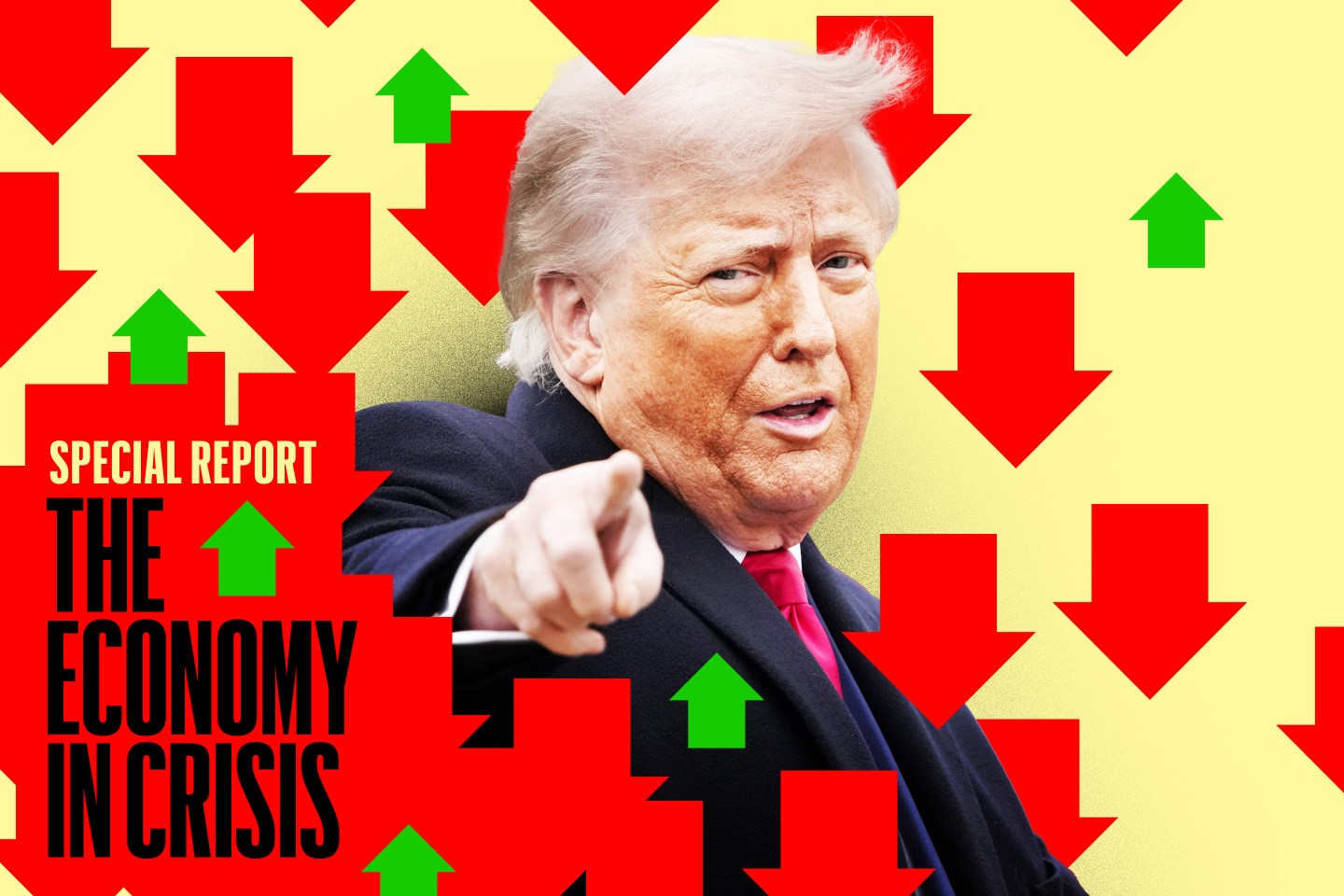
Retirement plan providers and investment advisors have been fielding calls from anxiety-ridden retail investors nonstop over the past 10 days, as President Donald Trump’s barrage of tariffs sent U.S. and global equity markets into free fall. While declines are scary and disconcerting, advisors are largely telling their clients to stay grounded and make some strategic moves.
As recent market losses wiped out billions of dollars of value in retirement accounts, TIAA reported retirement participant call volume and online account logins rose nearly 30% after April 2, the day when the tariffs were announced. Henry Silva, wealth management advisor at Apollon Wealth Management, says clients have been asking about whether they should make major purchases like cars ahead of likely drastic price increases.
Equities are volatile, the experts remind you. Though an emotional reaction is normal, it’s important to take a step back and think about future you. “The answer isn’t panic; it’s planning,” says Silva.
Here’s what advisors are telling clients now.
1. Don’t panic
Overwhelmingly, advisors say the worst thing that the average investor can do now is react emotionally to bad news. Rather than make any changes to long-term investment plans, take a step back and breathe. Selling stocks now, for example, means locking in losses. If you don’t need the money imminently, leave it alone.
Another reason not to pull investments: It’s almost impossible to get the timing right to jump back in. And research has found that the best and worst market days often happen in quick succession. That means if you exit stocks now, you likely won’t be there to benefit from the eventual upswing.
“In the moment, it’s easy to lose sight of your destination. It’s always important to remember the long-term plan, because this is just a period of time along the journey,” says Gerald Grant Jr., a financial advisor with Equitable Advisors. “Just because you see an accident on the way to work today, doesn’t mean you won’t take that route tomorrow.”
2. Think through purchases
Prices on goods ranging from cars to homes to groceries to clothing are expected to increase as a result of the tariffs. If you can afford it now, it might make sense to make select purchases.
“If you are in need of a big-ticket item such as a car, home appliance, computer equipment or home goods, purchase them now with existing inventory,” says Jody D’Agostini, certified financial planner (CFP) with Equitable Advisors. “Those prices are likely to increase in the future when the existing inventory is exhausted.”
Now is the time to be creative and flexible with purchases, says D’Agostini. Compare prices and shop for alternatives when possible.
“These tariffs might be transient in some situations, but having a stock assures a lower price remains,” she says.
On the flip side, other advisors say to delay any large, nonessential purchases until there is more certainty and stability. This is especially true for retirees or others on fixed or low incomes. Everyone’s budget, savings, and spending ability is different.
“It’s worth being intentional about spending,” says Brenna Baucum, an Oregon-based CFP.
3. Retirees should be proactive
Retirees and others who need to cash out equities in the next one to three years have different considerations than those with a longer-term view.
“Now is an ideal time to reassess your market exposure and consider reducing your stock allocation if it exceeds the level outlined in your investment plan,” says Charles B. Sachs, CFP and chief investment officer at Imperio Wealth.
They can also shift their strategies in other ways. For example, instead of adhering to a standard withdrawal rate—like the common 4% rule—consider adjusting withdrawals to take less now, during a downturn. When the market rebounds, withdraw more. That way, fewer losses are locked in.
4. Push back plans
Whether a vacation, new car, or even retirement, financial planners say it may make sense to put some plans on hold. Though the average person plans their retirement for decades, for example, it might make sense to push that date off for at least a few more months to see what the market is going to do.
“Perhaps consider working for an additional year or two to capitalize on things like health care coverage from your employer or maybe delay taking Social Security benefits a little longer so your monthly benefit amount is larger,” says Heather Winston, CFP and head of product strategy at Principal Financial Group. “If you have an annuity, it might also be beneficial to begin your payments sooner than you anticipated so your investment portfolio has time to recover.”
Those 73 and older who have required minimum distributions (RMDs) from retirement accounts might consider waiting until later in the year to take them to see if the market recovers. That said, if you don’t need the money from the RMD right now, it could make sense to take it and then reinvest the cash in a taxable brokerage account. That way you are selling low, but you are also buying low with the possibility of future gains. Again, that strategy only works if you don’t need to spend the money now, so it’s not for everyone.
“Even financially secure individuals are feeling the pressure, but our advice remains the same: decisions like this should be driven by your financial plan and personal timing, not by headlines,” says Silva.
5. Invest selectively
Markets have been declining, and there’s no sense of where the bottom may be yet, says Scott Wren, senior global market strategist at the Wells Fargo Investment Institute. It’s possible that the U.S. could fall into a recession. As such, it’s good to have some hedges in your portfolio.
“Our fixed-income guidance emphasizes selectivity. We favor buying investment-grade fixed
income and would focus on corporate bonds and essential-service municipal securities,” writes Wren. “We prefer buying in the intermediate (three to seven year maturities) portion of the curve.”
Still, investors feeling particularly risk averse could consider putting some funds into a money market account, Wren writes.
“Rates are noticeably higher now than when the pandemic hit and offer a bit of calm away from the storm,” he says. “As markets hopefully stabilize in coming months, we would favor incrementally reallocating to financial markets, primarily toward equities.”