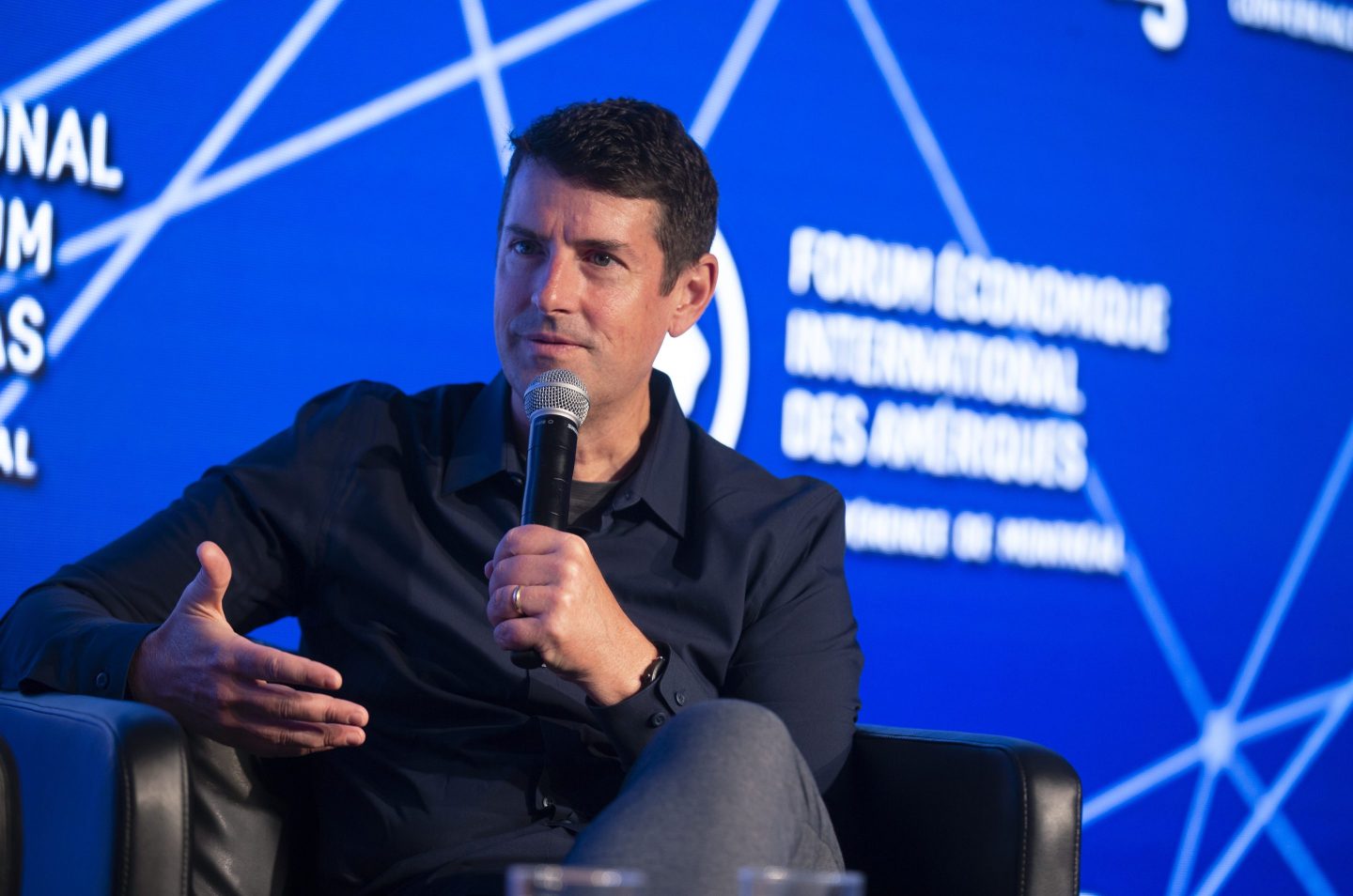
Gary Friedman, CEO of luxury furniture company RH, won points for authenticity last week when, in response to seeing his company’s stock price drop following President Trump’s tariff announcements, he shared his true feelings in the middle of an earnings call with the simple phrase: “Oh s–t.”
Friedman explained to investors that RH, formerly known as Restoration Hardware, sourced most of its products in Asia, where Trump’s tariffs are punishingly high. But the CEO also said he believed tariff-related disruption would be brief.
Since then, it’s become clear that few can predict whether tariff pain will be transient, if the economy is heading for a prolonged recession, or worse. In response to uncertainty and rumors, markets saw violent swings on Monday.
But Friedman got one thing right, according to leadership experts: In a crisis, leaders should keep it real. Employees respect CEOs who resist the urge to sugarcoat the seriousness of a volatile situation, and they prefer to hear from a CEO during times of upheaval, even when the message is a basic acknowledgment of concerns.
“There’s so many CEOs who think that we ought to do happy talk, or show optimism, or let people look on the bright side,” says David Dotlich, a president and senior partner at Korn Ferry, who advises Fortune 500 CEOs. But while leaders should aspire to be optimistic, and having a cool head is often necessary, he says, “I also think as a leader, you have to be realistic.”
Here’s what top leadership experts have to say about communicating to employees through volatile times.
Remember that employees trust their employers for information—and speak up
Peter Cappelli, a professor of management at the University of Pennsylvania’s Wharton School, points out that during the pandemic, surveys showed that employees looked to their company leaders for information about the virus, vaccines, and staying safe. Knowing that context, Cappelli says, leaders shouldn’t hesitate to speak to employees about the current chaos in the markets.
“People make up answers and explanations when you’re not telling them anything,” he says. “So say, ‘Look, we don’t know what’s going on here. We think our business seems to be fine. We can’t control these other events, and we have no plans to do anything dramatic except wait and see,’” he says.
Acknowledge that people are worried about their jobs and 401(k)s
Workers across the U.S. are stressed right now as they watch their retirement savings dwindle and the value of their stock options shrink. Business leaders ought to show empathy to their workers without making promises that aren’t realistic, says Dotlich.
CEOs should remain transparent about the answers they don’t have, he says, and share something like, they’re “committed to keeping people employed,” he says.
Jeffrey Sanchez-Burks, professor at University of Michigan’s Ross School of Business who also consults with businesses, adds that chief executives don’t have to act like therapists. But he says that showing humanity during these times is key, and validating what workers are feeling will actually help people focus.
“Part of what we’re experiencing is a moment when the emotional turbulence, the human experience, can’t be ignored anymore,” he says.
Show investors that you’re paying attention
On a high level, investors aren’t that different from employees: They’re looking for signs that a leader is evaluating the situation.
“With investors, you can lay out a bunch of scenarios that you understand,” Cappelli suggests. “You have to tell them that you understand what the tariffs would do to your business, and you’re trying to figure out how best to respond to them.”
Adam Galinsky, a professor at Columbia Business School, echoes that sentiment, suggesting that CEOs may want to share their contingency plans with investors. For example, they can say something like: “These are the two steps that we’re going to most likely take if the tariffs are in effect, and here’s what we’ll do if there’s a 90-day pause,’” says Galinsky.
Investors need to know that leaders are “thinking contingently and strategically,” he adds.
Don’t put off communicating while you wait for more information
Galinsky emphasizes the value of communicating in the moment, even if it’s tempting to tell yourself that you’ll have more information about the president’s next moves tomorrow.
“That’s not what people want,” he says. “The single worst thing you can do is wait for complete information before you communicate.”
Pointing to Andrew Cuomo’s daily press conferences during the pandemic, Galinsky notes that the politician briefly looked like a presidential candidate simply because he was giving people information on a predictable schedule and demonstrating that he was aware of their concerns.
“People are losing their bearings and their foundations,” says the professor and author of Inspire: The Universal Path for Leading Yourself and Others, “and they want to know that people are present.”
Focus on getting tariffs rolled back
Although the tariffs certainly have some supporters, the vast majority of the business world is against them. Kelly Shue, a professor of finance at Yale School of Management, thinks they’re “idiotic” and suggests that CEOs who disagree with the levies take action in the face of a looming crisis.
“The best thing they can do for their businesses, to save their workers and to save their path to future earnings, is to put pressure on the government to roll back these tariffs,” she says.
CEOs ought to be dedicating their time and energy to lobbying for tariff reversals, she says, leaning on any power they have through political donations, political influence, or lawsuits.
“This is not a time for comforting words,” Shue says. “They need to be getting stuff done.”