President Donald Trump’s 25% tax on imported cars, light trucks, and auto parts is likely to drive up prices at a time when many Americans already struggle to afford a new set of wheels. The tariffs will also force car companies to rethink what cars they make and where they make them.
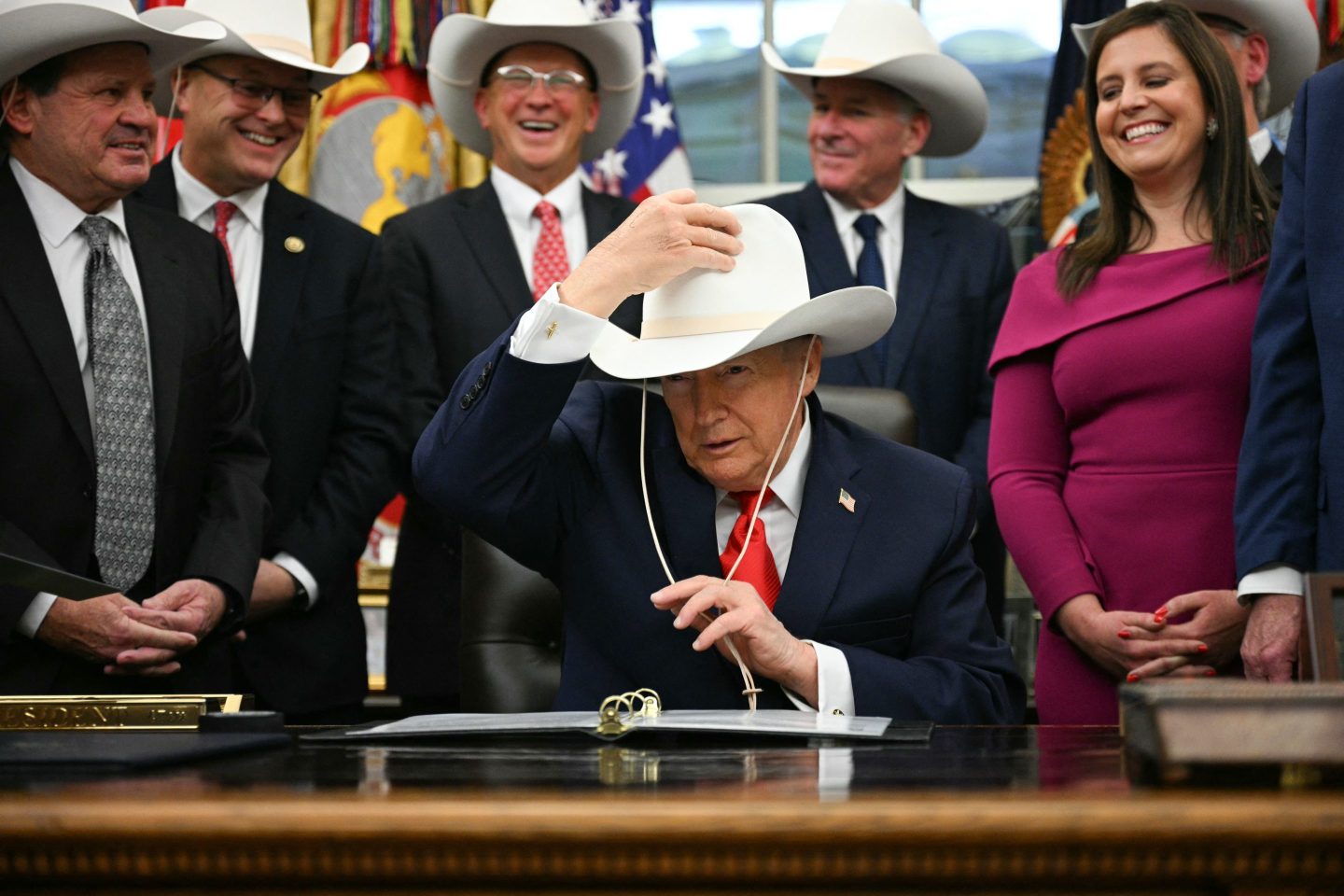
Trump has been itching to tax foreign autos for years. In his first term, he declared auto imports a threat to national security, which gave him the authority to impose tariffs on them. On Wednesday, he went ahead and imposed the levies. They take effect midnight April 3.
It’s the latest in a number of auto industry maneuvers by Trump during his first weeks back in the White House. Auto companies are also navigating the reversal of fuel economy standards, dialed down greenhouse gas emission standards and a host of electric vehicle policy rollbacks.
Some of the details of Trump’s auto tariffs have yet to be worked out.
For example, it’s unclear whether the new auto tariffs would stack on top of 25% import taxes set to be levied next week on all goods from Canada and Mexico. That would mean cars from Canada and Mexico could potentially face new tariffs of 50%.
And for now, the Trump administration is exempting from the tariffs cars, light trucks and auto parts that qualify for duty-free treatment under the US-Mexico-Canada Agreement, a regional trade pact the president negotiated five years ago. Trump intends to narrow that exemption to content made in the United States, not Canada or Mexico. But that will require setting up processes to determine what qualifies as U.S.-made — something that could take weeks or months.
The White House also said the import tax would apply to “key” auto parts, including engines, transmissions, powertrain parts and electrical components. And it could expand the tariffs to other auto parts “if necessary.’’
Here’s what else to know:
Why are tariffs so challenging for the auto industry?
As automakers expanded globally, they created complicated and efficient supply chains that spanned countries. In North America, for instance, Mexico supplies low-wage labor and makes smaller, less expensive cars and trucks while Canada and the United States provide more skilled labor and technological know-how.
Trump’s tariffs are intended to bring auto manufacturing back to the United States. But it won’t be easy.
Rerouting the sourcing of thousands of parts that are imported to the U.S. and uprooting assembly operations would take years.
“It adds to the uncertainty facing all automakers as the industry’s supply chain is inherently global and has optimized around moving components across national borders where free trade agreements have existed in the past,” said John Paul MacDuffie, professor of management at the University of Pennsylvania.
Sam Fiorani, analyst at AutoForecast Solutions, notes that while European makers of luxury vehicles and their buyers can afford some price adjustments, “it’s the companies like Toyota, Mazda, and Subaru who import large percentages of their fleets that will take a beating.”
“Throwing tariffs on the parts of vehicles built in Mexico and Canada that aren’t sourced from the United States will hurt the profits of General Motors, Stellantis, and Ford over the next few quarters, costing them billions,” he added.
Trump’s tariffs — which he insists are permanent — will force companies to make hard choices.
“It’s going to have the effect of forcing companies to increase U.S. content’’ if they want to dodge the import taxes, said Richard Mojica, a trade attorney with Miller & Chevalier.
And even though Vanessa Miller, chair of the automotive team at the law firm Foley & Lardner, acknowledges that some companies will be able to pivot operations to the U.S., others are too tied to factories in Mexico or elsewhere to make the move anytime soon.
Automakers might have to stop making some vehicles because they won’t be profitable with the tariffs in place. The tariffs hit “everyone in a manner that makes them rethink everything,’’ said Ivan Drury of the automotive website Edmunds. “This is around at least three or four years. We’re not looking at something you can just ride out.’’
What does this mean for car buyers and new car prices?
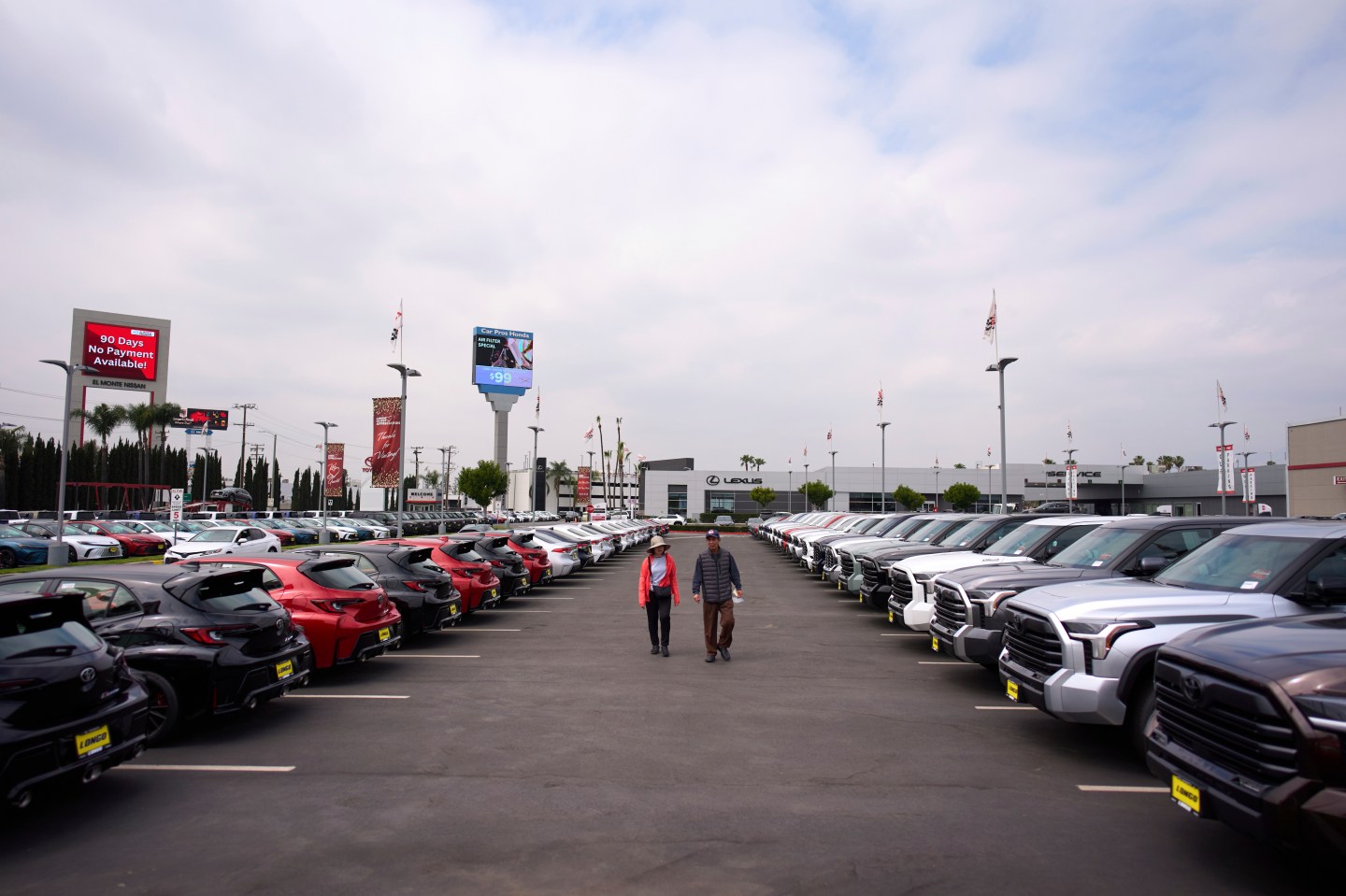
Beata Caranci and Andrew Foran of TD Economics estimate that the tariffs could raise the average price of cars and light trucks in the United States — which totaled more than $47,000 last month — by up to $5,000 if automakers pass along the entire cost to consumers. That price hike could go higher – to as much as $10,000 – if the Trump administration applies the tax full to cars made in Mexico and Canada.
Automakers and their suppliers are only now recovering from years of instability brought on by pandemic-forced production halts, a sweeping semiconductor shortage and low inventory on dealership lots. That meant prices were sky-high, incentives were low and few deals were to be had.
During the peak of the pandemic, consumers still bought vehicles at high prices. But the piled-on tariffs could put new vehicles out of reach for many would-be buyers, especially given rising indications of potentially broader inflation ahead throughout the economy.
“Starting almost immediately, consumers will see their already expensive new vehicles cost hundreds to thousands more and those prices will escalate even more when the supplies of many key vehicles dwindle,” Fiorani said. “Imagine the price rises during the semiconductor shortage and stretch it out across every brand and manufacturer. The trickle-down effect will put smaller suppliers out of business and send many workers onto unemployment.”
What about used cars?
By raising new vehicle prices, tariffs will likely send buyers to the used market. But with limited used inventory, an influx of buyers could rock used car prices, too. And they already average $25,000.
Lease penetration, or the number of vehicle transactions that are leases, has averaged around 30% or so over the past 10 years, according to Edmunds data.
But the industry saw low rates of leasing — nearly half the norm — particularly between May 2022 and January 2023. Fewer leased vehicles typically means fewer two- or three-year-old vehicles being put on the used-car market.
So there is likely to be a shortage of used cars just as more buyers start shopping for them.
How has the industry responded?
Governor Matt Blunt, president of the American Automotive Policy Council, which represents U.S. automakers, said that manufacturers supported Trump’s efforts to boost domestic auto manufacturing. But he cautioned that “it is critical that tariffs are implemented in a way that avoids raising prices for consumers and that preserves the competitiveness of the integrated North American automotive sector.
The United Auto Workers labor union applauded the tariffs. “Ending the race to the bottom in the auto industry starts with fixing our broken trade deals, and the Trump administration has made history with today’s actions,” UAW President Shawn Fain said in a statement. “These tariffs are a major step in the right direction for autoworkers and blue-collar communities across the country, and it is now on the automakers, from the Big Three to Volkswagen and beyond, to bring back good union jobs to the U.S.”
But Jennifer Safavian, president and CEO of Autos Drive America, which represents international auto manufacturers, denounced the tariffs: “The tariffs imposed today will make it more expensive to produce and sell cars in the United States, ultimately leading to higher prices, fewer options for consumers, and fewer manufacturing jobs in the U.S.”