- President Trump may have eroded trust between America and its trading partners following his tariff rollback, warns UBS, while the threat of such policies still casts a shadow over markets. The fundamentals of the economy look good, adds professor Jeremy Siegel, and the Oval Office needs to be mindful not to let voters down on pledges of stable prices.
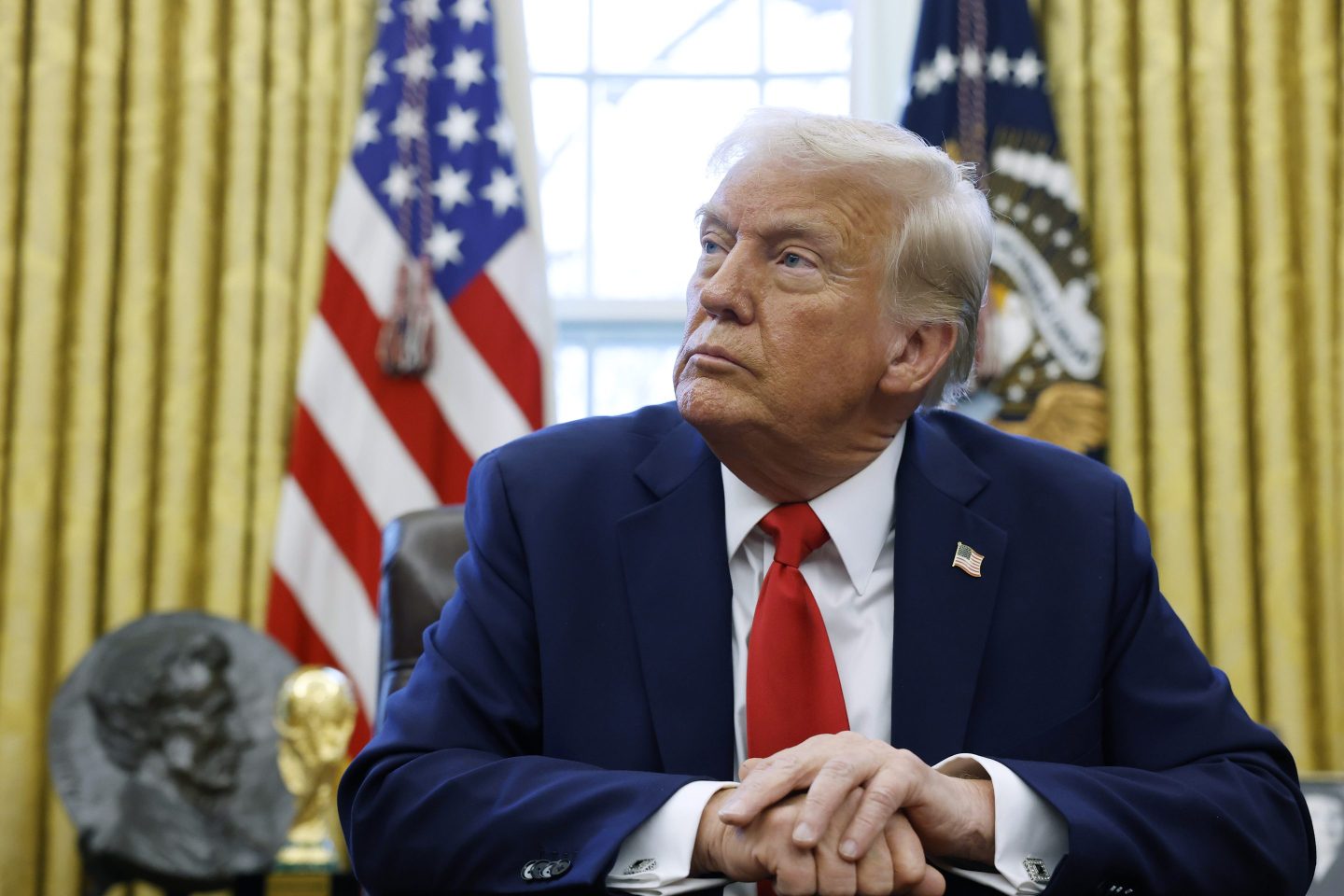
President Trump has shown his hand when it comes to tariff policy: It’s a threat he’s willing to make and rescind—as long as he gets part of what he wants.
And while the tactic may prove a costly game of chicken for the U.S. economy, it does mean Wall Street is convinced that a significant amount of the rhetoric coming out of the Oval Office will be short-lived at best.
To recap, over the weekend President Trump confirmed a tariff of 25% would be placed on imports coming from Mexico and Canada. China would also be facing a 10% import tariff on its goods.
Then, on Feb. 3, the tariffs on Mexico and Canada were pushed back. The Oval Office said both nations had taken the immediate steps needed to “to alleviate the illegal migration and illicit drug crisis” and thus, avoid tariffs.
The sanctions on China have gone ahead, sparking a trade war with major companies like Google now dragged into the melee.
Sentiment whiplash
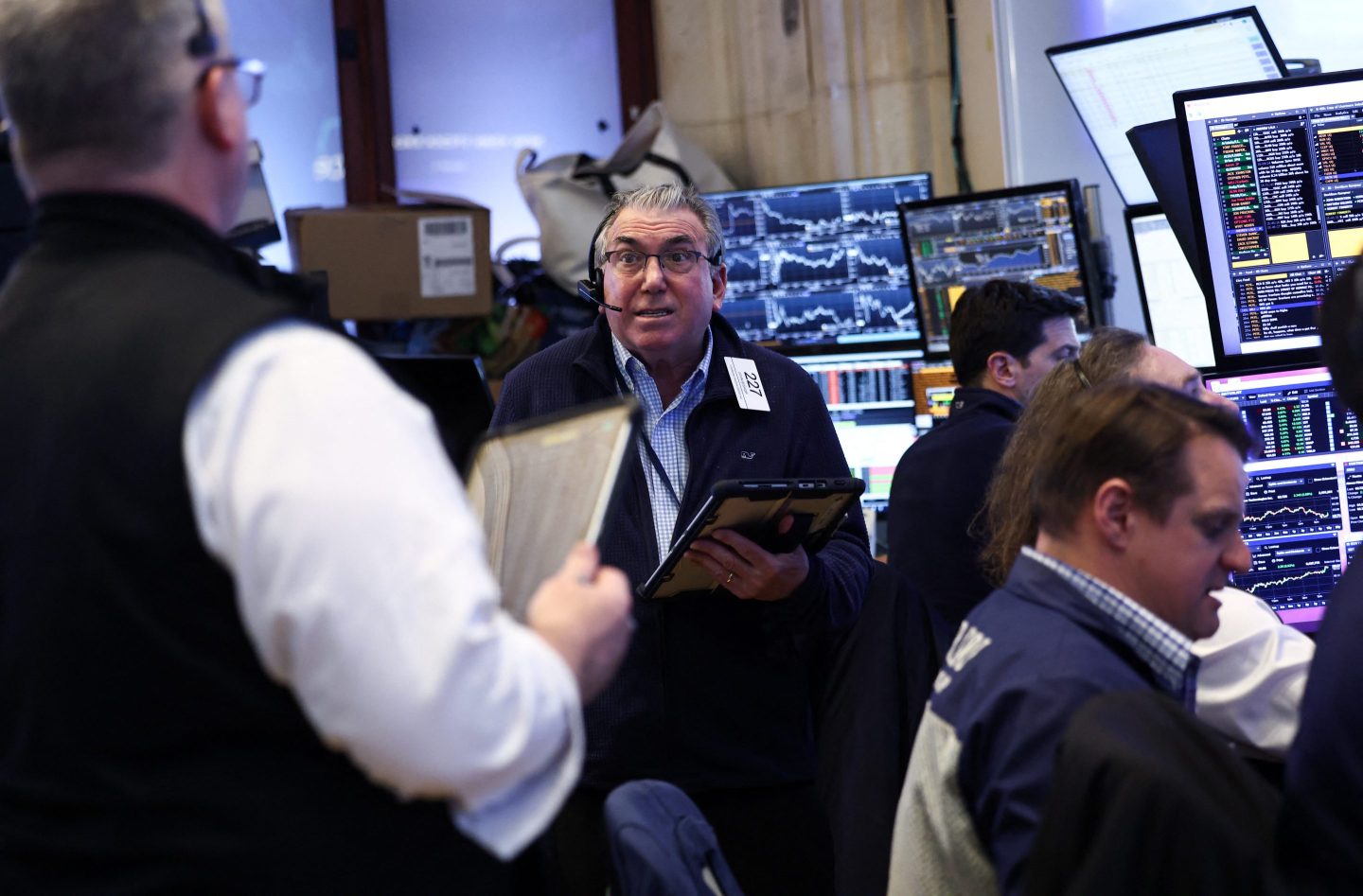
The sentiment on Wall Street on Monday was surprise—and a chiding for analysts who hadn’t believed or accounted for the commander-in-chief pushing ahead with his stated tariff plans.
Now, 24 hours later—and with the Mexico and Canada tariffs delayed, as were the Colombia tariffs before them—analysts are now preparing for an era of uncertainty but are hopeful political bluffs in the future won’t derail the fragile health of the American economy in the long run.
“President Trump again retreated from imposing aggressive taxes on U.S. consumers,” UBS chief economist Paul Donovan wrote in a Tuesday morning note seen by Fortune. “Although taxes on goods from Mexico and Canada are in theory delayed for a month, after three retreats in a row markets are unlikely to take that threat seriously.”
But that doesn’t mean there has been no impact, the UBS economist notes.
“The long-term consequences remain. Foreign countries have less reason to trust that the U.S. will honor trade treaties, reducing the incentive to make concessions,” Donovan continues. “U.S. consumers may have had a fright over trade taxes, changing their behavior.”
More tariff threats to come
Wall Street analysts note that it would also be naive to assume that President Trump—having achieved some of his aims with the ploy—will not use the lever to his advantage again in the future.
As Deutsche Bank’s Jim Reid put it in his macro outlook note on Tuesday morning: “Trump’s comments suggest that he will look to use the delay to leverage broader economic concessions.
“With tariffs being arguably the strongest economic tool that is almost fully at the president’s discretion, we should surely expect that these will continue to be used to both create negotiating leverage and pursue different objectives such as supply security, revenue generation, and trade deficit reduction.”
However, Reid adds, using tariff revenue in order to offset domestic tax cuts could require implementation of a whole new set of tariffs.
As such, “there are reasons to expect lingering uncertainty in markets.”
“It’s unlikely that this is the end of the story,” Reid adds.
Threats are short-term leverage
While the market dipped yesterday when it appeared President Trump was pushing ahead with his plan, indexes were quick to bounce back on news of the eleventh-hour cancellation.
As Reid points out, the S&P 500 had been as down as much as 1.93% but rose 1% immediately after the Mexico delays were announced.
Even before the tariffs were pushed back, Wall Street wasn’t buckling in for extended periods of higher prices and is convinced this doesn’t mark a permanent step-change in trade policy with neighbors.
Rather, analysts believed they were watching a trade agreement negotiating tool.
As Bank of America wrote in a note seen by Fortune yesterday, the threats or tariffs on Mexico and Canada will last until a new USMCA 2.0 is renegotiated.
“The U.S., Canada, and Mexico trade agreement (USMCA) is due for review in 2026. News reports suggest that President Trump aims to do the review sooner,” economists Claudio Irigoyen, Aditya Bhave, Carlos Capistrán Carmona, and Helen Qiao explained. “In our view, the tariffs against Canada and Mexico are aimed at increasing the U.S.’s leverage in these negotiations.”
UBS’s chief investment officer Americas Solita Marcelli similarly concluded that Trump’s threats were not likely to end up in long-term tariffs.
“The Trump administration would not want to jeopardize U.S. economic growth or risk higher inflation by leaving the tariffs in place for a sustained period, and significant stock market volatility could lead to a change in approach,” Marcelli wrote.
Market uncertainty
Professor Jeremy Siegel of the Wharton School at the University of Pennsylvania adds that—tariffs aside—the health of the U.S. economy looks to be in relatively good shape.
Writing for WisdomTree—an investment company where Siegel is senior economist—the expert writes: “Growth remains steady, with jobless claims at a healthy 207,000 and GDP tracking between 2.5% and 3% for the first quarter. This isn’t an environment that screams urgent rate cuts, particularly when core inflation metrics remain on target.”
But as anyone on Wall Street will tell you, one factor the market really doesn’t like is uncertainty.
The passive warnings from Trump that the tariff conversation isn’t over are likely to leave a gray cloud over economic forecasting.
Siegel adds, “Trump’s new tariffs are not smart either economically or politically…the political impact is likely to be very negative for Trump’s program, as the rise in prices (gasoline and some food items) will have high visibility in the mainstream media and put pressure on some legislators.”