• Home
  • Latest
  • Fortune 500
  • Finance
  • Tech
  • Leadership
  • Lifestyle
  • Rankings
  • Multimedia
CommentaryChina

Trump tariffs: Stealing from the China playbook—to boost car making in America

By
Michael Dunne
Michael Dunne
Down Arrow Button Icon
By
Michael Dunne
Michael Dunne
Down Arrow Button Icon
February 4, 2025, 6:03 AM ET
Michael Dunne is the CEO of Dunne Insights, an automotive advisory firm. He was previously the president of General Motors Indonesia and managing director of J.D. Power operations in China, and he authored American Wheels, Chinese Roads: The Story of General Motors in China.
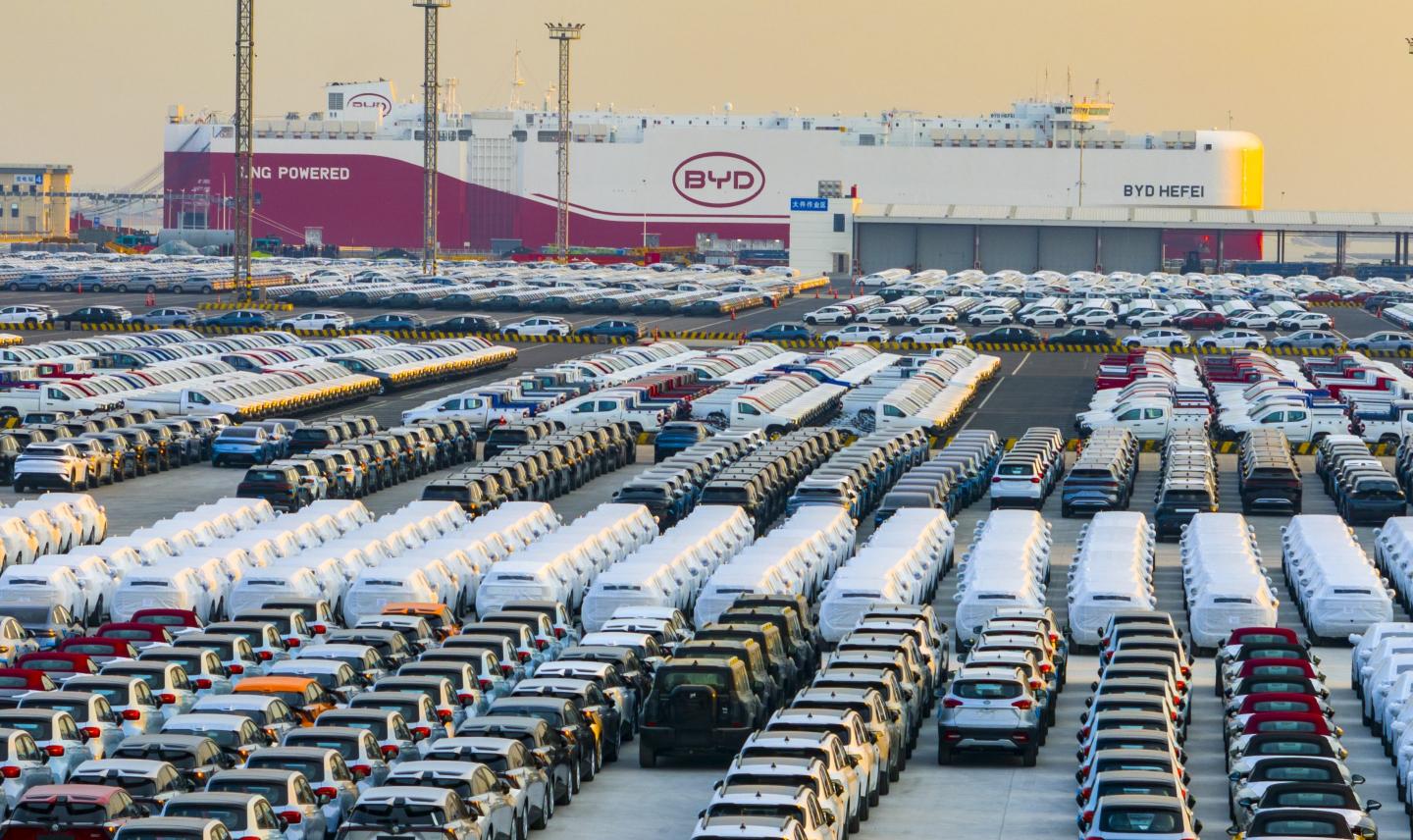
China has quickly become an automotive powerhouse, with carmaker BYD front and center.
China has quickly become an automotive powerhouse, with carmaker BYD front and center.CFOTO/Future Publishing via Getty Images

President Donald Trump is taking a page directly from China’s own trade playbook. 

The formula is simple and straightforward: “You want to access this big, beautiful market? You need to pay. So, you can either chew broken glass dealing with our tariffs or you can be smart and invest in manufacturing here inside our country.” 

It is exactly this kind of direct ultimatum that has worked spectacularly well for China, now an automotive manufacturing colossus. 

China: automotive powerhouse

China today builds more cars than any other country—three times more than America. China manufactures more electric vehicles and batteries than all other countries combined.

And this China juggernaut is no longer staying home. China shipped 6 million vehicles to more than 100 countries last year, blowing past perennial leaders Germany and Japan. 

“We’ve never seen competition like this before,” Ford CEO Jim Farley recently told his leadership team at headquarters.  

How did China's automotive industry go from an automotive pipsqueak to a powerhouse, feared by executives in Detroit, Stuttgart, and Tokyo? Tariffs, it turns out, played a huge role. Not the only role, but a big one. 

When I first arrived in China in the 1986, China had neither the know-how nor the capital to build their own cars. The country had no option but to import mostly used cars from Japan, Germany, and the U.S. 

Chinese leaders intensely disliked spending precious foreign exchange on imported cars, like used Nissan Cedrics and Toyota Crowns. But what choice did they have? In 1991, I met with the chairman of the Chinese Association of Automotive Manufacturers (CAAM) at a capacious government meeting hall in Beijing, overstuffed red cushions on giant chairs and all.  

"How soon will China have a car to call its own?" I asked.  

"About 10 years," he said with a shrug. China was that far behind. 

Doing business in China

In the early 1990s, China made the dramatic decision to place 100% tariffs on all car imports and to ban used car imports. That shut the door on everything built overseas. 

Prohibitive tariffs forced global automakers to manufacture cars inside China if they wanted to sell to Chinese buyers. That meant bringing capital and technology. And it meant training, ultimately, millions of Chinese managers and workers. 

Chinese leaders also demanded that global automakers form joint ventures with Chinese partners. The Chinese side had to own no less than 50% of the venture, solidifying China's control over this ambitious industrial master plan  

Of course, American, Japanese, and European automakers did not like the new rules. But they still wanted access to the China market. They began pumping tens of billions of dollars of investments into new plants and equipment. The Germans, French, and Americans were the first to arrive. At its peak, GM and its Chinese partners had built 27 full-scale manufacturing plants in China.

Eventually, every major automaker in the world invested in China to sell cars in China. That was the price of admission. 

Why does Trump want tariffs?

The impact of tariffs and other protective measures has been nothing short of sensational. In every year from 2000 through 2024, imports have been limited to less than 6% of total vehicle sales in China.  

In 2024, Chinese car imports declined for the third straight year to a piddling 3% of the total market.  

How much money are we talking about? Chinese consumers spent an estimated $575 billion on new cars in 2024. Of that total, more than $550 billion worth was manufactured inside China.

Trump wants that for America.

Today, the U.S. is home to the most open major car market in the world. Last year, imports accounted for almost 40% of new cars sold in America. They come in by the millions from Japan, South Korea, Europe. Mexico, and Canada, too. Chinese automakers would definitely be flooding the U.S. with cars if not for the 100% tariffs on car imports from China. (President Trump raised imports on Chinese cars to 25% in his first term. The Biden Administration lifted them to 100% in 2024.) 

President Trump believes tariffs will lead to an industrial renaissance in America. China is proof of concept that tariffs can be effective. They can force companies to invest. They can add jobs—lots of them. And they can create valuable automotive and technology clusters.

Tariffs are no guarantee of success. But coupled with incentives to invest and compete inside America, they can be powerful. 

China—home to the most highly protected major car market in the world—is now complaining about America becoming a little less wide open. 

That's hypocritical. And President Trump knows it. 

As Elon Musk, Trump's right-hand man, likes to say: "Fate loves irony." 

The opinions expressed in Fortune.com commentary pieces are solely the views of their authors and do not necessarily reflect the opinions and beliefs of Fortune.

Read more:

  • Tariffs won’t make America great again: Export-Import Bank's former chairman and president
  • The best psych-out artists know how to mess with your mind, but Trump’s push for tariffs shows how this strategy can backfire
  • Are Trump’s trade and tariffs tantrums repairing market failures or eroding global trust?
  • Trump invites Chinese automakers to build cars in the U.S.—and says ones they build in Mexico will be hit with tariffs up to 200%
Join us at the Fortune Workplace Innovation Summit May 19–20, 2026, in Atlanta. The next era of workplace innovation is here—and the old playbook is being rewritten. At this exclusive, high-energy event, the world’s most innovative leaders will convene to explore how AI, humanity, and strategy converge to redefine, again, the future of work. Register now.
About the Author
By Michael Dunne
See full bioRight Arrow Button Icon

Latest in Commentary

Finance
Lorem ipsum dolor sit amet, consectetur adipiscing elit, sed do eiusmod tempor incididunt ut labore et dolore magna aliqua. Ut enim ad minim veniam
By Fortune Editors
October 20, 2025
Finance
Lorem ipsum dolor sit amet, consectetur adipiscing elit, sed do eiusmod tempor incididunt ut labore et dolore magna aliqua. Ut enim ad minim veniam
By Fortune Editors
October 20, 2025
Finance
Lorem ipsum dolor sit amet, consectetur adipiscing elit, sed do eiusmod tempor incididunt ut labore et dolore magna aliqua. Ut enim ad minim veniam
By Fortune Editors
October 20, 2025
Finance
Lorem ipsum dolor sit amet, consectetur adipiscing elit, sed do eiusmod tempor incididunt ut labore et dolore magna aliqua. Ut enim ad minim veniam
By Fortune Editors
October 20, 2025
Finance
Lorem ipsum dolor sit amet, consectetur adipiscing elit, sed do eiusmod tempor incididunt ut labore et dolore magna aliqua. Ut enim ad minim veniam
By Fortune Editors
October 20, 2025
Finance
Lorem ipsum dolor sit amet, consectetur adipiscing elit, sed do eiusmod tempor incididunt ut labore et dolore magna aliqua. Ut enim ad minim veniam
By Fortune Editors
October 20, 2025

Most Popular

Finance
Lorem ipsum dolor sit amet, consectetur adipiscing elit, sed do eiusmod tempor incididunt ut labore et dolore magna aliqua. Ut enim ad minim veniam
By Fortune Editors
October 20, 2025
Finance
Lorem ipsum dolor sit amet, consectetur adipiscing elit, sed do eiusmod tempor incididunt ut labore et dolore magna aliqua. Ut enim ad minim veniam
By Fortune Editors
October 20, 2025
Finance
Lorem ipsum dolor sit amet, consectetur adipiscing elit, sed do eiusmod tempor incididunt ut labore et dolore magna aliqua. Ut enim ad minim veniam
By Fortune Editors
October 20, 2025
Finance
Lorem ipsum dolor sit amet, consectetur adipiscing elit, sed do eiusmod tempor incididunt ut labore et dolore magna aliqua. Ut enim ad minim veniam
By Fortune Editors
October 20, 2025
Finance
Lorem ipsum dolor sit amet, consectetur adipiscing elit, sed do eiusmod tempor incididunt ut labore et dolore magna aliqua. Ut enim ad minim veniam
By Fortune Editors
October 20, 2025
Finance
Lorem ipsum dolor sit amet, consectetur adipiscing elit, sed do eiusmod tempor incididunt ut labore et dolore magna aliqua. Ut enim ad minim veniam
By Fortune Editors
October 20, 2025
Fortune Secondary Logo
Rankings
  • 100 Best Companies
  • Fortune 500
  • Global 500
  • Fortune 500 Europe
  • Most Powerful Women
  • World's Most Admired Companies
  • See All Rankings
  • Lists Calendar
Sections
  • Finance
  • Fortune Crypto
  • Features
  • Leadership
  • Health
  • Commentary
  • Success
  • Retail
  • Mpw
  • Tech
  • Lifestyle
  • CEO Initiative
  • Asia
  • Politics
  • Conferences
  • Europe
  • Newsletters
  • Personal Finance
  • Environment
  • Magazine
  • Education
Customer Support
  • Frequently Asked Questions
  • Customer Service Portal
  • Privacy Policy
  • Terms Of Use
  • Single Issues For Purchase
  • International Print
Commercial Services
  • Advertising
  • Fortune Brand Studio
  • Fortune Analytics
  • Fortune Conferences
  • Business Development
  • Group Subscriptions
About Us
  • About Us
  • Press Center
  • Work At Fortune
  • Terms And Conditions
  • Site Map
  • About Us
  • Press Center
  • Work At Fortune
  • Terms And Conditions
  • Site Map
  • Facebook icon
  • Twitter icon
  • LinkedIn icon
  • Instagram icon
  • Pinterest icon

Latest in Commentary

agentic
CommentaryAI agents
Why your data infrastructure — not your AI model — will determine whether Agentic AI scales
By Jeffrey Sonnenfeld, Stephen Henriques, Catherine Dai and Zander JeinthanuttkanontApril 30, 2026
2 hours ago
hoskins
Commentaryoffices
Gensler Co-Chair: Hot-desking was supposed to save money. It may be costing you your culture
By Diane HoskinsApril 30, 2026
3 hours ago
tillis
CommentaryCongress
Thom Tillis: Free markets built American prosperity. Government intervention puts it at risk
By Thom Tillis and John StanfordApril 30, 2026
5 hours ago
iran
CommentaryIran
The Strait of Hormuz is a data problem, not just a military one
By Erik Bethel and Ami DanielApril 30, 2026
5 hours ago
hollywood
CommentaryMarketing
I spent 20 years learning to navigate an industry. Then I built a campaign for the man who’s dismantling it
By Matti YahavApril 29, 2026
1 day ago
aging
HealthLongevity
We’re the CEOs of Peloton and the Hospital for Special Surgery. Living longer isn’t enough, we need to live better, too
By Bryan T. Kelly and Peter SternApril 29, 2026
1 day ago

Most Popular

Apple cofounder Ronald Wayne—whose stake would be worth up to $400 billion had he not sold it in 1976—says that at 91, he has no regrets
Success
Apple cofounder Ronald Wayne—whose stake would be worth up to $400 billion had he not sold it in 1976—says that at 91, he has no regrets
By Preston ForeApril 27, 2026
3 days ago
Jamie Dimon gets candid about national debt: ‘There will be a bond crisis, and then we’ll have to deal with it’
Economy
Jamie Dimon gets candid about national debt: ‘There will be a bond crisis, and then we’ll have to deal with it’
By Eleanor PringleApril 29, 2026
1 day ago
‘They left me no choice’: Powell isn’t going anywhere—blocking Trump from another Fed appointee
Banking
‘They left me no choice’: Powell isn’t going anywhere—blocking Trump from another Fed appointee
By Eva RoytburgApril 29, 2026
18 hours ago
‘The cost of compute is far beyond the costs of the employees’: Nvidia executive says right now AI is more expensive than paying human workers
AI
‘The cost of compute is far beyond the costs of the employees’: Nvidia executive says right now AI is more expensive than paying human workers
By Sasha RogelbergApril 28, 2026
2 days ago
‘Take the money and run’: Johns Hopkins economist Steve Hanke on why the UAE quit OPEC
Energy
‘Take the money and run’: Johns Hopkins economist Steve Hanke on why the UAE quit OPEC
By Shawn TullyApril 29, 2026
1 day ago
More than two-thirds of U.S. schools say they’re unable to afford the cost of student free lunch—and MAHA’s dietary guidelines may make it worse
Economy
More than two-thirds of U.S. schools say they’re unable to afford the cost of student free lunch—and MAHA’s dietary guidelines may make it worse
By Sasha RogelbergApril 29, 2026
1 day ago

© 2026 Fortune Media IP Limited. All Rights Reserved. Use of this site constitutes acceptance of our Terms of Use and Privacy Policy | CA Notice at Collection and Privacy Notice | Do Not Sell/Share My Personal Information
FORTUNE is a trademark of Fortune Media IP Limited, registered in the U.S. and other countries. FORTUNE may receive compensation for some links to products and services on this website. Offers may be subject to change without notice.