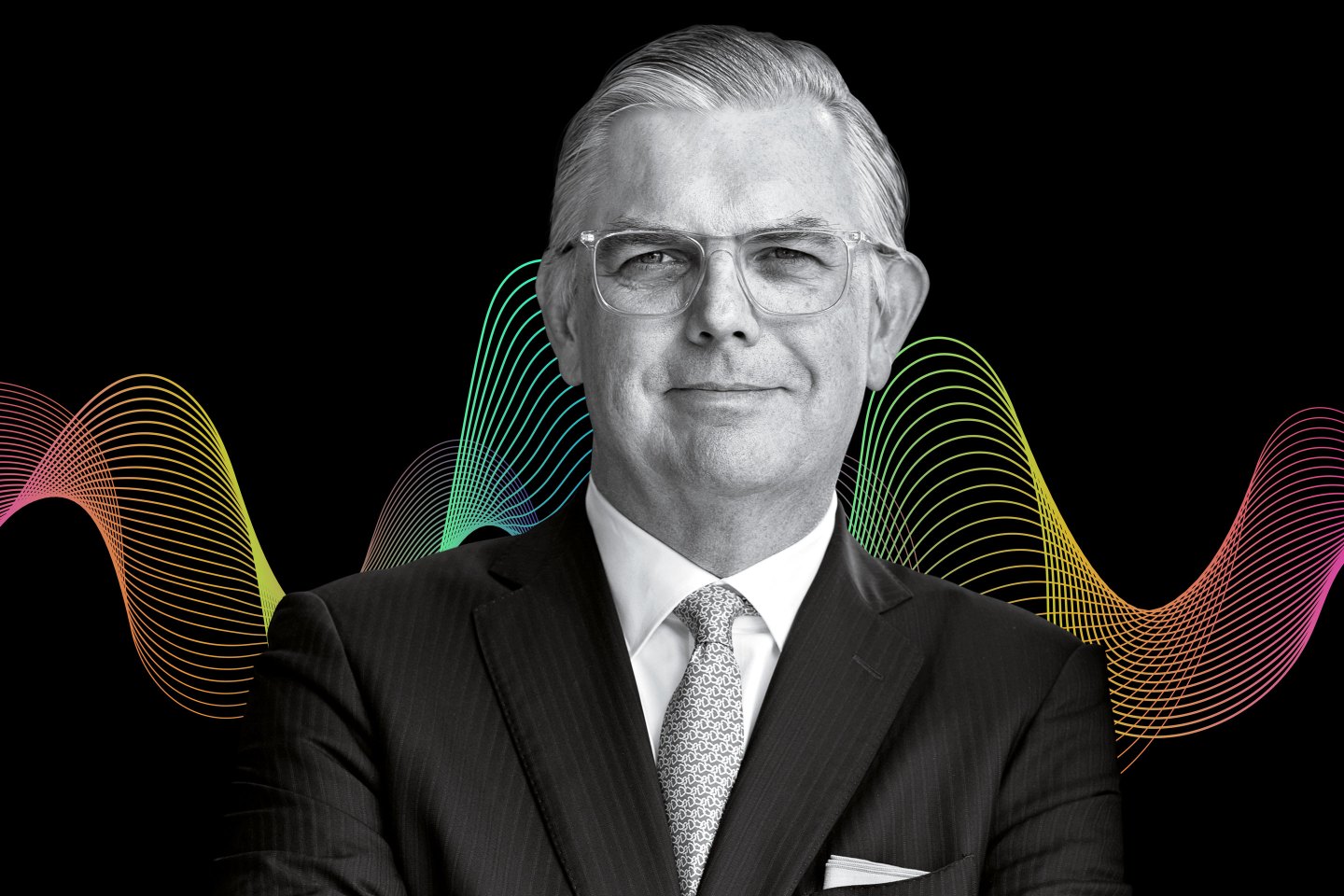
On this episode of Fortune’s Leadership Next podcast, Diane Brady, executive editorial director of the Fortune CEO Initiative and Fortune Live Media, welcomes a new co-host, editorial director Kristin Stoller. The duo kick off the sixth season with a conversation with Jason Girzadas, CEO of the show’s sponsor, Deloitte US. The trio discusses the issues they think will be top of mind for company leaders this year. AI, of course, takes the top spot. But the conversation also dips into how legacy brands may change things up, the well being of the workforce, and much more.
Listen to the episode or read the transcript below.
Transcript
Diane Brady: Leadership Next is powered by the folks at Deloitte who, like me, are exploring the changing roles of business leadership and how CEOs are navigating this change.
Hi everyone. I’m Diane Brady and welcome to the new season of Leadership Next, the podcast where we talk to leaders around the world from Fortune 500 companies, as well as those who are disrupting the way business is being done. I’m thrilled to have a new partner in crime. Kristin Stoller, Fortune‘s editorial director, also my comrade-in-arms for Fortune Live Media. Kristin, good to see you,
Kristin Stoller: Diane, it is so great to be here. I am so excited about this season.
Brady: We are going to have so much fun.
Stoller: We are.
Brady: Between us, we talk to the coolest people.
Stoller: I think we do.
Brady: The best CEOs. For this particular episode, we’re going to kick off the year speaking to Jason Girzadas, who is the CEO of Deloitte US. Looking back to also look forward about some of the episodes we had this past season that I think really point to some of the trends we’re going to be talking about in 2025.
Stoller: Yeah, I know a big trend I’m going to already predict is…
Brady: All right. Go.
Stoller: …it’s going to be AI.
Brady: Yes.
Stoller:I know it was a big in 2024. It’s obviously going to happen in 2025. And you talked to a lot of interesting people last year about that, too, right?
Brady: It was a motif in almost every conversation. I mean, some obviously, Marc Benioff of Salesforce just really wanted to talk and do a deep dive on agentic AI, which was fascinating.
[clip from interview with Marc Benioff] Today, I would say there. Is a new technology model which is going to be this idea of agents and a new business model, which is you’re paying per conversation, and there’s no question, there’s a new labor model, a new productivity model and a new economic model.
Brady: But also we had [Indeed CEO] Chris Hyams talk about it in the sense of how it’s going to change the way we look for jobs, the way we approach our jobs. Of course, Jim Kavanaugh of World Wide Technology. But I think one of the interesting themes that emerged even through the year is this sense that people were kind of using it as tools, playing around with AI, and now we’re moving to a whole different stage where people are talking about the business model changing and people like you and I actually working differently this year.
Stoller: Yeah, and I’m so fascinated also by the psychology behind it, what it means for workers, what it means for HR professionals, anyone in the C-suite in Fortune 500 companies.
Brady: Do you think you’re going to be happier with it or not?
Stoller: I think some parts of my job, I am going to be happier. You may not like this, but I use it for headlines all the time, and I love it. I have this…
Brady: I do love that.
Stoller: I do love it for headlines. But to write a full story, obviously not. That’s all me, I promise. You know I was at this dinner in San Francisco in September, and it was all CEOs talking about AI, and one of them told me this really interesting story about how he thinks that AI is going to take away the joy in the workplace because workers love doing these mundane tasks.
Brady: Really? Who likes doing Excel spreadsheets?
Stoller: I will say that my Fridays, when I just have me, my playlist on Spotify, and my Excel and Sabrina Carpenter, it’s a great Friday for me and that’s not all I do, but I do like to have.
Brady: Meditative.
Stoller: Yet the mindlessness, you know. Whatever.
Brady: Well, here’s the question I think is and so I do not share your joy with Excel, just to put that out there. But I do think the question of who owns our data is going to be more and more important, because now if you can create a digital self, in essence, that is going to be able to use my voice, my world view, a lot of the words that I use, if I can deploy that digital self to do tasks, if I leave my company, does it go with me like my 401(k) or does it continue to work for the company? Right now…
Stoller: Big question.
Brady: I think those questions are big. Obviously, I think a lot of the other issues that came up, climate change, the energy transition, that was a huge theme and it’s going to be one, of coursem that will continue to be a theme in 2025.
Stoller: And you talked to Tom Steyer about that last year, right? And that was one of the more fascinating episodes.
Brady: In between politics, we did indeed get to Galvanize Climate Solutions. And I think he’s got a fascinating perspective from an investment point of view. He’s what I’d call a climate optimist, which, you know, not always that easy to find in California.
Stoller: Yeah.
Brady: Speaking of California, we also spoke to PG&E’s CEO [Patti Poppe], and she was talking about really the devastating wildfires they had there. In addition to this new competition between data centers and, you know, basically the energy transition for how do we deploy our electricity. It’s a finite resource right now. We need to find more of it. So that, I’d say, is another big theme, but…
Stoller: That’s a giant theme.
Brady: I think stepping back, being a legacy brand, here we are almost a century old at Fortune. Yes, I think the way in which legacy brands have to reinvent themselves.
Stoller: I think that’s fascinating, especially with all these bankruptcies in 2024. We had Red Lobster. We had TGI Friday’s. What does this mean going forward? And what does it mean for the way consumers are going to to spend and use other other platforms?
Brady: Yeah. What’s the future of retail? Yeah, you know, I think how do we create a retail experience? We spoke to JCPenney CEO Mark Rosen. Joanne Crevoiserat of Tapestry and how she’s been reinventing the Coach brand and Kate Spade and Stuart Weitzman. And then Kellanova [CEO Steve Cahillane], of course, which still perplexes me.
Stoller: I don’t understand it.
Brady: I still think Kellogg’s. But this reinvention, which partly comes from splitting, you know, when you split a company, the next one of them needs a new name and Kellanova was it. I think we’re going to see so many reinventions. We’re going to see so much M&A activity, and we’re going to basically see a whole new configuration of the business landscape.
Stoller: Yeah. And I also think, you know, nostalgia definitely will play a role. People have been going to these legacy brands for a reason forever. I was interested that Lord & Taylor is launching a new e-commerce platform this year and shifting away. Is that going to draw in my demographic? Who knows? I remember shopping with my mom when I was five and…
Brady: I associate it with Mad Men for some reason.
Stoller: In the best way, though, I miss going there.
Brady: I think we’ll see a lot more of that. So Jason has a lot to say about this. And what’s interesting is last year you know, when he talked about some of the pessimism, this year with our CEO survey, CEOs are feeling optimistic.
Stoller: Are you feeling optimistic?
Brady: I’m feeling optimistic. I’m feeling optimistic in part because I think of the transformation that’s possible with AI. But I also think there’s more awareness right now of the perils and I hope, hope, hope that the geopolitical landscape calms down. Yeah, that’s kind of one of the most important issues right now for the global business landscape. We need to get a resolution in Europe with Ukraine and Russia. We need to see peace in the Middle East where we are going this year, multiple times to Riyadh and other places to have events. And I think in general, you know, there can be no business without a general prosperity and peace. All food for thought, Kristin. And after a short break, we’ll be right back with our conversation with Jason.
Stoller: Looking forward to it.
[Interview begins.]
Brady: So, Jason, great to see you. And before we get into the themes of 2025, we definitely want to look at what CEOs were talking about this past year. And no surprise, AI was number one on the list.
Jason Girzadas: Indeed, Diane, it’s incredible to look back on 2024 and just see how prevalent it is as a topic on every CXO agenda and certainly board governance priorities as well. I think the fueling of the prospects of generative AI impact everything from customer experience to growth and also efficiency. So it holds great promise. It’s been captivating every, certainly, client conversation that I’m a part of. And as you suggest, I think it will continue to be the case in 2025.
Brady: You know, I remember Marc Benioff when he was talking about agentic AI and he said software is about to become digital labor. I’d love to get your thoughts on how transformative is this year going to be in terms of the adoption of AI?
Girzadas: I think 2025 is the year of the digital FTE, is a way that I think about it. Every one of our clients is thinking about agentic capabilities, and I think it’s going to be deployed across a wide range of opportunities both in terms of efficiency as well as growth and enabling functions such as finance and talent. It will be a collaboration between human and machine. I think that is the prospect that we look at and believe is coming into reality. You know, we’re moving into a stage of from proofs of concept to scale deployment. That will take some time, but I think that will accelerate over the course of 2025 where enterprises, leading enterprises will have agentic capabilities across all different functional parts of the enterprise.
Stoller: Jason, are there any specific emerging AI tech or tools that you personally are most excited about in 2025?
Girzadas: Yea, it’s interesting. The reality is, is that as a CEO myself and looking at our own enterprise and I think this is similar to other CEOs who I interact with in service of them is how these tools can actually impact high cost, high volume, functional areas that they may be not as widely discussed or have as much of the attention of the media, if you will. But it’s in core functional areas, finance in terms of expense management and working capital. It’s in talent, in terms of recruiting and onboarding and evaluating candidates. It’s in other areas of supply chain, in terms of managing supplier diversity and effectiveness. So I think there’s a number of other growth areas certainly and customer experience areas, but it’s some of these high cost, high volume functional areas that are enabling to all enterprises, that are ubiquitous across all enterprises. Where I think some of the great promise is, that’s certainly an area of focus for us as Deloitte, but I see that also is a keen interest area of our clients that we serve in this area.
Brady: It’s interesting, Jason, you and I have talked about this before. Transformation is partly technology, but it’s not only about technology and I’m thinking about Christian Klein of SAP. He said even as a technology CEO, you can’t transform a company just by implementing new technology. You get into a lot of rooms we don’t get to go. How are CEOs talking to you about transformation? AI is just one part of it. What are some of the other components?
Girzadas: Yeah, it’s an important recognition, I think, by all leaders that, yes, there’s incredible promise for technology, but it’s not sufficient. There is a massive recognition of the need to train workforces, to increase literacy around all things tech, all things AI. Within Deloitte we talk about it in terms of tech literacy across our enterprise. That has to continue to be a parallel commitment because these are new tools, these are new technologies and they’re changing the way people do their work at all levels, at the most junior to the most senior. And so there has to be a parallel commitment to the age-old challenge of change management. But I think it’s exemplified in this transformational wave around generative AI that workforces are going to have to be readied and trained and expected to continue their learning and development working with these technologies in parallel. It is going to be a very common and I think, unfortunately, will be probably one of the more difficult parts of this transformational aspect. I think the other part of it is to start rethinking processes and rethinking the incentives around changing processes. I mean, that this technology allows rethinking of historic norms, rethinking of historic approaches, and I think that’s another really important part of what Christian was alluding to is that it’s not just about technology, it’s about thinking differently about what is truly the art of the possible, not being limited by the historic orthodoxies of a given enterprise or a given process area.
Stoller: Jason, I love that you brought up AI and the workplace because I’ve been having a lot of conversations with CHROs and other C-suite executives about AI and how it’s going to be used for upskilling and hiring and wellbeing, company culture, keeping Gen Z, pushing Gen Z out. I would love to hear from you, what do you think automation is going to do to the workforce and do you have maybe a big prediction or thing that you can share with us about what you think?
Girzadas: Well, automation in the workforce is a broad reality. I think that every organisation is dealing with as well as Deloitte. I mean we are seeing already how in every aspect of our business, we’ve asked all of our leaders to look differently about what their workforce needs are in light of this set of capabilities. What does it mean for, in our case, what an auditor does or what a tax professional does or what a consultant does? But that’s true for every client that I deal with. I mean, we are seeing every organization challenge their enterprise leaders to think differently, to understand what is truly possible and what are the requirements around training, what are the requirements around work process and work hiring. I think that is a commonality across all enterprises, including Deloitte. You know, I think the prediction is probably that the leading organizations of 2025 are going to embrace this in a holistic way, meaning all dimensions of an organization, the customer facing, the production as well as the service and support sides of organizations will be deploying these types of tools in an effective way and broadly, and to me that is the opportunity for enterprises to embrace.
Brady: I had a very fun conversation with Chris Hyams about that when we did the Deloitte’s Next Generation CEO program. I remember he was talking a lot about having personal agents. One of the other themes that came up in that conversation and also with Eli Lilly CEO Dave Ricks, was really about the longevity economy, this transformative shift with health and as Chris had mentioned, demographics. Curious to get your thoughts on that. You know, as life expectancy increases globally, as we see these tech tools start to transform health, how does that impact how people lead or even on a personal level, even your own thinking about health and such?
Girzadas: Absolutely. I think there’s a real synergy between these topics. I mean, one of the things that I certainly aspire to do as a CEO, and I think this is common, again, for other CEOs I deal with, is to create the leading culture. I mean, we all want to be a place where our very best people want to make their careers and see the opportunity to learn and grow and to be well. I think that’s a part of being a leading culture. And so creating a leading cultural and talent experience means creating the best work experience and workplace experience. So to me, these tools are part and parcel of what that means. And how do you alleviate from jobs, you know, some of the tedious, redundant work. How do you appeal to professionals who have choices that you know what they can do within a given work environment is on the cutting edge. It allows them to be even more productive, but also to be smart about the work that they do and take away the types of tasks and activities that maybe are not as fulfilling. To me, these things are, they go hand in hand. And I think as a CEO, I think deeply about and with my team about how do we create the environment where if you want to be the very best tax professional, the very best advisory or technology consultant or audit professional, I want you to do it here at Deloitte. And that’s true for our clients in their context where these tools matter. And I think that has to do with also creating, as I said, a wellbeing-focused culture, a healthy culture, where work is productive but not onerous and also fulfilling and allows people to be creative and to be fulfilled with their work enabled by cutting edge tools. Now there’s a journey to get there and there’s a process. I think all organizations are going to have to do to invest in that journey. But that’s the vision.
Stoller: Jason, I’m curious, how do you see potentially extended lifespans changing the concept of retirement itself and also work life balance?
Girzadas:Yeah, I think the definition of work is changing like it does in every generation, and it does today and will continue to. So we certainly see the prospect of people wanting to work longer and wanting to enjoy and be fulfilled and, you know, the next chapter of their career. I think all employers are going to be wanting to attract and retain the very best. And I think with health and longevity, it’s an opportunity for employers to embrace that. I also think that it’s part of creating an inclusive work culture, which is something we’re deeply committed to, where having generational diversity is, I think, a really powerful and important part of that commitment to an inclusive workplace. So these are things that I think in today’s modern work environment and as a leader of a large enterprise, we all think about how do we stay attractive and desirable for leading talent and recognize that that talent is going to look different and have a diverse complexion. And that’s a good thing. And so to me, I think we have to lean into it, embrace this notion of people wanting to work in different stages of their life and maybe longer in life. And that to me is an opportunity for us to distinguish ourselves yet again as a leading employer.
Brady: Several interviews this past year, Jason, we talked to a lot of legacy brands that have been transformed. There’s Mark Rosen at JCPenney. You know, he talked about bringing his brand back to relevance. Joanne Crevoiserat at Tapestry, Mike Sievert at T-Mobile. I’m curious what are the challenges that CEOs of legacy brands bring to you, Jason?
Girzadas: I find that a particularly relevant question for me. I happen to lead a 179-year-old brand.
Brady: There you go.
Girzadas: And so I have deep respect for these long standing organizations and brands that have amazing, amazing histories and have reinvented themselves many times like Deloitte has. So look, I think this is a real testament to the value of business and the importance of business being an example of how continuous learning and renewal plays out. And so legacy organizations haven’t had to make decisions about technology and around processes and talent models. And I think they’re recognizing and some of the leaders that you just cited, are recognizing that there’s opportunities to make significant change. But that change is difficult and it requires tremendous alignment with boards and with organizations’ workforces and tremendous vigilance on the part of the leaders that are driving that change. So it’s not easy, but I think it is possible, and I think it’s a testament to how businesses can renew themselves and redefine themselves, but also keep some of the core principles and values that have made them great. And so I, I actually really applaud and respect that endeavor. I think it requires and it’s made possible because of this changing technology landscape and the retirement of legacy technology, as well as the adoption of cutting edge technologies. And so organizations can in fact leapfrog competition, leveraging the brand, but then creating new capabilities. And in getting to new levels of efficiency and customer engagement that they can help them win into the future. So again, I feel like I’m part of the fraternity of legacy brands and respect, and also similarly continue to chart a path forward for the next 179 years on Deloitte’s part.
Brady: And as we’re relatively young at almost 100, but I you know, we too stand on the shoulders of giants and this is a time of exciting change. What is on your radar for the year ahead that you want to share with us, Jason?
Girzadas: Well, like you would know from our survey together, there’s real optimism in the business community. So I’m looking forward to I think I would say cautious optimism on sort of the economic outlook. I think certainly optimism fueled by a commitment to leverage emerging technology in a real positive way certainly. I think a realization that the capital markets can be supportive of business activity, I think as well. But also cautious optimism driven by the fact that there’s significant geopolitical volatility in this world that will weigh on and be a factor in all business decision making. So we start the year with a positive outlook, but also a realism and a pragmatism about some of the real challenges the world faces, Diane.
Stoller: Jason, that’s really a big change. Last year you started off this time saying there is a significant rise in pessimism. So I love seeing the shift year over year.
Girzadas: It’s a function of, I think, well, certainly the business survey, CEO’s survey that we do with Fortune is indicative of that. And I think we see that in our own business. We see organizations wanting to move forward with their change agendas, seeing opportunity, but also having to be realistic about the complexities of the world. So it’s a position that I formulated, you know, based on my own reactions on our survey results, but also with my own assessment of the environment that I see.
Stoller: Excellent. Well, Jason, thank you so much for your insights. We are looking forward to so many great conversations this season about a lot of these topics. But we really thank you for joining us.
Girzadas: Thank you both. Happy new year.
Brady: Thanks, Jason. Happy new year.
Leadership Next is edited by Nicole Vergalla.
Stoller: Our executive producer is Adam Banicki.
Brady: Our producer is Mason Cohn.
Stoller: Our theme is by Jason Snell.
Brady: Our studio producer is Natasha Ortiz.
Stoller: Leadership Next is a production of Fortune Media.
Brady: I’m Diane Brady.
Stoller: And I’m Kristin Stoller.
Brady: See you next time.
Leadership Next episodes are produced by Fortune‘s editorial team. The views and opinions expressed by podcast speakers and guests are solely their own and do not reflect the opinions of Deloitte or its personnel. Nor does Deloitte advocate or endorse any individuals or entities featured on the episodes.