(THE CONVERSATION) It’s hard to imagine a holiday season without “A Charlie Brown Christmas.” The 1965 broadcast has become a staple – etched into traditions across generations like decorating the tree or sipping hot cocoa.
But this beloved TV special almost didn’t make it to air. CBS executives thought the 25-minute program was too slow, too serious and too different from the upbeat spectacles they imagined audiences wanted. A cartoon about a depressed kid seeking psychiatric advice? No laugh track? Humble, lo-fi animation? And was that a Bible verse? It seemed destined to fail – if not scrapped outright.
And yet, against all the odds, it became a classic. The program turned “Peanuts” from a popular comic strip into a multimedia empire – not because it was flashy or followed the rules, but because it was sincere.
As a business professor who has studied the “Peanuts” franchise, I see “A Charlie Brown Christmas” as a fascinating historical moment. It’s the true story of an unassuming comic strip character who crossed over into television and managed to voice hefty, thought-provoking ideas – without getting booted off the air.
Call from the blue
The “Peanuts” special came together out of a last-minute scramble. Somewhat out of the blue, producer Lee Mendelson got a call from advertising agency McCann-Erickson: Coca-Cola wanted to sponsor an animated Christmas special.
Mendelson had previously failed to convince the agency to sponsor a “Peanuts” documentary. This time, though, he assured McCann-Erickson that the characters would be a perfect fit.
Mendelson called up “Peanuts” comic strip creator Charles “Sparky” Schulz and told him he had just sold “A Charlie Brown Christmas” – and they would have mere months to write, animate and bring the special to air.
Schulz, Mendelson and animator Bill Melendez worked fast to piece together a storyline. The cartoonist wanted to tell a story that cut through the glitz of holiday commercialism and brought the focus back to something deeper.
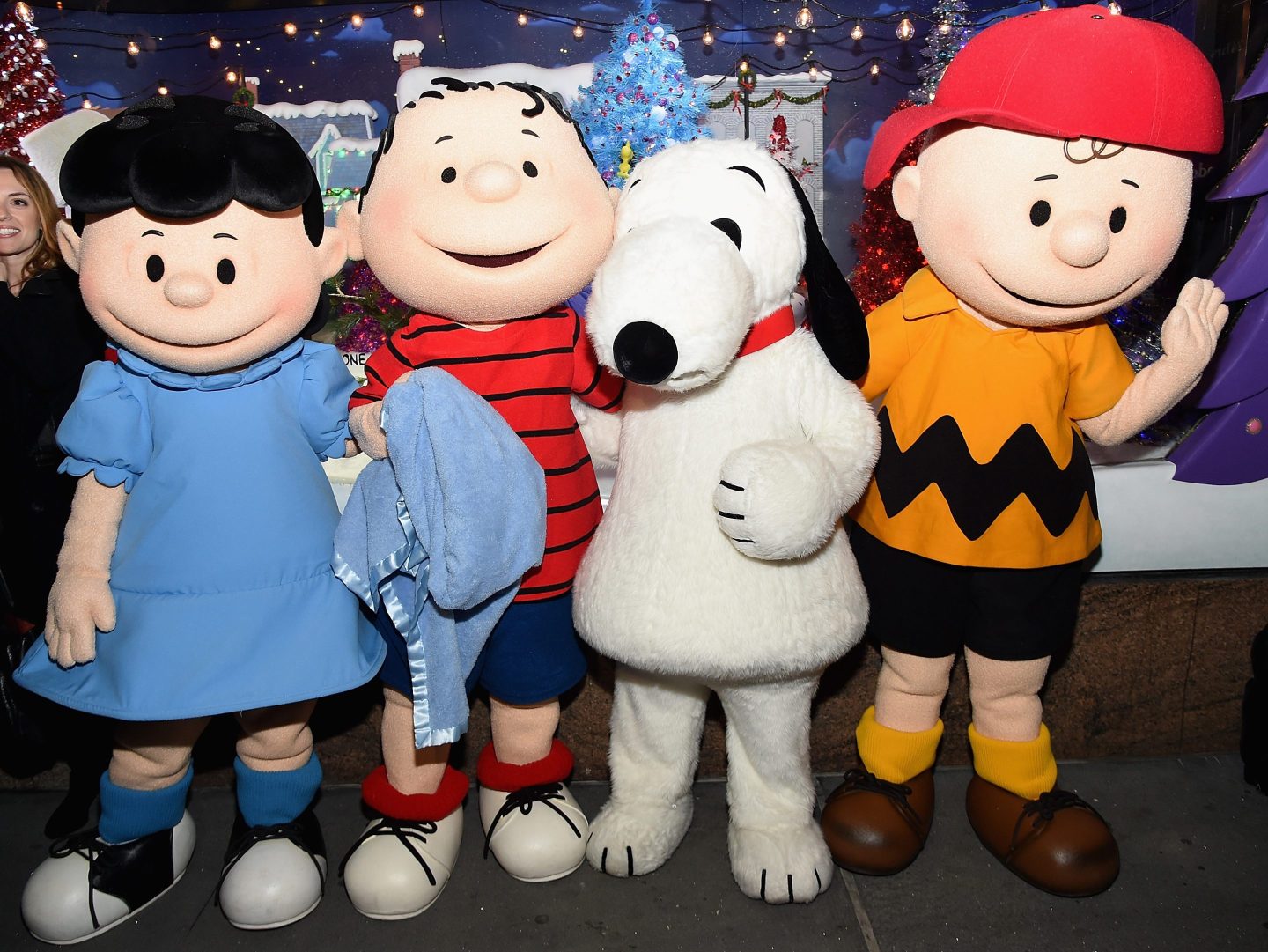
While Snoopy tries to win a Christmas lights contest, and Lucy names herself “Christmas queen” in the neighborhood play, a forlorn Charlie Brown searches for “the real meaning of Christmas.” He makes his way to the local lot of aluminum trees, a fad at the time. But he’s drawn to the one real tree – a humble, scraggly little thing – inspired by Hans Christian Andersen’s fairy tale “The Fir Tree.”
Jazz – and the Bible
Those plot points would likely delight the network, but other choices Schulz made were proving controversial.
The show would use real children’s voices instead of adult actors’, giving the characters an authentic, simple charm. And Schulz refused to add a laugh track, a standard in animated TV at the time. He wanted the sincerity of the story to stand on its own, without artificial prompts for laughter.
Meanwhile, Mendelson brought in jazz musician Vince Guaraldi to compose a sophisticated soundtrack. The music was unlike anything typically heard in animated programming, blending provocative depth with the innocence of childhood.
Most alarming to the executives was Schulz’s insistence on including the heart of the Nativity story in arguably the special’s most pivotal scene.
When Charlie Brown joyfully returns to his friends with the spindly little tree, the rest of the “Peanuts” gang ridicule his choice. “I guess I really don’t know what Christmas is all about,” the utterly defeated Charlie Brown sighs.
Gently but confidently, Linus assures him, “I can tell you what Christmas is all about.” Calling for “Lights, please,” he quietly walks to the center of the stage.
In the stillness, Linus recites the Gospel of Luke, Chapter 2, with its story of an angel appearing to trembling shepherds:
And the angel said unto them, Fear not: for, behold, I bring you tidings of great joy, which shall be to all people.
For unto you is born this day in the city of David a savior, which is Christ the Lord.
“Glory to God in the highest, and on earth peace, good will toward men,” he concludes, picking up his security blanket and walking into the wings. The rest of the gang soon concludes Charlie Brown’s scrawny tree isn’t so bad, after all – it just “needs a little love.”
When Schulz discussed this idea with Mendelson and Melendez, they were hesitant. For much of U.S. history, Protestant Christianity was the default in American culture, but in the years since World War II, society had grown somewhat more mindful of making room for Catholic and Jewish Americans. Unsure how to handle the shifting norms, many mainstream entertainment companies in the 1960s tended to avoid religious topics.
“The Bible thing scares us,” CBS executives said when they saw the proofs of the special. But there was simply no time to redo the entire dramatic arc of the special, and pulling it was not an option, given that advertisements had already run.
Fun and philosophy
Fortunately for the “Peanuts” franchise, when the special aired on Dec. 9, 1965, it was an instant success. Nearly half of American households tuned in, and the program won both an Emmy and a Peabody Award. Schulz had tapped into something audiences were craving: an honest, heartfelt message that cut through the commercialism.
Millions of viewers have continued to tune in to the show’s annual rebroadcast for over 50 years on CBS and then ABC – and now Apple TV+.
When I was researching my spiritual biography of Schulz, “A Charlie Brown Religion,” one of my favorite finds was a 1965 letter from a Florida viewer, Betty Knorr. She praised the show for stressing “the true meaning of the Christmas season” at a time when “the mention of God in general (is) being hush hushed.”
The magic of Schulz’s work, though, is that it resonates across demographics and ideologies. Some fans find comfort in the show’s gentle message of faith, while others embrace it in a purely secular way.
Simple but poignant, Schulz’s art and gentle humor can do two things. They can act as safe entry points for some pretty hefty thoughts – be they psychiatric, cultural or theological. Or “Peanuts” cartoons can simply be heartwarming, festive entertainment, if that’s what you want.
Today, both the “Peanuts” empire and the Christmas industry are thriving. Back in the 1960s, commercial realities almost derailed Schulz’s special, yet those same forces ultimately ensured its broadcast. The result is a lasting touchstone of innocence, hope and belief.
The Conversation is an independent and nonprofit source of news, analysis and commentary from academic experts. The Conversation is wholly responsible for the content.