Disney is in the middle of a recession. At least, it would be if it was a nation, which it kind of is. Over the past four years, the home of Iron Man, Predator and Mickey Mouse—with 225,000 employees in entertainment parks and offices around the world—has lost more than $190 billion in market value. Its stock dropped from an all-time-high of $201 in March 2021 to $96 today, a decrease of 52 percent.
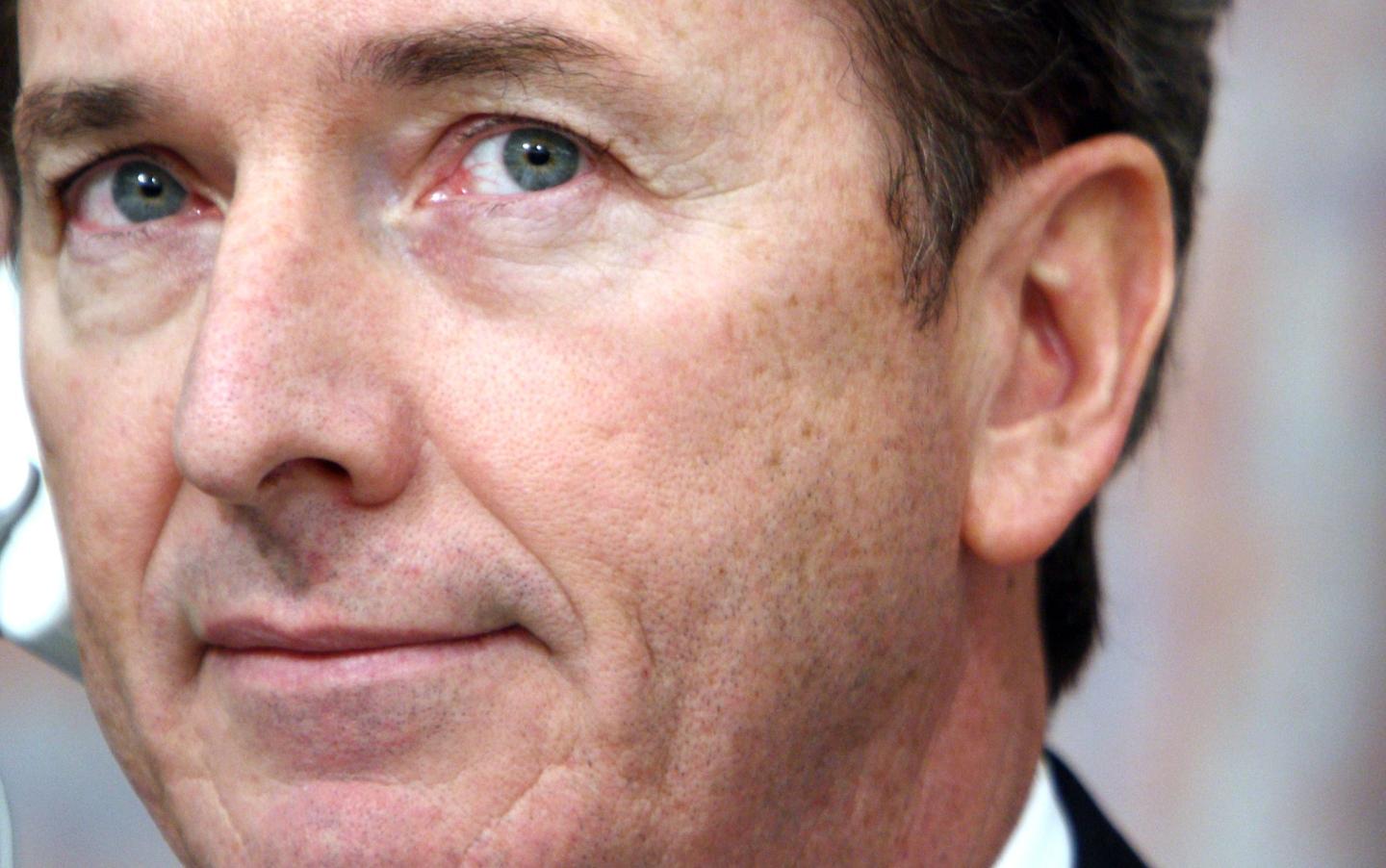
To stave off the bleeding, Disney is bringing on Morgan Stanley executive chairman James Gorman as chairman of the board, effective January 2025. His main role will be to fix Disney’s enduring problem: hiring a new CEO.
The search comes after longtime former Disney CEO Bob Iger came out of retirement in late 2022 to step in for the short-tenured Bob Chapek, who was fired from the top job after a series of debacles, including an embarrassing fight with Florida Governor Ron Desantis over the company’s special tax status in the state. The following year, a series of sequels green-lit by Chapek—including Ant-Man, The Little Mermaid, and Indiana Jones—flopped badly, leaving the entertainment giant reeling.
As analysts sort through the detritus of Disney’s last few years, one question is emerging: Why Gorman? In short, the answer is a strategic mind comparable to Napoleon’s. Over the course of 15 years the perennial outsider helped Morgan Stanley grow through a series of shrewd investments, leading the bank’s revenue to swell from $31 billion when he took over in 2010 to $54 billion when he handed over power earlier this year.
Gorman has already been the subject of numerous glowing accounts of the masterful execution of his own succession planning. After years methodically vetting candidates, he stepped down from Morgan Stanley in January and was seamlessly replaced by current CEO Ted Pick. But beneath the surface Gorman’s superpower is strategy itself.
A graduate of Columbia Business School, class of 1987, Gorman was hired by consulting giant McKinsey immediately out of school. Among his first accounts was Merrill Lynch, where he studied the art of advising third parties—a skill he’ll be leveraging for Disney—by helping the bank develop its internet strategy. He joined Morgan Stanley in 2006 at a time when it was already deeply invested in the mortgage-backed securities that eventually collapsed, leading to the great recession and erasing $30 billion from Morgan’s market value.
Just as the Great Recession was ramping up, in October 2008, Gorman and then-CEO John Mack reportedly called the CEO of Citigroup, Vikram Pandit, and asked to buy wealth management giant Smith Barney, which at the time had 15,000 brokers and $2 trillion in assets under management. Though Morgan Stanley borrowed more than $100 billion in bailout money from the government, according to a report by the Congressional Oversight Panel, Citi was even weaker, borrowing more than $450 billion.
Gorman’s phone call paid off. In 2009 he negotiated a tiny $2.9 billion deal for 51% of the brokerage operation valued at $13.5 billion, reportedly $8.5 billion less than Citi’s valuation. The next year he was made CEO. Though Gorman was also behind the bank’s successful acquisition of eTrade and Solium it’s not the ability to buy that defines his success.
In leadership, Gorman became known for the straightforward strategic updates he regularly published, starting in January 2013. While many corporate strategies hide behind industry jargon Gorman organizes his in easy-to-read presentations, moving quickly from a specific action, to how it will be implemented, and the expected financial benefits. All of Gorman’s notes reflected a clear vision for balancing Morgan’s business of wealth and investment management with institutional securities. In practice, this meant the bank could enjoy a more durable stream of revenue by adding fee-driven management services to the market driven securities business.
Gorman’s ability to develop strategies beyond just M&A will be useful for Disney, which has no problem buying businesses. Its corporate structure has become almost comical in its complexity, including not just the outright ownership of 21st Century Fox, but 50% or higher stakes in Marvel, Touchstone Pictures and Lucasfilm, just to name a few. What Disney needs is a new strategy. Though Disney’s Linear Networks division for cable and broadcast television historically generated the most revenue for the company, it has largely failed to expand to streaming. Despite a deep rack of valuable intellectual property, it took Disney five years to barely turn a profit on its Disney+ streaming service even as its flagship theme parks continue to struggle.
So, who will Gorman choose to execute Disney’s strategy going forward? With the help of the rest of his succession planning committee directors, Mary Barra, CEO of General Motors, Calvin McDonald, CEO of Lululemon, and outgoing chairman Mark Parker, candidates reportedly being considered include, Disney’s television boss, Dana Walden; theme parks and video game boss, Josh D’Amaro; movie chief Alan Bergman; and ESPN leader Jimmy Pitaro.
But it’s interesting to note that both of Disney’s most successful recent CEOs came from outside media giants—Robert Iger from ABC and Michael Eisner from Paramount—while the feckless Chapek came from within Disney.