• Home
  • Latest
  • Fortune 500
  • Finance
  • Tech
  • Leadership
  • Lifestyle
  • Rankings
  • Multimedia
CommentaryFinance

Warren Buffett warns of ‘casino-like’ investor behavior. Here’s the hidden cost of ‘free’ investing

By
Victor Haghani
Victor Haghani
,
James White
and
Vladimir Ragulin
Vladimir Ragulin
Down Arrow Button Icon
October 22, 2024, 10:04 AM ET

Victor Haghani is founder and CIO of Elm Wealth, where James White is CEO. Vladimir Ragulin is a financial services consultant.

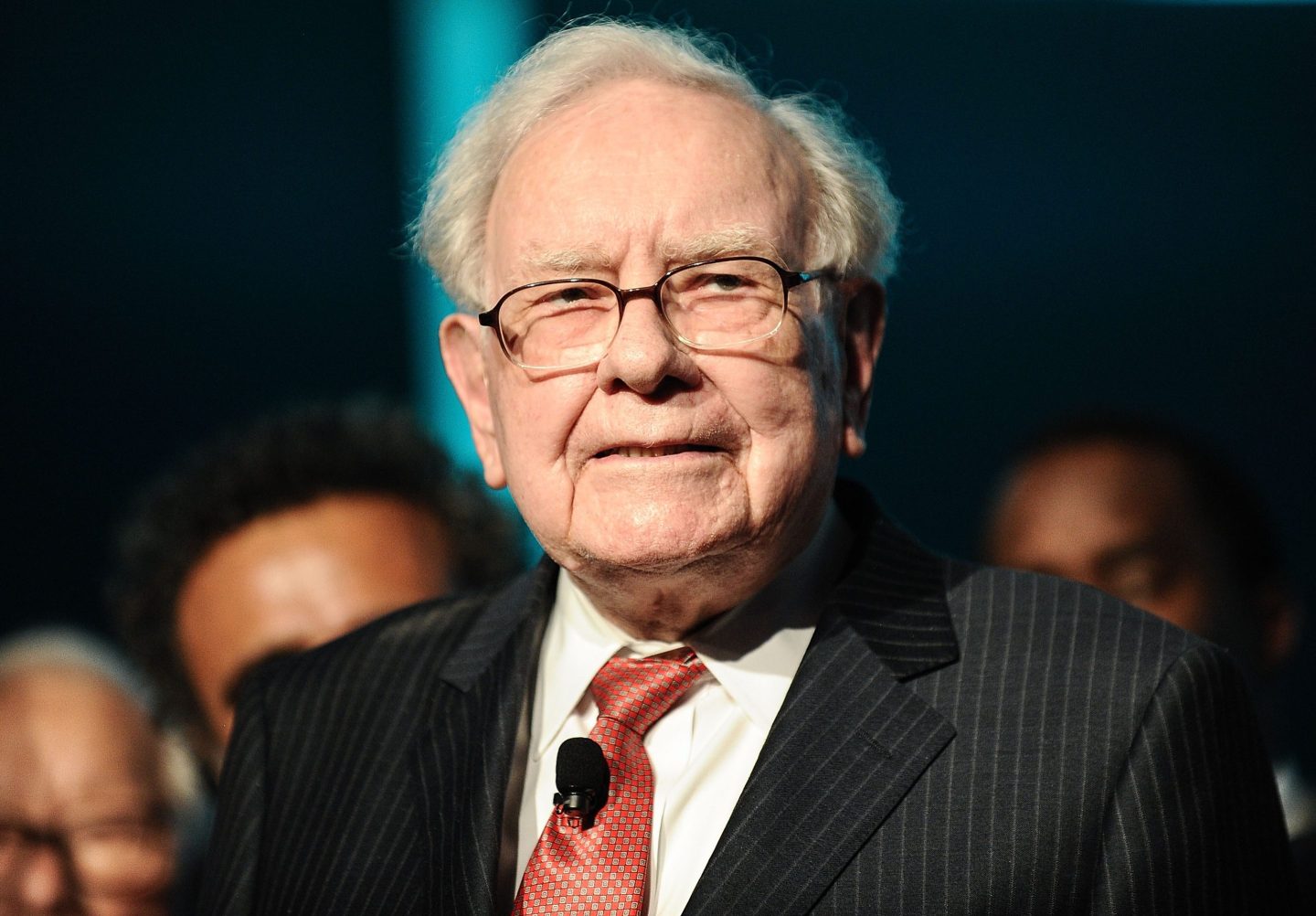
Warren Buffett.
Warren Buffett.Daniel Zuchnik/WireImage

The landscape of investing has undergone a seismic shift, with the advent of commission-free trading and low-cost ETFs. While this has empowered retail investors, it has also introduced new challenges. Fees have been significantly reduced, but investors now face less visible but equally harmful costs associated with increased risk.

Vanguard founder John Bogle‘s “cost matters hypothesis” (CMH) was based on the mathematical truth that the sum of all active portfolios equals the market portfolio. From this it follows that the average return on all active portfolios must equal the market return, minus the fees charged by active investment managers. This may have been the single most powerful argument driving the relentless growth of indexing over the past 30 years. However, now that trading and investment fees have gotten close to zero, the CMH has lost its power to direct investors toward low cost, diversified index investing.

Risk matters

From discussions with family, friends, and online investor forums, we’ve noticed it’s become much harder to convince people to avoid frenetic trading of their personal accounts now that trading appears to be “free.” As we scratched our heads over this problem, we realized that the logic underlying Bogle’s CMH applies with equal force in the dimension of risk.

We recently published a paper that puts forward the “risk matters hypothesis” (RMH), a corollary to Bogle’s CMH. The RMH asserts that the average risk across all active portfolios is greater than the risk of the market portfolio. It cautions investors with concentrated stock portfolios that—in aggregate—they must suffer a lower return-to-risk ratio (a.k.a. Sharpe ratio) than they’d get from a broadly diversified index fund. It was an idea we couldn’t find in any personal finance books or textbooks—which surprised us given its significance and simplicity.

The return-to-risk ratio is very important because taking risk is the price we pay for the promise of higher returns. Investors should seek the portfolio with the highest return-to-risk ratio possible, to get as much expected return as they can for a given amount of risk.

Buffett’s warning

In today’s “free” investing world, many in the finance industry seem bent on distracting investors from this goal. Investors who have not (yet) embraced broad market indexing are being encouraged to trade more actively and take more risk. As Warren Buffett observed, “markets now exhibit far more casino-like behavior than they did when I was young. The casino now resides in many homes and daily tempts the occupants.”

This casino-fication of markets can be seen in the explosion of stock options trading volumes, particularly in lottery-like zero-day-to-expiration options, and the glorification of day-trading on online trading platforms that are almost indistinguishable from online gambling sites. All sorts of leveraged, concentrated, and options-based ETFs have come to market, and have attracted hundreds of billions of dollars in short order.

All these active bets made by retail investors require other market participants, often professional and highly profitable trading firms, to hold opposing active positions. In aggregate, all the players— retail and professional—with holdings that deviate from the market portfolio are taking more risk. And, in aggregate, they need to be compensated for this increased risk by outperforming the market. Unfortunately, this is a mathematical impossibility—the average cannot exceed the average (just as most drivers cannot be above average)!

Taking extra risk can be thought of as equivalent to paying fees; both reduce the expected return-to-risk ratio of the investor’s portfolio, as can be seen in the equation below.

Using reasonable inputs, for return and market risk, we find that a portfolio that has 4% extra active risk is as attractive as one with just market risk but paying a fee of 1%. In this new low-cost investing world, the price active investors pay has shifted from fees to risk.

Double-whammy for active investors

Unfortunately, the bad news for ordinary investors doesn’t stop here. When retail investors take on extra risk, the market participants taking the other side of their active bets are also, on average, taking extra risk. These professional trading firms need to make extra returns to compensate them for the extra risk they’re taking, and the only place that can come from is the pockets of active retail traders. This is a double whammy for active investors—they need to get extra return for the extra risk they take, but instead they wind up with a lower return, because other market participants higher up in the food chain are making extra returns at their expense. While the payment of fees can be thought of as a zero-sum transfer in that one party pays a fee and the other party receives the fee, the cost of taking extra risk is a negative sum phenomenon across all parties.

While the allure of “free” investing is strong, the “risk matters hypothesis” reminds investors to be cautious about the risk associated with deviating from the market. In most cases, the best bet may be to stick with broadly diversified index funds.

The opinions expressed in Fortune.com commentary pieces are solely the views of their authors and do not necessarily reflect the opinions and beliefs of Fortune.

Join us at the Fortune Workplace Innovation Summit May 19–20, 2026, in Atlanta. The next era of workplace innovation is here—and the old playbook is being rewritten. At this exclusive, high-energy event, the world’s most innovative leaders will convene to explore how AI, humanity, and strategy converge to redefine, again, the future of work. Register now.
About the Authors
By Victor Haghani
See full bioRight Arrow Button Icon
By James White
See full bioRight Arrow Button Icon
By Vladimir Ragulin
See full bioRight Arrow Button Icon

Latest in Commentary

Finance
Lorem ipsum dolor sit amet, consectetur adipiscing elit, sed do eiusmod tempor incididunt ut labore et dolore magna aliqua. Ut enim ad minim veniam
By Fortune Editors
October 20, 2025
Finance
Lorem ipsum dolor sit amet, consectetur adipiscing elit, sed do eiusmod tempor incididunt ut labore et dolore magna aliqua. Ut enim ad minim veniam
By Fortune Editors
October 20, 2025
Finance
Lorem ipsum dolor sit amet, consectetur adipiscing elit, sed do eiusmod tempor incididunt ut labore et dolore magna aliqua. Ut enim ad minim veniam
By Fortune Editors
October 20, 2025
Finance
Lorem ipsum dolor sit amet, consectetur adipiscing elit, sed do eiusmod tempor incididunt ut labore et dolore magna aliqua. Ut enim ad minim veniam
By Fortune Editors
October 20, 2025
Finance
Lorem ipsum dolor sit amet, consectetur adipiscing elit, sed do eiusmod tempor incididunt ut labore et dolore magna aliqua. Ut enim ad minim veniam
By Fortune Editors
October 20, 2025
Finance
Lorem ipsum dolor sit amet, consectetur adipiscing elit, sed do eiusmod tempor incididunt ut labore et dolore magna aliqua. Ut enim ad minim veniam
By Fortune Editors
October 20, 2025

Most Popular

Finance
Lorem ipsum dolor sit amet, consectetur adipiscing elit, sed do eiusmod tempor incididunt ut labore et dolore magna aliqua. Ut enim ad minim veniam
By Fortune Editors
October 20, 2025
Finance
Lorem ipsum dolor sit amet, consectetur adipiscing elit, sed do eiusmod tempor incididunt ut labore et dolore magna aliqua. Ut enim ad minim veniam
By Fortune Editors
October 20, 2025
Finance
Lorem ipsum dolor sit amet, consectetur adipiscing elit, sed do eiusmod tempor incididunt ut labore et dolore magna aliqua. Ut enim ad minim veniam
By Fortune Editors
October 20, 2025
Finance
Lorem ipsum dolor sit amet, consectetur adipiscing elit, sed do eiusmod tempor incididunt ut labore et dolore magna aliqua. Ut enim ad minim veniam
By Fortune Editors
October 20, 2025
Finance
Lorem ipsum dolor sit amet, consectetur adipiscing elit, sed do eiusmod tempor incididunt ut labore et dolore magna aliqua. Ut enim ad minim veniam
By Fortune Editors
October 20, 2025
Finance
Lorem ipsum dolor sit amet, consectetur adipiscing elit, sed do eiusmod tempor incididunt ut labore et dolore magna aliqua. Ut enim ad minim veniam
By Fortune Editors
October 20, 2025
Rankings
  • 100 Best Companies
  • Fortune 500
  • Global 500
  • Fortune 500 Europe
  • Most Powerful Women
  • Future 50
  • World’s Most Admired Companies
  • See All Rankings
Sections
  • Finance
  • Leadership
  • Success
  • Tech
  • Asia
  • Europe
  • Environment
  • Fortune Crypto
  • Health
  • Retail
  • Lifestyle
  • Politics
  • Newsletters
  • Magazine
  • Features
  • Commentary
  • Mpw
  • CEO Initiative
  • Conferences
  • Personal Finance
  • Education
Customer Support
  • Frequently Asked Questions
  • Customer Service Portal
  • Privacy Policy
  • Terms Of Use
  • Single Issues For Purchase
  • International Print
Commercial Services
  • Advertising
  • Fortune Brand Studio
  • Fortune Analytics
  • Fortune Conferences
  • Business Development
About Us
  • About Us
  • Editorial Calendar
  • Press Center
  • Work At Fortune
  • Diversity And Inclusion
  • Terms And Conditions
  • Site Map

© 2025 Fortune Media IP Limited. All Rights Reserved. Use of this site constitutes acceptance of our Terms of Use and Privacy Policy | CA Notice at Collection and Privacy Notice | Do Not Sell/Share My Personal Information
FORTUNE is a trademark of Fortune Media IP Limited, registered in the U.S. and other countries. FORTUNE may receive compensation for some links to products and services on this website. Offers may be subject to change without notice.


Most Popular

placeholder alt text
Economy
America's $38 trillion national debt 'exacerbates generational imbalances' with Gen Z and millennials paying the price, warns think tank
By Eleanor PringleDecember 16, 2025
2 days ago
placeholder alt text
Success
As millions of Gen Zers face unemployment, McDonald's CEO dishes out some tough love career advice for navigating the market: ‘You've got to make things happen for yourself’
By Preston ForeDecember 16, 2025
1 day ago
placeholder alt text
Innovation
An MIT roboticist who cofounded bankrupt Roomba maker iRobot says Elon Musk's vision of humanoid robot assistants is 'pure fantasy thinking'
By Marco Quiroz-GutierrezDecember 16, 2025
2 days ago
placeholder alt text
AI
IBM, AWS veteran says 90% of your employees are stuck in first gear with AI, just asking it to ‘write their mean email in a slightly more polite way’
By Marco Quiroz-GutierrezDecember 16, 2025
1 day ago
placeholder alt text
Economy
The $38 trillion national debt is to blame for over $1 trillion in annual interest payments from here on out, CRFB says
By Nick LichtenbergDecember 17, 2025
10 hours ago
placeholder alt text
Politics
Exclusive: After citations against Elon Musk’s Boring Company were suddenly withdrawn, federal regulators are now investigating Nevada OSHA
By Jessica MathewsDecember 16, 2025
1 day ago

Latest in Commentary

layoffs
CommentaryLayoffs
The AI layoff wave is just beginning — and it’s by design
By Kevin OakesDecember 17, 2025
12 hours ago
Norbert Jung
Commentary
Factory 2030 runs on more than code. As a CEO, I see the power of agentic AI—and the trust gap that we must close
By Norbert JungDecember 17, 2025
16 hours ago
TD Jakes
CommentaryReligion
To heal a divided nation, America’s next chapter must rediscover a common unity
By T.D. JakesDecember 16, 2025
2 days ago
tree
CommentaryInflation
Colorado is suffering from Christmas Tree inflation because Denver imports most of them—from North Carolina and the Pacific Northwest
By Ali Besharat and The ConversationDecember 16, 2025
2 days ago
Charles Lamanna
CommentaryMicrosoft
I lead Microsoft’s enterprise AI agent strategy. Here’s what every company should know about how agents will rewrite work
By Charles LamannaDecember 15, 2025
3 days ago
Julian Braithwaite is the Director General of the International Alliance for Responsible Drinking
CommentaryProductivity
Gen Z is drinking 20% less than Millennials. Productivity is rising. Coincidence? Not quite
By Julian BraithwaiteDecember 13, 2025
5 days ago