
• Home
  • News
  • Fortune 500
  • Tech
  • Finance
  • Leadership
  • Lifestyle
  • Rankings
  • Multimedia
FinanceU.S. economy

Top economist: More people are looking for a job, but not because they were laid off

Paolo Confino
By
Paolo Confino
Paolo Confino
Reporter
Down Arrow Button Icon
Paolo Confino
By
Paolo Confino
Paolo Confino
Reporter
Down Arrow Button Icon
August 7, 2024, 1:52 PM ET
Apollo chief economist Torsten Slok
Apollo Global Management chief economist Torsten SlokVictor J. Blue—Bloomberg/Getty Images

The unemployment rate may be higher, but it’s because there are more workers, not fewer jobs. 

Recommended Video

The recent rise in unemployment is the result of an immigration surge that has expanded the labor supply in the U.S., rather than widespread job cuts, according to Apollo Global Management chief economist Torsten Slok. Apollo is one of the world’s largest private equity firms with $696 billion in assets under management.  

According to data from the Bureau of Labor Statistics, the unemployment rate has increased for the past five months to its current level of 4.3%. That trend led to concerns a recession was on the horizon. A rise in the unemployment rate often presages a recession, as companies lay off workers in an effort to cut costs and brace themselves for tough times ahead.

However, as Slok points out, there haven’t been mass layoffs. In fact, layoffs have been relatively flat for the year, hovering between roughly 1.5 million to 1.6 million a month. June had the lowest number of layoffs so far this year. 

Instead there are more people joining the labor force—even if they aren’t working at the moment. “The source of the rise in the unemployment rate is not job cuts but a rise in labor supply because of rising immigration,” Slok wrote in an email. 

In 2022, net immigration to the U.S. amounted to 2.6 million people, according to the Congressional Budget Office. In 2023, that number jumped to 3.3 million. Forecasts for 2024 expect the same levels of net immigration. 

For a long time immigration helped prop up the U.S. economy by filling labor shortages during the tight labor market in the aftermath of the pandemic. Immigrants were employed, getting paid, and spending that money on goods and services, keeping the economy chugging along when it risked faltering. Immigrants also helped cool an overheated labor market, according to research from the Kansas City Fed. However, the uptick in immigration also reduced wage growth, according to the Kansas City Fed’s research, which while helpful to keep inflation from getting out of hand in the short term, harms workers’ earning potential over the long term. 

The most recent round of employment data released in July triggered what economists call the Sahm Rule, which states that if the three-month rolling average of the unemployment rate is at least 0.5% higher than the 12-month low, the economy is at the start of a recession. A fact that many economists, Slok among them, noticed yet brushed aside. 

“The Sahm Rule was designed for a decline in labor demand, not a rise in immigration,” Slok said. 

Claudia Sahm, the inventor of the rule, agreed. On Wednesday in an op-ed for Bloomberg, the chief economist at New Century Advisors explained that her rule doesn’t distinguish between a rise in labor supply and a reduction in labor supply, which both raise the unemployment rate but for different reasons. “The rate will decrease once the jobs ‘catch up’ with the new job seekers and more workers allow the economy to grow more,” she wrote. “The Sahm Rule does not distinguish between these two dynamics, and can look more ominous when the labor force is expanding rapidly.”

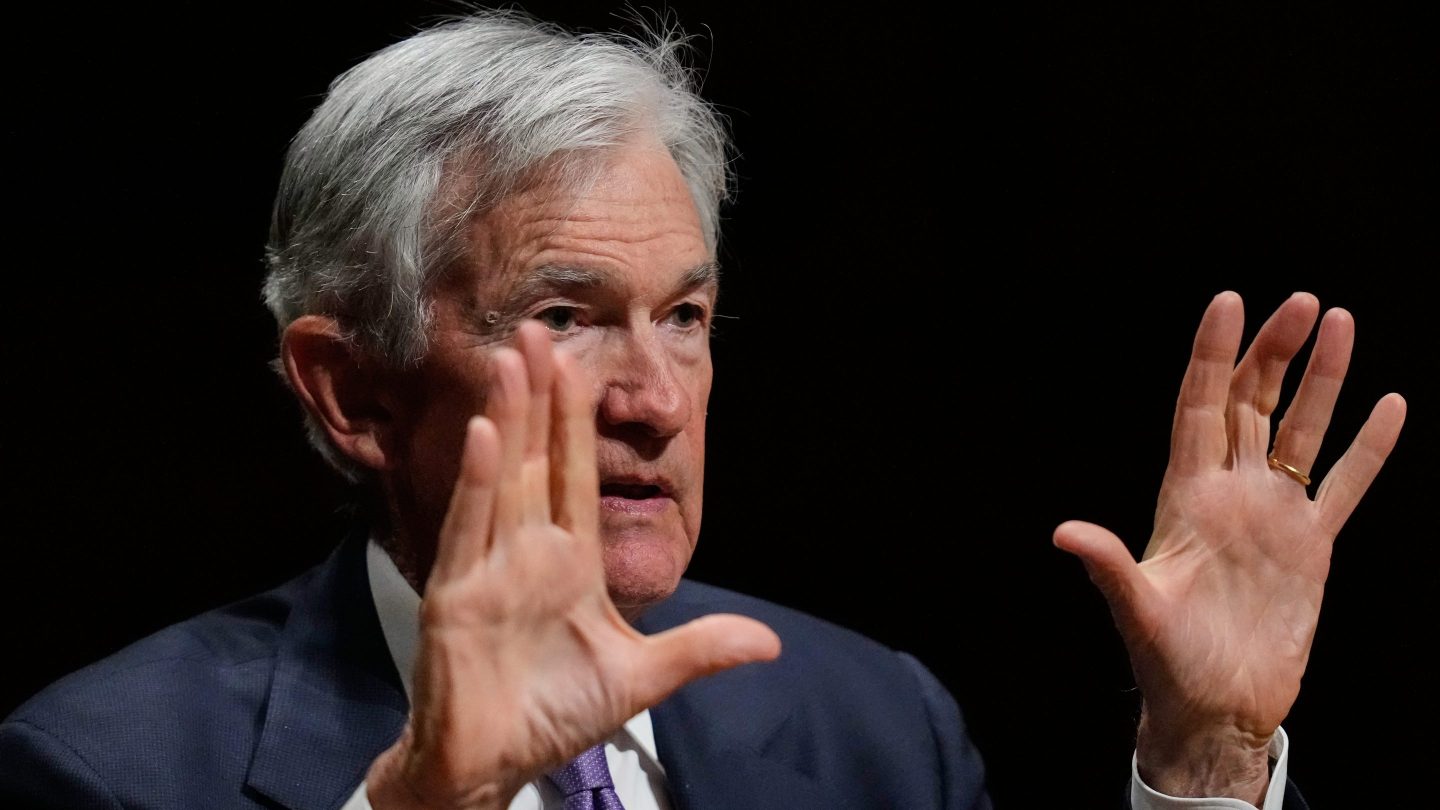
When asked about the Sahm Rule last month, Federal Reserve Chair Jerome Powell hinted at her points. Powell called the rule a “statistical regularity” and not “an economic rule where it’s telling you something must happen.” 

Slok cited Powell’s recommendation to look at more than just a single metric to properly assess the economy. Powell “said we should focus on the totality of the data, not just on one data point,” Slok wrote. “And the totality of the data still shows an economy that is solid.”

In a blog post published last week, Slok cited high levels of consumer spending on purchases like air travel and restaurants as signs the economy was slowing, but not cratering, and headed for a soft landing. Yet there are still some notable changes in consumer behavior that indicate tougher economic times could lie ahead. Retail spending has been wobbly in the past two months, and credit card delinquencies rose through the second quarter, neither of which bode well for the health of the U.S.’s consumer-driven economy.


Fortune Brainstorm AI returns to San Francisco Dec. 8–9 to convene the smartest people we know—technologists, entrepreneurs, Fortune Global 500 executives, investors, policymakers, and the brilliant minds in between—to explore and interrogate the most pressing questions about AI at another pivotal moment. Register here.
About the Author
Paolo Confino
By Paolo ConfinoReporter

Paolo Confino is a former reporter on Fortune’s global news desk where he covers each day’s most important stories.

See full bioRight Arrow Button Icon

Latest in Finance

RetailConsumer Spending
U.S. consumers are so financially strained they put more than $1 billion on buy-now, pay later services during Black Friday and Cyber Monday
By Jeena Sharma and Retail BrewDecember 5, 2025
10 hours ago
Elon Musk
Big TechSpaceX
Musk’s SpaceX discusses record valuation, IPO as soon as 2026
By Edward Ludlow, Loren Grush, Lizette Chapman, Eric Johnson and BloombergDecember 5, 2025
10 hours ago
data center
EnvironmentData centers
The rise of AI reasoning models comes with a big energy tradeoff
By Rachel Metz, Dina Bass and BloombergDecember 5, 2025
10 hours ago
Personal FinanceLoans
5 ways to use a home equity line of credit (HELOC)
By Joseph HostetlerDecember 5, 2025
10 hours ago
Netflix
InvestingAntitrust
Netflix–Warner Bros. deal sets up $72 billion antitrust test
By Josh Sisco, Samuel Stolton, Kelcee Griffis and BloombergDecember 5, 2025
10 hours ago
Schumer
Politicsnational debt
‘This is a bad idea made worse’: Senate Dems’ plan to fix Obamacare premiums adds nearly $300 billion to deficit, CRFB says
By Nick LichtenbergDecember 5, 2025
10 hours ago

Most Popular

placeholder alt text
Economy
Two months into the new fiscal year and the U.S. government is already spending more than $10 billion a week servicing national debt
By Eleanor PringleDecember 4, 2025
2 days ago
placeholder alt text
Success
‘Godfather of AI’ says Bill Gates and Elon Musk are right about the future of work—but he predicts mass unemployment is on its way
By Preston ForeDecember 4, 2025
2 days ago
placeholder alt text
Success
Nearly 4 million new manufacturing jobs are coming to America as boomers retire—but it's the one trade job Gen Z doesn't want
By Emma BurleighDecember 4, 2025
2 days ago
placeholder alt text
Success
Nvidia CEO Jensen Huang admits he works 7 days a week, including holidays, in a constant 'state of anxiety' out of fear of going bankrupt
By Jessica CoacciDecember 4, 2025
2 days ago
placeholder alt text
Real Estate
‘There is no Mamdani effect’: Manhattan luxury home sales surge after mayoral election, undercutting predictions of doom and escape to Florida
By Sasha RogelbergDecember 4, 2025
2 days ago
placeholder alt text
Economy
Tariffs and the $38 trillion national debt: Kevin Hassett sees ’big reductions’ in deficit while Scott Bessent sees a ‘shrinking ice cube’
By Nick LichtenbergDecember 4, 2025
2 days ago
Rankings
  • 100 Best Companies
  • Fortune 500
  • Global 500
  • Fortune 500 Europe
  • Most Powerful Women
  • Future 50
  • World’s Most Admired Companies
  • See All Rankings
Sections
  • Finance
  • Leadership
  • Success
  • Tech
  • Asia
  • Europe
  • Environment
  • Fortune Crypto
  • Health
  • Retail
  • Lifestyle
  • Politics
  • Newsletters
  • Magazine
  • Features
  • Commentary
  • Mpw
  • CEO Initiative
  • Conferences
  • Personal Finance
  • Education
Customer Support
  • Frequently Asked Questions
  • Customer Service Portal
  • Privacy Policy
  • Terms Of Use
  • Single Issues For Purchase
  • International Print
Commercial Services
  • Advertising
  • Fortune Brand Studio
  • Fortune Analytics
  • Fortune Conferences
  • Business Development
About Us
  • About Us
  • Editorial Calendar
  • Press Center
  • Work At Fortune
  • Diversity And Inclusion
  • Terms And Conditions
  • Site Map

© 2025 Fortune Media IP Limited. All Rights Reserved. Use of this site constitutes acceptance of our Terms of Use and Privacy Policy | CA Notice at Collection and Privacy Notice | Do Not Sell/Share My Personal Information
FORTUNE is a trademark of Fortune Media IP Limited, registered in the U.S. and other countries. FORTUNE may receive compensation for some links to products and services on this website. Offers may be subject to change without notice.