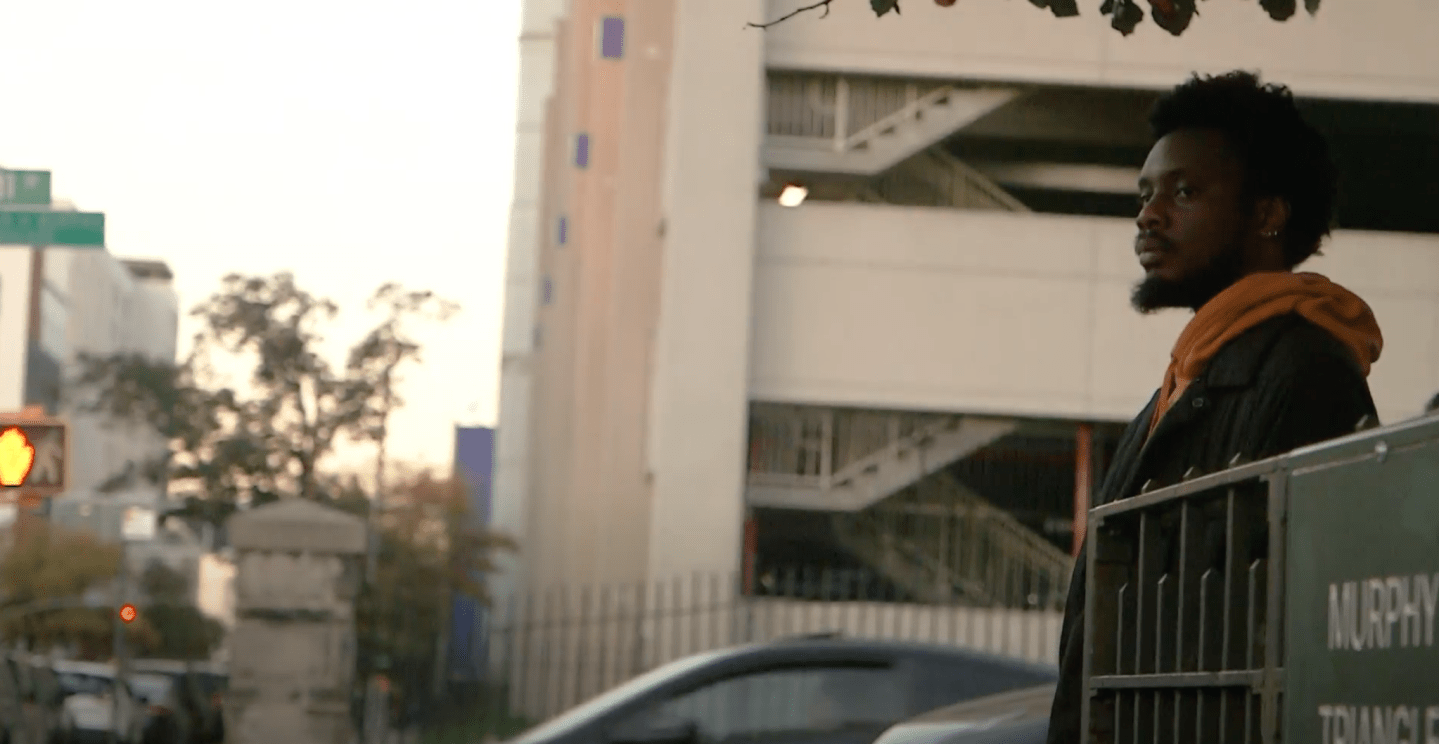
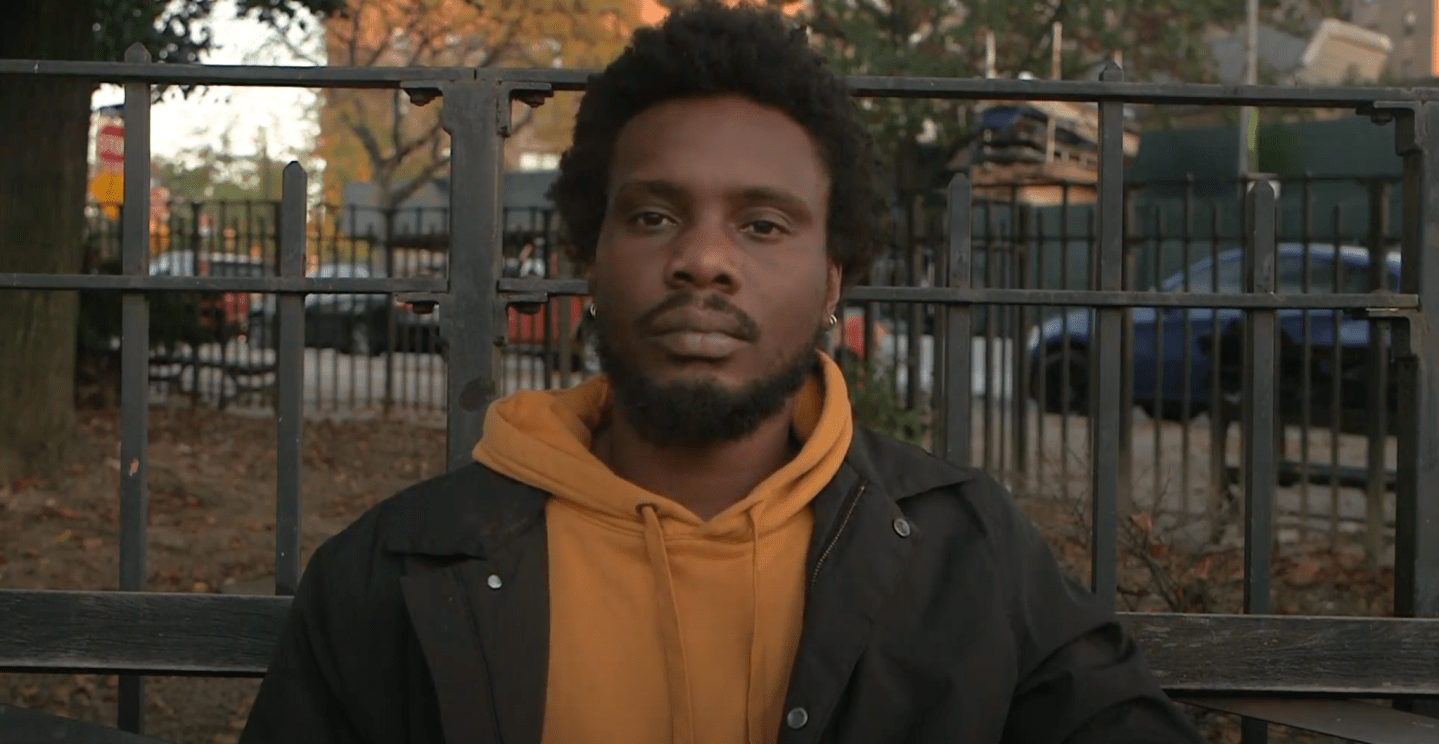
For the last seven years, Jha’asryel-Akquil Bishop has called city shelters their home.
Bishop lost their housing just one month after they immigrated to the United States from Guyana in 2016. They were living in Brooklyn with their uncle until they began experiencing domestic violence, which, they said, “forced me to move out.”
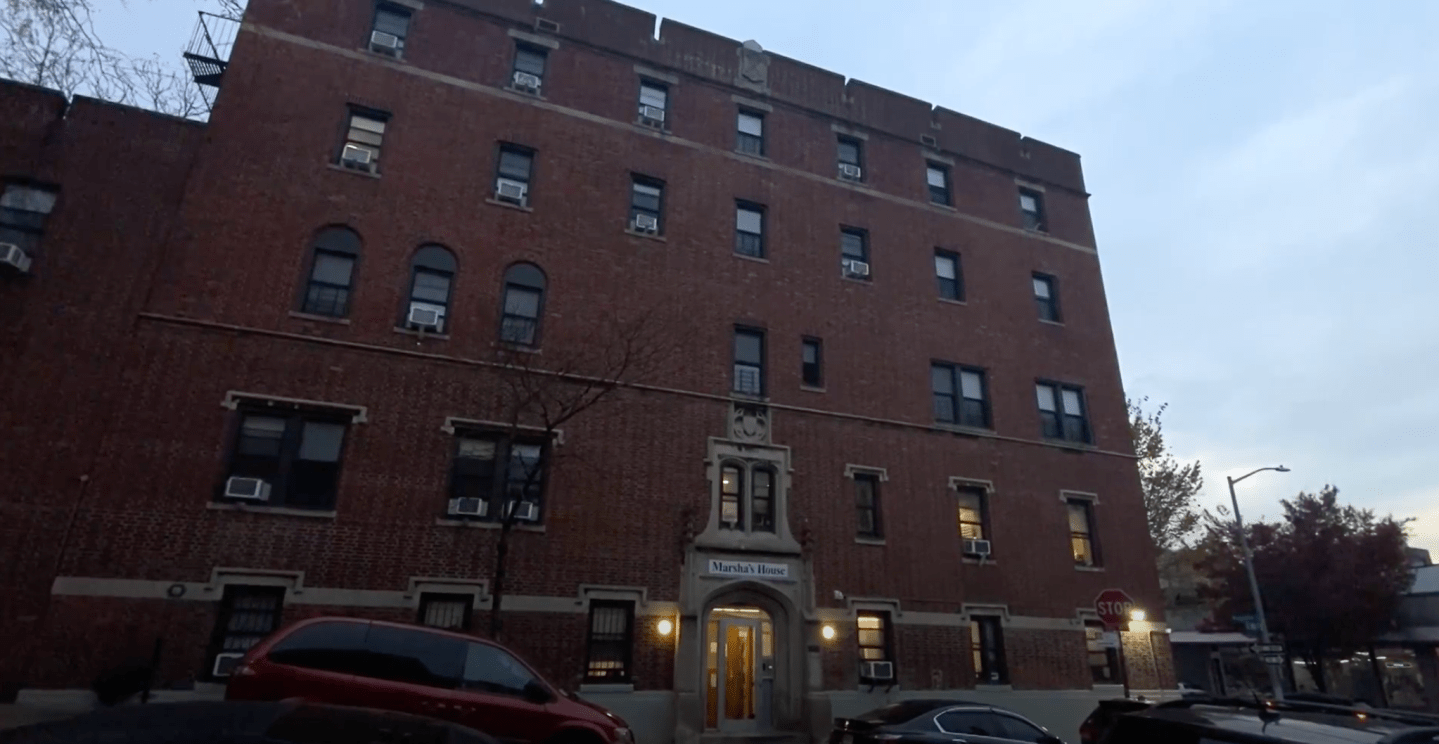
Now 27, they’re living at Marsha’s House, the only queer-designated shelter for adults in the city, which has been the center of several lawsuits for abuse and neglect and has been called a “nightmare” of misconduct and unsafe living conditions by ex-residents.
Despite the huge need for queer-designated shelters, there are only a handful of them out of hundreds of city shelters. In New York City, LGBTQ+ people make up only 10% of the general population, yet nearly 40% of LGBTQ+ New Yorkers report experiencing homelessness, according to estimates by a New York City Comptroller survey. For youth, the numbers are more grim: LGBTQ+ youth make up just 4.5% of the general population, but comprise nearly 40% of the city’s homeless youth, according to New York State’s Office of Children and Family Services—and the population is three times more likely to be physically threatened, abused, and carry emotional trauma than others who are homeless. Of the queer-designated shelters in the city, most are limited to services for youth under age 24.
Marsha’s House, however, is an exception. Located in Belmont in the Bronx, the shelter has an age limit of 30. But the shelter also comes with a slew of concerns, like broken facilities that go unfixed (despite required annual inspections), a layout that can contribute to emotional distress, especially for those who have experienced trauma, and staff who may be unfamiliar with LGBTQ+ issues, according to incident reports filed by residents that Fortune obtained through Freedom of Information requests.
Queer homeless residents are often traumatized and require different resources than others
LGBTQ+ homeless people are disproportionately affected by sexual or violent assaults, which in many cases lead to mental illnesses like post-traumatic stress disorder, depression, suicidal thoughts, and more. These risks can be greater for youth and young adults, like Bishop.
“I’m someone who’s experienced sexual violence and abuse, and so thinking about sharing a room with someone else who I don’t know and in a shelter setting, I did not sleep at night,” Bishop said. “I had chronic pain because I had trouble sleeping. I got placed on medication for sleep because I had trouble sleeping.”
A recent study found homeless queer youth had been sexually assaulted at three times the rate of non-LGBTQ+ homeless youth, and almost half of queer youth reported sexual abuse by an adult caretaker, compared to about 20% of non-LGBTQ+ youth.
According to a national study that analyzed mental illness in more than 400 homeless youth, 41% of those who identify as queer reported depression, compared to 28% of non-queer youth, and were also much more likely to report suicidal ideation and attempted suicide.
Marsha’s House, an 81-bed shelter that opened in 2017, is currently the city’s only adult shelter designated for sexual minorities—but Bishop believes “if Marsha’s House had an improved facility, it could become more accessible” to a population with a big need, but few resources for support.
Those who are queer and homeless, they said, “oftentimes are also victims of sexual violence and do need the privacy of a single room.”
At Marsha’s House, Bishop said they’ve witnessed their peers having manic episodes, bouts of psychosis, and mental distress. They said there are six single-person rooms usually reserved for people who have gotten a transitional surgery or when another room or bed needs repair.
Bishop believes the rooms could offer a few days of mental peace to residents who may need them, but they’re hard to access. The city’s Department of Homeless Services (DHS), rather than shelter staff, determines who can stay in them. “I think it is a very disadvantageous situation at the shelter,” Bishop said, adding, “when you’re recovering from discrimination and violence, oftentimes it’s hard to rest or sleep when there are other people around you. People may need those rooms to reset themselves, and that’s not an option available to them.”
Other structural elements of the shelter, which is five stories tall but does not have an elevator, also prevent those who have physical disabilities from living there.
The city’s Department of Homeless Services did not confirm Fortune’s inquiry on how many single-occupancy rooms are in the shelter or how residents can be eligible for them. A DHS spokesperson told Fortune the agency has been strengthening its trauma-informed support for LGBTQ+ populations for the last several years, including more training courses for staff since 2015.
Residents describe staff who are “nasty and rude and talk down to people”
Another challenge at Marsha’s House, Bishop told Fortune, includes staff members speaking rudely or yelling at residents. Bishop described such interactions as “tense.”
“Folks have had issues with staff to their gender identity and feeling discriminated or feeling unsafe,” they said.
Between December 2019 to April 2020, and June to December 2022, residents filed at least 10 complaints against staff behavior, according to residents’ grievance reports Fortune obtained through Freedom of Information requests, and is the second most frequent complaint from residents, those reports show.
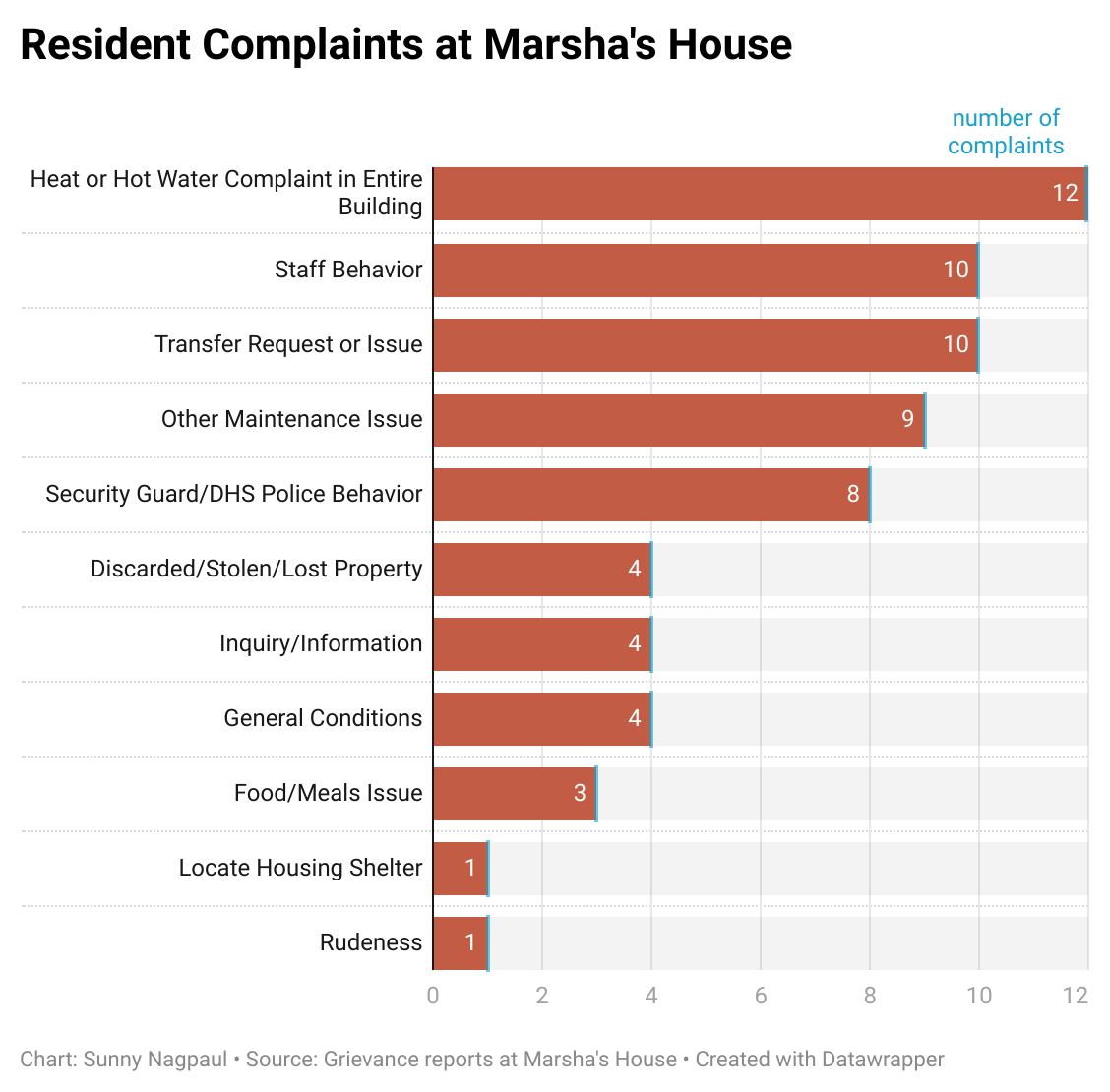
The complainants, whose names have been redacted from the reports, said “the staff is very rude and need to be changed and trained,” are “nasty and rude and talk down to people,” and talk “negatively and disrespectfully” about residents.
Another complainant said staff have called residents derogatory names. When the resident spoke to the director, they wrote, they “felt dismissed and no disciplinary action was taken against the staff member.”
Such interactions, it seems, have now shaped the shelter’s reputation. Maddox Guerilla, a senior consultant at housing-advocacy group Point Source Youth, also used to be homeless and heard about staff troubles at the shelter. “I don’t think the staff at Marsha’s House are being trained in queer issues,” Guerilla told Fortune, “because I hear people all the time saying, ‘they don’t respect me by my name,’ or ‘they’re harassing me, misgendering me, they don’t treat trans people right.’”
A DHS spokesperson told Fortune all shelter staff receive a full-day training course in LGBTQ+ specific issues, and any additional training each shelter provider may offer, and that staff are expected to lead with care and compassion when engaging with clients. The spokesperson also said the agency has robust accountability mechanisms in place to address inappropriate staff behavior, but did not elaborate on what those measures are.
To be sure, queer homeless residents often face discrimination at shelters, and find themselves in positions where they may be too vulnerable or unstable to speak up for themselves. One transgender woman, Mariah Lopez, however, has sued the city several times for discrimination against her. Her most recent lawsuit was against Marsha’s House, which she sued because she says she was denied entry to the shelter with her service dog, Chica, who helps her manage her post-traumatic stress and anxiety disorders.
Her lawsuit led to changes. Following her case, in 2021 the city’s Department of Homeless Services pledged to create another shelter specifically for transgender and non-gender-conforming clients, and to reserve 30 beds across Manhattan, the Bronx, Brooklyn, and Queens that will include single-stalled toilets, showers, and private bathrooms with doors that can lock, where possible.
Unsanitary conditions remain unfixed for years
Queer populations still face challenges that other homeless people face, like infestations, mold, and broken things.
At Marsha’s House, the most common complaints were about heat or hot water in the building, according to the residents’ reports, which reveal that showers have had issues with uncontrollable burning hot water since 2020.
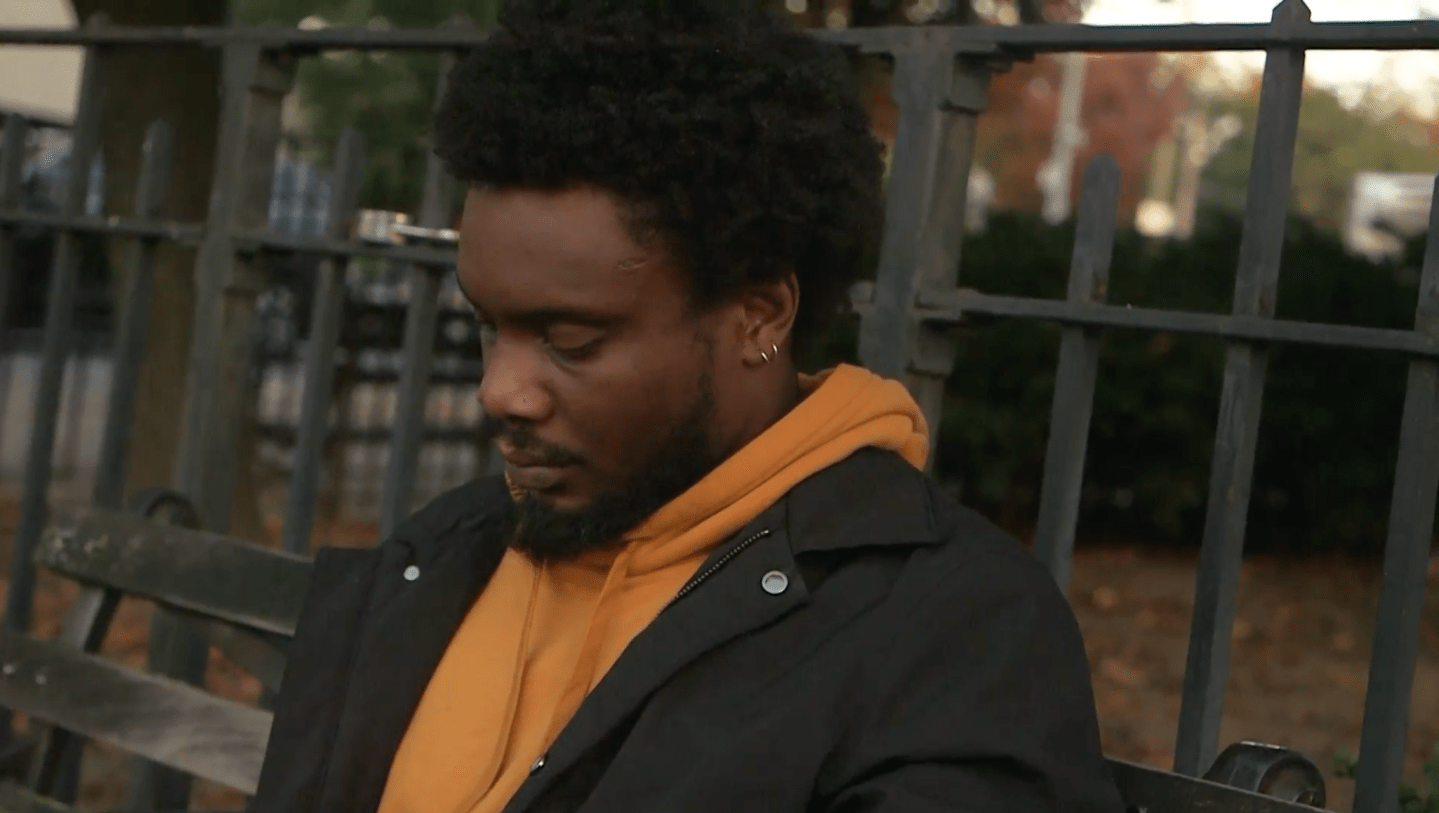
The showers in the shelter, Bishop said, operate by pressing a button rather than a dial, and often the temperature of the water is so hot, they’ve developed rashes, dry skin, and even breathing problems.
“If the temperature of the water is too hot or the room gets too humid, I usually lose my breath or faint,” Bishop said.
According to the residents’ reports, the most hot-water complaints were filed in March and April 2020. The complaints in the report said “the water literally burns people’s skin,” and cited “water which is extremely hot in the shower.” One client said he mentioned this to staff, “but nothing has been done.”
Bishop was also recently diagnosed with an intestinal parasite, and the bathrooms are so dirty that they worry it will spread. “You go there and you see feces from the person that used it before,” they said. Last year, one resident reported “there is a person or persons leaving poop smear all over in a lot of the restrooms. Directors know about this, this is still happening.” Other complaints cited mold and bug infestations.
A DHS spokesperson told Fortune that when the agency is made aware of conditions that adversely impact residents’ quality of life, it works closely with shelter operators and landlords to rectify the situation in a timely manner.
New York’s homeless crisis is growing
More than 200,600 migrants have arrived in New York since the spring of 2022, and more than 65,600 people remain in the city’s care, according to city data. Up to 1,500 migrants live in temporary emergency shelters outside the city.
In 2016, the New York State Comptroller began a series of audit reports on shelter conditions, with new versions released every four years. The goal was to reveal the gaps in shelter regulations, which allow broken things to go unfixed for years.
The most recent 2020 report found over 60% of the city’s 80 shelters had significant health and safety risks. Peter Carroll, the lead author of the audit report, told Fortune the biggest issues include mold, vermin, and bug infestations, and that while his team was doing surveys, it was clear that “nobody really knew the scope of the population or the problem.”
He described how the inspection process works: OTDA, the main regulating entity of shelters statewide, inspects shelters annually, and then works with shelters or property owners to address violations. If a violation requires more than one month to fix, the shelter should submit a “corrective action plan” to OTDA. But according to the report, that’s one of the steps causing confusion. In five shelters where corrective action plans stated issues like bathtub mold and broken toilets were fixed, Carroll’s audit team returned to see the find the same broken conditions.
“We found that in most cases, the conditions didn’t get better, they got worse,” Carroll said.
The most promising solution for broken facilities, he said, may be more money or at least awareness of financial support that is already siphoned off for shelters. In the state’s yearly budget, $1 million is available through grants to shelters and shelter providers through OTDA for emergency repairs.
“It could bring up to $150,000 per facility, each year,” Carroll said, adding that many shelters his team visited said there wasn’t enough money to address the health risks. “This grant would be a way to close that gap.”