• Home
  • Latest
  • Fortune 500
  • Finance
  • Tech
  • Leadership
  • Lifestyle
  • Rankings
  • Multimedia
CommentaryAI

The death of the Chevron doctrine complicates U.S. policymakers’ efforts to regulate AI—but there’s another way

By
Dewey Murdick
Dewey Murdick
and
Owen J. Daniels
Owen J. Daniels
Down Arrow Button Icon
By
Dewey Murdick
Dewey Murdick
and
Owen J. Daniels
Owen J. Daniels
Down Arrow Button Icon
July 11, 2024, 10:26 AM ET

Dewey Murdick is the executive director at Georgetown University’s Center for Security and Emerging Technology (CSET). Owen J. Daniels is the Andrew W. Marshall fellow at Georgetown University’s Center for Security and Emerging Technology (CSET).

A divided U.S. Supreme Court has thrown out a decades-old legal doctrine that empowered federal regulators to interpret unclear laws, issuing a blockbuster ruling that will constrain environmental, consumer and financial watchdog agencies.
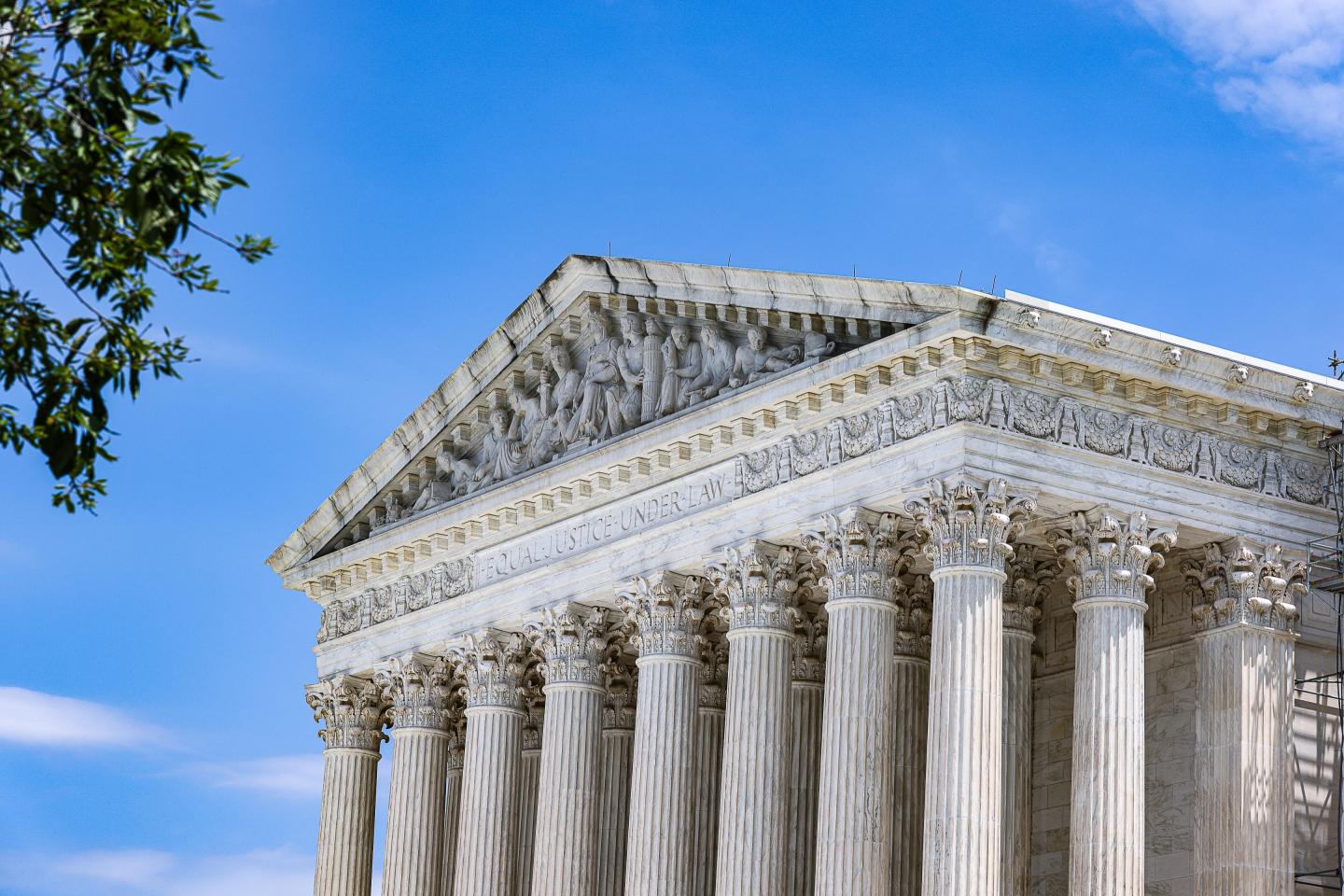
A divided U.S. Supreme Court has thrown out a decades-old legal doctrine that empowered federal regulators to interpret unclear laws, issuing a blockbuster ruling that will constrain environmental, consumer and financial watchdog agencies.Valerie Plesch - Bloomberg - Getty Images

In a time when passing basic legislation is already challenging, the Supreme Court’s recent decision in Loper Bright Enterprises et al. v. Raimondo has changed the options space for how the U.S. can govern highly dynamic areas of innovation, such as artificial intelligence (AI). By overturning the Chevron Doctrine’s deference to executive agencies, the Court has weakened rule-making agencies’ abilities to interpret and administer laws on issues of public concern, transferring interpretative power of federal laws to the court system. 

America is locked in a battle for global leadership in AI, both in terms of creating cutting-edge technology and ensuring that developers build new models and applications safely for the good of society. Against this backdrop, determining how the U.S. governs, innovates, and competes globally in AI is critically important, especially when it is nearly impossible for a partisan Congress to write unambiguous laws about complex technologies. As the dust settles, this new reality will become more apparent. This is especially true—and urgent—as Congress and the White House grapple with AI governance. 

To rise to the challenge of AI governance in this new environment, the U.S. needs nimble, forward-thinking policies to protect against AI’s risks while promoting American innovation.

We propose three principles to enable an agile approach to AI governance and maintain the United States’ technological edge. Our conclusions are based on extensive analysis conducted across the Center for Security and Emerging Technology (CSET) research team that informed our understanding of the practical realities of AI governance. This work drew on evaluation of existing AI models’ technical capabilities, study of AI risks and incidents, comparative policy analysis of the U.S. and other nations, exploration of current regulatory authorities and technological evaluation methods, and insights gained through personal conversations with congressional members, current and former senior officials, and other key stakeholders.

First, effective protection against AI harms hinges on our ability to identify them. Prioritizing AI incident reporting is crucial to mapping the landscape of AI risks. New AI governance frameworks should incentivize companies to report incidents involving their systems to regulatory agencies or a neutral body such as the National Institute for Standards and Technology. This approach would enhance public awareness of AI risks and help identify patterns across industries.

Implementing a robust harm measurement system and mandating comprehensive incident reporting can discourage risky innovation practices without stifling progress. A thoughtful phased amnesty system for self-reporting would motivate AI developers to learn from mistakes and act responsibly. Combining this mandatory approach with voluntary and citizen reporting would provide a more complete picture of AI safety. While setting up such a system will involve initial costs and challenges, a reporting framework that creates the right incentives for industry could inform and catalyze future AI governance efforts.

Second, an adaptive and flexible approach to AI governance is crucial. Federal agencies should leverage existing regulatory authorities applicable to AI rather than pursuing new regulations. However, they must also acknowledge their limitations in areas such as human capital, expertise, and infrastructure for testing and evaluation. The Supreme Court’s decision will inevitably raise questions about precisely how agencies understand their existing authorities, but it also underlines the imperative of adopting governance that can incorporate private sector expertise while avoiding regulatory capture. 

Enhancing AI literacy among policymakers and now judges is essential. This includes developing a fundamental understanding of AI’s strengths, weaknesses, applications, and limitations. Such knowledge will be key to crafting adaptive governance strategies that can keep pace with rapid technological advancements.

Third, AI governance should leverage America’s strengths: our culture of innovation and our decentralized, dynamic economy. This is particularly crucial in the context of technological competition with China. While the Biden Administration has taken defensive measures, such as restricting exports of advanced semiconductors and controlling outbound investments in critical technologies, these steps may only temporarily slow China’s progress.

Instead of focusing on defensive strategies, policymakers should aim to accelerate innovation within the distributed U.S. innovation environment. This approach plays to our strengths rather than competing on China’s terms, where they have long-standing expertise in legal, illegal, and extralegal forms of tech transfer. Policymakers should complement necessary controls with regulatory incentives that reinforce America’s capacity to create robust innovation ecosystems and attract top talent. Incentivizing breakthrough research, creating tax incentives for reshoring critical supply chains to the U.S. and friendly countries, and continuing to develop a favorable startup environment can help us outpace our rivals through relentless creativity and adaptability, rather than restrictions. 

The Loper Bright decision, while challenging existing regulatory approaches, presents an opportunity to create a more agile, distributed, and innovation-friendly governance environment for AI. By focusing on incentives, fostering adaptability, and leveraging our strong innovation ecosystem, Loper Bright is driving us to create smart governance of artificial intelligence—and perhaps an approach that could serve as a model for dealing with other future technologies.

More must-read commentary published by Fortune:

  • How U.S.-China competition is benefiting the world—and reshaping the global economy
  • ‘A head-in-the-sand approach’: The U.S. strategic drug stockpile is inadequate for a bird flu outbreak
  • The national debt is over $34 trillion. It’s time to tell the truth about the U.S. government’s finances
  • Fearless Fund counsel: The court ruling barring grants to Black women entrepreneurs should terrify CEOs

The opinions expressed in Fortune.com commentary pieces are solely the views of their authors and do not necessarily reflect the opinions and beliefs of Fortune.

Join us at the Fortune Workplace Innovation Summit May 19–20, 2026, in Atlanta. The next era of workplace innovation is here—and the old playbook is being rewritten. At this exclusive, high-energy event, the world’s most innovative leaders will convene to explore how AI, humanity, and strategy converge to redefine, again, the future of work. Register now.
About the Authors
By Dewey Murdick
See full bioRight Arrow Button Icon
By Owen J. Daniels
See full bioRight Arrow Button Icon

Latest in Commentary

Finance
Lorem ipsum dolor sit amet, consectetur adipiscing elit, sed do eiusmod tempor incididunt ut labore et dolore magna aliqua. Ut enim ad minim veniam
By Fortune Editors
October 20, 2025
Finance
Lorem ipsum dolor sit amet, consectetur adipiscing elit, sed do eiusmod tempor incididunt ut labore et dolore magna aliqua. Ut enim ad minim veniam
By Fortune Editors
October 20, 2025
Finance
Lorem ipsum dolor sit amet, consectetur adipiscing elit, sed do eiusmod tempor incididunt ut labore et dolore magna aliqua. Ut enim ad minim veniam
By Fortune Editors
October 20, 2025
Finance
Lorem ipsum dolor sit amet, consectetur adipiscing elit, sed do eiusmod tempor incididunt ut labore et dolore magna aliqua. Ut enim ad minim veniam
By Fortune Editors
October 20, 2025
Finance
Lorem ipsum dolor sit amet, consectetur adipiscing elit, sed do eiusmod tempor incididunt ut labore et dolore magna aliqua. Ut enim ad minim veniam
By Fortune Editors
October 20, 2025
Finance
Lorem ipsum dolor sit amet, consectetur adipiscing elit, sed do eiusmod tempor incididunt ut labore et dolore magna aliqua. Ut enim ad minim veniam
By Fortune Editors
October 20, 2025

Most Popular

Finance
Lorem ipsum dolor sit amet, consectetur adipiscing elit, sed do eiusmod tempor incididunt ut labore et dolore magna aliqua. Ut enim ad minim veniam
By Fortune Editors
October 20, 2025
Finance
Lorem ipsum dolor sit amet, consectetur adipiscing elit, sed do eiusmod tempor incididunt ut labore et dolore magna aliqua. Ut enim ad minim veniam
By Fortune Editors
October 20, 2025
Finance
Lorem ipsum dolor sit amet, consectetur adipiscing elit, sed do eiusmod tempor incididunt ut labore et dolore magna aliqua. Ut enim ad minim veniam
By Fortune Editors
October 20, 2025
Finance
Lorem ipsum dolor sit amet, consectetur adipiscing elit, sed do eiusmod tempor incididunt ut labore et dolore magna aliqua. Ut enim ad minim veniam
By Fortune Editors
October 20, 2025
Finance
Lorem ipsum dolor sit amet, consectetur adipiscing elit, sed do eiusmod tempor incididunt ut labore et dolore magna aliqua. Ut enim ad minim veniam
By Fortune Editors
October 20, 2025
Finance
Lorem ipsum dolor sit amet, consectetur adipiscing elit, sed do eiusmod tempor incididunt ut labore et dolore magna aliqua. Ut enim ad minim veniam
By Fortune Editors
October 20, 2025
Fortune Secondary Logo
Rankings
  • 100 Best Companies
  • Fortune 500
  • Global 500
  • Fortune 500 Europe
  • Most Powerful Women
  • World's Most Admired Companies
  • See All Rankings
  • Lists Calendar
Sections
  • Finance
  • Fortune Crypto
  • Features
  • Leadership
  • Health
  • Commentary
  • Success
  • Retail
  • Mpw
  • Tech
  • Lifestyle
  • CEO Initiative
  • Asia
  • Politics
  • Conferences
  • Europe
  • Newsletters
  • Personal Finance
  • Environment
  • Magazine
  • Education
Customer Support
  • Frequently Asked Questions
  • Customer Service Portal
  • Privacy Policy
  • Terms Of Use
  • Single Issues For Purchase
  • International Print
Commercial Services
  • Advertising
  • Fortune Brand Studio
  • Fortune Analytics
  • Fortune Conferences
  • Business Development
  • Group Subscriptions
About Us
  • About Us
  • Press Center
  • Work At Fortune
  • Terms And Conditions
  • Site Map
  • About Us
  • Press Center
  • Work At Fortune
  • Terms And Conditions
  • Site Map
  • Facebook icon
  • Twitter icon
  • LinkedIn icon
  • Instagram icon
  • Pinterest icon

Latest in Commentary

Can the ‘blue economy’ deliver on its promise? Investors are starting see the ocean as an asset worth protecting
CommentaryConservation
Can the ‘blue economy’ deliver on its promise? Investors are starting see the ocean as an asset worth protecting
By Natalie Sum Yue ChungMay 2, 2026
7 hours ago
old
Commentaryaffordability
The American household just took an 81% margin cut. Wall Street hasn’t priced it in
By Katica RoyMay 2, 2026
19 hours ago
dario
CommentaryAnthropic
Anthropic’s most powerful AI model just exposed a crisis in corporate governance. Here’s the framework every CEO needs.
By Jeffrey Sonnenfeld, Stephen Henriques, Dan Kent and Holden LeeMay 2, 2026
19 hours ago
mackenzie
Commentaryphilanthropy
Stop donating to Harvard and the Ivy League. There’s a better option that MacKenzie Scott already figured out
By Ed Smith-LewisMay 2, 2026
22 hours ago
drinks
CommentaryFood and drink
We need a new way of thinking about drinking: Time to replace the ‘standard drink’ with advice people can actually use
By Justin KissingerMay 2, 2026
22 hours ago
pakistan
CommentaryIran
Asia is being hammered by the Iran conflict’s economic fallout. The U.S. has the playbook to help—and every reason to
By Wendy Cutler and Jane MellsopMay 2, 2026
22 hours ago

Most Popular

Scott Bessent on financial literacy: 'it drives me crazy' to see young men in blue-collar construction jobs playing the lottery
Personal Finance
Scott Bessent on financial literacy: 'it drives me crazy' to see young men in blue-collar construction jobs playing the lottery
By Fatima Hussein and The Associated PressMay 1, 2026
2 days ago
Gen Z is rebelling against the economy with ‘disillusionomics,’ tackling near 6-figure debt by turning life into a giant list of income streams
Economy
Gen Z is rebelling against the economy with ‘disillusionomics,’ tackling near 6-figure debt by turning life into a giant list of income streams
By Jacqueline MunisMay 2, 2026
16 hours ago
Stop donating to Harvard and the Ivy League. There's a better option that MacKenzie Scott already figured out
Commentary
Stop donating to Harvard and the Ivy League. There's a better option that MacKenzie Scott already figured out
By Ed Smith-LewisMay 2, 2026
22 hours ago
The American household just took an 81% margin cut. Wall Street hasn’t priced it in
Commentary
The American household just took an 81% margin cut. Wall Street hasn’t priced it in
By Katica RoyMay 2, 2026
19 hours ago
A Chick-fil-A worker got fired and then showed up behind the register to allegedly refund himself over $80,000 in mac and cheese
Law
A Chick-fil-A worker got fired and then showed up behind the register to allegedly refund himself over $80,000 in mac and cheese
By Catherina GioinoMay 1, 2026
2 days ago
Current price of oil as of May 1, 2026
Personal Finance
Current price of oil as of May 1, 2026
By Joseph HostetlerMay 1, 2026
2 days ago

© 2026 Fortune Media IP Limited. All Rights Reserved. Use of this site constitutes acceptance of our Terms of Use and Privacy Policy | CA Notice at Collection and Privacy Notice | Do Not Sell/Share My Personal Information
FORTUNE is a trademark of Fortune Media IP Limited, registered in the U.S. and other countries. FORTUNE may receive compensation for some links to products and services on this website. Offers may be subject to change without notice.