• Home
  • Latest
  • Fortune 500
  • Finance
  • Tech
  • Leadership
  • Lifestyle
  • Rankings
  • Multimedia

Trendingnow

1

Surging Treasury yields expose a brutal truth: America has no margin for error on its $39 trillion debt

2

U.S. says deals with Iran for safe Hormuz transit are prohibited

3

After a judge ordered Trump's name be removed from the Kennedy Center, president says it will 'soon be closed, probably never to open again'

1

Surging Treasury yields expose a brutal truth: America has no margin for error on its $39 trillion debt

2

U.S. says deals with Iran for safe Hormuz transit are prohibited

3

After a judge ordered Trump's name be removed from the Kennedy Center, president says it will 'soon be closed, probably never to open again'
CommentaryEconomy

The national debt is over $34 trillion. It’s time to tell the truth about the U.S. government’s finances

By
Alvaro Vargas Llosa
Alvaro Vargas Llosa
Down Arrow Button Icon
By
Alvaro Vargas Llosa
Alvaro Vargas Llosa
Down Arrow Button Icon
June 24, 2024, 11:09 AM ET
Alvaro Vargas Llosa is a Senior Fellow of the Independent Institute, Oakland, Calif. His latest book is Global Crossings: Immigration, Civilization and America.
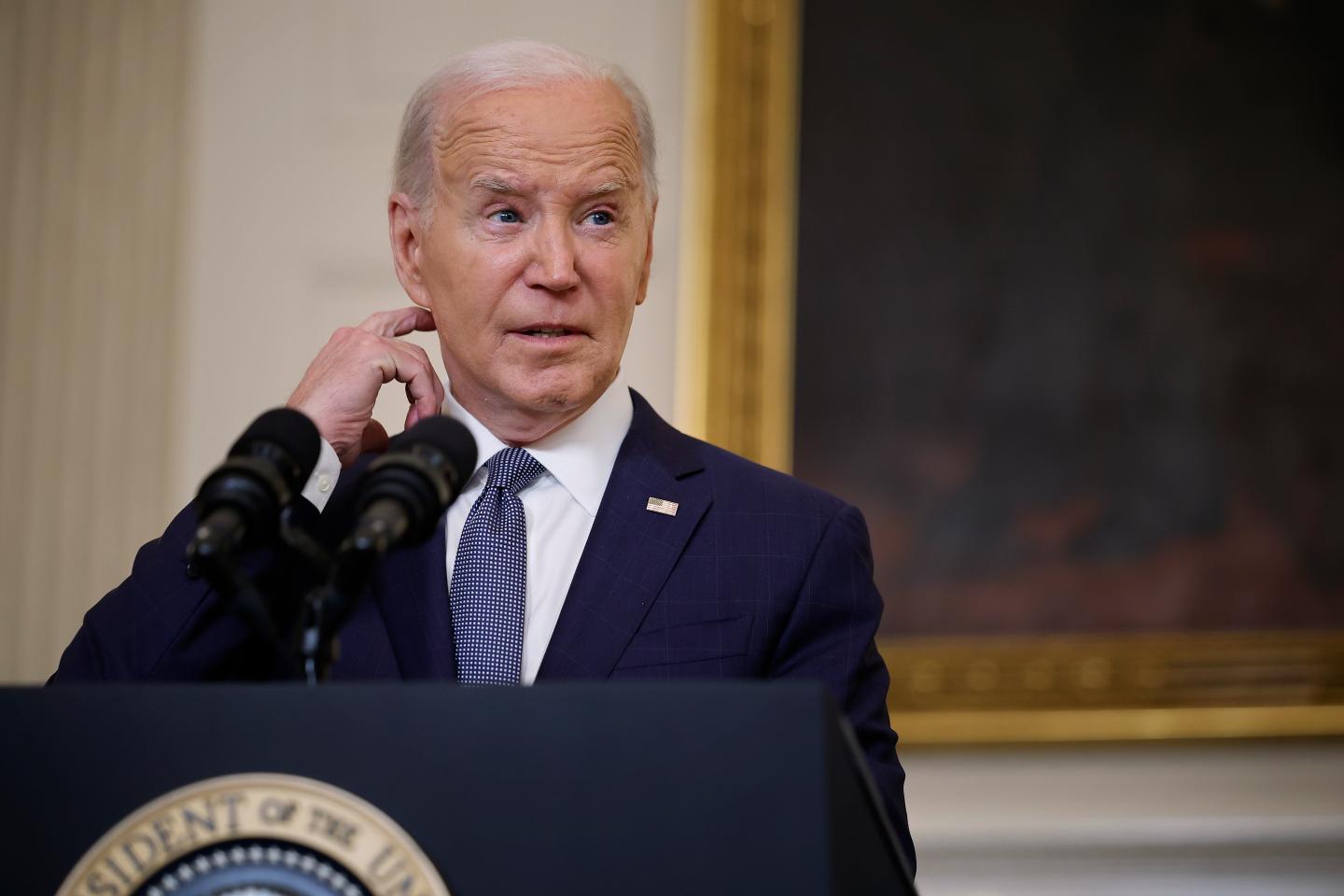
The national debt is expected to reach a new record by year end—but neither party has a credible plan to address it.
The national debt is expected to reach a new record by year end—but neither party has a credible plan to address it. Chip Somodevilla—Getty Images

If anyone living in the United States in the decades immediately after the Second World War had predicted the self-inflicted financial mess the U.S. government now finds itself in, nobody would have taken that person seriously.

For most of American history, until the mid-1970s, annual federal spending and revenue were roughly in balance—the exceptions being in wartime. Contrast that with the federal deficit in fiscal year 2023, which topped $1.7 trillion, an amount larger than Mexico’s total economy (the 12th largest in the world). It exceeded $1 trillion again in the first eight months of the current fiscal year and, according to the Congressional Budget Office’s latest forecast, released on June 18, will approach $2 trillion by the end of fiscal 2024.

This has fueled a massive increase in the federal debt, which now totals $34 trillion, about $6 trillion more than America’s gross domestic product (GDP), the value of all the goods and services produced by America’s 330 million residents in a year. If we count Social Security and Medicare liabilities, total debt is several times larger than GDP.

The consequences are sobering. Politicians like to use euphemisms to describe what they’re doing. Government spending, in the current vernacular, is referred to as “investment.” Government spending, however, crowds out investment, which explains why private investment, the equivalent of 4.8% of GDP, is 30% lower than in 2000.

At the same time, the purchasing power of the U.S. dollar, a reflection of both the federal government’s finances and the Federal Reserve’s money printing, also is down: by more than 50% since 2000.

As a result of this economic mismanagement, the U.S. government will pay close to $900 billion this year just in interest payments on the national debt—and, according to Congressional Budget Office (CBO) projections, which assume an idyllic scenario of no major wars, no recessions, and no financial crises, debt service will steadily increase to some $5.3 trillion by 2054. It was hard enough sustaining a debt that stood at 106% of GDP during WWII, when the country’s savings rate was 24%, but sustaining a much higher level of indebtedness with today’s 3% savings rate defies the imagination.

This catastrophe has been a long time in the making. In 1993, for instance, the annual deficit amounted to 3.8% of GDP, and the debt, which seemed astronomically high at a “mere” $4.4 trillion, was Lilliputian by today’s standards.

The trend goes back longer than that. The growth of the U.S. government in modern times is the story of post-WWII America. President Dwight Eisenhower seems to have been the last guy in the post-WWII era who understood that the welfare state, the warfare state, and tax cuts not backed by tough spending cuts are incompatible with fiscally responsible government, or at least with reasonably-sized government. His predecessor, Harry Truman, who had funded the Korean War effort, left Eisenhower a level of federal spending equivalent to 18.5% of GDP. Between then and now, both parties, with short-lived exceptions, have pushed both the defense and domestic budgets exponentially higher.

Lyndon Johnson took spending to 19.6% of GDP; Richard Nixon and Gerald Ford to 21.5%; Jimmy Carter to 21.8%; George W. Bush to 21.9%; Barack Obama to 24.9% (before bringing it back to 21.9%); Donald Trump to 31.3% (during the COVID-19 meltdown), and Joe Biden to 31.7%, although now it has come down to 22%.

Between 1950 and 1970, total debt (including government, household, corporate, and financial) was stable at about 150% of GDP. After Nixon did away with what was left of the gold standard in 1971, it was off to the races. Since then, total debt has grown by nearly 5,600%, more than double the U.S. economic growth rate.

There was a time, even in the middle of the Cold War, when government leaders, despite their international responsibilities and the onerous legacy of the New Deal and Great Society that nobody dared reverse, understood the need for fiscal discipline and containing the growth of government.

Between 1947 and 1966, the budget was balanced in 12 years, while the rest of the time there was a negligible average deficit of 0.07%. Contrast that with the 12 years under Presidents Ronald Reagan and George H. W. Bush (mostly with a hostile or partly hostile Congress), which averaged a 4% deficit due to defense spending increases, abandonment of domestic restraint—a legacy of Johnson’s “bread and butter” years and the Nixon-Ford presidencies’ about-face on most of the economic principles they previously had espoused—and the unfunded tax cuts influenced by Arthur Laffer’s notion that tax cuts would pay for themselves. Gone was Eisenhower’s discipline, who insisted on slashing spending before he cut taxes.

The new millennium distorted matters even further, with the annual deficit from 2002 to 2023 averaging 5% over the two decades, 20% higher than nominal economic growth, which averaged 4.2%. President Obama, under whom the deficit was double the Congressional Budget Office’s original projections, got the spending spree started, with Presidents Trump and Biden taking it to new levels.  

It’s now come down to this. Unless a new generation of leaders has the courage to cut such “untouchables” as the defense, education, justice, and homeland security budgets, and privatize the Social Security program (as more than 40 countries wisely have done), sooner or later, the current trajectory of federal finances will lead to an extremely ugly place. If you think things are bad now, just wait.

More must-read commentary published by Fortune:

  • Booz Allen Hamilton CEO: America needs a whole-of-nation approach in its great power competition with China
  • NYC comptroller: Food delivery apps are blaming minimum pay for inflation. It’s baloney
  • ‘Sometimes, the facts don’t matter’: Attacks on DEI are an anti-capitalist war on American prosperity
  • No one wants another pandemic—but bird flu has already flown the coop

The opinions expressed in Fortune.com commentary pieces are solely the views of their authors and do not necessarily reflect the opinions and beliefs of Fortune.

About the Author
By Alvaro Vargas Llosa
See full bioRight Arrow Button Icon

Latest in Commentary

Finance
Lorem ipsum dolor sit amet, consectetur adipiscing elit, sed do eiusmod tempor incididunt ut labore et dolore magna aliqua. Ut enim ad minim veniam
By Fortune Editors
October 20, 2025
Finance
Lorem ipsum dolor sit amet, consectetur adipiscing elit, sed do eiusmod tempor incididunt ut labore et dolore magna aliqua. Ut enim ad minim veniam
By Fortune Editors
October 20, 2025
Finance
Lorem ipsum dolor sit amet, consectetur adipiscing elit, sed do eiusmod tempor incididunt ut labore et dolore magna aliqua. Ut enim ad minim veniam
By Fortune Editors
October 20, 2025
Finance
Lorem ipsum dolor sit amet, consectetur adipiscing elit, sed do eiusmod tempor incididunt ut labore et dolore magna aliqua. Ut enim ad minim veniam
By Fortune Editors
October 20, 2025
Finance
Lorem ipsum dolor sit amet, consectetur adipiscing elit, sed do eiusmod tempor incididunt ut labore et dolore magna aliqua. Ut enim ad minim veniam
By Fortune Editors
October 20, 2025
Finance
Lorem ipsum dolor sit amet, consectetur adipiscing elit, sed do eiusmod tempor incididunt ut labore et dolore magna aliqua. Ut enim ad minim veniam
By Fortune Editors
October 20, 2025

Most Popular

Finance
Lorem ipsum dolor sit amet, consectetur adipiscing elit, sed do eiusmod tempor incididunt ut labore et dolore magna aliqua. Ut enim ad minim veniam
By Fortune Editors
October 20, 2025
Finance
Lorem ipsum dolor sit amet, consectetur adipiscing elit, sed do eiusmod tempor incididunt ut labore et dolore magna aliqua. Ut enim ad minim veniam
By Fortune Editors
October 20, 2025
Finance
Lorem ipsum dolor sit amet, consectetur adipiscing elit, sed do eiusmod tempor incididunt ut labore et dolore magna aliqua. Ut enim ad minim veniam
By Fortune Editors
October 20, 2025
Finance
Lorem ipsum dolor sit amet, consectetur adipiscing elit, sed do eiusmod tempor incididunt ut labore et dolore magna aliqua. Ut enim ad minim veniam
By Fortune Editors
October 20, 2025
Finance
Lorem ipsum dolor sit amet, consectetur adipiscing elit, sed do eiusmod tempor incididunt ut labore et dolore magna aliqua. Ut enim ad minim veniam
By Fortune Editors
October 20, 2025
Finance
Lorem ipsum dolor sit amet, consectetur adipiscing elit, sed do eiusmod tempor incididunt ut labore et dolore magna aliqua. Ut enim ad minim veniam
By Fortune Editors
October 20, 2025
Fortune Secondary Logo
Rankings
  • 100 Best Companies
  • Fortune 500
  • Global 500
  • Fortune 500 Europe
  • Most Powerful Women
  • World's Most Admired Companies
  • See All Rankings
  • Lists Calendar
Sections
  • Finance
  • Fortune Crypto
  • Features
  • Leadership
  • Health
  • Commentary
  • Success
  • Retail
  • Mpw
  • Tech
  • Lifestyle
  • CEO Initiative
  • Asia
  • Politics
  • Conferences
  • Europe
  • Newsletters
  • Personal Finance
  • Environment
  • Magazine
  • Education
Customer Support
  • Frequently Asked Questions
  • Customer Service Portal
  • Privacy Policy
  • Terms Of Use
  • Single Issues For Purchase
  • International Print
Commercial Services
  • Advertising
  • Fortune Brand Studio
  • Fortune Analytics
  • Fortune Conferences
  • Business Development
  • Group Subscriptions
About Us
  • About Us
  • Press Center
  • Work At Fortune
  • Terms And Conditions
  • Site Map
  • About Us
  • Press Center
  • Work At Fortune
  • Terms And Conditions
  • Site Map
  • Facebook icon
  • Twitter icon
  • LinkedIn icon
  • Instagram icon
  • Pinterest icon

Latest in Commentary

Matt Rogers
Commentarystart-ups
I worked with Steve Jobs at Apple, where every OS update killed startups. AI founders are about to face the same thing
By Matt RogersMay 30, 2026
19 hours ago
sam
CommentaryChips
The AI economy could crash on mounting chip costs — and those token costs won’t help
By Rakesh KumarMay 30, 2026
21 hours ago
pope
Commentaryregulation
The Pope and Anthropic agree: AI Companies cannot govern this alone
By Shlomit WagmanMay 30, 2026
23 hours ago
t
CommentaryCoding
Girls Who Code CEO: 70% of teen girls want to work in cybersecurity. We’re losing them before they start
By Tarika BarrettMay 29, 2026
2 days ago
r
CommentaryLayoffs
Big Tech is laying off developers. My company just hired its first. We’re both right about AI
By Rob CollieMay 29, 2026
2 days ago
lentz
CommentaryCareers
I built a Fortune 1000 career most people wouldn’t walk away from. Then I did
By Christine LentzMay 29, 2026
2 days ago

Most Popular

Surging Treasury yields expose a brutal truth: America has no margin for error on its $39 trillion debt
Economy
Surging Treasury yields expose a brutal truth: America has no margin for error on its $39 trillion debt
By Shawn TullyMay 30, 2026
1 day ago
U.S. says deals with Iran for safe Hormuz transit are prohibited
Politics
U.S. says deals with Iran for safe Hormuz transit are prohibited
By Jack Wittels and BloombergMay 30, 2026
17 hours ago
After a judge ordered Trump's name be removed from the Kennedy Center, president says it will 'soon be closed, probably never to open again'
Law
After a judge ordered Trump's name be removed from the Kennedy Center, president says it will 'soon be closed, probably never to open again'
By Collin Binkley and The Associated PressMay 30, 2026
11 hours ago
Gen Z is rejecting $200 dates and choosing 'solo-maxxing'—and dating apps are taking a hit
Economy
Gen Z is rejecting $200 dates and choosing 'solo-maxxing'—and dating apps are taking a hit
By Sydney LakeMay 30, 2026
22 hours ago
Current price of oil as of May 29, 2026
Personal Finance
Current price of oil as of May 29, 2026
By Joseph HostetlerMay 29, 2026
2 days ago
After Blue Origin rocket explosion, NASA's entire moon exploration program depends on SpaceX for now as Musk eyes blockbuster IPO soon
Innovation
After Blue Origin rocket explosion, NASA's entire moon exploration program depends on SpaceX for now as Musk eyes blockbuster IPO soon
By Jason MaMay 30, 2026
12 hours ago

© 2026 Fortune Media IP Limited. All Rights Reserved. Use of this site constitutes acceptance of our Terms of Use and Privacy Policy | CA Notice at Collection and Privacy Notice | Do Not Sell/Share My Personal Information
FORTUNE is a trademark of Fortune Media IP Limited, registered in the U.S. and other countries. FORTUNE may receive compensation for some links to products and services on this website. Offers may be subject to change without notice.