• Home
  • Latest
  • Fortune 500
  • Finance
  • Tech
  • Leadership
  • Lifestyle
  • Rankings
  • Multimedia
CommentaryIran
Asia

Asia is being hammered by the Iran conflict’s economic fallout. The U.S. has the playbook to help—and every reason to

By
Wendy Cutler
Wendy Cutler
and
Jane Mellsop
Jane Mellsop
Down Arrow Button Icon
By
Wendy Cutler
Wendy Cutler
and
Jane Mellsop
Jane Mellsop
Down Arrow Button Icon
May 2, 2026, 5:00 AM ET
pakistan
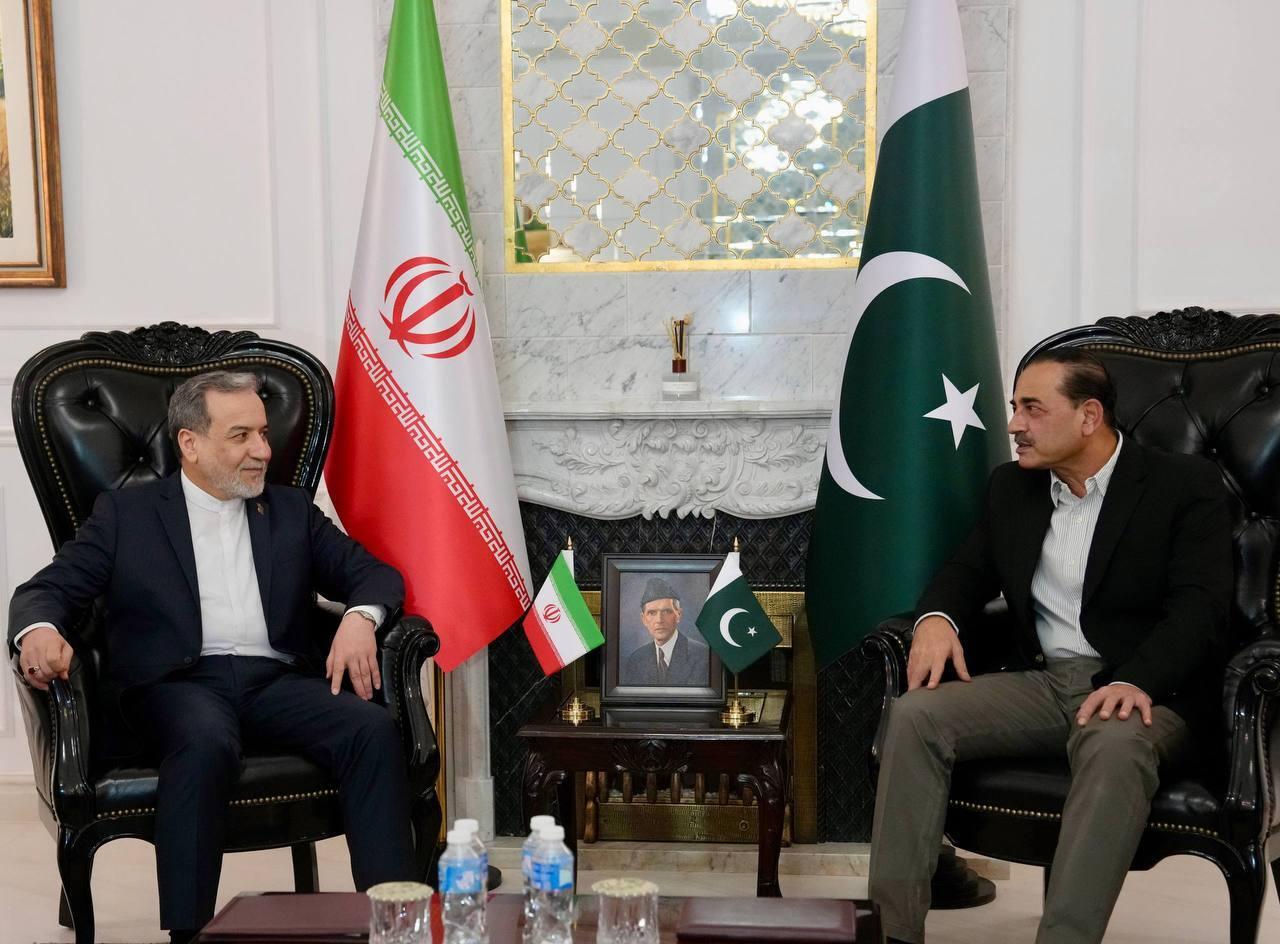
Iranian Foreign Minister Abbas Araghchi (L) meets with Pakistani Chief of General Staff Asim Munir (R) amid efforts to revive stalled peace talks between the US and Iran to end their eight-week war, in Islamabad, capital of Pakistan, on April 25, 2026. Iranian Ministry of Foreign Affairs / Handout /Anadolu via Getty Images

As countries around the world confront the economic fallout from the Iran conflict, Asian economies have been particularly hard hit. Energy prices have skyrocketed, economic growth forecasts have been slashed, food insecurity is back in the spotlight, and access to critical chemicals, aluminum and other products has been curtailed.

Recommended Video

In response, Asia has been busy implementing a range of measures, from restricting energy use to introducing fuel subsidies, re-starting coal plants, and imposing export restrictions. While the crisis looms large over Asia, the U.S. trade agenda appears to move forward unabated. Adapting U.S. trade asks to reflect the pressures partners are facing — and offering financial support or other cooperation — would build meaningful goodwill in a region Washington cannot afford to lose.

With more than 80% of the oil and gas usually passing through the Strait of Hormuz bound for Asia, the region’s energy vulnerability is stark. Energy prices in Asia have risen by almost 70% in some places since the start of the war, forcing countries like Cambodia and Vietnam to ration energy and introduce fuel subsidies. Pakistan and Bangladesh have closed schools, and, across Southeast Asia, officials are working from home and curtailing travel.  For tourism-dependent economies like Thailand and Vietnam, surging jet fuel costs and airline service cuts are compounding the damage. In addition, the current situation has prompted several countries in Asia to accelerate their shift to green technologies, which China is well positioned to benefit from given its dominance in this area.

Fertilizer supply has also been impacted by the crisis, as one third of global fertilizer supply comes through the Strait of Hormuz. Compounding this, China, another major supplier, has imposed export restrictions.  Shortages now threaten countries across South and Southeast Asia, where agriculture employs a large share of the workforce — raising food security risks for economies already under strain.

In Japan, there is growing concern about the reduced access to naphtha, a raw material from the Gulf that is needed to make critical medical supplies. Purchasing restrictions have been announced, and Japanese Prime Minister Takaichi has released medical gloves stockpiled for use in a pandemic to alleviate sourcing problems. The semiconductor industry is also not immune, with roughly 45% of sulfur, which is required in chip production, usually coming from Gulf producers.

Projections for economic growth across Asia, particularly emerging economies, have already been scaled back. In April, the International Monetary Fund revised its numbers downwards, citing the Middle East conflict as halting recent momentum. Asia’s economic growth is now expected to slow by 0.6% from 2025, with India, Vietnam, and Thailand predicted to slow beyond this level. If the conflict drags on, economic growth through 2027 is predicted to reduce cumulatively by 1% to 2%.

Despite this, Washington’s trade requests appear unwavering. With Indian officials continuing to negotiate elements of a bilateral trade deal, New Delhi’s ability to show flexibility on key U.S. asks — such as increased agricultural market access — will likely narrow as its population faces rising food costs and input-price pressures mount for farmers and manufacturers.  Malaysia and Indonesia may be finding it increasingly difficult to move forward the implementation of their bilateral trade deals given the necessary focus on addressing the immediate economic impacts from the conflict.

In addition, as businesses prioritize securing energy and other critical inputs, identifying prospective investments in the U.S., required as part of certain recent trade deals, is likely being pushed off to a future date.

At a special meeting this week, ASEAN economic ministers stressed the need for greater regional cooperation and coordination to address the far-reaching economic impacts. The Singapore-New Zealand Agreement on Trade in Essential Supplies — a little-known but relevant model —helps to maintain the supply of essential goods between these countries during moments of crisis and is an example of Asia leading the way with collective responses. The Philippines has also suggested a regional study on joint oil stockpiling, while Japan has provided financial assistance to help Asian partners secure energy supplies and bolster stockpiles. 

U.S. policymakers would be well served to acknowledge the limited bandwidth Asian partners have for Washington’s trade priorities right now — and to adjust accordingly. Moreover, Washington could take a page from Japan’s playbook and provide support to those economies particularly hard hit by the conflict.  By doing so, the U.S. could build valuable trust and confidence at a time when relationships between our partners and the U.S. need a boost.

The opinions expressed in Fortune.com commentary pieces are solely the views of their authors and do not necessarily reflect the opinions and beliefs of Fortune.

Join us at the Fortune Workplace Innovation Summit May 19–20, 2026, in Atlanta. The next era of workplace innovation is here—and the old playbook is being rewritten. At this exclusive, high-energy event, the world’s most innovative leaders will convene to explore how AI, humanity, and strategy converge to redefine, again, the future of work. Register now.
About the Authors
By Wendy Cutler
See full bioRight Arrow Button Icon
By Jane Mellsop
See full bioRight Arrow Button Icon

Latest in Commentary

Finance
Lorem ipsum dolor sit amet, consectetur adipiscing elit, sed do eiusmod tempor incididunt ut labore et dolore magna aliqua. Ut enim ad minim veniam
By Fortune Editors
October 20, 2025
Finance
Lorem ipsum dolor sit amet, consectetur adipiscing elit, sed do eiusmod tempor incididunt ut labore et dolore magna aliqua. Ut enim ad minim veniam
By Fortune Editors
October 20, 2025
Finance
Lorem ipsum dolor sit amet, consectetur adipiscing elit, sed do eiusmod tempor incididunt ut labore et dolore magna aliqua. Ut enim ad minim veniam
By Fortune Editors
October 20, 2025
Finance
Lorem ipsum dolor sit amet, consectetur adipiscing elit, sed do eiusmod tempor incididunt ut labore et dolore magna aliqua. Ut enim ad minim veniam
By Fortune Editors
October 20, 2025
Finance
Lorem ipsum dolor sit amet, consectetur adipiscing elit, sed do eiusmod tempor incididunt ut labore et dolore magna aliqua. Ut enim ad minim veniam
By Fortune Editors
October 20, 2025
Finance
Lorem ipsum dolor sit amet, consectetur adipiscing elit, sed do eiusmod tempor incididunt ut labore et dolore magna aliqua. Ut enim ad minim veniam
By Fortune Editors
October 20, 2025

Most Popular

Finance
Lorem ipsum dolor sit amet, consectetur adipiscing elit, sed do eiusmod tempor incididunt ut labore et dolore magna aliqua. Ut enim ad minim veniam
By Fortune Editors
October 20, 2025
Finance
Lorem ipsum dolor sit amet, consectetur adipiscing elit, sed do eiusmod tempor incididunt ut labore et dolore magna aliqua. Ut enim ad minim veniam
By Fortune Editors
October 20, 2025
Finance
Lorem ipsum dolor sit amet, consectetur adipiscing elit, sed do eiusmod tempor incididunt ut labore et dolore magna aliqua. Ut enim ad minim veniam
By Fortune Editors
October 20, 2025
Finance
Lorem ipsum dolor sit amet, consectetur adipiscing elit, sed do eiusmod tempor incididunt ut labore et dolore magna aliqua. Ut enim ad minim veniam
By Fortune Editors
October 20, 2025
Finance
Lorem ipsum dolor sit amet, consectetur adipiscing elit, sed do eiusmod tempor incididunt ut labore et dolore magna aliqua. Ut enim ad minim veniam
By Fortune Editors
October 20, 2025
Finance
Lorem ipsum dolor sit amet, consectetur adipiscing elit, sed do eiusmod tempor incididunt ut labore et dolore magna aliqua. Ut enim ad minim veniam
By Fortune Editors
October 20, 2025
Fortune Secondary Logo
Rankings
  • 100 Best Companies
  • Fortune 500
  • Global 500
  • Fortune 500 Europe
  • Most Powerful Women
  • World's Most Admired Companies
  • See All Rankings
  • Lists Calendar
Sections
  • Finance
  • Fortune Crypto
  • Features
  • Leadership
  • Health
  • Commentary
  • Success
  • Retail
  • Mpw
  • Tech
  • Lifestyle
  • CEO Initiative
  • Asia
  • Politics
  • Conferences
  • Europe
  • Newsletters
  • Personal Finance
  • Environment
  • Magazine
  • Education
Customer Support
  • Frequently Asked Questions
  • Customer Service Portal
  • Privacy Policy
  • Terms Of Use
  • Single Issues For Purchase
  • International Print
Commercial Services
  • Advertising
  • Fortune Brand Studio
  • Fortune Analytics
  • Fortune Conferences
  • Business Development
  • Group Subscriptions
About Us
  • About Us
  • Press Center
  • Work At Fortune
  • Terms And Conditions
  • Site Map
  • About Us
  • Press Center
  • Work At Fortune
  • Terms And Conditions
  • Site Map
  • Facebook icon
  • Twitter icon
  • LinkedIn icon
  • Instagram icon
  • Pinterest icon
Wendy Cutler is Senior Vice President at the Asia Society Policy Institute and former Acting Deputy U.S. Trade Representative.
Jane Mellsop is Director, Trade, Investment and Economic Security at the Asia Society Policy Institute and former Senior Trade Adviser to the New Zealand Minister for Trade and Export Growth.

Latest in Commentary

mackenzie
Commentaryphilanthropy
Stop donating to Harvard and the Ivy League. There’s a better option that MacKenzie Scott already figured out
By Ed Smith-LewisMay 2, 2026
2 hours ago
drinks
CommentaryFood and drink
We need a new way of thinking about drinking: Time to replace the ‘standard drink’ with advice people can actually use
By Justin KissingerMay 2, 2026
2 hours ago
pakistan
CommentaryIran
Asia is being hammered by the Iran conflict’s economic fallout. The U.S. has the playbook to help—and every reason to
By Wendy Cutler and Jane MellsopMay 2, 2026
2 hours ago
francis
CommentaryFlorida
Former Miami Mayor Francis Suarez: Why I’m joining Stephen Ross and Ken Griffin in betting big on ambitious business leaders
By Francis SuarezMay 1, 2026
20 hours ago
valerie
CommentaryLayoffs
Tesla’s former HR chief: the AI layoff panic Is built on a false premise—here’s what most workers need to know
By Valerie Capers WorkmanMay 1, 2026
22 hours ago
tamas
CommentaryPolymarket
SEON CEO: Prediction markets can forecast the future. Can they survive their own manipulation problem?
By Tamas KadarMay 1, 2026
1 day ago

Most Popular

Scott Bessent on financial literacy: 'it drives me crazy' to see young men in blue-collar construction jobs playing the lottery
Personal Finance
Scott Bessent on financial literacy: 'it drives me crazy' to see young men in blue-collar construction jobs playing the lottery
By Fatima Hussein and The Associated PressMay 1, 2026
22 hours ago
China dominates the world's lithium supply. The U.S. just found 328 years' worth in its own backyard
North America
China dominates the world's lithium supply. The U.S. just found 328 years' worth in its own backyard
By Jake AngeloApril 30, 2026
2 days ago
The U.S. economy is booming — just not where 50 million Americans live
Commentary
The U.S. economy is booming — just not where 50 million Americans live
By Derek KilmerMay 1, 2026
1 day ago
Current price of oil as of May 1, 2026
Personal Finance
Current price of oil as of May 1, 2026
By Joseph HostetlerMay 1, 2026
23 hours ago
Apple cofounder Ronald Wayne—whose stake would be worth up to $400 billion had he not sold it in 1976—says that at 91, he has no regrets
Success
Apple cofounder Ronald Wayne—whose stake would be worth up to $400 billion had he not sold it in 1976—says that at 91, he has no regrets
By Preston ForeApril 27, 2026
5 days ago
A Chick-fil-A worker got fired and then showed up behind the register to allegedly refund himself over $80,000 in mac and cheese
Law
A Chick-fil-A worker got fired and then showed up behind the register to allegedly refund himself over $80,000 in mac and cheese
By Catherina GioinoMay 1, 2026
18 hours ago

© 2026 Fortune Media IP Limited. All Rights Reserved. Use of this site constitutes acceptance of our Terms of Use and Privacy Policy | CA Notice at Collection and Privacy Notice | Do Not Sell/Share My Personal Information
FORTUNE is a trademark of Fortune Media IP Limited, registered in the U.S. and other countries. FORTUNE may receive compensation for some links to products and services on this website. Offers may be subject to change without notice.