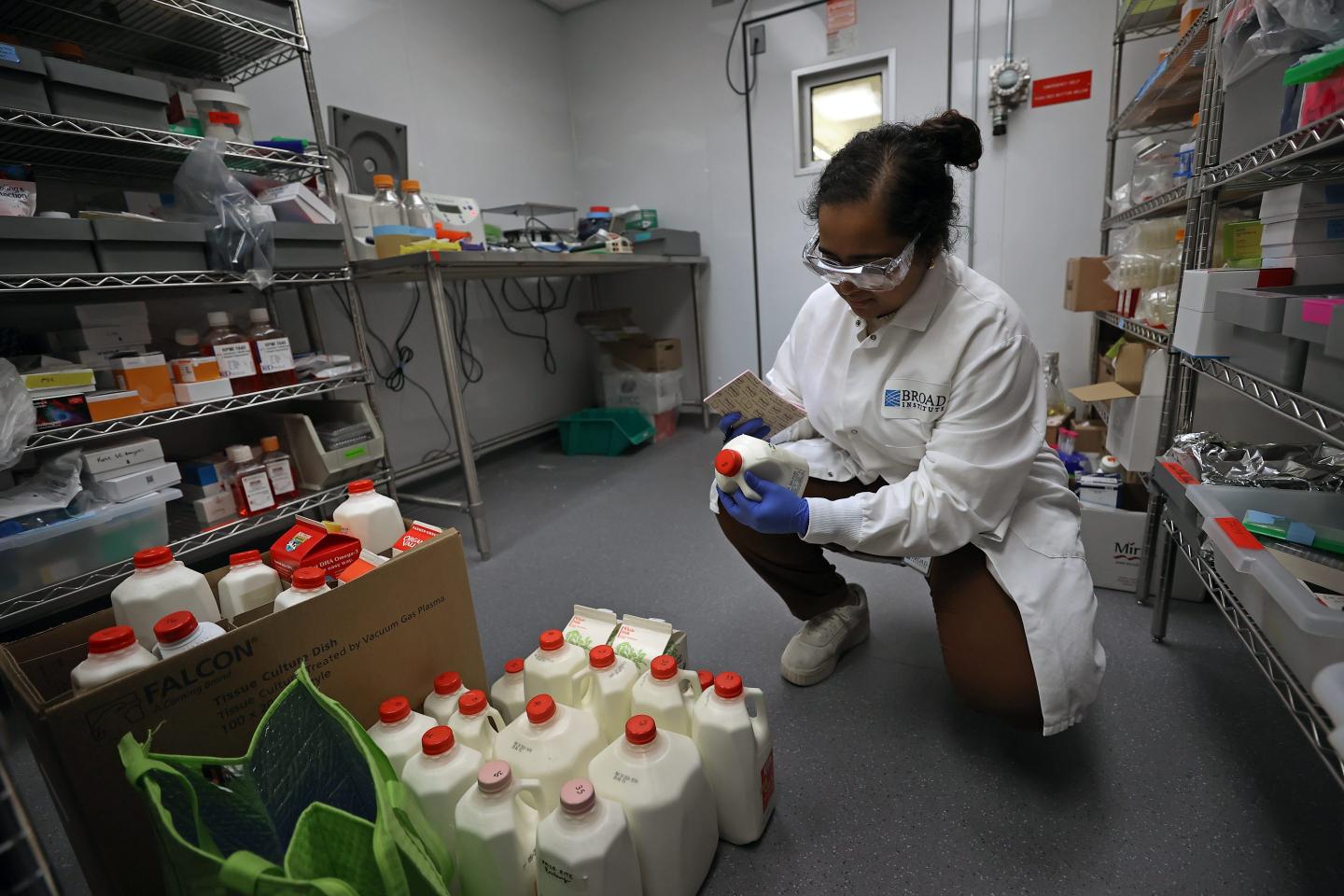
The latest iteration of bird flu is concerning enough in its own right. It has already demonstrated a tremendous ability to jump species, and its spread to farm livestock has raised alarms among researchers studying the possibility of mass infection—including in humans.
What’s even more worrisome in the U.S., though, is what happens next. Assuming the H5N1 outbreak eventually reaches far more people than the three who’ve been confirmed so far in connection with dairy cows, how prepared are government agencies to react to widespread infection or a pandemic?
Increasingly, experts fear, the answer to that question is a grim one. “Our antiviral supply for influenza is inadequate,” says Rick Bright, immunologist and former director of the Biomedical Advanced R&D Authority. “We need to diversify it—and even that is not enough, with what we have approved (to treat flu). We need to be developing additional treatment options.”
An inadequate national stockpile
The issues are multifold. The antiviral that the U.S. has in the greatest supply, Tamiflu, has been questioned not only for its path to government approval (virtually all of its clinical trials were drug-company sponsored), but also for its ability to reduce the risk of hospitalization or serious complications of flu. Yet sources told me federal officials in 2018 reportedly ignored pleas for greater diversity in their antiviral stock, instead pushing forward with another Tamiflu order. The U.S. government has also approved an extended shelf life for the drug that is twice what the manufacturer ever requested.
Another drug, Baloxavir, has shown promise in preventing the spread of flu. However, the U.S. Strategic National Stockpile (SNS) includes only hundreds of thousands of doses of that drug, and the process of building up the stockpile is estimated to take 18 to 24 months. And experts say that whichever country puts money on the table first often gets first access to supply, so it’s important to get in line.
Viral resistance can develop rather quickly to either drug, highlighting the need for other treatment options.“Given how frequently flu viruses change and the potential for flu viruses to develop resistance or reduced susceptibility to one or more flu antiviral drugs, it is good to have more options for treating flu,” the federal Centers for Disease Control and Prevention (CDC) says.
In response to information obtained by the author of this article and viewed by Fortune that has not previously been made public by the CDC, a spokesperson confirmed that oseltamivir (generic for Tamiflu) showed a 16-fold reduction in its ability to inhibit the H5N1 virus collected from an infected dairy worker in Texas, when compared to the activity against a seasonal virus. That reduction is considered minor, the spokesperson said, and the CDC continues to recommend “prompt antiviral treatment with oseltamivir for patients with confirmed or suspected H5N1 virus infection.”
That finding, though, confounded experts. “While (the reduction doesn’t mean the Texas virus will be fully resistant to Tamiflu, it is a clear indication that the virus has reduced susceptibility,” says Bright. “Most likely it would take a higher treatment dose or a longer duration of treatment with Tamiflu to be able to treat someone with this H5N1 virus, but more testing is needed…At this point, we cannot rest comfortably that what we have in the stockpile will be sufficient or even adequately effective against H5N1 viruses in people.” (A CDC study did find that the virus was sensitive to some of the other anti-viral drugs tested, including Baloxavir.)
“Ideally, you would have a multi-drug cocktail like we have for HIV, for instance,” says Andy Pekosz, influenza researcher and director of the Center for Emerging Viruses and Infectious Diseases at Johns Hopkins University. “With one individual drug, you have a very limited time before the virus gets resistant. But if you put together two or three of them, you build the wall incredibly high for the virus to actually gain resistance against all of those antivirals.”
Tamiflu has a shelf life of 10 years, as established by its manufacturer (Roche, now merged with Genentech) and as mandated by the European Union. But the U.S. Food and Drug Administration has some stock that dates to 2004, and the FDA has extended the shelf life of some of the oldest purchased Tamiflu products to 20 years for emergency responses–a decision that prompted a Genentech spokesperson to distance the company from it.
“If local governments decide to extend the shelf life of the product, that is based on their own assessment and in accordance with government shelf-life extension programs,” the Genentech spokesperson told me. “We do, however, share the concern of public health experts about the perennial threat of pandemic influenza, which could be exacerbated by expiring antivirals in the U.S. Strategic National Stockpile.”
No ‘miracle drugs’
Even if Tamiflu worked well, the approximately 55 million treatment courses the U.S. has on hand would be inadequate to treat large-scale human H5N1 infection, especially if it was used preventatively for close contacts, as the CDC currently recommends. “I don’t think there is good data right now that supports its use prophylactically,” says Francesca Torriani, medical director of infection prevention and clinical epidemiology at UC San Diego Health. “In my experience as an infectious disease physician, that is a recipe to basically develop resistance.”
“Antiviral drugs are not miracle drugs,” says William Schaffner, a former medical director of the National Foundation for Infectious Diseases. “The trick is to get in early, try to cut the virus off at the pass—in other words, interfere with the multiplication of that virus before it multiplies too much in our body and evokes a big inflammatory response, Schaffner says. Tamiflu needs to be administered within the first 24 to 48 hours of symptom onset to be effective; a full course includes one pill taken twice daily for five days.
Baloxavir, which requires a single dose and works differently than other flu antivirals, has been shown in healthy adult outpatients to have similar efficacy as Tamiflu in time to alleviation of symptoms. It’s a viable alternative in case the virus produces resistance to one drug or the other. But we have nowhere near enough on hand to make a significant difference.
How about a human vaccine?
Health authorities say we have very limited quantities stockpiled of a 2020 H5 candidate vaccine that could provide some level of immunity against the current, mostly avian virus in cows—useful for those at highest risk of exposure, such as farmworkers. However, the virus would mutate significantly before it becomes the human pandemic strain, experts say, so we’d likely need to rapidly update the vaccine, then mass produce it.
Andy Pekosz estimates it would take six to seven months to produce roughly 150 million doses using the traditional method. So it might be two or more years before we’d have enough vaccine to immunize the entire country that way—and we’ll need to manufacture two doses of vaccine for each person.
Though mRNA vaccines could be made much faster—“in the order of three months” to generate a significant number of doses, Pekosz says—they aren’t approved yet for influenza by the FDA. Meanwhile, the government is in conversations with Pfizer and Moderna, but anything that gets produced will take time—more time than we would have to respond to a mass outbreak.
The U.S. is woefully unprepared for a pandemic
All of this might lead one to question the readiness of the U.S. to respond to the next possible pandemic–-in this case, H5N1. That sense of unpreparedness, it turns out, is echoed at the highest levels of government.
On 9 May, the powerful House Committee on Energy and Commerce warned of “a pattern of fiscal mismanagement and a series of failed acquisitions that have left the SNS dangerously under-resourced and likely underprepared to respond to future public health emergencies.“
On the same day, a letter to Dawn O’Connell, assistant secretary for preparedness and response at the Department of Health and Human Services, laid out the concerns in graphic detail. Writing on behalf of multiple Senate committees and subcommittees, the letter excoriated what it described as “the mismanagement of the Strategic National Stockpile.”
The letter, from the Subcommittee on Oversight and Investigations and viewed by Fortune, noted that the governmental Administration for Strategic Preparedness and Response (ASPR) had been placed on a list of agencies that “are vulnerable to waste, fraud, abuse, or mismanagement, or in need of transformation.” It pointed out that ASPR let more than $850 million in SNS emergency supplemental funding go unused. Those funds were eventually rescinded by the Office of Management and Budget, the letter said, due to “lack of appropriate planning and urgency by ASPR.”
We are far below the government’s repeatedly stated goal over five years of 85 million treatment courses of flu antivirals. What is required, Bright says, is to urgently place orders for fresh drugs, refresh long outdated drugs, diversify the SNS holdings to guard against antiviral drug resistance, and accelerate the development of new treatment options.
“A head-in-the-sand approach to influenza antiviral readiness will not serve the public well when there is a need to respond to an influenza pandemic,” he says. The time to commence serious action is now, not when the country is staring down the barrel of a full pandemic.
More must-read commentary published by Fortune:
- Booz Allen Hamilton CEO: America needs a whole-of-nation approach in its great power competition with China
- NYC comptroller: Food delivery apps are blaming minimum pay for inflation. It’s baloney
- ‘Sometimes, the facts don’t matter’: Attacks on DEI are an anti-capitalist war on American prosperity
- No one wants another pandemic—but bird flu has already flown the coop
The opinions expressed in Fortune.com commentary pieces are solely the views of their authors and do not necessarily reflect the opinions and beliefs of Fortune.