

Good morning. Insurers around the world are bullish on artificial intelligence—and betting it can help them save on operations.
Goldman Sachs Asset Management’s annual survey of global insurance companies, released on Tuesday, was conducted among 359 chief investment officers and CFOs representing more than $13 trillion in balance sheet assets, which Goldman estimates is about half of those under supervision.
For the first time, Goldman Sachs asked about artificial intelligence in the survey, and the results show that over the past year, insurers have been adopting AI models into operations.
Globally, 29% of insurers are currently using AI, with 51% looking to implement the tech, which was “a very strong response and certainly was a bit of a surprise to us,” Matt Armas, global co-head of insurance at Goldman Sachs Asset Management, said during a media call about the report.
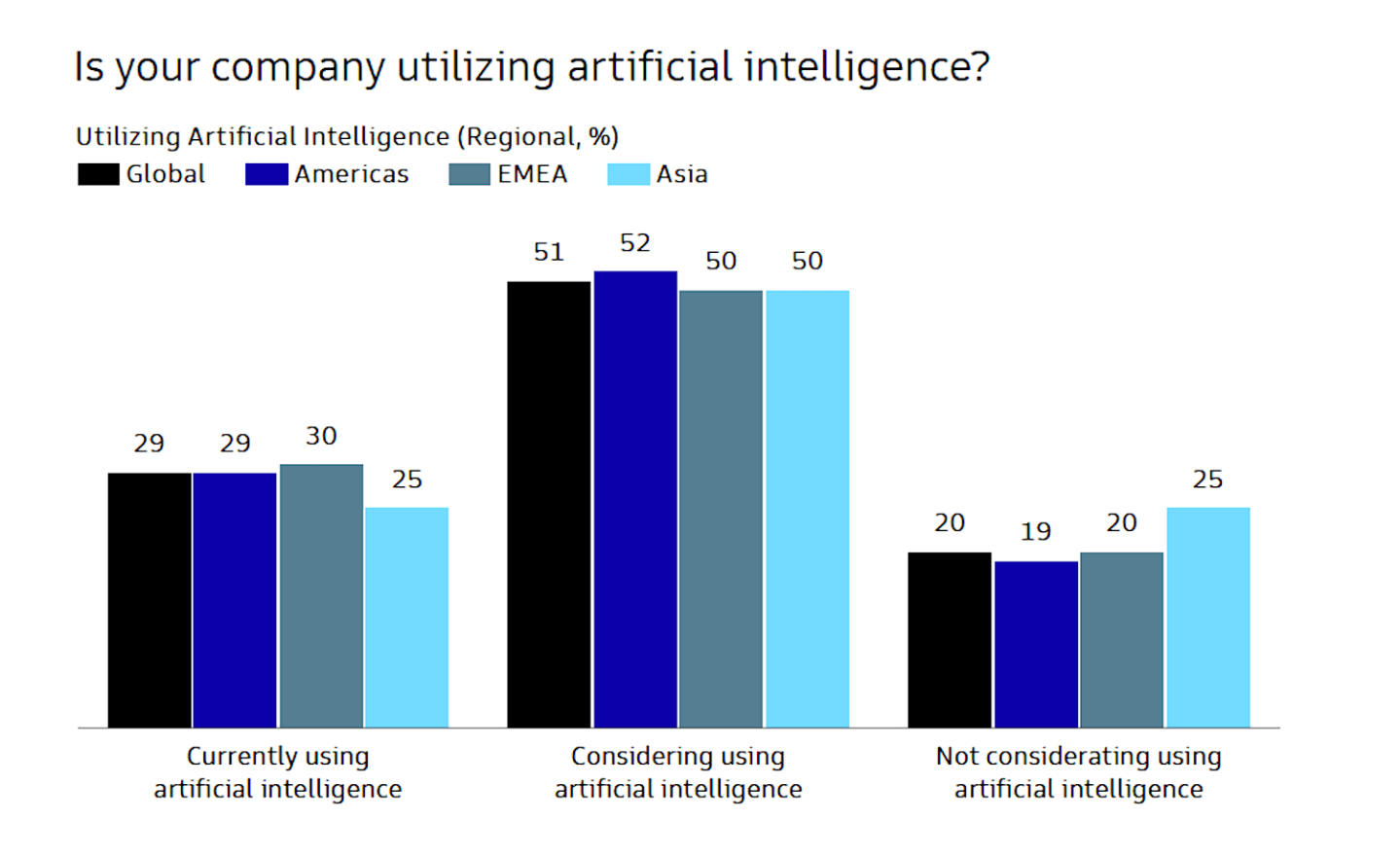
“What we’re seeing is clients starting to use AI in the highest-return areas first,” Armas said. Approximately 73% of insurers are first looking to reduce overall operational costs, while 39% are starting to incorporate AI in risk and underwriting, particularly in the Americas. “And there is also an emergence in trying to use it in evaluating investments,” he said.
Additionally, the survey shows there’s a continued trend toward private credit. More than half (53%) of insurers believe private credit will be the asset class with the highest total return for the year. “This is the first time we’ve seen a fixed income asset as the highest expected return asset class in our survey,” Armas added.
The survey also found that 52% of insurers ranked an economic slowdown or recession in the U.S. as one of their macroeconomic concerns as it relates to investment portfolios, while 48% cited concerns about credit and equity market volatility and 46% cited geopolitical tensions. And half of respondents believe a recession in the U.S. is possible over the next two to three years.
But insurance investors are less concerned with inflation trends, with 42% viewing inflation as one of the greatest macroeconomic risks, down from 55% in 2023. Despite these macro concerns, investors’ “risk appetite remains healthy in 2024,” with 17% net planning to add overall risk to their portfolios, according to Goldman Sachs.
Sheryl Estrada
sheryl.estrada@fortune.com
María Soledad Davila Calero curated the Leaderboard and Overheard sections of today’s newsletter.
Leaderboard
Christa Davies has decided to retire from her position of EVP and CFO at AON (NYSE: AON), a global professional services firm. Davies, who has spent 16 years at AON, will remain in her role until the third quarter to then become an advisor during a transition period. Her official retirement will begin in 2025. AON has started the process of finding a successor.
Jerry Letter was appointed CFO and head of corporate development at Noventiq Holdings PLC, a cybersecurity provider for businesses. Letter brings over 25 years of experience in areas such as public markets, capital markets, and M&A. Letter has worked with Noventiq for over a year helping with proposed business combination and Nasdaq listing.
Big deal
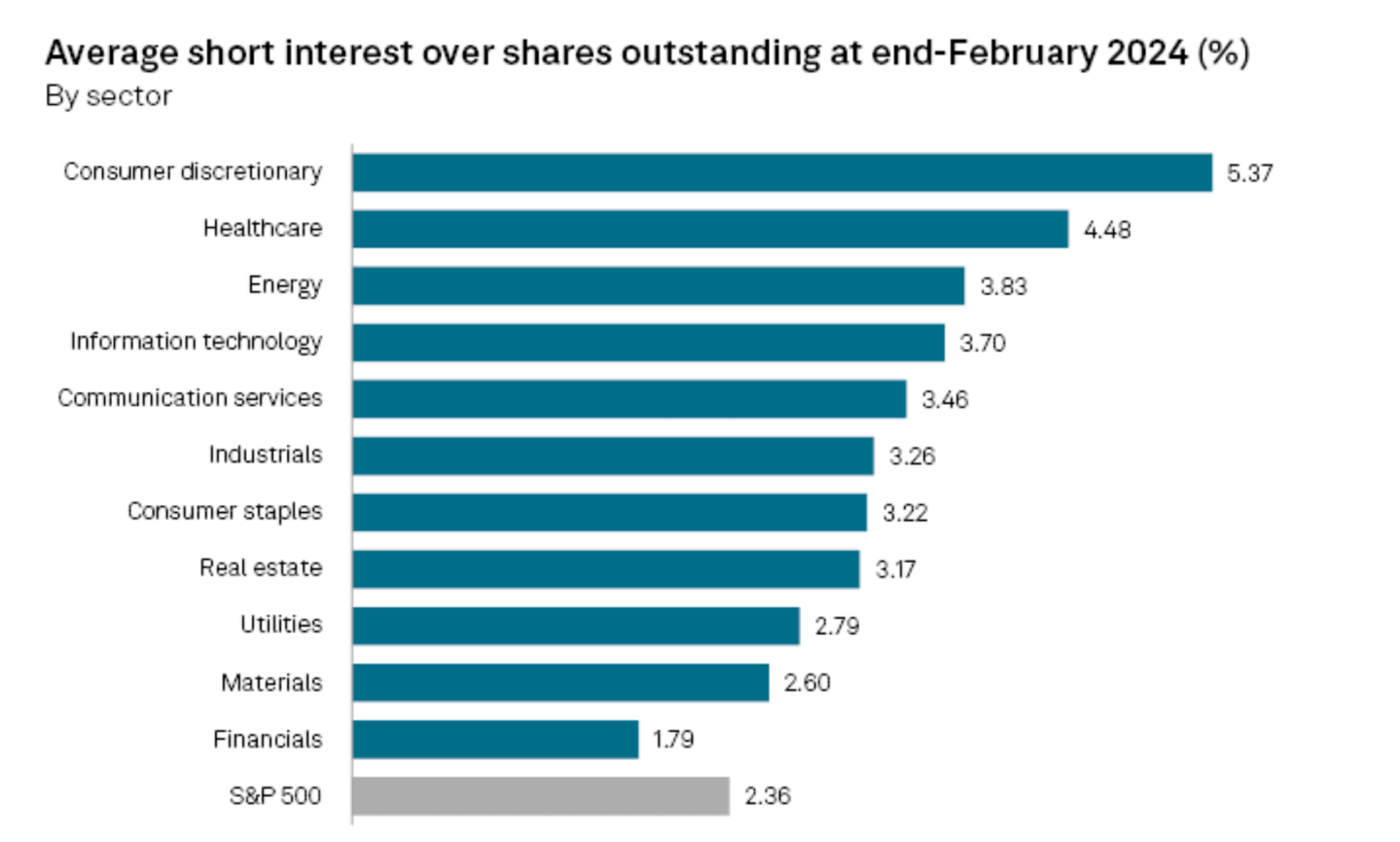
Short sellers continue to bet against consumer-discretionary (nonessential goods and services) stocks. By the end of February, it remained the most-shorted sector, with 5.4% of outstanding shares held short, according to S&P Global Market Intelligence data released on Wednesday. This was followed by the health care sector (4.5%) and energy stocks (3.8%).
Going deeper
The Knowledge at Wharton video series features Chip Bergh, the former president and CEO of Levi Strauss & Co., where he served from September 2011 to January 2024. Bergh, who has led many iconic brands during his 45-year career, discusses best practices for building a global brand.
Overheard
“If you cannot assign a value, then how can you be bullish or bearish?”
— Sharmin Mossavar-Rahmani, chief investment officer of Goldman Sachs Wealth Management, said of cryptocurrencies during an interview with the Wall Street Journal. Mossavar-Rahmani went on to say that she sees crypto as a speculative investment, not an investment asset class.
This is the web version of CFO Daily, a newsletter on the trends and individuals shaping corporate finance. Sign up for free.